- Company Articles
- Industry articles
- Industry standards
- How 3030b EU Standard Aluminum Profile Enhances Workplace Ergonomics

How 3030b EU Standard Aluminum Profile Enhances Workplace Ergonomics
Related Product
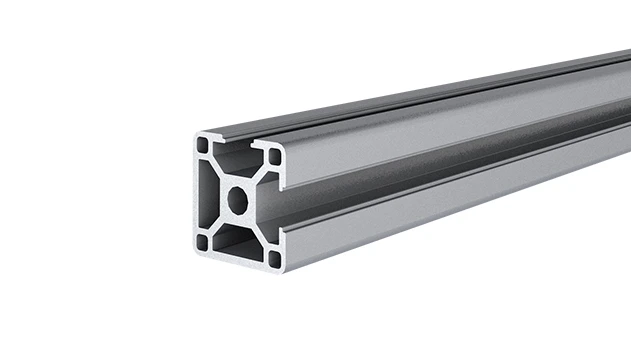
3030B EU Standard Aluminum Profile
3030 is a 3.00 x 3.00CM fractional 30 series square extrusion T-slot profile with two side open T-slots, each side with 3.00cm face, 2 side with open slot, 2 side with closed face. The profile has align-a-grooves to assist in aligning connecting profiles.
Walk into any busy workshop, factory floor, or assembly line, and you'll notice a silent battle unfolding: workers hunching over workbenches that are too low, straining to reach materials stacked on rigid shelves, or wrestling with heavy tools that never quite fit their grip. These aren't just minor inconveniences—they're ergonomic red flags. Poor workplace ergonomics costs businesses billions annually in lost productivity, worker fatigue, and preventable injuries. But what if the solution wasn't a fancy new chair or a one-size-fits-all workstation? What if it was something as foundational as the materials we build our workspaces with? Enter the 3030b EU Standard Aluminum Profile: a deceptively simple component that's quietly revolutionizing how we design workplaces around human comfort and efficiency.
What Is 3030b EU Standard Aluminum Profile, Anyway?
Before diving into its ergonomic superpowers, let's get familiar with the star of the show. The 3030b EU Standard Aluminum Profile is a modular building block crafted from high-grade aluminum, designed to meet strict European union standards for strength, durability, and safety. At its core, it's a rectangular extrusion—30mm by 30mm in cross-section—with precision-engineered T-slots running along its length. These slots aren't just for show; they're the secret to its versatility, allowing users to attach, adjust, and reconfigure accessories with minimal effort. Unlike clunky steel beams or brittle plastic frames, 3030b aluminum profiles strike a rare balance: they're lightweight enough to move by hand yet robust enough to support heavy loads (we're talking up to 200kg per meter, depending on configuration). And because they're EU-standardized, you never have to worry about compatibility issues—whether you're adding a shelf bracket in Berlin or a caster wheel in Barcelona, the parts fit.
But why does "EU standard" matter for ergonomics? Simple: EU regulations prioritize worker safety and well-being, mandating that industrial components minimize physical strain. That means 3030b profiles are tested not just for load-bearing capacity, but for how they interact with human movement—smooth edges to prevent cuts, lightweight design to reduce lifting fatigue, and modularity to adapt to diverse body types. It's not just a material; it's a commitment to putting people first.
Modularity: The Ergonomic Game-Changer
Traditional workspaces are built like fortresses: rigid, fixed, and stubbornly resistant to change. A wooden workbench stays at one height forever; a steel shelf can't be repositioned without a wrench and a prayer. But ergonomics isn't about "one height fits all"—it's about adaptability . A 5'2" assembly worker needs a different bench height than a 6' tall colleague. A morning shift might require a compact workstation for detailed tasks, while the afternoon shift needs extra space for bulk materials. This is where 3030b aluminum profile shines: its modular design turns "fixed" into "flexible."
Consider a typical scenario: A electronics factory needs workstations for soldering, testing, and packaging. With traditional setups, they'd order three separate workbenches—each with fixed heights, fixed shelves, and zero room for adjustment. If a worker develops wrist pain from soldering at a too-low bench, the solution might involve expensive custom modifications or, worse, forcing the worker to adapt. With 3030b profiles, though, the factory can build a single base frame and tweak it on the fly. Need the soldering station higher? Loosen a few bolts, slide the crossbars up the T-slots, and lock them in place. Want the packaging area to have a sloped shelf for easier access? Attach an aluminum guide rail a at a 15-degree angle using T-slot nuts. Even better, when workflows change (and they always do), the entire setup can be disassembled and reconfigured in hours, not days. No more wasted space, no more worker discomfort—just a workspace that bends to the people using it.
| Ergonomic Factor | Traditional Materials (Wood/Steel) | 3030b EU Standard Aluminum Profile | Impact on Workers |
|---|---|---|---|
| Height Adjustability | Fixed; requires power tools or replacement | Tool-free adjustment via T-slots; infinite height settings | Reduces neck/back strain by aligning work surface with elbow height |
| Weight & Mobility | Heavy (50-100kg per workbench); difficult to reposition | Lightweight (10-15kg per meter); compatible with caster wheels | Minimizes lifting injuries; allows workers to reposition workstations independently |
| Accessory Integration | Limited; requires drilling or welding | Unlimited; T-slots accept aluminum profile accessories (hinges, clamps, lights) | Customizable tool placement reduces reaching/straining |
| Edge Safety | Often sharp or splintered | Smooth, rounded edges per EU safety standards | Reduces cuts and abrasions during daily use |

Accessories: The Unsung Heroes of Ergonomic Design
A 3030b aluminum profile is only as good as the accessories that bring it to life. Think of it as a canvas—and aluminum profile accessories are the paintbrushes that turn it into a masterpiece of ergonomic design. Let's break down the key players:
Adjustable Leveling Feet: Stability That Adapts to You
Walk into any old workshop, and you'll find workbenches that wobble like jelly on uneven floors. Workers compensate by propping up corners with scrap wood or shims, turning a simple task into a balancing act. Enter adjustable leveling feet—small, unassuming components that screw into the base of 3030b profiles, allowing precise height tweaks (usually up to 50mm) to level the workstation. For Maria, a quality control inspector in a automotive plant, this was a game-changer: "Our factory floor has these weird dips from years of heavy machinery. Before, my inspection table would rock, and I'd miss tiny defects because I was focused on not spilling my tools. Now, with leveling feet, I twist a knob, the table locks into place, and I can focus on my work—not the floor."
Caster Wheels: Mobility Without the Muscle
Heavy workbenches and shelves aren't just hard to move—they're dangerous. Straining to push a steel cart loaded with parts can lead to pulled muscles or slips. 3030b profiles, paired with caster wheels, eliminate this risk. These aren't your average office chair wheels; industrial-grade caster wheels for aluminum profiles feature locking brakes, shock-absorbing rubber tires, and smooth-rolling bearings that let even a single worker move a fully-loaded workstation with ease. "I used to need a coworker to help me shift my assembly cart when we switched production runs," says Raj, a line worker in a consumer goods factory. "Now, I just unlock the casters, glide it into place, and lock it down. No more asking for help, no more waiting—just getting the job done."
Aluminum Guide Rails: Material Flow That Follows You
Reaching across a cluttered workbench to grab parts isn't just annoying—it's a recipe for repetitive strain injuries. Aluminum guide rails, like the aluminum guide rail a and aluminum guide rail b, mount directly to 3030b profiles, creating smooth, sloped tracks for materials to slide into place. Imagine a packaging station where boxes glide gently from a shelf to the worker's hands, or a assembly line where small components roll along a rail instead of being stacked in a bin. "Before, I'd twist my torso 45 degrees every 30 seconds to grab screws from the shelf behind me," says Lina, who assembles circuit boards. "My shoulder ached so bad I'd ice it every night. Now, the screws roll right to my workstation via the guide rail. No twisting, no pain—just steady work."
Hinges and Joints: Workspaces That Fold, Tilt, and Pivot
Ergonomics isn't just about height—it's about angle. A soldering iron works best at a 30-degree tilt; a laptop stand needs to adjust for glare. 3030b profiles pair with aluminum hinges and multi-angle joints that let work surfaces pivot, fold, or lock into place. For example, a drafting table built with 3030b profiles can tilt from flat to 45 degrees with a simple lever, reducing neck strain for designers. A workbench with a fold-down side shelf saves space during cleanup and expands when extra surface area is needed. "I used to hunch over my drafting board for hours," says Marco, a mechanical designer. "Now, I tilt it to eye level, and my neck pain is gone. It's like the workstation finally gets how I work."
Real-World Impact: From Fatigue to Flow
Numbers tell part of the story, but the real magic of 3030b aluminum profile lies in its impact on daily work life. Let's look at two case studies:
Case Study 1: Automotive Parts Manufacturer Cuts Strain Injuries by 40%
A mid-sized automotive parts factory in Hungary was struggling with high turnover and rising workers' compensation claims. An ergonomic audit revealed the culprit: fixed steel workbenches that forced workers into awkward postures. The factory replaced 20 workstations with 3030b aluminum profile setups, adding adjustable heights, caster wheels, and aluminum guide rails. Within six months, reported back and shoulder pain dropped by 40%, and productivity increased by 15% as workers spent less time adjusting to their environment and more time assembling parts. "We didn't just buy workstations—we bought trust," says the factory manager. "Workers see we care about their comfort, and they're more engaged because of it."
Case Study 2: Electronics Workshop Adapts to Diverse Workers
A small electronics repair shop in Portugal employed workers of all ages and heights, from 19-year-old apprentices to 60-year-old veterans. Traditional fixed workbenches meant the shortest workers strained to reach tools, while taller ones hunched over. The solution? 3030b aluminum profile workstations with quick-adjust height levers and modular tool holders. Now, each worker starts their shift by setting their bench to their ideal height (measured by elbow height, per ergonomic guidelines) and arranging tools within arm's reach using T-slot accessories. "I'm 5'1", and before, I stood on a crate to reach the top shelf," says Sofia, an apprentice. "Now, I lower the shelf, lock it, and get to work. No more crates, no more embarrassment—just me and my tools, working in sync."
Beyond Ergonomics: Sustainability and Longevity
Ergonomics isn't just about today—it's about tomorrow. 3030b aluminum profiles are built to last, with corrosion-resistant finishes and reusable components that reduce waste. Unlike wooden workbenches that splinter or steel frames that rust, aluminum profiles can be disassembled, reconfigured, and repurposed for decades. When a factory upgrades its workflow, old 3030b parts don't end up in landfills—they're reassembled into new workstations. This sustainability isn't just good for the planet; it's good for business. "We've had our 3030b profiles for eight years, and they still look brand new," says a facility manager in Germany. "We've moved them, modified them, even used them in three different departments. You can't do that with cheap particleboard or flimsy plastic."
Conclusion: Building Workspaces That Care
At the end of the day, ergonomics isn't about fancy gadgets or buzzwords. It's about respect—respect for the people who show up, day in and day out, to build, create, and innovate. The 3030b EU Standard Aluminum Profile doesn't just enhance workplace ergonomics; it redefines what a workspace can be: adaptable, human-centered, and ready to grow with the people who use it. It turns "good enough" into "just right," one adjustable bench, one smooth-rolling caster, and one pain-free workday at a time.
So the next time you walk into a workshop, take a closer look at the materials. Are the workstations built for the workers, or despite them? With 3030b aluminum profile, the answer is clear: workspaces don't have to be battles. They can be partnerships—between people and the tools they use to shape the world.