- Company Articles
- Industry articles
- Industry standards
- How 3030b EU Standard Aluminum Profile Reduces Production Downtime in Assembly Lines

How 3030b EU Standard Aluminum Profile Reduces Production Downtime in Assembly Lines
Related Product
3030B EU Standard Aluminum Profile
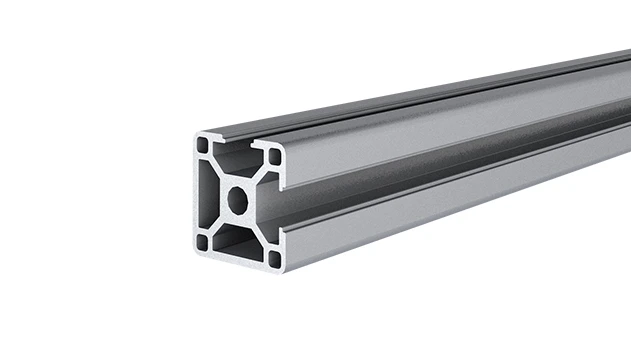
3030 is a 3.00 x 3.00CM fractional 30 series square extrusion T-slot profile with two side open T-slots, each side with 3.00cm face, 2 side with open slot, 2 side with closed face. The profile has align-a-grooves to assist in aligning connecting profiles.
In the fast-paced world of manufacturing, every second counts. A single minute of unplanned downtime on an assembly line can translate to lost revenue, missed deadlines, and frustrated teams. From equipment breakdowns to cumbersome reconfigurations, downtime lurks around every corner—often hiding in outdated, rigid systems that can't keep up with modern production demands. But what if there was a solution that didn't just patch the problem, but prevented it? Enter the 3030b EU standard aluminum profile: a modular, versatile building block that's quietly revolutionizing how assembly lines operate. In this article, we'll explore how this unassuming component is slashing downtime, boosting flexibility, and transforming manufacturing floors from reactive chaos to proactive efficiency.
The Hidden Cost of Downtime: Why Assembly Lines Can't Afford to Wait
Before diving into the solution, let's first understand the problem. Downtime isn't just an inconvenience—it's a financial drain. According to industry reports, manufacturers lose an average of 5% to 20% of their productive capacity to downtime, with some facilities experiencing up to 800 hours of unplanned stoppages annually. For a mid-sized factory, that's tens of thousands of dollars in lost output, not to mention the ripple effects: overtime costs to catch up, rushed orders that compromise quality, and strained relationships with clients.
So, what causes this downtime? Common culprits include:
1. Rigid, Inflexible Systems: Many assembly lines rely on fixed steel structures or custom-welded frames. When production needs change—like shifting to a new product model or scaling up output—these systems require hours (or even days) of cutting, welding, and retooling. During that time, the line sits idle.
2. Slow Maintenance and Repairs: Traditional steel components corrode, warp, or loosen over time. Fixing them often means bringing in specialized technicians, waiting for replacement parts, or even replacing entire sections of the frame. Each delay adds to downtime.
3. Cumbersome Setup and Changeovers: Switching between production runs—say, from assembling small electronics to larger appliances—often involves reconfiguring workbenches, flow racks, and material handling systems. With outdated tools, this process can take hours, grinding production to a halt.
4. Poor Compatibility: Mismatched components from different suppliers create weak points. A bracket that doesn't fit, a joint that slips, or a rail that misaligns—these small issues snowball into line stoppages.
The good news? Many of these problems stem from using outdated building materials. Enter the 3030b EU standard aluminum profile: a modular, durable, and highly adaptable solution designed to tackle downtime at its roots.
What Is 3030b EU Standard Aluminum Profile?
At first glance, the 3030b EU standard aluminum profile might look like just another metal bar. But beneath its sleek surface lies a design engineered for efficiency. Let's break it down:
Dimensions and Design: The "3030" in its name refers to its cross-section: 30mm by 30mm. This compact size strikes a perfect balance—sturdy enough to support heavy loads (up to 150kg per linear meter, depending on configuration) yet lightweight enough for easy handling. The "b" denotes a specific groove design, with T-slots running along all four sides. These slots are the profile's secret weapon: they allow accessories like brackets, shelves, and connectors to slide into place and lock securely, no welding or drilling required.
Material and Compliance: Made from high-grade aluminum alloy (typically 6063-T5), the 3030b profile is corrosion-resistant, non-magnetic, and built to withstand the wear and tear of factory environments. As an EU standard component, it adheres to strict quality and safety regulations, ensuring compatibility with other EU-standard parts—a critical detail for avoiding mismatched components.
Versus the Competition: Compared to smaller profiles (like 2020) or larger ones (like 4040), the 3030b hits the sweet spot for assembly lines. Smaller profiles lack the strength for heavy-duty tasks, while larger ones can be overkill, adding unnecessary weight and cost. The 3030b's size makes it ideal for building workbenches, flow racks, material carts, and lightweight conveyor systems—all staples of modern assembly lines.

5 Ways 3030b Aluminum Profile Slashes Downtime
1. Tool-Free Assembly Cuts Setup Time by 70%
Traditional assembly line structures rely on welding, drilling, or bolting—processes that require skilled labor and time. Need to reconfigure a workbench for a new product? You'd spend hours cutting steel, welding joints, and repainting. With 3030b, setup time plummets. Thanks to its T-slot design, accessories like brackets, panels, and shelves slide into place and lock with simple screws or clamping nuts. A team can build a basic workbench in under an hour, and reconfigure it in minutes.
Consider this: A automotive parts manufacturer recently switched from steel frames to 3030b profiles for their sub-assembly stations. Previously, reconfiguring a station for a new car model took 8 hours (two full shifts). With 3030b, the same team now completes the task in 2 hours—saving 6 hours of downtime per changeover. Over a year with 12 model changes, that's 72 hours of recovered production time.
2. Modular Design Eliminates "One-Size-Fits-All" Inflexibility
Assembly lines don't stay static. Consumer demands shift, product designs evolve, and production volumes fluctuate. Rigid systems can't keep up, leading to frequent overhauls and downtime. The 3030b profile, however, is modular by nature. It's built to be taken apart, reconfigured, and expanded without losing structural integrity.
For example, a electronics plant needed to add a quality control station mid-line to address rising defect rates. With their old steel setup, this would have required shutting down the line for a full day to weld new supports. Using 3030b, they built a standalone inspection workbench in their workshop, rolled it into place, and connected it to the existing line using aluminum profile accessories—all in 30 minutes, with zero line downtime.
3. Durable and Low-Maintenance, Reducing Repair Delays
Steel frames rust, wood warps, and plastic cracks—all requiring frequent repairs. The 3030b profile, made from corrosion-resistant aluminum, stands up to factory grime, humidity, and temperature swings. Its smooth surface is easy to clean, and unlike steel, it never needs repainting. Even better, its modular components mean repairs are localized: if a joint wears out or a bracket bends, you replace just that part, not the entire structure.
A food packaging facility learned this firsthand. Their old steel flow racks constantly rusted in the humid environment, leading to jams as corroded rollers seized up. Replacing a single rusted roller required disconnecting the entire rack and welding a new one—taking 2 hours per rack. After switching to 3030b-based flow racks with plastic roller track guide rails (grey and yellow, to match their color-coded workflow), rust became a non-issue. When a roller does wear out, workers pop it out and snap a new one in—done in 5 minutes, no tools needed.
4. Compatibility with Lean System Principles Minimizes Waste
Lean manufacturing is all about eliminating waste—including time waste. The 3030b profile aligns seamlessly with lean principles, from 5S (sort, set in order, shine, standardize, sustain) to just-in-time production. Its modularity makes it easy to design workspaces that keep tools and materials within arm's reach, reducing motion waste. Flow racks built with 3030b ensure materials flow smoothly to the line, cutting down on waiting time. And because components are standardized, training time for new workers drops—no more fumbling with custom tools or obscure part numbers.
A furniture manufacturer implementing lean practices saw dramatic results after adopting 3030b. They replaced disorganized, static workbenches with 3030b-based stations, each equipped with adjustable shelves, tool hooks, and bins for parts. The result? Time spent searching for tools dropped by 40%, and line operators reported fewer errors—all because the workspace was tailored to their needs, not the other way around.
5. Lightweight Construction Reduces Operator Fatigue and Injury
Downtime isn't just about equipment—it's about people. Heavy steel structures require multiple workers to move or adjust, increasing the risk of strains, sprains, and accidents. A single injury can take a worker off the line for weeks, creating staffing gaps and further delays. The 3030b profile weighs just 0.8kg per meter (compared to 2.5kg for a similar steel profile), making it easy for one person to handle. This reduces injury risk and empowers teams to make quick adjustments without waiting for extra help.
A medical device manufacturer noticed this firsthand. Their old steel material carts weighed 45kg empty; loaded with parts, they topped 80kg. Operators struggled to maneuver them, leading to frequent spills and occasional strains. Switching to 3030b-based carts cut the weight to 15kg empty, and adding casters (another compatible accessory) made them effortless to roll. The result? Zero cart-related injuries in six months, and a 25% faster material delivery time to the line.
| Traditional Steel Frames | 3030b Aluminum Profile | Downtime Reduction Potential |
|---|---|---|
| Setup/Reconfiguration: 8–12 hours | Setup/Reconfiguration: 1–2 hours | 70–80% faster |
| Maintenance: Frequent welding/repairs | Maintenance: Tool-free part replacement | 90% less repair time |
| Weight: 2.5kg/m (hard to handle) | Weight: 0.8kg/m (one-person operation) | Reduced injury-related downtime |
| Compatibility: Custom parts, frequent mismatches | Compatibility: EU-standard, universal accessories | Fewer component-related failures |
Real-World Impact: How a Electronics Plant Cut Downtime by 40%
To put these benefits into perspective, let's look at a real example. A mid-sized electronics manufacturer in Germany was struggling with frequent downtime on their smartphone assembly line. Their main issues: slow changeovers between models, frequent jams in their old steel flow racks, and operator fatigue from heavy equipment. Over six months, they replaced key components with 3030b-based systems, including:
- Workstations: 12 custom workbenches with adjustable heights and integrated tool holders.
- Flow Racks: 8 material racks with plastic roller track guide rails (grey) for smooth component flow.
- Material Carts: 15 lightweight trolleys with casters for moving parts between stations.
The results were striking: Changeover time between phone models dropped from 6 hours to 2 hours. Flow rack jams decreased by 80%, thanks to smoother roller tracks. And operator-reported fatigue dropped by 50%, reducing sick days. In total, the plant cut unplanned downtime by 40% in the first year—translating to over €120,000 in recovered production value.
Why Not Just Use Steel? The Hidden Costs of "Cheaper" Alternatives
At this point, you might be wondering: Why not stick with steel? It's familiar, and upfront costs can be lower. But looks can be deceiving. Steel requires welding, painting, and frequent maintenance—costs that add up over time. A steel workbench might cost €200 to build, but reconfiguring it costs €150 in labor and materials. A 3030b workbench might cost €300 upfront, but reconfiguring it costs €20 (just new brackets). Over five years, the steel bench ends up costing more—before factoring in downtime.
Then there's corrosion. In humid or chemical-heavy environments, steel rusts, weakening joints and creating safety hazards. Replacing a rusted steel frame costs time and money; the 3030b profile, with its aluminum construction, resists rust indefinitely. It's an investment in long-term reliability, not just a quick fix.
Conclusion: The 3030b Profile—More Than a Part, a Productivity Partner
Downtime is the silent killer of manufacturing efficiency, but it doesn't have to be. The 3030b EU standard aluminum profile isn't just a building material—it's a productivity tool. Its modular design, tool-free assembly, and compatibility with lean system principles address the root causes of downtime: inflexibility, slow setup, maintenance delays, and operator fatigue. By investing in 3030b, manufacturers aren't just buying aluminum profiles—they're buying time: time to produce more, adapt faster, and stay ahead of the competition.
In the end, the 3030b profile is a reminder that sometimes, the biggest gains in manufacturing come from the smallest innovations. A simple T-slot, a lightweight design, and a focus on modularity—these features add up to fewer stoppages, happier teams, and a bottom line that's stronger for it. So the next time your assembly line grinds to a halt, ask yourself: Is it time to swap out the old and embrace the modular?