- Company Articles
- Industry articles
- Industry standards
- How 3030r EU Standard Aluminum Profile Enhances Warehousing Logistics Racks

How 3030r EU Standard Aluminum Profile Enhances Warehousing Logistics Racks
Related Product
3030R EU Standard Aluminum Profile
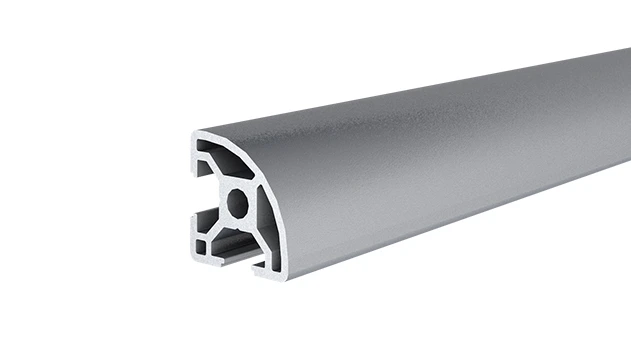
3030R is a 3.00 x 3.00CM fractional 30 series square extrusion T-slot profile with four open T-slots, two side with 3.00cm face, the other side with round face. The profile has align-a-grooves to assist in aligning connecting profiles.
Walk into any modern warehouse, and you'll notice a silent revolution happening—one that's all about efficiency, adaptability, and making the most of every square inch. From small e-commerce fulfillment centers to large-scale manufacturing hubs, the pressure to move goods faster, store more with less space, and adapt to changing demands has never been higher. At the heart of this transformation? Smart, flexible infrastructure. And if there's one component that's quietly become the unsung hero of warehousing logistics racks, it's the 3030r EU Standard Aluminum Profile.
You might be thinking, "It's just a metal bar—how much difference can it really make?" But that's the beauty of it: the 3030r isn't just any metal bar. It's a precision-engineered, modular building block that turns ordinary racks into dynamic, future-ready systems. In this article, we'll dive into what makes this aluminum profile so special, how it solves real-world warehousing headaches, and why it's becoming the go-to choice for businesses that refuse to be stuck with rigid, one-size-fits-all storage solutions. We'll even touch on how it pairs with essential accessories like roller track and caster wheels to create systems that grow with your needs. Let's start by understanding what exactly the 3030r EU Standard Aluminum Profile is—and why it matters.
What Is the 3030r EU Standard Aluminum Profile, Anyway?
First things first: let's break down the name. "EU Standard" tells us it meets strict European industrial guidelines for quality, safety, and performance—think corrosion resistance, load-bearing capacity, and dimensional accuracy. "Aluminum Profile" refers to its shape: it's an extruded aluminum product, meaning it's formed by pushing molten aluminum through a die to create a consistent cross-section. And "3030r"? That's the fun part. The "3030" typically denotes its dimensions—30mm by 30mm, a sweet spot for balancing strength and versatility. The "r" often stands for "rounded" or "reinforced," hinting at design tweaks (like rounded edges for safety or reinforced walls for extra durability) that set it apart from basic 30x30 profiles.
But here's the key: this isn't just a static piece of metal. The 3030r is designed to be modular. Picture a set of building blocks you played with as a kid—only these blocks are industrial-grade, can hold hundreds of pounds, and connect with precision. Its T-slot design (those grooves running along its length) lets you attach brackets, panels, shelves, and even moving parts like roller track without welding or drilling. That means no more waiting for a contractor to modify your racks when your inventory changes. With the right aluminum profile accessories, you can reconfigure a 3030r-based rack in hours, not days.
Why Warehouses Are Ditching Old Racks for 3030r Systems
Let's talk about the problems warehouses face daily. Maybe you've experienced this: You invest in a heavy-duty steel rack system, only to realize six months later that you need to add a shelf at a different height… but the holes are pre-drilled, so you're stuck. Or you expand your product line, and suddenly your racks can't handle the weight of the new, bulkier items. Or worst of all, you move to a smaller facility, and your old racks are too big to fit—so you have to sell them at a loss and buy new ones. Sound familiar?
The 3030r solves these issues by being adaptable . Unlike fixed steel racks, which are built for a single purpose, 3030r-based systems are designed to evolve. Need to add a shelf? Slide a bracket into the T-slot and tighten a bolt. Want to convert a static rack into a mobile cart? Swap out the fixed feet for caster wheels (more on that later). Need to disassemble and rebuild in a new location? The lightweight aluminum makes it easy to transport, and the modular joints mean no parts get damaged in the process.
But adaptability isn't the only win. Aluminum is naturally corrosion-resistant, so even in damp warehouses or facilities near the coast, you won't have to worry about rust weakening your racks over time. And while it's lightweight (about 1/3 the weight of steel), it's surprisingly strong. A single 3030r profile can support up to 200 kg per linear meter, depending on the setup—more than enough for most warehousing needs, from small parts bins to heavy cartons.

Key Features of the 3030r: Why It Stands Out
1. Lightweight Yet Shockingly Strong
Aluminum has a strength-to-weight ratio that steel can only dream of. A 3030r profile weighs roughly 1.5 kg per meter—light enough for two people to carry a 2-meter section without straining. But don't let the weight fool you: its extruded design (think of the internal "webs" or ribs you'd see in a cross-section) distributes weight evenly, so it can handle heavy loads without bending or warping. This makes installation a breeze—no need for cranes or heavy machinery—and reduces the strain on your warehouse floor, too.
2. T-Slot Design: The Secret to Modularity
If the 3030r had a superpower, it would be its T-slot grooves. These longitudinal slots run the length of the profile, allowing you to attach almost any accessory without drilling new holes. Need a shelf? Slide a bracket into the slot and secure it with a T-bolt and nut. Want to add a roller track for sliding bins? Use a specialized connector that locks into the T-slot. Even tools like workbenches or label holders can be attached in minutes. This flexibility means your racks aren't just storage—they're blank canvases.
3. Corrosion Resistance: Built to Last
Warehouses are tough environments. Humidity, spills, and even chemical exposure can take a toll on metal. But aluminum forms a natural oxide layer that resists rust and corrosion. For extra protection, many 3030r profiles come with anodized or powder-coated finishes, making them ideal for food processing facilities, pharmaceutical warehouses, or coastal areas where salt air is a concern. Unlike steel, you won't have to repaint or replace rusted sections every few years—this stuff is built to outlast your business's growth spurts.
4. Safety First: Rounded Edges and Precision Engineering
Warehouse accidents often happen due to sharp edges or unstable structures. The 3030r addresses this with rounded corners (remember that "r" in the name?) that reduce the risk of cuts or scrapes when workers bump into racks. Plus, EU standards ensure tight tolerances—each profile is manufactured to within 0.1mm of its specified dimensions. That means when you connect two 3030r pieces with a bracket, they fit together snugly, no wobbly joints or uneven shelves. Stability = safety, and safety = peace of mind.
How 3030r Enhances Warehousing Logistics Racks: Real-World Benefits
Enough about features—let's talk about results. How does the 3030r actually make warehouses better? Let's break it down into four key areas where it delivers tangible value.
Space Optimization: Making Every Inch Count
Warehouse space is expensive. Wasted vertical space or clunky racks that take up too much floor area can eat into profits. The 3030r's slim 30x30mm profile means you can build taller racks without sacrificing stability, maximizing vertical storage. Its modularity also lets you design racks around odd-shaped items—think of a rack that narrows at the top to fit under low ceilings or bends around a support column. And because it's lightweight, you can add mezzanine levels or overhead racks without overloading your building's structure.
Take, for example, a small electronics warehouse that needed to store both tiny components (resistors, capacitors) and larger items (circuit boards, power supplies). With 3030r, they built a hybrid rack: lower shelves with roller track for easy access to heavy circuit boards, and upper shelves with small bins (attached via T-slot brackets) for components. The result? They increased storage capacity by 35% in the same footprint.
Speed and Efficiency: From Static to Dynamic
In warehousing, time is money. The faster you can pick, pack, and ship, the more orders you can handle. The 3030r excels here, especially when paired with roller track. Roller track—those grooved rails with small wheels—turns static shelves into gravity-fed conveyors. Attach roller track to a 3030r frame, angle it slightly, and boxes or bins slide down to the picking end automatically. No more reaching, bending, or walking back and forth—items come to you.
One online retailer we worked with used this setup for their "fast-moving" products. They built a 3030r rack with 3-row, 3-floor material racks (sound familiar?) and added yellow plastic roller track guide rails. Overnight, their pickers cut down on walking time by 20%, and order accuracy improved because items were always at the front of the shelf. All thanks to the 3030r's ability to support the roller track system with minimal effort.
Adaptability: Grow Without Starting Over
Seasonal spikes, new product lines, or sudden growth—warehouses have to handle it all. With traditional steel racks, scaling up means buying new racks or hiring welders to modify existing ones. With 3030r, you just add more profiles. Need to extend a rack by 2 meters? Buy a new 2m section, connect it with a corner bracket, and you're done. Want to convert a static rack into a mobile cart for cross-docking? Swap the fixed feet for caster wheels (we'll circle back to these!). It's like having a rack system that can read your mind—and your business plan.
Ergonomics: Happier, Healthier Workers
A rack system that's hard to use isn't just inefficient—it's a recipe for worker fatigue and injuries. The 3030r lets you design racks around human needs. For example, build workbenches at waist height (using 3030r legs with adjustable feet) to reduce bending. Add caster wheels to small racks so workers can roll heavy loads instead of lifting them. Or angle shelves forward (using adjustable brackets) to make items easier to see and reach. When workers are comfortable, they're faster, more accurate, and less likely to get hurt. It's a win-win.
Pairing 3030r with Accessories: The Perfect Team
The 3030r is great on its own, but it truly shines when paired with the right accessories. Let's look at two must-have add-ons that take your racks to the next level: roller track and caster wheels.
Roller Track: Turn Racks into Conveyors
Roller track is exactly what it sounds like: a rail with small, free-spinning wheels that let items glide smoothly. When attached to a 3030r rack, it transforms static storage into a mini-conveyor system. Imagine a shelf where, as you take a box from the front, the next box slides forward automatically. That's roller track in action. It's perfect for first-in, first-out (FIFO) inventory systems, where you want the oldest items to be picked first.
The 3030r's T-slot makes installing roller track a cinch. Use specialized brackets (like roller track placon mounts) to attach the track to the profile. Choose from plastic (yellow or grey) or aluminum guide rails, depending on your load and environment. For heavy items, go with steel wheels; for lighter goods, plastic works great. And since the 3030r is modular, you can add or remove roller track sections as your needs change—no permanent modifications required.
Caster Wheels: Racks That Move When You Do
Static racks are great until you need to rearrange your warehouse layout. Enter caster wheels. Attach a set of heavy-duty caster wheels to the bottom of a 3030r frame, and suddenly your rack becomes a mobile cart. Need to move inventory from receiving to shipping? Roll the cart instead of carrying boxes. Hosting a seasonal sale and need extra display space? Wheel a rack to the front of the warehouse. Even better, many caster wheels come with brakes, so you can lock the cart in place when it's not moving.
The 3030r's lightweight design makes this possible. A 2-meter rack with shelves might weigh 50 kg—add four caster wheels, and one person can move it easily. Just make sure to choose casters rated for your load (most standard caster wheels handle 100-200 kg each) and opt for swivel casters for maximum maneuverability. It's like giving your racks a pair of legs.
3030r vs. Other Profiles: How Does It Compare?
You might be wondering: "Why 3030r? There are other aluminum profiles out there, like 2020 or 4040." Great question. Let's compare the 3030r to two common alternatives to see where it fits best.
| Profile Type | Dimensions (mm) | Typical Load Capacity (per linear meter) | Best For | Key Trade-offs |
|---|---|---|---|---|
| 3030r EU Standard | 30x30 | 150-200 kg | Medium-duty racks, workbenches, mobile carts, roller track systems | More versatile than 2020, lighter than 4040—ideal for most general warehousing needs |
| 2020 EU Standard | 20x20 | 50-100 kg | Light-duty shelving, small parts storage, temporary displays | Cheaper and lighter, but too flimsy for heavy loads or tall racks |
| 4040 EU Standard | 40x40 | 250-350 kg | Heavy-duty storage, industrial machinery frames, mezzanines | Stronger, but heavier and bulkier—overkill for most small to mid-sized warehouses |
As you can see, the 3030r hits the sweet spot. It's strong enough for most warehousing tasks (think pallets, cartons, or tools) but not so heavy that it becomes hard to work with. It's also widely available, so finding aluminum profile accessories (brackets, connectors, etc.) is easy—no waiting for specialty parts.
Real-World Success Stories: 3030r in Action
Still not convinced? Let's look at two businesses that switched to 3030r and never looked back.
Case Study 1: E-Commerce Fulfillment Center
A mid-sized e-commerce company was struggling with seasonal spikes. Every holiday season, they'd rent extra steel racks to handle increased inventory, then pay to store them for the rest of the year. It was costly and inefficient. They switched to 3030r-based racks with roller track and caster wheels. Now, during peak season, they build extra racks in a day (no tools beyond a hex key!). After the season, they disassemble the racks and store the profiles (which take up minimal space). They've cut storage costs by 40% and can now handle 30% more orders during busy times.
Case Study 2: Automotive Parts Warehouse
An automotive parts distributor needed racks that could handle both small components (screws, washers) and heavy parts (brake pads, alternators). Their old steel racks had fixed shelves, so they often had empty space above small bins. With 3030r, they built custom racks: lower shelves with roller track for heavy parts (using steel wheel roller track) and upper shelves with adjustable bins (attached via T-slot brackets) for small components. The result? They doubled their storage density and reduced picking time by 25% because workers no longer had to search through disorganized shelves.
The Future of Warehousing: Why 3030r Will Only Grow in Popularity
Warehousing is evolving. Automation, AI-driven inventory management, and on-demand logistics are becoming the norm. And as warehouses get smarter, their infrastructure needs to keep up. The 3030r is perfectly positioned for this future because it's… well, future-proof .
Think about it: Automated systems (like robots that pick items) need racks with precise dimensions and stable surfaces. The 3030r's EU-standard tolerances ensure robots can navigate without errors. Modular systems allow warehouses to add sensors, barcode scanners, or IoT devices (like weight sensors) by attaching them to the T-slots. And as sustainability becomes a priority, aluminum's recyclability (it can be melted down and reused indefinitely) makes the 3030r a greener choice than steel or plastic.
Plus, with more businesses embracing "just-in-time" inventory and flexible supply chains, the need for adaptable storage will only grow. The 3030r isn't just a product—it's a mindset: "We don't know what tomorrow will bring, but our racks can handle it."
Final Thoughts: Is the 3030r Right for Your Warehouse?
At the end of the day, the 3030r EU Standard Aluminum Profile isn't a magic bullet—but it's pretty close. It solves the three biggest pain points in warehousing: inflexibility, inefficiency, and wasted space. Whether you're running a small workshop or a large distribution center, its modularity, strength, and adaptability make it a smart investment.
So, should you switch? If you're tired of racks that can't keep up with your business, if you want to reduce installation time, or if you need a system that grows with you—yes. Start small: build a single mobile cart with 3030r and caster wheels, or add a roller track section to an existing rack. See how it works. Chances are, you'll wonder how you ever managed without it.
In the world of warehousing, the difference between good and great often comes down to the details. And the 3030r? It's a detail that makes all the difference.