- Company Articles
- Industry articles
- Industry standards
- How 4040C EU Standard Aluminum Profile Meets EU EN Standards: Compliance Guide

How 4040C EU Standard Aluminum Profile Meets EU EN Standards: Compliance Guide
Related Product
4040C EU Standard Aluminum Profile
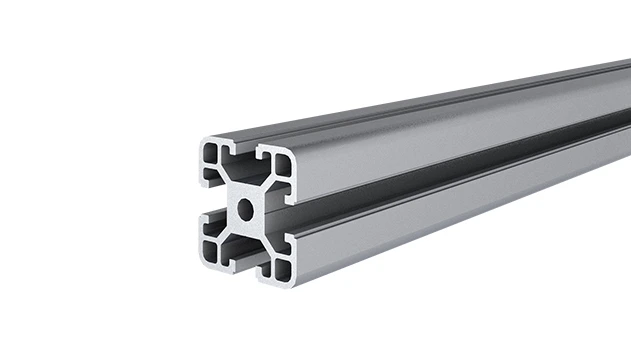
4040C is a 4.00x4.00 CM fractional 40 series square extrusion T-slot profile with four open T-slots, each side with 4.00cm face. The profile has align-a-grooves to assist in aligning connecting profiles.
For manufacturers and engineers navigating the complex landscape of European industrial standards, few components demand as much attention to detail as aluminum profiles. These versatile building blocks form the backbone of everything from factory workbenches to automated production lines, and their compliance with EU EN standards isn't just a box to check—it's a promise of safety, durability, and interoperability. Among the most widely used profiles in the EU market, the 4040C EU Standard Aluminum Profile stands out as a benchmark of compliance. But what exactly makes it tick? How does it consistently meet the rigorous requirements of EU EN norms? In this guide, we'll pull back the curtain on the 4040C, exploring its design, materials, testing, and real-world applications to show why it's trusted by suppliers and manufacturers across the continent.
Understanding EU EN Standards for Aluminum Profiles
Before diving into the specifics of the 4040C, let's clarify what "EU EN standards" actually entail. These are harmonized European norms developed by the European Committee for Standardization (CEN) to ensure products meet common safety, performance, and quality criteria across member states. For aluminum profiles, the key standards include:
- EN 755 : Covers mechanical properties of wrought aluminum and aluminum alloys, specifying requirements for tensile strength, yield strength, and elongation.
- EN 12020-2 : Focuses on the dimensions and tolerances of extruded aluminum profiles, ensuring consistency in size and shape for seamless integration with accessories.
- EN 10025 : While primarily for steel, parts of this standard inform the testing of metallic components used in conjunction with aluminum profiles, such as connectors and fixings.
Compliance with these standards isn't optional. For a profile to be sold in the EU, it must undergo rigorous testing and certification, often involving third-party notified bodies. This process ensures that the profile can withstand the demands of industrial use—whether it's supporting heavy machinery on a factory floor or maintaining structural integrity in high-stress environments.
The 4040C EU Standard Aluminum Profile: Design and Dimensions
At first glance, the 4040C might seem like just another aluminum extrusion profile—a square tube with T-slots for accessories. But its design is a masterclass in balancing form and function to meet EU standards. Let's break down its core features:
1. Dimensions and Tolerances
True to its name, the 4040C has a nominal cross-section of 40mm x 40mm, with wall thicknesses typically ranging from 1.5mm to 3mm depending on the application. What sets it apart, however, is its adherence to EN 12020-2's strict tolerance limits. The width and height of the profile deviate by no more than ±0.3mm from the nominal size, and the straightness tolerance is held to 0.5mm per meter—critical for ensuring that when you order a 4040C from an aluminum profile supplier, it will fit perfectly with 4040C-compatible accessories, no matter where in Europe it's manufactured.
2. Material Composition
The 4040C is almost universally extruded from 6063-T5 aluminum alloy, a choice dictated by EN 755. This alloy, composed primarily of aluminum, magnesium, and silicon, offers an ideal blend of strength, corrosion resistance, and extrudability. The "T5" temper—achieved through artificial aging—further enhances its mechanical properties, making it suitable for load-bearing applications without sacrificing workability. For suppliers, using 6063-T5 isn't just a preference; it's a compliance requirement, as EN 755 explicitly lists this alloy as acceptable for structural profiles.
3. T-Slot Design and Compatibility
The T-slots running along the 4040C's length are more than just a convenience—they're engineered for compatibility with aluminum profile accessories. The slots typically measure 8mm or 10mm in width, allowing for easy insertion of bolts, nuts, and connectors. This standardized design ensures that accessories like 4040 aluminum profile end caps, angle brackets, and panel mounts from different suppliers will work seamlessly with the 4040C, a key requirement for modular systems common in EU manufacturing.

Mechanical Properties: Meeting EN 755's Rigorous Demands
EU EN 755 doesn't just set guidelines—it sets hard limits. For the 4040C to earn compliance, its mechanical properties must meet or exceed specific thresholds. Let's compare its typical performance to EN 755 requirements:
| Property | EN 755 Minimum Requirement | 4040C (6063-T5) Typical Value | Compliance Status |
|---|---|---|---|
| Tensile Strength (MPa) | 160 MPa | 180–200 MPa | Exceeds |
| Yield Strength (MPa) | 110 MPa | 150–170 MPa | Exceeds |
| Elongation (%) | 8% | 10–12% | Exceeds |
| Hardness (HB) | 50 HB | 60–70 HB | Exceeds |
These numbers aren't just impressive—they're essential. A tensile strength of 180 MPa means the 4040C can withstand forces up to 180 million Pascals before breaking, making it suitable for heavy-duty applications like material racks and assembly line frames. The higher elongation percentage also ensures the profile can bend slightly under stress without fracturing, a critical safety feature in dynamic environments.
Testing and Certification: The Path to CE Marking
Compliance doesn't happen by accident. For an aluminum extrusion profile like the 4040C to bear the CE mark—a legal requirement for sale in the EU—it must undergo a battery of tests, often overseen by a notified body. Here's a glimpse into the process:
1. Dimensional Testing
Every batch of 4040C profiles undergoes dimensional checks using calibrated tools like micrometers and coordinate measuring machines (CMMs). Inspectors verify that cross-sectional dimensions, wall thickness, and straightness align with EN 12020-2 tolerances. Even minor deviations—like a 0.4mm variance in width—can result in a batch being rejected.
2. Mechanical Testing
Tensile tests are performed on sample coupons cut from extruded profiles. These tests measure how much force the material can withstand before breaking (tensile strength) and how much it stretches (elongation). For the 4040C, suppliers often test beyond EN 755 requirements, aiming for a safety margin of 10–15% to account for real-world stressors like temperature fluctuations and vibration.
3. Corrosion Resistance
EU standards also mandate resistance to corrosion, especially in industrial environments where profiles may be exposed to oils, chemicals, or moisture. The 4040C typically undergoes anodizing—a process that creates a protective oxide layer on its surface. EN 12373-6 specifies minimum anodizing thickness (usually 10–20 μm for architectural profiles), and salt spray tests (per EN ISO 9227) ensure the finish resists pitting and peeling for years.
4. Traceability and Documentation
Compliance isn't just about the product—it's about paperwork. Reputable aluminum profile suppliers maintain detailed records of each batch, including alloy composition certificates, test results, and extrusion parameters. This traceability is critical for audits, as EU authorities may request documentation to verify compliance years after a profile was manufactured.
Aluminum Profile Accessories: The Unsung Heroes of Compliance
A profile is only as good as the accessories it works with. For the 4040C, aluminum profile accessories like end caps, connectors, and fixings must also meet EU standards to ensure the entire system is compliant. Let's spotlight two key accessories:
1. 4040 Aluminum Profile End Cap
At first glance, a 4040 aluminum profile end cap might seem trivial—a simple plastic or aluminum cap to cover the profile's cut end. But EU standards dictate even small details here. The end cap must fit snugly to prevent debris from entering the profile (a hazard in cleanrooms) and must be flame-retardant if used in environments with fire safety requirements (per EN 13501-1). Reputable suppliers often use polyamide (PA6) for plastic end caps, a material that meets EN 71-3 standards for low toxicity, ensuring it's safe for workers who may handle the profiles regularly.
2. Aluminum Profile Fixings
Aluminum profile fixings—such as T-bolts, flange nuts, and angle brackets—are the glue that holds modular systems together. EN 12020-2 and EN 15048 (for fasteners) require these fixings to have specific tensile strengths and corrosion resistance. For example, a M8 T-bolt used with the 4040C must have a minimum tensile strength of 400 MPa, while stainless steel fixings must meet EN 10088-1 for corrosion resistance. Suppliers often pair 4040C profiles with fixings from the same alloy family to avoid galvanic corrosion, a common pitfall when mixing metals.
4040C vs. Other EU Standard Profiles: What Sets It Apart?
The EU market offers a range of 40x40mm profiles, including the 4040A, 4040B, and 4040D. How does the 4040C stack up? Let's compare key compliance-focused features:
| Profile Type | Alloy | Tensile Strength (MPa) | T-Slot Compatibility | EN 755 Compliance |
|---|---|---|---|---|
| 4040C EU Standard | 6063-T5 | 180–200 | 8mm/10mm slots (universal) | Full compliance |
| 4040A EU Standard | 6005A-T6 | 220–240 | 10mm slots (proprietary) | Full compliance |
| 4040B EU Standard | 6082-T6 | 260–280 | 12mm slots (limited compatibility) | Full compliance |
The 4040C's advantage lies in its balance. While the 4040A and 4040B offer higher tensile strength, their proprietary T-slot designs limit accessory compatibility, forcing manufacturers to source components from a single supplier. The 4040C, with its universal 8mm/10mm slots, allows mixing and matching of aluminum profile accessories from multiple suppliers, a flexibility highly valued in EU markets where supply chain diversity is often a priority. Additionally, its 6063-T5 alloy is easier to extrude than the 6082-T6 used in the 4040B, making the 4040C more cost-effective for high-volume production without sacrificing compliance.
Real-World Applications: How 4040C Compliance Drives Industry
Compliance isn't just about passing tests—it's about enabling innovation. The 4040C's adherence to EU EN standards has made it a staple in industries where safety and reliability are non-negotiable:
1. Automotive Manufacturing
EU automotive plants rely on modular workbenches and material racks built from 4040C profiles. These systems must withstand heavy loads (e.g., engine components) and frequent reconfiguration, and EN compliance ensures they meet strict safety standards for worker protection. For example, a material rack constructed with 4040C profiles and aluminum profile fixings is guaranteed to support up to 500kg per shelf without buckling, a critical specification in ISO 14122-compliant factories.
2. Pharmaceutical Production
In pharmaceutical cleanrooms, where contamination control is paramount, the 4040C's anodized surface (compliant with EN 12373-6) resists bacterial growth and is easy to sanitize. Aluminum profile accessories like smooth-surface end caps and non-porous connectors further reduce the risk of particle accumulation, helping manufacturers meet EU GMP (Good Manufacturing Practice) guidelines.
3. Renewable Energy
Solar panel assembly lines and wind turbine maintenance platforms often use 4040C profiles. Here, compliance with EN 755's corrosion resistance standards is critical, as these systems are frequently exposed to outdoor elements. The 4040C's ability to withstand salt spray (per EN ISO 9227) ensures longevity in coastal wind farms or solar installations near industrial zones.
Choosing the Right Aluminum Profile Supplier: A Compliance Checklist
Even the most well-designed profile is only as compliant as the supplier behind it. When sourcing 4040C profiles, manufacturers should ask potential suppliers the following questions:
- Do you have CE marking for the 4040C, and can you provide a Declaration of Conformity (DoC)? A reputable supplier will have a DoC issued by a notified body, listing compliance with EN 755 and EN 12020-2.
- What testing do you perform on each batch? Look for suppliers who conduct in-house tensile testing, dimensional checks, and corrosion resistance tests, with results available upon request.
- Can you provide material certificates for the 6063-T5 alloy? These certificates, often called "mill test reports," verify the alloy's composition and temper, ensuring it meets EN 755.
- Do your aluminum profile accessories (e.g., end caps, fixings) also comply with EU standards? Non-compliant accessories can compromise the entire system's safety and performance.
By prioritizing suppliers who can answer these questions confidently, manufacturers avoid the risk of non-compliant profiles entering their supply chain—a mistake that could lead to product recalls, fines, or even legal liability.
Conclusion: The 4040C—More Than a Profile, a Compliance Partner
The 4040C EU Standard Aluminum Profile isn't just a piece of metal; it's a testament to the rigor of EU EN standards and the expertise of aluminum profile suppliers who bring it to life. From its 6063-T5 alloy composition to its precisely engineered T-slots, every aspect is designed to meet or exceed the demands of EN 755, EN 12020-2, and other critical norms. For manufacturers, choosing the 4040C isn't just about building better products—it's about building trust. Trust that the workbenches, racks, and systems they create will stand the test of time, keep workers safe, and comply with regulations across Europe.
As industries continue to evolve, the 4040C will undoubtedly evolve with them, adapting to new standards and new challenges. But one thing will remain constant: its role as a cornerstone of compliant, reliable aluminum profile systems in the EU and beyond.