- Company Articles
- Industry articles
- Industry standards
- How 4040C EU Standard Aluminum Profile Reduces Assembly Time in Manufacturing

How 4040C EU Standard Aluminum Profile Reduces Assembly Time in Manufacturing
Related Product
4040C EU Standard Aluminum Profile
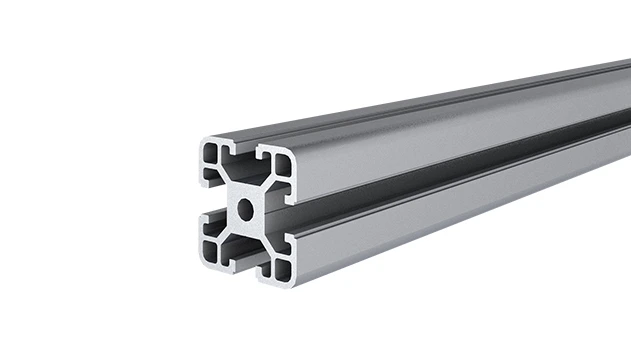
4040C is a 4.00x4.00 CM fractional 40 series square extrusion T-slot profile with four open T-slots, each side with 4.00cm face. The profile has align-a-grooves to assist in aligning connecting profiles.
In the fast-paced world of manufacturing, every minute on the assembly line counts. Delays in putting together workbenches, material racks, or production cells can ripple through the entire operation, slowing output, increasing labor costs, and even delaying order fulfillment. For years, manufacturers have grappled with traditional assembly methods—think welding steel frames, drilling countless holes for bolts, or custom-cutting wood—that are not only time-consuming but also rigid, making it hard to adapt to changing production needs. But what if there was a solution that could cut assembly time in half, simplify customization, and still deliver the strength and durability required for industrial use? Enter the 4040C EU Standard Aluminum Profile—a-sounding component that's quietly revolutionizing how factories build, adapt, and optimize their workspaces.
At first glance, the 4040C might look like just another metal bar. But its design—rooted in precision engineering and decades of manufacturing insight—addresses the core pain points of traditional assembly. From its T-slot grooves that eliminate the need for drilling to its lightweight yet robust aluminum composition, this profile (and the ecosystem of aluminum profile accessories that accompany it) is a masterclass in efficiency. In this article, we'll dive into why the 4040C has become a go-to choice for lean system adopters, how it streamlines everything from workbench construction to material rack assembly, and why manufacturers who switch to it never look back.
What Makes the 4040C EU Standard Aluminum Profile So Special?
To understand why the 4040C reduces assembly time, we first need to unpack what it is. The "4040" in its name refers to its cross-sectional dimensions: 40mm by 40mm, a size that strikes a perfect balance between strength and versatility for most industrial applications. The "C" denotes its specific groove design—a detail that might seem minor until you realize how it simplifies connections. Made from high-grade aluminum alloy (typically 6063-T5, known for its excellent strength-to-weight ratio), the 4040C is an aluminum extrusion profile, meaning it's shaped by forcing heated aluminum through a die to create its uniform, precision structure. This extrusion process ensures consistency across every piece, so you never have to worry about mismatched parts or ill-fitting components.
But the real magic lies in its T-slot design. Running along all four sides of the profile are long, narrow grooves (the "T-slots") that act as built-in channels for fasteners, connectors, and accessories. Unlike traditional steel profiles, which require pre-drilled holes or welding to attach components, the T-slots in the 4040C let you slide in bolts, nuts, or specialized connectors at any point along the length of the profile. Need to attach a shelf 12 inches from the top? No drilling required—just drop a T-slot nut into the groove, slide it to the right position, and tighten. This flexibility alone shaves hours off assembly time, especially when building complex structures like workbenches or multi-tiered material racks.
Fun fact: The EU standard designation ensures the 4040C meets strict quality and dimensional tolerances, so profiles from different suppliers (as long as they're EU-compliant) will work seamlessly together. This interoperability is a game-changer for manufacturers who need to source parts globally or replace components without worrying about compatibility issues.
Aluminum Profile Accessories: The Unsung Heroes of Fast Assembly
A profile is only as good as the accessories that bring it to life, and the 4040C's ecosystem of aluminum profile accessories is where the time savings truly multiply. These accessories—designed specifically for T-slot profiles—turn what would be a tedious, multi-step assembly process into a "click-and-go" experience. Let's break down the most essential ones and how they cut time:
- 90° Aluminum Profile Connectors: These L-shaped brackets slide into the T-slots of two perpendicular 4040C profiles, locking them together at a perfect right angle. No welding, no drilling—just insert the connector, tighten the bolt with an Allen key, and you're done. Compare that to traditional steel assembly, where you'd need to clamp the pieces, pre-drill holes, and bolt them together (or worse, weld and grind), and the time difference is stark.
- 4040 Aluminum Profile End Caps: These simple plastic or metal caps snap onto the ends of the profile, covering sharp edges and preventing debris from getting into the T-slots. In traditional setups, deburring sharp steel edges or painting cut ends to prevent rust adds extra steps. With end caps, it's a 5-second task.
- Gusset Plates (Gusset Alp 4040): For added stability in high-load applications (like heavy-duty workbenches), gusset plates reinforce corner joints. They slide into the T-slots and bolt into place, requiring just two bolts per plate—no measuring or aligning needed.
- T-Slot Nuts and Bolts: These specialized fasteners are designed to slide freely in the T-slots, allowing you to position components (like shelves, tool holders, or panels) anywhere along the profile. No more guessing where to drill holes—just slide the nut to the desired spot, insert the bolt, and tighten.
The beauty of these accessories is that they're universal. Whether you're building a small workbench or a large material rack, the same connectors and fasteners work across the entire 4040C system. This standardization eliminates the need to stock dozens of specialized parts, reducing inventory costs and decision fatigue during assembly.
Traditional Assembly vs. 4040C Aluminum Profile Assembly: A Time Comparison
| Assembly Task | Traditional Method (Steel/Wood) | 4040C Aluminum Profile Method | Time Saved |
|---|---|---|---|
| Building a basic workbench (4ft x 2ft) | 4–6 hours (cutting, drilling, welding/bolting, sanding, painting) | 1–1.5 hours (sliding connectors, tightening bolts, adding accessories) | Up to 75% |
| Assembling a 3-tier material rack | 6–8 hours (cutting uprights, drilling shelf holes, welding/bracing) | 2–3 hours (connecting uprights with 90° brackets, sliding shelf supports into T-slots) | Up to 62% |
| Modifying a workbench (adding a shelf) | 1–2 hours (measuring, drilling new holes, bolting shelf brackets) | 10–15 minutes (sliding T-slot nuts, attaching shelf supports, securing shelf) | Up to 90% |
| Disassembling and reconfiguring a structure | 2–3 hours (cutting welds, removing bolts, sorting salvageable parts) | 30–45 minutes (unscrewing connectors, repurposing profiles and accessories) | Up to 80% |

From Sketch to Setup: Building a Workbench with 4040C in Under 2 Hours
Let's put this into context with a real-world example: building a standard workbench, a staple in any manufacturing facility. A typical workbench needs a sturdy frame, a flat top, and maybe some lower shelves for tool storage. With traditional methods, this would involve:
- Cutting steel tubes or wooden boards to the desired length (time: 30–60 minutes, plus cleanup).
- Pre-drilling holes in the frame for shelves and the top (time: 45–60 minutes, with risk of misalignment).
- Welding or bolting the frame together (time: 1–2 hours, depending on skill level).
- Sanding rough edges and painting to prevent rust (time: 1–2 hours, plus drying time).
- Attaching the top and shelves (time: 30–45 minutes, with more drilling).
Total time: 4–6 hours, and that's if everything goes right. Now, let's walk through the same process with 4040C profiles and aluminum profile accessories:
- Measure and cut the profiles (if needed): Most suppliers sell 4040C profiles in standard lengths (1m, 2m, 3m), so if your workbench is 1.2m long, you can buy pre-cut pieces or quickly cut them with a miter saw (time: 10 minutes).
- Build the frame: Take four vertical 4040C profiles (legs) and connect them to two horizontal profiles at the top and bottom using 90° aluminum profile connectors. Each corner takes 2 connectors and 4 bolts—tighten with an Allen key (time: 20 minutes for 4 corners).
- Add cross-bracing: For stability, add horizontal cross-braces between the legs using straight connectors. Slide T-slot nuts into the legs, attach the braces, and tighten (time: 15 minutes).
- Attach the top: Lay an aluminum honeycomb panel (lightweight but strong) on top of the frame. Use T-slot nuts and bolts to secure it—no drilling needed (time: 10 minutes).
- Add shelves: Slide shelf brackets into the T-slots at the desired height, place a shelf board on top, and secure with bolts (time: 15 minutes for 2 shelves).
- Finish with end caps: Snap end caps onto any exposed profile ends (time: 5 minutes).
Total time: 1 hour and 15 minutes . That's a 75% reduction in assembly time, and the result is a workbench that's lighter than steel (easier to move if needed), resistant to rust, and fully customizable. Want to add a tool rail later? Just slide T-slot nuts into the top frame and bolt it on. Need to lower the shelves? Loosen the bolts, slide the brackets, and retighten. No re-drilling, no welding—just adaptability.
Real-world feedback: A small electronics manufacturer in Germany recently switched to 4040C workbenches for their assembly line. Their production manager noted, "We used to spend a full day building one custom workbench for new product lines. Now, two technicians can build three workbenches in a morning. And when we need to reconfigure for a new circuit board size? We just loosen the bolts, adjust the shelves, and we're back up and running in 20 minutes. It's like night and day."
4040C and Lean Systems: A Match Made in Manufacturing Heaven
The 4040C isn't just about speed—it's about aligning with the principles of lean manufacturing, a methodology focused on eliminating waste, optimizing flow, and continuous improvement. Lean systems thrive on flexibility: the ability to adapt to changing customer demands, reduce setup times, and minimize downtime. Traditional assembly methods, with their rigid, one-size-fits-all structures, are the antithesis of lean. The 4040C, however, is lean by design.
Consider one of the core pillars of lean: muda (waste). In manufacturing, waste includes unnecessary motion, waiting, and overproduction. With traditional assembly, if a workbench is no longer needed, it's often scrapped (waste of materials) or stored (waste of space). The 4040C, being modular and reusable, eliminates this waste. Disassemble a workbench, and the profiles and accessories can be repurposed into a material rack or a mobile cart. No scrap, no storage costs—just repurposing.
Another lean principle is jidoka (automation with a human touch), which emphasizes stopping production to fix issues. If a traditional workbench is too low for a new operator, you're stuck—modifying it would require cutting and rewelding. With the 4040C, you can adjust the height in minutes by swapping out leg lengths or adding extenders. This reduces downtime and keeps the line running smoothly.
Perhaps most importantly, the 4040C accelerates kaizen (continuous improvement). In lean systems, small, frequent improvements to processes are key. With the 4040C, employees can experiment with better workspace layouts—moving shelves, adding tool holders, or reconfiguring workbenches—without waiting for maintenance or outside contractors. This empowers teams to take ownership of their workspace, leading to more engaged employees and better ideas.
Beyond Workbenches: 4040C in Material Racks, Conveyors, and More
While workbenches are a common application, the 4040C's versatility shines across the factory floor. Let's explore a few more use cases where it reduces assembly time:
Material Racks
Material racks—used to store parts, components, or finished goods—are another area where traditional assembly drags. Building a 3-row, 3-floor rack with steel would involve cutting uprights, welding cross-beams, and installing shelves, a process that could take a full day. With 4040C profiles, the same rack can be assembled in 2–3 hours. Using multi-angle fixed aluminum joints, you can connect horizontal and vertical profiles in minutes, and adjustable shelf brackets let you set shelf heights on the fly. Plus, the lightweight nature of aluminum makes the rack easier to move (with casters, another accessory that bolts directly into the T-slots) if production lines shift.
Roller Tracks and Conveyors
Roller tracks—used to slide materials between workstations—are critical for maintaining flow in lean systems. Traditional roller tracks often require custom brackets and welding to mount to frames. With 4040C, roller track placon mounts (flat or high) slide into the T-slots, allowing you to attach roller tracks in seconds. Need to adjust the angle of the track? Loosen the bolts, tilt the mount, and retighten. No re-welding, no re-drilling.
Mobile Carts
Mobile carts for transporting parts between stations are essential for reducing operator motion (another lean waste). Building a cart with steel would involve welding a frame, attaching casters, and adding a platform—time-consuming and heavy. With 4040C, you can build a cart in under an hour: connect profiles for the frame, bolt on casters (using castor installation bases that slide into T-slots), and add a platform. The cart is lightweight enough for one person to move but strong enough to carry heavy loads.
The Long-Term Benefits: More Than Just Time Savings
While reducing assembly time is the most immediate benefit of the 4040C, its impact ripples outward, creating long-term value for manufacturers:
- Lower Labor Costs: Less time assembling means fewer labor hours spent on setup, freeing employees to focus on value-added tasks like production or quality control.
- Faster Prototyping: For manufacturers developing new products, the ability to quickly build and test workstations or production cells with 4040C accelerates time-to-market.
- Reduced Inventory: Instead of stocking custom-cut steel parts or specialized brackets, you can stock a few standard 4040C lengths and accessories, reducing storage space and costs.
- Durability: Aluminum is resistant to rust and corrosion, meaning 4040C structures last longer than steel (especially in humid or chemical-exposed environments) with minimal maintenance.
- Sustainability: Aluminum is fully recyclable, and the modular design reduces waste from scrapped structures. Many manufacturers also appreciate that the 4040C system aligns with their sustainability goals.
Why Choose 4040C Over Other Profiles?
You might be wondering: Are there other aluminum profiles out there? Yes—but the 4040C stands out for a few key reasons. First, its EU standard designation ensures strict quality control. Profiles are tested for dimensional accuracy, strength, and consistency, so you know every piece will fit. Second, the 40mm x 40mm size is the "goldilocks" of industrial profiles—not too small (like 2020 profiles, better for light-duty use) or too large (like 8080 profiles, overkill for most workbenches). It strikes the perfect balance of strength and versatility.
Third, the ecosystem of accessories is unmatched. From specialized connectors to custom brackets, suppliers have built a vast array of parts specifically for the 4040C, making it easy to find exactly what you need. And finally, cost: While aluminum profiles are often more expensive upfront than raw steel, the time saved in assembly and the reusability of the system mean the ROI is typically measured in months, not years.
Final Thoughts: The 4040C—Small Profile, Big Impact
In a manufacturing landscape where efficiency is everything, the 4040C EU Standard Aluminum Profile proves that sometimes the most impactful innovations are the ones that simplify the basics. By reimagining how we connect, build, and adapt structures, it turns assembly from a chore into a quick, painless process—one that empowers manufacturers to focus on what they do best: making great products.
Whether you're a small workshop looking to streamline workbench setup or a large factory aiming to optimize your lean system, the 4040C and its aluminum profile accessories offer a clear path to faster assembly, greater flexibility, and long-term savings. It's not just a profile—it's a mindset shift: away from rigid, time-consuming processes and toward a future where building and adapting your workspace is as easy as connecting a few brackets and tightening a few bolts.
So the next time you walk through a factory and see a sleek, modular workbench or a neatly organized material rack, take a closer look. Chances are, it's built with 4040C profiles—and the team using it is too busy meeting production goals to miss the old way of doing things.