- Company Articles
- Industry articles
- Industry standards
- How 4040E EU Standard Aluminum Profile Supports Continuous Improvement in Manufacturing

How 4040E EU Standard Aluminum Profile Supports Continuous Improvement in Manufacturing
Related Product
4040E EU Standard Aluminum Profile
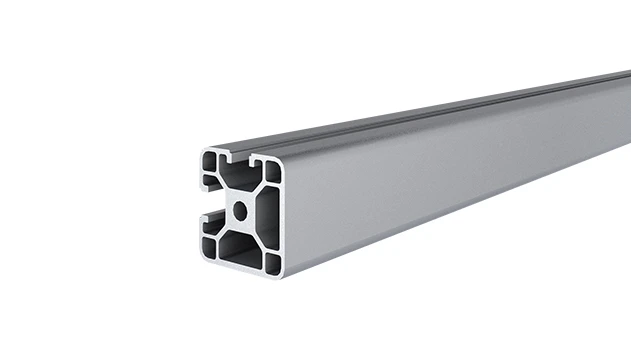
4040E is a 4.00x4.00 CM fractional 40 series square extrusion T-slot profile with two side open T-slots, two side with closed face, each side with 4.00cm face. The profile has align-a-grooves to assist in aligning connecting profiles.
How 4040E EU Standard Aluminum Profile Supports Continuous Improvement in Manufacturing
Introduction: The Need for Continuous Improvement in Modern Manufacturing
In today's fast-paced manufacturing landscape, standing still is the same as falling behind. Consumer demands shift overnight, production volumes fluctuate, and new technologies emerge that promise to revolutionize workflows. At the heart of staying competitive lies a commitment to continuous improvement—the relentless pursuit of efficiency, flexibility, and waste reduction. Yet, for many manufacturers, this pursuit is hindered by rigid, outdated infrastructure. Traditional workbenches, fixed material racks, and inflexible production lines were built for stability, not change. They resist adaptation, slow down innovation, and often become bottlenecks rather than enablers of progress.
Enter the 4040E EU Standard Aluminum Profile—a that's quietly transforming how factories, warehouses, and assembly lines operate. Far more than just a piece of metal, this aluminum profile is a building block for agility. It's designed to grow, change, and evolve alongside your business, making it a cornerstone of modern lean systems. In this article, we'll explore how the 4040E profile supports continuous improvement by enhancing flexibility, reducing waste, and empowering teams to create workspaces that adapt to their needs—today, tomorrow, and long into the future.
Understanding 4040E EU Standard Aluminum Profile: More Than Just Metal
Before diving into its impact on manufacturing, let's take a closer look at what makes the 4040E EU Standard Aluminum Profile unique. At first glance, it might seem like any other metal extrusion—straight, silver, and unassuming. But beneath its simple exterior lies a design philosophy centered on versatility. The "4040" refers to its dimensions: 40mm in width and 40mm in height, creating a square cross-section that balances strength and lightweight performance. The "E" denotes compliance with EU standards, ensuring consistent quality, safety, and compatibility across Europe and beyond.
What Sets 4040E Apart?
Unlike traditional steel or wooden structures, 4040E aluminum profiles are engineered for modularity. Their defining feature is the T-slots running along all four sides—long, narrow grooves that act as universal connection points. These slots allow for easy attachment of aluminum profile accessories, from brackets and hinges to shelves and wheels, without the need for welding, drilling, or specialized tools. Imagine being able to reconfigure a workbench in minutes, add a new shelf to a material rack with a few screws, or adjust the height of a flow rack with nothing more than a hex key. That's the flexibility 4040E brings to the table.
Key Features: Strength, Flexibility, and Compatibility
The 4040E profile isn't just flexible—it's also surprisingly strong. Made from high-grade aluminum alloy, it offers an impressive strength-to-weight ratio, meaning it can support heavy loads (often up to 200kg per linear meter, depending on the setup) while remaining lightweight enough to be maneuvered by a single person. This combination is critical in manufacturing, where equipment needs to be both sturdy and adaptable.
Compatibility is another standout feature. 4040E profiles are designed to work seamlessly with a wide range of aluminum profile accessories, from corner brackets and end caps to caster wheels and roller tracks. This interoperability means you're not locked into a single supplier or system; you can mix and match components to create custom solutions tailored to your specific needs. Whether you're building a workbench, a flow rack, or a full production line, the 4040E profile acts as a common language, ensuring all parts work together harmoniously.
The Role of 4040E in Lean Systems: Building a Foundation for Efficiency
Lean manufacturing—a methodology focused on minimizing waste while maximizing value—has become a cornerstone of modern production. At its core, lean is about identifying and eliminating "muda" (Japanese for waste) in all its forms: overproduction, waiting, transportation, defects, and more. But lean isn't just a set of principles; it's a mindset that requires tools and infrastructure capable of supporting continuous adaptation. This is where 4040E aluminum profile shines.
Modularity: Adapting to Changing Needs
One of the biggest sources of waste in manufacturing is inflexible infrastructure. A traditional steel workbench, for example, is built to a fixed height and size. If your team needs to adjust it to accommodate a taller operator or a larger component, you're often stuck with expensive modifications or even replacing the entire bench. With 4040E, modularity eliminates this waste. Since profiles are connected via T-slot accessories, you can easily disassemble, reconfigure, or expand structures as needed. Need to add a second shelf to a workbench? Simply slide in new brackets and a profile section. Want to raise the height of a flow rack to improve ergonomics? Swap out the legs for longer profiles. This adaptability means your infrastructure grows with your needs, reducing the waste of underutilized or obsolete equipment.
Reducing Waste: From Setup to Scaling
Setup time is another area where 4040E drives lean improvements. Traditional production lines often require hours or even days of downtime to reconfigure for new products or batch sizes. With 4040E-based systems, changeovers become quick and efficient. For example, a modular assembly line built with 4040E profiles can be repositioned, extended, or modified in a fraction of the time, minimizing waiting and idle resources. This is especially valuable in high-mix, low-volume manufacturing, where flexibility is key to meeting diverse customer demands.
Scaling production is also simplified with 4040E. Instead of investing in entirely new systems when demand increases, you can expand existing structures by adding more profiles and accessories. This incremental scaling reduces the risk of overinvesting in capacity that may not be needed, aligning perfectly with lean's focus on "just-in-time" resource allocation. Whether you're doubling the size of a material rack or adding a new station to a production line, 4040E makes growth affordable and efficient.
Practical Applications: How 4040E Transforms Workspaces
Theory is important, but the true value of 4040E lies in its real-world applications. Let's explore how this profile is making a difference in three critical areas of manufacturing: workbenches, flow racks, and custom material handling solutions.
Workbenches: Ergonomic, Customizable, and Durable
The workbench is the heartbeat of any assembly line—a place where operators spend hours each day, assembling products, inspecting parts, or packaging goods. A poorly designed workbench can lead to fatigue, errors, and reduced productivity. 4040E profiles are changing this by enabling the creation of workbenches that are ergonomic, customizable, and built to last.
Ergonomics is a top priority. With 4040E, workbench height can be easily adjusted to match the operator's stature, reducing strain on the back, shoulders, and wrists. T-slots allow for the integration of accessories like tool holders, monitor arms, and overhead lighting, keeping essential items within arm's reach and reducing unnecessary movement. For example, a electronics manufacturer might add a shelf above the workbench to hold component bins, or attach a keyboard tray that slides under the surface when not in use. The result? A workspace that adapts to the operator, not the other way around.
Durability is equally important. Unlike wooden workbenches that warp or steel ones that rust, 4040E aluminum workbenches are resistant to corrosion, impact, and wear. They can withstand spills, heavy tool use, and the daily rigors of manufacturing, ensuring they remain functional for years—even decades—with minimal maintenance. And when they do need updating, they're easy to repair or upgrade, extending their lifespan even further.
Flow Racks: Streamlining Material Handling
Material handling is a major source of waste in many factories. Time spent searching for parts, moving materials between stations, or waiting for supplies to arrive can add up quickly, eating into productivity. Flow racks—gravity-fed storage systems that allow materials to slide from the back to the front as items are removed—are a proven solution for streamlining this process. And 4040E profiles are ideal for building them.
A typical flow rack built with 4040E consists of vertical supports, horizontal rails, and roller tracks (often made from aluminum or plastic) that guide materials forward. The modular design allows for easy adjustment of shelf heights, number of lanes, and depth, ensuring the rack fits the specific dimensions of your materials—whether you're storing small electronic components or large automotive parts. For example, a food packaging plant might use a 4040E flow rack with adjustable lanes to accommodate different-sized boxes, while an aerospace manufacturer could build a heavy-duty version to hold large metal components.
The benefits of 4040E flow racks are clear: faster access to materials, reduced walking time for operators, and improved inventory visibility (since items are always presented at the front). This not only cuts down on waste but also reduces the risk of errors, as the right parts are always within reach.
Aluminum Profile Accessories: The Unsung Heroes of Customization
While the 4040E profile is the star of the show, aluminum profile accessories are the supporting cast that brings everything together. From simple brackets to complex roller track systems, these accessories turn basic profiles into fully functional tools. Let's take a closer look at a few key accessories and how they enhance 4040E systems:
- Corner Brackets: These small, unassuming pieces connect profiles at 90-degree angles, forming the frame of workbenches, racks, and other structures. They're available in various designs, including fixed and swivel options, allowing for both rigid and adjustable connections.
- Caster Wheels: Adding caster wheels to a 4040E frame transforms static structures into mobile ones. This is invaluable for workbenches that need to be moved between stations or material racks that follow production lines.
- Roller Tracks: As mentioned earlier, roller tracks turn shelves into flow racks, enabling gravity-fed material movement. They're available in different materials (aluminum, plastic) and wheel types (steel, nylon) to suit various load requirements and environments (including ESD-safe options for electronics manufacturing).
- End Caps and Covers: These accessories protect the ends of profiles from damage, reduce sharp edges for safety, and give finished structures a clean, professional look.
The beauty of these accessories is their simplicity. Most can be installed without specialized tools, meaning operators and maintenance teams can make adjustments on the fly, without waiting for external contractors. This empowers frontline teams to take ownership of their workspaces, driving continuous improvement from the ground up.
Quantifying the Benefits: Why Manufacturers Choose 4040E
At this point, you might be wondering: Is 4040E worth the investment? Let's break down the benefits in concrete terms, from cost savings to productivity gains.
Cost-Effectiveness Over Time
It's true that 4040E profiles and accessories often have a higher upfront cost than traditional materials like wood or basic steel. However, their long-term value more than makes up for this. Unlike wooden structures that need replacement every few years or steel systems that require welding and painting, 4040E systems are built to last. They resist corrosion, don't warp or rot, and can be reconfigured repeatedly, eliminating the need for frequent replacements.
To put this into perspective, consider a manufacturer that replaces its wooden workbenches every 3 years at a cost of $500 each. A 4040E workbench might cost $800 upfront, but with proper maintenance, it can last 10+ years and be reconfigured 5+ times in that period. Over a decade, the wooden workbenches would cost $1,667 (5 replacements), while the 4040E bench would cost $800—saving $867, not counting the cost of downtime for replacements.
Sustainability: Aligning with Green Manufacturing Goals
Sustainability is no longer a buzzword in manufacturing—it's a business imperative. Consumers, regulators, and investors are increasingly demanding eco-friendly practices, and 4040E profiles support these goals in several ways. Aluminum is 100% recyclable, and recycling it requires just 5% of the energy needed to produce new aluminum. This means at the end of its lifespan, a 4040E profile can be melted down and reused, reducing waste and carbon footprint.
Additionally, the modular design of 4040E systems reduces material waste during production. Traditional construction often results in cutoffs and scrap, but 4040E profiles are sold in standard lengths (typically 2-6 meters) that can be cut to size with minimal waste. And since they're reconfigurable, there's no need to discard entire structures when needs change—simply repurpose the profiles into something new.
Improved Productivity and Employee Satisfaction
At the end of the day, manufacturing is about people. A workspace that's ergonomic, organized, and adaptable doesn't just improve efficiency—it also boosts employee morale. When operators have tools and systems that work for them, not against them, they're more engaged, less fatigued, and more likely to stay with the company. 4040E profiles enable this by putting control in the hands of workers. If a workbench is too low, they can adjust it. If a material rack is in the way, they can move it. This sense of ownership leads to a more positive work environment and, ultimately, better results.
Traditional vs. 4040E Solutions: A Comparative Look
To better understand the impact of 4040E, let's compare it to traditional manufacturing infrastructure in a side-by-side table:
| Feature | Traditional Infrastructure (Steel/Wood) | 4040E Aluminum Profile Systems |
|---|---|---|
| Flexibility | Fixed; difficult to reconfigure without welding/drilling | Highly modular; reconfigurable in minutes with basic tools |
| Strength-to-Weight Ratio | Heavy; strong but hard to maneuver | Lightweight; strong enough for most manufacturing loads |
| Setup Time | Long (hours/days); requires specialized labor | Short (minutes/hours); can be done by in-house teams |
| Cost Over Lifespan | Low upfront, high long-term (frequent replacements) | High upfront, low long-term (durable and reconfigurable) |
| Sustainability | Often not recyclable; high waste during replacement | 100% recyclable; minimal waste due to reusability |
| Customization | Limited; requires custom fabrication | Unlimited; mix-and-match accessories for unique solutions |
The table speaks for itself: 4040E systems outperform traditional infrastructure in nearly every category that matters for continuous improvement. They're not just a better choice—they're a necessary one for manufacturers looking to thrive in today's dynamic market.
Overcoming Challenges: Addressing Common Misconceptions
Despite its many benefits, some manufacturers remain hesitant to adopt 4040E profiles. Let's address a few common misconceptions and show why they're unfounded.
"Aluminum Isn't Strong Enough for Heavy-Duty Applications"
This is perhaps the most persistent myth. While it's true that aluminum is not as dense as steel, the high-grade alloys used in 4040E profiles are surprisingly strong. For most manufacturing applications—from workbenches to material racks—4040E provides more than enough load capacity. In cases where extreme strength is needed (e.g., supporting tons of weight), 4040E can be reinforced with steel inserts or paired with thicker profiles, offering the best of both worlds: aluminum's flexibility and steel's strength.
"It's Too Expensive Compared to Wood or Basic Steel"
As we saw earlier, the upfront cost of 4040E is higher, but the long-term savings are significant. When you factor in the cost of replacing wooden structures every few years, the downtime for reconfiguring steel systems, and the inability to adapt traditional infrastructure to new needs, 4040E quickly becomes the more cost-effective choice. Many manufacturers find that the investment pays for itself within 1-2 years through productivity gains and reduced waste.
"We Don't Have the Skills to Install or Maintain It"
This couldn't be further from the truth. 4040E systems are designed for simplicity. Most accessories attach with basic hand tools (hex keys, screwdrivers), and assembly is intuitive—think of it like building with an advanced set of Legos. Suppliers often provide detailed instructions and even video tutorials, and many offer training for in-house teams. In fact, operators often become proficient in making adjustments after just a few hours of practice, empowering them to take ownership of their workspaces.
Looking Ahead: 4040E and the Future of Manufacturing
As manufacturing continues to evolve—driven by Industry 4.0, automation, and the rise of smart factories—the need for flexible infrastructure will only grow. 4040E EU Standard Aluminum Profile is well-positioned to play a central role in this future. Its modular design makes it ideal for integrating with new technologies, from IoT sensors that monitor production flow to collaborative robots (cobots) that work alongside human operators.
Imagine a smart workbench built with 4040E profiles, equipped with sensors that track tool usage, alert operators to maintenance needs, and adjust lighting based on ambient conditions. Or a flow rack that automatically reconfigures itself using motorized brackets and 4040E profiles, adapting to real-time changes in production demand. These aren't science fiction—they're practical applications that 4040E's flexibility makes possible.
In the coming years, we can expect to see even more innovation in 4040E systems, from advanced accessories that enable seamless connectivity with automation tools to profiles made from recycled aluminum, further reducing environmental impact. As manufacturers continue to prioritize agility, sustainability, and efficiency, 4040E will remain a key enabler of continuous improvement.
Conclusion: Building a Culture of Continuous Improvement with 4040E
Continuous improvement isn't just about processes—it's about people, tools, and the infrastructure that supports them. The 4040E EU Standard Aluminum Profile is more than a tool; it's a catalyst for change. By providing the flexibility to adapt, the strength to perform, and the modularity to grow, it empowers manufacturers to build workspaces that evolve with their needs, reduce waste, and drive efficiency.
Whether you're a small workshop looking to upgrade your workbenches or a large factory building a new production line, 4040E offers a path forward. It's a investment in your team, your processes, and your future—one that pays dividends in productivity, sustainability, and competitive advantage.
In the end, the true power of 4040E lies not in the metal itself, but in what it enables: a culture where continuous improvement isn't just a goal, but a daily reality. And in today's manufacturing landscape, that's the difference between falling behind and leading the way.