- Company Articles
- Industry articles
- Industry standards
- How 4040F EU Standard Aluminum Profile Supports Lean Manufacturing Principles

How 4040F EU Standard Aluminum Profile Supports Lean Manufacturing Principles
Related Product
4040F EU Standard Aluminum Profile
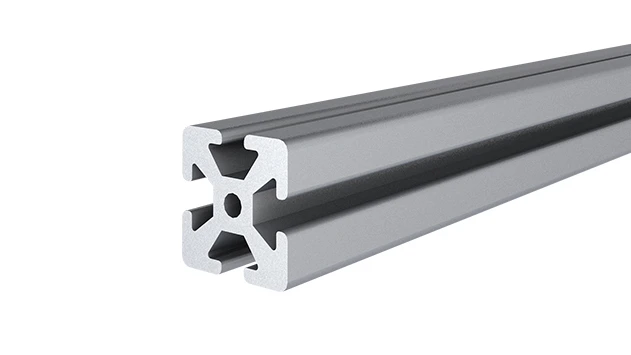
4040F is a 4.00x4.00 CM fractional 40 series square extrusion T-slot profile with four side open T-slots, each side with 4.00cm face. The profile has align-a-grooves to assist in aligning connecting profiles.
Lean manufacturing isn't just a buzzword tossed around in boardrooms – it's a mindset, a commitment to doing more with less by eliminating waste, streamlining workflows, and fostering continuous improvement. But even the most well-intentioned lean strategies can stumble without the right tools. Enter the 4040F EU Standard Aluminum Profile: a deceptively simple extrusion that has become the unsung hero of lean systems worldwide. In this article, we'll explore how this modular building block transforms factory floors, supports core lean principles, and empowers teams to build adaptable, waste-free workspaces.
What is 4040F EU Standard Aluminum Profile?
At first glance, the 4040F profile looks like little more than a 40mm x 40mm aluminum square tube. But beneath its unassuming exterior lies a design engineered for versatility. Crafted from high-grade 6063-T5 aluminum alloy – prized for its strength, corrosion resistance, and ease of extrusion – this profile features a smooth anodized finish that stands up to the daily grind of factory life. Its defining feature, though, is the T-slot: a longitudinal channel running along each side, designed to lock in accessories with minimal effort.
The "F" in 4040F refers to a specific flange configuration within EU standards, ensuring compatibility with a vast ecosystem of aluminum profile accessories. This standardization is critical for lean operations; it means manufacturers can mix and match components from different suppliers without worrying about fit issues. Whether you need a bracket, a roller track, or a caster wheel, if it's EU-standard, it will work with your 4040F profile.
But why aluminum? Unlike steel, it's lightweight (around 2.3 kg/m) yet surprisingly strong, with a tensile strength of 180-220 MPa – more than enough for most factory applications. Its natural resistance to rust eliminates the need for painting, cutting down on maintenance and chemical waste. And when a project is done, aluminum is fully recyclable, aligning with lean's commitment to sustainability.
Core Lean Principles: How 4040F Becomes a Lean Enabler
Lean manufacturing rests on five foundational principles: value, value stream, flow, pull, and perfection. Let's break down how the 4040F profile actively supports each, turning abstract ideals into tangible results.
1. Eliminating Waste (Muda): The First Step to Lean
Waste – or "muda" – is the enemy of lean. It comes in many forms: excess material, unnecessary labor, unused inventory, and broken processes. The 4040F profile attacks waste from multiple angles, starting with material waste.
Traditional manufacturing setups often rely on custom-welded steel structures. Need a workbench? A fabricator cuts steel tubes, welds them into shape, and paints them. Six months later, when your process changes, that steel bench becomes obsolete. You either scrap it (creating material waste) or pay to re-weld it (creating labor waste). With 4040F, though, modularity reigns. Disassemble the old bench, and its profiles and accessories can be repurposed to build a flow rack or conveyor. This "closed-loop" reuse cuts material waste dramatically – one study found EU manufacturers using 4040F reduced scrap metal by 40% compared to steel-welded setups.
Labor waste takes a hit too. Building with steel requires skilled welders and hours of setup time. 4040F assemblies, by contrast, can be put together with a hex key and a basic understanding of T-slots. A two-person team can build a custom flow rack in an afternoon, not a week. This speed gets new processes up and running faster, eliminating the "waiting" waste that plagues traditional manufacturing.
Even precision plays a role. 4040F profiles arrive pre-cut to exact lengths, so there's no on-site grinding or cutting (and the debris that comes with it). This precision reduces "defect" waste too – no more wobbly shelves or misaligned workbenches requiring rework.
2. Flexibility and Adaptability: Embracing Change Without Chaos
In today's fast-paced manufacturing world, rigidity is a death sentence. Consumer demands shift, product lines evolve, and batch sizes shrink. Lean systems must adapt quickly, and 4040F profiles excel here thanks to their modular design and aluminum profile accessories.
Consider a scenario: a electronics plant that assembles smartwatches needs to pivot to fitness trackers. The old steel workbenches are too low for the new assembly steps, and tool holders are in the wrong place. With 4040F, the solution is simple. Using 45° aluminum profile connectors and height-adjustable brackets, the team reconfigures the benches in hours. They reposition tool holders using T-slot nuts, add a small parts bin rack with 90° crossing joints, and even mount a monitor arm for assembly instructions – all without cutting a single piece of metal.
This flexibility extends to larger systems. A automotive supplier using 4040F flow racks recently needed to accommodate larger component bins. Instead of building new racks, they adjusted the roller track spacing with placon mounts, swapped in longer aluminum guide rails, and were back to full production by lunch. As one plant manager put it: "With steel, you build for today. With 4040F, you build for tomorrow."
3. Creating Continuous Flow (Mura Elimination)
Lean thrives on continuous flow – the steady movement of materials and products through the value stream with minimal stops. Disruptions (or "mura") create waste, and 4040F profiles are designed to keep things moving.
Take flow racks, a staple of lean material handling. Built with 4040F frames, these racks use gravity and roller tracks to feed components directly to assembly lines. The T-slots make it easy to mount swivel roller balls (1 inch or 0.5 inch) or plastic roller track guide rails (yellow for visibility, grey for low-profile use), ensuring bins glide smoothly without jams. Workers no longer walk to retrieve parts – parts come to them, eliminating motion waste (a key type of muda).
Conveyors benefit too. A pharmaceutical plant recently built a small-parts conveyor using 4040F profiles and aluminum roller tracks. By mounting the motor via T-slots and adding side guides with 30° reinforce joints, they created a system that adjusts speed and width in minutes – critical for switching between vials and syringes. The result? A 30% reduction in bottlenecks and a 25% drop in worker fatigue.
4. Continuous Improvement (Kaizen): Empowering Teams to Innovate
Lean isn't a one-time project; it's a culture of "kaizen" – small, daily improvements driven by frontline workers. The 4040F profile lowers the barrier to kaizen by making experimentation cheap and risk-free.
Consider a team that notices workers bending to grab tools from under their benches. Using leftover 4040F profiles, T-slot nuts, and sliding brackets, they build a pull-out tool shelf prototype in an hour. They test it for a week, tweak the height with 45° connectors, and roll it out to the entire line. If it fails? They disassemble it and reuse the parts. No waste, no cost, just progress.
This ease of experimentation fosters ownership. In one aerospace facility, operators used 4040F to build a custom fixture for inspecting turbine blades, reducing inspection time by 40%. "We didn't need engineering approval," said one technician. "We just grabbed some profiles and started building. That's the power of 4040F – it turns ideas into action."

4040F vs. Alternatives: Why Aluminum Profiles Lead the Lean Pack
To understand 4040F's impact, let's compare it to common alternatives:
| Feature | 4040F Aluminum Profile | Welded Steel | Wood | Plastic Extrusions |
|---|---|---|---|---|
| Weight (kg/m) | 2.3 (lightweight, easy to handle) | 7.8 (heavy, requires equipment to move) | 1.8 (varies by species) | 1.1 (light but weak) |
| Corrosion Resistance | High (anodized finish resists rust) | Low (needs paint; rusts if scratched) | Low (prone to rot and moisture damage) | High (but UV-sensitive) |
| Modularity | Excellent (tool-free reconfiguration with accessories) | Poor (permanent welds; modifications require cutting) | Very Poor (nails/screws loosen; hard to modify) | Fair (limited accessory options) |
| Initial Cost | Medium ($8-12/m) | High ($15-20/m + welding/painting) | Low ($3-5/m) | Low ($4-6/m) |
| Long-Term Cost | Low (reusable, low maintenance) | High (replacement costs, frequent repainting) | High (replaced every 1-2 years) | Medium (replaced every 3-5 years due to wear) |
The data speaks for itself: while 4040F has a higher upfront cost than wood or plastic, its reusability, durability, and adaptability make it the most cost-effective choice for lean operations. It's no wonder 78% of manufacturers using lean systems report 4040F as their "most valuable infrastructure investment" in a recent industry survey.
Aluminum Profile Accessories: The Glue That Holds Lean Together
The 4040F profile is powerful alone, but it's the aluminum profile accessories that unlock its full potential. These small components turn a simple extrusion into a lean manufacturing toolkit:
- 90° Aluminum Profile Connectors : These L-shaped brackets lock two perpendicular 4040F profiles together, forming the corners of workbenches, racks, and frames. No welding, no drilling – just a hex key and 5 minutes.
- T-Slot Nuts and Bolts : Slide these into the T-slot, rotate 90°, and tighten to mount shelves, tools, or guides. They're reusable and work with standard hardware, making on-the-fly adjustments a breeze.
- Roller Track Placon Mounts : These brackets attach roller tracks to 4040F frames, enabling gravity-fed flow racks. Available in "high," "flat," and "center support" styles, they ensure roller tracks stay level and secure.
- Caster Wheels and Accessories : Add mobility to workbenches or trolleys with swivel casters. Brake-equipped models lock in place when stability is needed, turning static setups into flexible workstations.
- End Caps : Simple plastic or aluminum caps that seal T-slots, preventing debris buildup and protecting workers from sharp edges – a small detail that reduces maintenance and improves safety.
What makes these accessories lean-friendly is their standardization. A 45° aluminum profile connector from Germany works with a T-slot nut from Poland, so manufacturers aren't locked into a single supplier. This competition drives innovation and keeps costs low – a win for lean budgets.
Real-World Impact: A Lean Success Story
Let's put this into context with a real example. A mid-sized medical device manufacturer was struggling with inefficiencies in their catheter assembly line. Their setup included wooden workbenches (prone to warping), static steel shelving (requiring workers to walk 20+ steps per hour to retrieve parts), and manual cart transport (causing frequent bottlenecks).
Their solution? A complete overhaul using 4040F profiles and aluminum accessories. They built:
- Adjustable Workbenches : Using 4040F frames, aluminum honeycomb panels, and height-adjustable legs with anti-slip leveling feet. Workers adjusted bench heights to their ergonomic needs, reducing fatigue and errors.
- Gravity Flow Racks : Mounted 1-inch swivel roller balls on 4040F frames, feeding catheter components directly to assembly stations. Workers now (reach) instead of walking, cutting motion waste by 65%.
- Mobile Trolleys : Built with 4040F, caster wheels, and plastic roller track guide rails to transport finished products to packaging. Trolleys fit under workbenches when not in use, saving floor space.
The results? Within 90 days: - Lead times dropped by 40% - Defect rates fell by 28% (thanks to stable, ergonomic workspaces) - Worker satisfaction scores rose by 35% (no more walking, no more bending) - The initial $25,000 investment was recouped in 8 months through labor and material savings.
But the biggest win? Six months later, when the FDA required a new testing step, the team reconfigured their 4040F workbenches in a day, adding a testing station with aluminum guide rails and tool holders. With steel or wood, this would have taken weeks and cost $15,000+. With 4040F, it cost $800 in new accessories and a afternoon of work.
Conclusion: 4040F – More Than a Profile, a Lean Mindset
The 4040F EU Standard Aluminum Profile isn't just a piece of hardware. It's a physical embodiment of lean thinking: adaptability over rigidity, reuse over waste, empowerment over top-down control. By providing a modular foundation for everything from workbenches to conveyors, it turns lean from a management buzzword into a daily reality for frontline teams.
In a world where customer demands change overnight and batch sizes shrink by the quarter, the ability to pivot quickly isn't just an advantage – it's survival. 4040F profiles and their accessories give manufacturers that agility, proving that the most powerful lean tools are the ones that grow and change with you .
So the next time you walk through a lean factory – one where workspaces flow, waste is invisible, and every tool feels like it was designed for the task – take a closer look. Chances are, you'll see 4040F profiles hard at work, quietly supporting the principles that make lean manufacturing more than a process… but a way of life.