- Company Articles
- Industry articles
- Industry standards
- How 4080A EU Standard Aluminum Profile Supports Lean Production Principles

How 4080A EU Standard Aluminum Profile Supports Lean Production Principles
Related Product
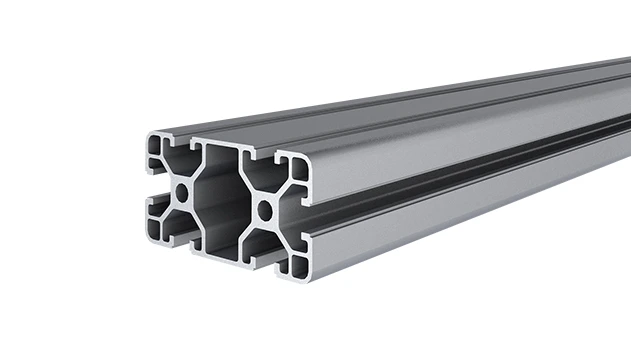
4080A EU Standard Aluminum Profile
4080A is a 4.00x8.00 CM fractional 40 series square extrusion T-slot profile with two side open T-slots, each side with 4.00cm face, two side with 8.00cm face. The profile has align-a-grooves to assist in aligning connecting profiles.
Introduction: The Heartbeat of Lean Production
Lean production isn't just a buzzword thrown around factory floors—it's a philosophy, a way of working that puts efficiency, adaptability, and respect for people at the forefront. At its core, lean is about stripping away the unnecessary, so every action, every tool, and every inch of space contributes to creating value for the customer. But here's the thing: you can't build a lean operation on shaky foundations. The infrastructure you choose—from workbenches to material racks—shapes how easily your team can eliminate waste, adapt to change, and keep production flowing smoothly. That's where the 4080A EU Standard Aluminum Profile comes in. More than just a metal extrusion, it's a silent partner in lean success, designed to grow, shift, and evolve with your production needs. Let's dive into how this unassuming piece of aluminum is quietly revolutionizing how manufacturers embrace lean principles.
What Is 4080A EU Standard Aluminum Profile, Anyway?
Before we connect it to lean, let's get to know the star of the show: the 4080A EU Standard Aluminum Profile. If you've walked through a modern factory or warehouse, you've probably seen it without realizing—those sleek, silver (or sometimes colored) frames that make up workstations, shelving, and even conveyor systems. The "4080A" refers to its dimensions: 40mm in width and 80mm in height, with "A" denoting a specific groove design (more on that later). The "EU Standard" tag isn't just for show, either. It means this profile meets strict European quality and compatibility standards, ensuring it works seamlessly with a wide range of accessories—no guesswork, no mismatched parts.
What makes the 4080A special? Start with its construction: it's an aluminum extrusion, meaning it's formed by pushing molten aluminum through a die to create a consistent, precise shape. This process results in a profile that's lightweight yet surprisingly strong—strong enough to support heavy tools, materials, and even entire workbenches, but light enough that your team can reconfigure it without cranes or heavy machinery. Then there's the T-slot design: running along its length are grooves (or "slots") that act like built-in tracks. These slots let you attach accessories—like brackets, shelves, or wheels—using simple bolts or connectors, no welding or drilling required. It's like building with industrial-grade Legos, but for grown-ups solving real production problems.
Quick Example: Imagine a small electronics manufacturer that needs a workstation for assembling circuit boards. With 4080A, they can bolt a flat aluminum honeycomb panel (for a smooth, static-free surface) into the T-slots, add a shelf above for tools using aluminum profile accessories, and attach casters to the base for mobility. If next month they need to add a light bar or a bin for scrap parts? Just slide a new bracket into the T-slot and tighten a screw. No waiting for a welder, no cutting new holes—done in minutes.

Lean Principle 1: Eliminate Waste (Muda) – 4080A's Superpower
Waste is the arch-nemesis of lean, and it comes in many forms: overproduction, waiting, unnecessary movement, defects, and more. The 4080A profile attacks waste from multiple angles, starting with its modular design. Traditional production setups often rely on custom-built steel frames or wooden workbenches. These are rigid—once you build them, changing their height, adding a shelf, or moving them across the floor means either rebuilding from scratch (wasting materials) or living with inefficiencies (wasting time). 4080A flips that script.
Waste of Overproduction: No More "One-and-Done" Frames
Custom steel frames are often "one-and-done." If your production line shifts—say, you start making a larger product and need taller workbenches—those old frames become scrap. With 4080A, you don't overproduce infrastructure. The same profile that builds a 3-foot-tall workbench today can be disassembled and reused to build a 5-foot-tall material rack tomorrow. Its aluminum construction is durable enough to withstand repeated assembly and disassembly, so you're not throwing away perfectly good materials every time your needs change. That's waste reduction in action.
Waste of Waiting: Reconfigure in Hours, Not Weeks
In manufacturing, time is money, and waiting is the biggest thief. When a new product launch requires a line redesign, waiting for a contractor to weld new frames or modify existing ones can stall production for days or weeks. 4080A cuts that waiting time to hours. Since accessories attach via T-slots, your team can reconfigure a workstation during a shift change: lower the work surface, add a tool rail, or attach a flow rack to feed parts directly to the operator. No contractors, no downtime—just your team, a few hex keys, and a new layout ready to go.
Waste of Space: Compact, Efficient, and Adaptable
Floor space is a premium in any facility, and clunky, oversized equipment is a common culprit of space waste. 4080A's slim profile (40x80mm) and customizable design let you build infrastructure that fits your space, not the other way around. For example, a traditional steel material rack might be 2 feet deep because that's the standard size, even if you only need 18 inches. With 4080A, you can build a rack that's exactly 18 inches deep, using aluminum profile accessories to add shelves only where you need them. The result? More room for production, fewer cramped walkways, and a layout that feels intentional, not haphazard.
Lean Principle 2: Build Quality In (Jidoka) – Stability That Prevents Defects
Lean isn't just about speed—it's about doing things right the first time. Jidoka, or "automation with a human touch," is the principle that says production should stop when a defect is detected, preventing bad products from moving forward. But to build quality in, your team needs stable, reliable tools. A wobbly workbench, a sagging shelf, or a misaligned conveyor can turn even the most careful operator into a source of defects. 4080A's design prioritizes stability, giving your team a solid foundation to focus on quality, not compensating for shoddy infrastructure.
Let's start with rigidity. Despite being lightweight, 4080A's extrusion design (hollow with internal reinforcing ribs) resists bending and twisting. That means a workbench built with 4080A won't wobble when an operator is using a drill or torque wrench, reducing the risk of slips that lead to scratched parts or misaligned components. The T-slot connections, when tightened properly, lock accessories in place—no more shelves that slide or brackets that loosen over time. Even under heavy loads, the profile maintains its shape, ensuring measurements stay consistent shift after shift.
Then there's compatibility with specialized accessories that boost quality. For example, ESD (Electrostatic Discharge) workbenches are critical in electronics manufacturing to prevent static from damaging sensitive components. 4080A pairs seamlessly with ESD-safe aluminum honeycomb panels and grounding kits, creating a workstation that not only holds tools but actively protects products. Similarly, when building a flow rack for parts, 4080A works with precision roller tracks (like the 40 steel roller track with ESD wheels) that ensure parts glide smoothly, reducing jams and that cause defects. It's not just about holding things—it's about holding them in a way that makes quality inevitable.
Lean Principle 3: Create Knowledge (Organizational Learning) – From Experimentation to Standardization
Lean isn't static; it's a journey of continuous improvement. For that journey to work, teams need to experiment, learn, and standardize what works. 4080A acts as a "learning lab" for your production floor, making it easy to test new ideas, document successes, and scale what works—without the risk of wasted resources.
Think about it: traditional infrastructure is a barrier to experimentation. If you want to test a new workstation layout, you have to commit to building it (and possibly wasting materials if it fails). With 4080A, experimentation is low-risk. A team can sketch a new layout on a whiteboard, grab a few 4080A profiles and aluminum profile accessories, and have a prototype built by lunch. If it works? Great—document the design, standardize it, and roll it out to other lines. If it doesn't? Disassemble the prototype, return the parts to the storage rack, and try again. No waste, no guilt—just fast, iterative learning.
This ease of experimentation also helps capture knowledge from your frontline team. Operators, who know the work best, often have ideas for improving their stations—adding a shelf at eye level, angling a tool holder for easier access, or moving a flow rack closer to reduce reaching. With 4080A, those ideas don't get stuck in "suggestion box limbo." The team can build the improved station themselves, test it, and if it cuts down on errors or speeds up work, share the design with other shifts. Over time, this creates a culture where everyone feels empowered to contribute to lean improvements—not just managers, but the people doing the work every day.
Lean Principle 4: Deliver Fast (Lead Time Reduction) – When Every Day Counts
In today's market, customers want products fast—and that pressure trickles down to your production floor. Lead time reduction isn't just about speeding up assembly; it's about eliminating delays in setup, retooling, and line changes. 4080A shines here by turning "we need it tomorrow" from a stressor into a manageable task.
Consider a scenario: a customer places a rush order for a custom part, and your team needs to set up a mini-production line dedicated to that order. With traditional infrastructure, this might mean ordering a custom workbench (wait 2 weeks), hiring a contractor to build a material rack (wait another week), and crossing your fingers the pieces arrive on time. With 4080A, you can have the line up and running in a day. Your team pulls profiles and accessories from stock, assembles a workbench using workbench E (single deck) components, adds a flow rack B (3 row and 3 floor) to hold raw materials, and bolts on casters to make the whole setup mobile. By the end of the shift, production is rolling—no waiting, no expedited shipping fees, just results.
This speed isn't just for emergencies, either. It's for everyday adaptability. Seasonal demand spikes, product design changes, or even staff absences (needing to rearrange stations to cover a missing team member) all require fast adjustments. 4080A ensures your infrastructure keeps up with your production schedule, not the other way around.
Traditional vs. 4080A: A Lean Showdown
Still not convinced? Let's put 4080A head-to-head with traditional production infrastructure (think steel frames, wooden shelves, and custom-built workbenches) in a lean-focused comparison. The table below breaks down how each stacks up against key lean metrics:
| Lean Metric | Traditional Infrastructure | 4080A Aluminum Profile |
|---|---|---|
| Setup Time for New Layouts | Weeks (waiting for custom fabrication/welding) | Hours (assembled with hand tools by in-house teams) |
| Reusability | Low (custom-built for one purpose; hard to repurpose) | High (disassemble and reuse parts for new projects) |
| Waste from Scrap | High (old frames/racks often end up in landfills) | Low (aluminum is recyclable; parts are rarely scrapped) |
| Adaptability to Volume Changes | Poor (fixed size; can't easily expand/contract) | Excellent (add/remove sections to match demand) |
| Cost Over Time | High (repeatedly buying new infrastructure) | Low (one-time investment in reusable parts) |
| Support for Continuous Improvement | Limited (hard to test new ideas without major investment) | Strong (easy to prototype and iterate on layouts) |
Real-World Impact: How a Manufacturer Used 4080A to Cut Waste by 30%
Let's ground this in a real (composite) story. Meet "TechPro," a mid-sized manufacturer of industrial sensors. A few years ago, their production floor was typical of many factories: custom steel workbenches bolted to the floor, wooden shelves that sagged under heavy components, and a "if it ain't broke, don't fix it" attitude toward layout. But as demand grew, they hit a wall: lead times were stretching, errors were creeping in, and their team was spending more time walking for tools than assembling products—classic signs of waste piling up.
TechPro's lean coordinator, Maria, suggested a pilot project: replace the steel workbenches in their sensor assembly line with 4080A-based workstations. Skeptical at first (the team was used to "heavy-duty" steel), Maria's team agreed to test it. They started small: a single workstation built with 4080A profiles, an aluminum honeycomb panel top, and a flow rack attached to the side to feed parts directly to the operator. Within a week, they noticed changes: the operator was reaching less (reducing movement waste), tools were organized in T-slot-mounted holders (cutting search time), and the workstation was at the perfect height (reducing ergonomic strain, which had been causing minor errors).
Encouraged, they expanded to the entire line, adding casters to the workstations so they could be repositioned for different product runs. They used 4080A to build a modular flow rack system that adjusted to the size of incoming parts—no more wasted space on shelves that were too big or too small. Six months later, Maria's team reported a 30% reduction in non-value-added time (the "waste" in lean terms), a 15% drop in defects, and lead times cut by nearly a week. Best of all, the operators were thrilled—they felt heard, knowing their input on workstation design was being used to make their jobs easier.
Conclusion: 4080A – More Than Metal, It's a Lean Mindset
At the end of the day, the 4080A EU Standard Aluminum Profile isn't just a tool—it's a reflection of lean thinking. It's about building infrastructure that doesn't fight against change but embraces it. It's about trusting your team to experiment, learn, and improve. It's about seeing waste not as inevitable, but as something to be designed out from the start.
Whether you're just starting your lean journey or you're a seasoned pro looking to take things to the next level, the right infrastructure matters. Traditional setups lock you into yesterday's processes, but 4080A unlocks tomorrow's possibilities. It's lightweight, but it carries the weight of lean success. It's simple, but it solves complex production challenges. And most importantly, it's not just built for today—it's built to grow with you, one T-slot connection at a time.
So, the next time you walk your production floor, take a look at your workbenches, racks, and stations. Are they holding you back, or are they helping you move forward? If it's the former, maybe it's time to give 4080A a closer look. Your team, your customers, and your bottom line will thank you.