- Company Articles
- Industry articles
- Industry standards
- How 4080B EU Standard Aluminum Profile Enhances Production Line Flexibility

How 4080B EU Standard Aluminum Profile Enhances Production Line Flexibility
Related Product
4080B EU Standard Aluminum Profile
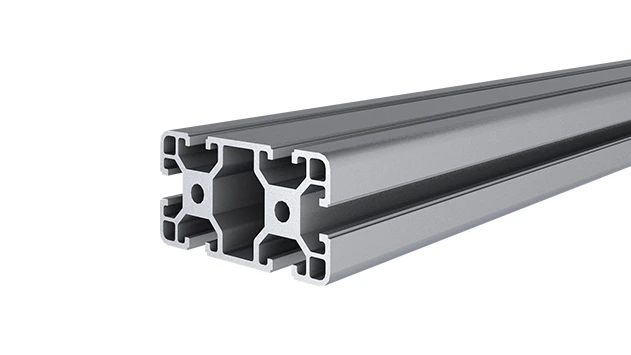
4080B is a 4.00x8.00 CM fractional 40 series square extrusion T-slot profile with two side open T-slots, each side with 4.00cm face, two side with 8.00cm face. The profile has align-a-grooves to assist in aligning connecting profiles.
The Modern Manufacturing Challenge: Staying Agile in a Fast-Changing World
Walk into any manufacturing facility today, and you'll likely hear the same buzzwords: agility, adaptability, rapid changeover. In an era where consumer demands shift overnight and product lifecycles shrink from years to months, production lines can no longer afford to be static. A factory that's stuck with rigid, welded steel structures or one-size-fits-all workstations risks falling behind—missed deadlines, wasted resources, and the inability to pivot when a new opportunity (or challenge) arises.
This is where the backbone of flexible manufacturing comes into play: the materials and systems that make reconfiguration not just possible, but practical. Among these, aluminum profiles have emerged as unsung heroes, and one profile, in particular, stands out for its ability to transform production lines: the 4080B EU standard aluminum profile. It's not just a piece of metal; it's a building block for flexibility, a tool that empowers teams to design, adapt, and optimize their workflows on the fly. Let's dive into why this profile has become a cornerstone for manufacturers aiming to stay ahead in a competitive landscape.
What Is 4080B EU Standard Aluminum Profile, Anyway?
Before we explore its impact, let's start with the basics. The "4080B" in its name tells you exactly what you're dealing with: a rectangular aluminum extrusion with a cross-section of 40mm (width) by 80mm (height). The "EU standard" label ensures it meets strict European norms for quality, precision, and safety—think consistent dimensions, smooth finishes, and compliance with regulations that prioritize worker well-being and structural integrity.
But numbers alone don't tell the story. This profile is born from an extrusion process, where molten aluminum alloy is forced through a die to create its signature shape. What makes the 4080B special is its balance of size, strength, and versatility. At 40x80mm, it's wide enough to support heavy loads (think tooling, assembly fixtures, or even small machinery) but not so bulky that it limits workspace. Its aluminum composition—typically a high-grade alloy like 6063—strikes that rare sweet spot: lightweight enough to be maneuvered by a small team, yet strong enough to handle the daily grind of a production environment.
Fun fact: The "B" in 4080B often refers to a specific slot design or profile variant, depending on the manufacturer. Most commonly, it indicates a profile with T-slots—those long, narrow grooves running along its length—that are the secret to its flexibility. These slots aren't just for show; they're the gateway to a world of customization.

The T-Slot Advantage: Why "Slots" Make All the Difference for Flexibility
If there's one feature that elevates the 4080B from a basic aluminum bar to a flexible manufacturing tool, it's its T-slots. Imagine a bookshelf where you can move the shelves up, down, or sideways without drilling new holes or sawing wood. That's the T-slot concept, but on an industrial scale. These slots run the length of the profile, allowing accessories—brackets, connectors, panels, and more—to slide into place and lock securely with simple fasteners like bolts or nuts.
Why does this matter for production line flexibility? Let's contrast it with traditional setups. A welded steel workstation is fixed; if you need to add a shelf or reposition a tool holder, you're looking at grinding, welding, and repainting—hours (or days) of downtime, not to mention the cost of skilled labor. With 4080B's T-slots, that same adjustment might take 15 minutes: loosen a few bolts, slide the accessory to the new position, retighten, and you're back in business. No welding, no special tools, no mess.
But the T-slots aren't just about adjustability—they're about modularity. Manufacturers don't have to build custom structures from scratch for every new project. Instead, they can mix and match 4080B profiles with aluminum profile accessories to create exactly what they need, when they need it. Need a temporary assembly station for a rush order? Combine 4080B rails with a plywood top and a few brackets. Launching a new product line that requires taller workbenches? Swap out the lower profile legs for longer 4080B sections. It's like building with industrial-grade Legos, but for grown-ups.
Aluminum Profile Accessories: The Unsung Partners in Flexibility
A profile is only as good as the accessories that bring it to life. The 4080B doesn't work in isolation; it's part of an ecosystem of aluminum profile accessories designed to turn raw extrusions into functional systems. Let's break down some of the most common (and most useful) accessories, and how they contribute to production line adaptability:
Connectors: The Glue That Holds It All Together
Connectors are the Swiss Army knives of the aluminum profile world. From 90° aluminum profile connectors that join two profiles at a right angle (perfect for building workbench frames) to 45° connectors for angled structures, these small but mighty components eliminate the need for welding. Most connectors are designed to fit snugly into the T-slots, securing with set screws or bolts. What's game-changing is their reusability: take apart a structure at the end of a project, and those same connectors can be used to build something entirely new the next day.
End Caps and Rubber Strips: Finishing Touches That Matter
At first glance, end caps—those plastic or metal covers that snap onto the ends of profiles—might seem like an afterthought. But in a production environment, details matter. Uncapped profiles can have sharp edges, posing a safety risk to workers. They can also collect dust, debris, or liquids, which can jam moving parts or corrode the aluminum over time. End caps solve both problems, creating a clean, safe finish. Similarly, T-slot rubber seal covers slide into the slots to protect them from dirt when not in use, ensuring accessories glide smoothly even after months of disuse.
Panels and Plates: Adding Functionality in Seconds
Need a surface for assembly? A back panel for tool storage? With panel brackets and plates, you can attach plywood, metal sheets, or even ESD (electrostatic discharge) mats directly to 4080B profiles. These panels aren't permanent, either. If a workflow changes and you need to relocate the surface, simply unscrew the brackets and reattach them elsewhere. It's this "non-permanent permanence" that makes the 4080B system so powerful—structures feel stable enough for daily use, yet temporary enough to evolve with your needs.
Real-World Applications: How 4080B Transforms Production Lines
Theory is great, but let's ground this in practice. How do manufacturers actually use 4080B EU standard aluminum profiles to enhance flexibility? Let's explore three common applications, and the tangible benefits they deliver:
Aluminum Workbenches: Customizable Workspaces for Every Task
Workbenches are the heart of any production line, and one-size-fits-all models simply don't cut it. A 4080B-based aluminum workbench, however, is a blank canvas. Need a taller bench for workers standing during assembly? Use longer 4080B legs. Add a shelf halfway up to store tools? Slide shelf brackets into the T-slots and secure with bolts. Want to integrate a monitor arm for digital work instructions? There's a bracket for that, too. Even specialized needs—like ESD protection for electronics assembly—are easy to address: attach an ESD mat to the work surface using adhesive or bracket clips, and ground the mat via a terminal in the T-slot.
Consider a small electronics manufacturer that produces both smartphones and tablets. Smartphone assembly might require a lower workbench with integrated lighting, while tablet assembly needs extra surface space for larger components. With 4080B workbenches, the team can reconfigure the height and add/remove shelves between shifts, ensuring each product gets the workspace it needs—no need to invest in separate benches for each line.
Roller Tracks: Streamlining Material Flow with Adjustable Paths
Material handling is another area where inflexibility can grind production to a halt. Fixed conveyor belts or rigid roller tracks work well for one product, but what happens when you introduce a new part with a different size or shape? Enter roller tracks built with 4080B profiles. The 4080B serves as the frame, with roller track brackets securing the rollers to the profile. Need to widen the track for larger boxes? Add an extra profile parallel to the existing one and adjust the roller spacing. Need to change the angle of the track to accommodate a new workstation layout? Loosen the connectors, pivot the frame, and retighten. It's material flow, reimagined as a dynamic, adaptable system.
A furniture manufacturer I worked with recently shared a perfect example: they used to have a fixed roller track system that only worked for their standard-sized cabinets. When they launched a line of smaller nightstands, the track was too wide, causing parts to tip or jam. Switching to a 4080B-based roller track let them narrow the frame in under an hour, saving them from investing in a brand-new conveyor system.
Material Racks: Storage That Grows with Your Inventory
Storage is often the forgotten piece of the flexibility puzzle. Traditional steel racks are built to a fixed height and depth, leaving you with wasted space if your inventory shrinks or overcrowding if it grows. 4080B material racks solve this by letting you adjust shelf heights on the fly. Using shelf brackets that slide into the T-slots, you can raise shelves to accommodate taller boxes or lower them for smaller parts—no tools required beyond a hex key. Some manufacturers even build mobile racks by adding casters to the base, making it easy to reposition storage to where it's needed most (e.g., moving a rack of fasteners closer to an assembly station during a rush order).
Comparing Profiles: Why 4080B Stands Out for Flexibility
The 4080B isn't the only aluminum profile on the market. There's the smaller 3030 (30x30mm), the square 4040 (40x40mm), and even larger profiles like 8080 (80x80mm). So why choose 4080B for flexibility? Let's compare it to two common alternatives to see how it stacks up:
| Feature | 4080B EU Standard Aluminum Profile | 4040 EU Standard Aluminum Profile (Square) | 3030 EU Standard Aluminum Profile (Small) |
|---|---|---|---|
| Dimensions | 40mm (width) x 80mm (height) | 40mm x 40mm (square) | 30mm x 30mm (square) |
| Typical Load Capacity | Up to 500kg per linear meter (depending on support) | Up to 300kg per linear meter | Up to 150kg per linear meter |
| T-Slot Size | Larger slots (typically 8-10mm wide) for bigger accessories | Medium slots (6-8mm wide) | Small slots (4-6mm wide) |
| Best For | Heavy-duty workbenches, roller tracks, machinery frames | Light to medium workbenches, shelving, small conveyors | Light-duty structures, display racks, prototyping |
| Flexibility Edge | Balances load capacity with adaptability; larger slots accept more accessory types | Good for lighter applications but limited by square shape for certain designs | Highly maneuverable but too small for most production line needs |
As the table shows, the 4080B's strength lies in its versatility. It's not the smallest profile (so it can handle more weight), but it's not so large that it's cumbersome to work with. Its rectangular shape is particularly useful for structures where you need more vertical support (like workbench legs) or horizontal surface area (like roller track frames). And with its larger T-slots, it's compatible with a wider range of accessories, giving you more options to customize.
Beyond Flexibility: The Hidden Benefits of 4080B Profiles
While flexibility is the star of the show, the 4080B brings other advantages to the production line that are worth mentioning. These "bonus benefits" make it not just a flexible choice, but a smart long-term investment:
Cost Savings: Less Waste, More Reuse
Traditional manufacturing setups often lead to waste. A custom welded workstation that's no longer needed ends up in a scrapyard. With 4080B, that workstation can be disassembled, and its components reused. Over time, this reusability translates to lower costs—you're not constantly buying new materials for every project. Even better, because the system is modular, you can start small (e.g., a single workbench) and expand incrementally as your needs grow, avoiding large upfront investments.
Safety: Built-In Peace of Mind
EU standard aluminum profiles are designed with safety in mind. The extrusion process ensures smooth, rounded edges (no sharp corners to catch clothing or skin), and the lightweight nature of aluminum reduces the risk of injury during assembly or reconfiguration. Many accessories, like end caps and rubber strips, add an extra layer of protection, while the stability of properly connected profiles minimizes the risk of structures tipping or collapsing. For manufacturers, this means fewer workplace accidents and a happier, more confident team.
Sustainability: Greener Manufacturing for a Better Future
Aluminum is one of the most recyclable materials on the planet—nearly 75% of all aluminum ever produced is still in use today. Choosing 4080B profiles aligns with sustainability goals, as they can be recycled at the end of their lifespan (though, with their durability, that might be decades down the line). Additionally, the reduced need for welding and painting cuts down on energy use and harmful emissions, making your production line not just flexible, but greener, too.
Choosing the Right Partner: Why a Reputable Lean System Supplier Matters
To truly unlock the flexibility of 4080B EU standard aluminum profiles, you need more than just the profiles themselves—you need a partner who understands your production challenges and can provide the right mix of profiles, accessories, and expertise. This is where a trusted lean system supplier comes in. A good supplier won't just sell you parts; they'll work with you to design solutions that fit your specific workflows, recommend accessories you might not have considered, and even provide training to help your team get the most out of the system.
When evaluating suppliers, look for a few key traits: a wide range of in-stock accessories (so you're not waiting weeks for a critical connector), clear technical documentation (including assembly guides and load capacity charts), and responsive customer support (because when you need to reconfigure a workbench before a big order, you can't afford to wait for answers). A supplier with experience in your industry is even better—they'll understand the unique demands of, say, automotive manufacturing versus electronics assembly, and can tailor their recommendations accordingly.
The Future of Manufacturing: Flexibility as a Competitive Advantage
As manufacturing continues to evolve—driven by trends like customization, on-demand production, and shorter product cycles—flexibility won't just be a nice-to-have; it'll be a necessity. Production lines that can't adapt will struggle to keep up with competitors who can pivot in days instead of months. The 4080B EU standard aluminum profile, with its T-slot design, versatile accessories, and balance of strength and adaptability, is more than a tool for today's challenges—it's an investment in tomorrow's success.
Whether you're building a new production line from scratch or retrofitting an existing one, consider this: the structures you build today shouldn't limit the innovations of tomorrow. With 4080B profiles, you're not just building workbenches, roller tracks, or racks—you're building a foundation for agility. And in manufacturing, agility isn't just about surviving change; it's about thriving because of it.