- Company Articles
- Industry articles
- Industry standards
- How to Identify Authentic 2020 National Standard Profile: Anti-Counterfeit Guide

How to Identify Authentic 2020 National Standard Profile: Anti-Counterfeit Guide
Related Product
2020 National Standard Profile
45° external bending joint, used for 45° external connection of two aluminum pipes.
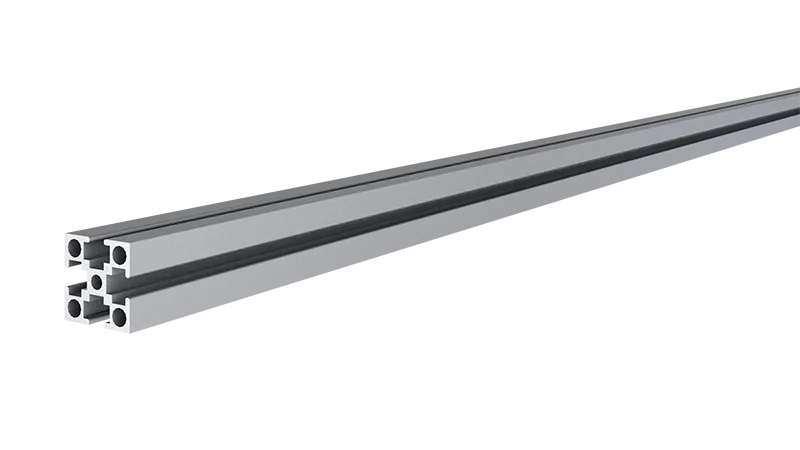
If you've ever walked through a manufacturing workshop, a electronics assembly line, or even a DIY garage, you've probably seen those sleek, silver aluminum frames holding up shelves, workbenches, or conveyor systems. Chances are, many of those frames are made from aluminum profiles—and if they're built to standard, there's a good chance they're 2020 national standard profiles. These unassuming 20mm x 20mm extrusions are the unsung heroes of efficient, modular design, used everywhere from small workshops to large-scale factories. But here's the catch: not all 2020 profiles are created equal. Counterfeit versions, with shoddy materials and sloppy manufacturing, are flooding the market, and falling for them can cost you time, money, and even safety. In this guide, we'll walk through how to spot the real deal—authentic 2020 national standard profiles—so you can avoid headaches and keep your projects (and your budget) on track.
First Things First: What Even Is a 2020 National Standard Profile?
Before we dive into spotting fakes, let's make sure we're all on the same page about what a 2020 national standard profile actually is. At its core, it's a type of aluminum extrusion profile—meaning it's made by forcing heated aluminum alloy through a die to create a specific cross-sectional shape. The "2020" refers to its dimensions: 20 millimeters in width and 20 millimeters in height, forming a square or rectangular tube (depending on the design). But it's not just about size; the "national standard" part means it adheres to strict manufacturing guidelines set by industry authorities, covering everything from material composition to tolerances, surface treatment, and mechanical properties.
Why does this matter? Because when you're building something—say, a workbench for assembling circuit boards or a material rack for storing components—you need parts that fit together perfectly, hold weight reliably, and stand up to daily wear and tear. Authentic 2020 national standard profiles are engineered to do just that. Counterfeits, on the other hand, cut corners: they use cheaper alloys, skip quality checks, and ignore dimensional specs. The result? Wobbly structures, parts that don't fit with your aluminum profile accessories, and frames that bend or corrode after just a few months of use.
Why Bother with Authenticity? The Risks of Cutting Corners
You might be thinking, "Does it really matter if my 2020 profile is 'authentic'? Can't I just buy the cheapest one and call it a day?" Let's put it this way: imagine you're building a workbench for your small electronics business. You need it to hold tools, circuit boards, and maybe a soldering station—nothing too heavy, but enough that stability is key. You find a supplier offering 2020 profiles for half the price of the big-name brands. You jump on it, assemble the workbench, and within a month, you notice the legs are starting to bow. A few weeks later, the crossbars loosen because the aluminum profile accessories (like the 90° connectors) don't fit snugly—turns out the counterfeit profiles have slightly narrower slots. By the end of the quarter, you're replacing the whole bench. That "cheap" profile just cost you more in time, materials, and frustration than if you'd bought the real thing upfront.
But the risks go beyond just money. In industrial settings, counterfeit profiles can be dangerous. If you're using 2020 profiles to build a material rack for heavy components, a frame that bends could cause parts to topple, damaging inventory or even injuring someone. In regulated industries like aerospace or medical device manufacturing, non-compliant materials can lead to failed inspections or legal issues. And let's not forget corrosion: counterfeit profiles often skip proper surface treatments, so they'll rust or degrade faster in humid or industrial environments. Simply put, authenticity isn't just about getting what you paid for—it's about safety, reliability, and peace of mind.

5 Key Features of Authentic 2020 National Standard Profiles
Now that we know why authenticity matters, let's get into the nitty-gritty: how to actually identify a real 2020 national standard profile. We'll break this down into five checkpoints, from visual cues to hands-on tests. By the end, you'll be able to spot a fake from a mile away.
1. Dimensional Accuracy: It's All in the Numbers
Authentic 2020 profiles live and die by their dimensions. Remember, the "2020" isn't just a marketing term—it's a promise that the profile measures 20mm x 20mm (or as close as possible, within strict tolerances). Counterfeit manufacturers, however, often fudge these numbers to save on material costs. A profile that's supposed to be 20mm wide might measure 19.5mm, or the wall thickness (which should be consistent, usually around 1.2mm for standard models) might vary by 0.3mm or more along the length.
How to check this? Grab a digital caliper (they're affordable—around $20 online—and worth every penny for this kind of inspection). Measure the width and height at three different points along the profile: near one end, in the middle, and near the other end. Authentic profiles will be within ±0.1mm of 20mm at all points. If you see variations of 0.2mm or more, that's a red flag. Next, check the wall thickness: use the caliper to measure the distance between the inner and outer edges of the profile's wall. Again, consistency is key—counterfeits often have thinner walls in some spots and thicker in others, a sign of shoddy extrusion.
2. Material Quality: Not All Aluminum Is Created Equal
Authentic 2020 national standard profiles are made from high-grade aluminum alloys, typically 6063-T5 or similar. These alloys are chosen for their strength, corrosion resistance, and workability—perfect for modular frames. Counterfeits, though, often use recycled aluminum or cheaper alloys mixed with impurities like iron or copper. How can you tell the difference without a lab test?
First, do the magnet test. Aluminum is non-magnetic, so a magnet should not stick to the profile. If it does, there's iron in the alloy—definitely a counterfeit. Second, check the weight. Aluminum has a consistent density (about 2.7 grams per cubic centimeter). Cut a 1-meter length of the profile and weigh it. Compare that weight to the theoretical weight of a 20x20mm profile with the specified wall thickness (you can calculate this using the formula for the volume of a hollow rectangle: volume = (outer width x outer height - inner width x inner height) x length). If the actual weight is significantly lower than the theoretical, the alloy is likely diluted with lighter (and weaker) materials. If it's heavier, there might be iron or other metals mixed in.
3. Surface Treatment: Smooth, Consistent, and Protected
Run your hand along an authentic 2020 profile. It should feel smooth, with no rough spots, burrs, or pits. Most authentic profiles undergo anodization—a process that creates a thin, protective oxide layer on the surface. This layer not only prevents corrosion but also gives the profile a uniform, matte finish (usually silver, though some are colored). Counterfeits, by contrast, often skip proper anodization or use cheap powder coating that chips or fades quickly.
Here's how to test the surface: scratch the profile gently with a key or a coin. Authentic anodized surfaces will resist light scratches—you might see a faint mark, but the coating won't peel or chip. Counterfeit coatings, on the other hand, will scratch off easily, revealing a dull, unprotected aluminum underneath. Also, check for color consistency: authentic profiles have even coloring along their entire length. If you see splotches, streaks, or areas where the color is lighter or darker, that's a sign of rushed or shoddy treatment.
4. Markings and Engravings: The Profile's "ID Card"
Authentic 2020 national standard profiles come with built-in "ID cards" in the form of markings or engravings. These usually include the manufacturer's logo, the batch number, the alloy type (like "6063-T5"), and the national standard designation (e.g., "GB/T 6892-2015" for Chinese standards). These markings are stamped or etched into the profile during manufacturing, so they should be clear, sharp, and hard to rub off.
Counterfeits, by contrast, often have (blurry) markings, or none at all. Some might even stamp fake logos or standards to look legitimate, but a closer inspection will reveal inconsistencies: the font might be slightly off, the spacing uneven, or the standard number might not match any real industry specification. If you're unsure, look up the standard number online—genuine national standards are publicly available, so you can verify if the marking is real.
5. Compatibility with Accessories: The "Snug Fit" Test
One of the best things about 2020 national standard profiles is how well they work with aluminum profile accessories—connectors, end caps, brackets, and so on. Authentic profiles are designed to fit these accessories perfectly: a 2020 end cap should slide on smoothly and stay in place without wiggling; a 90° connector should clamp tightly without gaps. Counterfeits, with their off-kilter dimensions, often fail this test.
Here's a quick check: if you already have genuine aluminum profile accessories (like a 2020 aluminum profile end cap), try fitting them onto the new profile. If the end cap is loose, or if it won't slide on at all, that's a problem. Similarly, try inserting a T-slot nut into the profile's slot—it should turn easily but not wobble. If the slot is too narrow or too wide, the accessories won't work, and neither will your project.
Beyond the Profile: Vetting the Supplier
Even if a profile passes all the physical tests above, it's still worth checking out the supplier. After all, a reputable aluminum profile supplier will have strict quality control processes in place, while fly-by-night operations are more likely to peddle counterfeits. Here's what to look for when choosing a supplier:
1. Ask for Documentation (and Check It Thoroughly)
Legitimate suppliers will happily provide documentation like Material Test Reports (MTRs) or certificates of compliance. An MTR should list the alloy composition (e.g., 97% aluminum, 0.6% silicon, 0.3% magnesium), mechanical properties (tensile strength, yield strength), and test results (like corrosion resistance). If a supplier hesitates to provide these documents, or if the paperwork looks forged (e.g., blurry logos, typos, or inconsistent dates), walk away.
Also, check for quality certifications like ISO 9001, which indicates the supplier follows international quality management standards. While certifications alone don't guarantee authenticity, they're a good sign that the supplier takes quality seriously.
2. Look for Industry Reputation
Do a quick Google search for the supplier's name. Are there reviews from other customers? Do industry forums or trade associations mention them positively? A supplier with a long history (5+ years) and good reviews is far less likely to sell counterfeits than a new company with no online presence. You can also ask for references—most reputable suppliers will put you in touch with past clients who can vouch for their products.
3. Visit the Factory (If Possible)
If you're ordering in bulk, consider visiting the supplier's factory. This might not be feasible for international suppliers, but if they're local, a tour can tell you a lot. Look for clean, organized production lines, quality control stations (where workers inspect profiles for defects), and proper storage (aluminum profiles should be stored in dry, covered areas to prevent corrosion). A disorganized factory with no quality checks is a red flag.
Case Study: How One Workshop Avoided a Costly Mistake
To put all this into context, let's look at a real-world example (names changed for privacy). Meet Alex, the owner of a small PCB assembly workshop. Alex needed to build three new workbenches to keep up with growing orders. He found two suppliers: Supplier A, a well-known aluminum extrusion profile supplier with good reviews but higher prices, and Supplier B, a new company offering 2020 profiles for 40% less.
Alex was tempted by Supplier B's price, so he ordered a small batch to test. When the profiles arrived, he noticed they had no markings, and the surface felt rough. He grabbed his caliper and measured: the width was 19.7mm in some spots and 20.2mm in others—way outside the ±0.1mm tolerance. He then tried fitting a genuine 2020 aluminum profile end cap, and it fell right off. Suspecting a counterfeit, he reached out to Supplier B for an MTR, but they never responded.
Alex cut his losses and ordered from Supplier A. The authentic profiles had clear markings, consistent dimensions, and the accessories fit perfectly. Six months later, the workbenches are still sturdy, and Alex estimates he saved at least $500 in potential replacements. "I learned my lesson," he says. "Now I always check the dimensions, the markings, and the supplier's reputation before buying. It takes a little extra time, but it's worth it."
Final Thoughts: Your Checklist for Authentic 2020 Profiles
By now, you should have a solid toolkit for identifying authentic 2020 national standard profiles. To recap, here's your quick-reference checklist:
Physical Inspection:
- Measure dimensions with a caliper: 20mm x 20mm ±0.1mm, consistent wall thickness.
- Magnet test: No magnetic attraction (aluminum is non-magnetic).
- Surface treatment: Smooth, scratch-resistant anodization, even color.
- Markings: Clear manufacturer logo, batch number, and standard designation.
- Accessory fit: Aluminum profile accessories (end caps, connectors) slide on snugly with no gaps.
Supplier Verification:
- Request and verify MTRs, quality certifications (ISO 9001), and compliance documents.
- Check online reviews and industry reputation.
- Ask for references or visit the factory (if possible).
At the end of the day, authentic 2020 national standard profiles aren't just pieces of aluminum—they're investments in your projects, your business, and your peace of mind. By taking the time to verify their authenticity, you'll avoid costly mistakes, ensure your frames are safe and reliable, and build systems that stand the test of time. So the next time you're shopping for 2020 profiles, remember: a little due diligence goes a long way.