- Company Articles
- Industry articles
- Industry standards
- How to Verify 2020 EU Standard Aluminum Profile Certification

How to Verify 2020 EU Standard Aluminum Profile Certification
Related Product
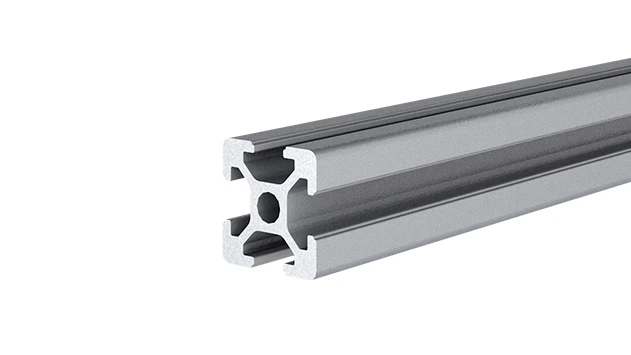
2020 EU Standard Aluminum Profile
2020 is a 2.00 x 2.00CM fractional 20 series square extrusion T-slot profile with four open T-slots, one on each 2.00 face. The profile has align-a-grooves to assist in aligning connecting profiles.
In today's fast-paced manufacturing, construction, and logistics industries, aluminum profiles have become indispensable. Lightweight yet durable, resistant to corrosion, and infinitely customizable, they form the backbone of everything from production workbenches and conveyor systems to modular furniture and industrial racks. But not all aluminum profiles are created equal—especially when it comes to meeting regional standards. For businesses operating in the European union or exporting to EU markets, compliance with the 2020 EU standard for aluminum profiles isn't just a box to check; it's a critical safeguard against subpar quality, safety risks, and legal penalties.
The 2020 EU standard, a refined set of regulations built on decades of industry feedback, sets strict benchmarks for material composition, mechanical performance, dimensional accuracy, and environmental sustainability. Yet, with countless suppliers claiming "EU compliance," how can you be sure the aluminum extrusion profile you're purchasing actually meets these rigorous standards? This guide will walk you through the step-by-step process of verifying 2020 EU standard certification, equipping you with the tools to make informed decisions and protect your operations from costly mistakes.
1. Understanding the 2020 EU Standard for Aluminum Profiles
Before diving into verification, it's essential to grasp what the 2020 EU standard entails. Unlike generic "industrial grade" labels, this standard is a legally binding set of requirements developed by the European Committee for Standardization (CEN) to ensure consistency, safety, and quality across aluminum products. It builds on earlier versions (such as the 2010 and 2015 standards) by tightening tolerances for critical applications and updating environmental compliance to align with the EU's Green Deal goals.
Key Components of the 2020 EU Standard
Material Composition: The standard specifies allowable alloying elements (e.g., copper, magnesium, silicon) and their percentages to ensure optimal strength and ductility. For example, 6061-T6, a common alloy for structural profiles, must contain 0.4-0.8% silicon and 0.15-0.4% copper to meet 2020 EU criteria.
Dimensional Tolerances: Extruded profiles must adhere to strict size limits for cross-sectional dimensions, wall thickness, and straightness. A 2020 EU standard aluminum profile with a specified width of 40mm, for instance, cannot deviate by more than ±0.2mm—critical for modular systems where components must interlock precisely.
Mechanical Properties: Tensile strength, yield strength, and elongation are rigorously tested. For structural profiles, the standard mandates a minimum tensile strength of 200 MPa and elongation of 8% to ensure they can withstand operational stress without failure.
Surface Treatment: Anodizing, powder coating, or electroplating must meet corrosion resistance standards (e.g., 1000 hours of salt spray testing for marine-grade applications) and adhere to REACH regulations, which restrict the use of harmful substances like lead and cadmium.
Environmental Compliance: The 2020 update places greater emphasis on sustainability, requiring suppliers to track and reduce carbon emissions during production and ensure recyclability (aluminum profiles must be at least 95% recyclable by weight).
2. Step-by-Step Guide to Verifying Certification
Verifying 2020 EU standard certification isn't about blindly trusting a supplier's word—it's about cross-referencing documentation, inspecting physical evidence, and validating claims through third-party sources. Below is a actionable roadmap to ensure your aluminum profiles meet the mark.
Step 1: Request Official Certification Documentation
The first and most critical step is to ask your aluminum profile supplier for formal certification documents. A reputable supplier will readily provide these without hesitation. Key documents to request include:
- Certificate of Conformity (CoC): This legal document, issued by the supplier or a third-party certifier, states that the product complies with the 2020 EU standard. It should include the product name, batch number, alloy type, temper, and a clear reference to the standard (e.g., "EN 755-9:2020").
- Test Reports: Accredited laboratory test results for mechanical properties (tensile strength, hardness), chemical composition (alloy analysis), and surface treatment (corrosion resistance). Look for reports from labs accredited by the European Accreditation (EA) to ensure validity.
- CE Marking Documentation: For profiles used in construction or machinery, the CE mark is mandatory. Request the Declaration of Performance (DoP), which outlines how the product meets EU harmonized standards (e.g., EN 1090 for structural steel and aluminum components).
Red flag: If a supplier hesitates to provide these documents or offers generic "certificates" without specific test data or standard references, proceed with extreme caution. Legitimate compliance cannot be proven with vague assurances.
Step 2: Cross-Check Certification Details
Once you have the documents, don't just file them away—scrutinize the details to ensure they align with your requirements. Here's what to verify:
Standard Reference: Confirm the CoC explicitly mentions "2020 EU standard" or the corresponding EN number (e.g., EN 755-2:2020 for extruded profiles for general purposes). Older standards (pre-2020) may not meet current safety or environmental requirements.
Product Match: Ensure the product described in the CoC matches what you're purchasing. Check the alloy designation (e.g., 6063 vs. 7075), temper (T5 vs. T6), and dimensions. A mismatch here could mean you're getting a lower-grade profile than advertised.
Issuing Body Accreditation: Verify that the organization issuing the CoC or test report is accredited by a recognized body like EA or the International Laboratory Accreditation Cooperation (ILAC). You can usually check accreditation status via the certifier's website or EA's online database.
Step 3: Inspect Physical Markings on the Profile
Certification documents are important, but physical markings on the aluminum extrusion profile itself provide an additional layer of verification. The 2020 EU standard requires manufacturers to include permanent, legible markings that include:
- The CE mark (for applicable products), displayed in a size proportional to the profile (minimum 5mm height for profiles wider than 50mm).
- The batch or heat number, linking the profile to its production batch for traceability.
- The supplier's name or logo, ensuring accountability.
- A reference to the 2020 standard (e.g., "EN 755-2020").
Example: A properly marked 2020 EU standard aluminum profile might read: "ABC Metals | Batch #230415 | EN 755-9:2020 | CE" stamped or laser-etched along its length.
Red flag: Faded, incomplete, or easily removable markings (e.g., stickers that peel off) are a sign the profile may not be fully compliant. Genuine markings are etched or embossed during production, not added post-extrusion.
Step 4: Validate Testing Data with Third-Party Sources
Even with a CoC and test reports, it's wise to cross-verify critical data with independent sources. For example, if a test report claims a tensile strength of 250 MPa, you can contact the accredited lab listed on the report to confirm the result. Most labs will verify their findings with a reference number, giving you peace of mind that the data hasn't been falsified.
For high-volume or high-stakes orders, consider commissioning your own third-party testing. While this adds cost, it's a small price to pay compared to the losses incurred by using non-compliant profiles (e.g., product recalls, workplace accidents, or rejected shipments).

2. The Role of the Aluminum Profile Supplier in Certification
Your choice of aluminum profile supplier is inseparable from the certification process. A reputable supplier doesn't just sell products—they act as a partner in compliance, providing the documentation and support needed to verify standards. Here's how to assess a supplier's commitment to 2020 EU compliance:
Supplier Qualifications to Look For
- ISO 9001 Certification: This quality management system certification indicates the supplier has processes in place to consistently meet customer and regulatory requirements.
- Membership in Industry Bodies: Organizations like the European Aluminum Association (EAA) or the Aluminum Extruders Council (AEC) often require members to adhere to strict quality standards, including 2020 EU compliance.
- Transparent Production Processes: Willingness to share details about their extrusion, testing, and quality control procedures (e.g., in-house labs, automated dimensional checks) is a strong indicator of compliance.
Example: A supplier with an in-house EA-accredited lab can conduct real-time testing during production, ensuring every batch meets 2020 EU standards before shipping. This level of control is far more reliable than outsourcing testing to unvetted third parties.
3. Common Pitfalls to Avoid
Even with careful verification, it's easy to fall prey to misleading practices. Here are three common pitfalls and how to steer clear of them:
Pitfall 1: Assuming "EU-Compliant" Means "2020 EU Standard"
Many suppliers use the vague term "EU-compliant" to imply adherence to current standards, but this can include older versions (e.g., 2015) that lack the 2020 updates. Always demand explicit reference to the 2020 standard in writing.
Pitfall 2: Overlooking Aluminum Profile Accessories
Certification isn't limited to the profile itself—aluminum profile accessories like connectors, end caps, and brackets must also comply with EU standards. A certified profile paired with substandard accessories can compromise the entire system's safety. Ask suppliers if accessories are covered under the main profile's certification or have their own CoCs.
Pitfall 3: Ignoring Traceability
A batch number on the profile is useless if the supplier can't trace it back to production records. In the event of a defect, traceability allows you to identify affected batches quickly and prevent widespread issues. Ask for a sample batch record to ensure the supplier can link the batch number to raw material sources, extrusion parameters, and test results.
4. Comparison Table: Verified vs. Unverified 2020 EU Standard Aluminum Profiles
| Feature | Verified 2020 EU Standard Profile | Unverified Profile |
|---|---|---|
| Certification Documentation | CoC with explicit 2020 standard reference; detailed test reports from EA-accredited labs. | Generic "certificate" with no test data; references to outdated standards. |
| Physical Markings | Clear CE mark, batch number, supplier logo, and standard reference (etched/embossed). | Faded stickers or missing markings; no standard reference. |
| Test Data | Tensile strength, alloy composition, and corrosion resistance results within 2020 limits. | No test data or results below 2020 minimum requirements. |
| Supplier Support | Promptly provides additional documentation; offers traceability for batches. | Hesitates to share details; unable to link profiles to production records. |
5. Conclusion: Protecting Your Business Through Rigorous Verification
Verifying 2020 EU standard certification for aluminum profiles isn't just a bureaucratic exercise—it's a strategic investment in your business's reputation, safety, and bottom line. By requesting and scrutinizing documentation, cross-checking details, inspecting physical markings, and partnering with reputable suppliers, you can ensure the profiles you use meet the highest standards of quality and compliance.
Remember, the cost of cutting corners on certification far outweighs the savings of cheaper, non-compliant products. From failed audits and product recalls to workplace injuries, the consequences are too great to ignore. By following the steps outlined in this guide, you'll transform certification verification from a daunting task into a straightforward process—one that empowers you to build stronger, safer, and more reliable systems for years to come.
In the end, the 2020 EU standard isn't just about meeting regulations; it's about upholding a commitment to excellence. And in today's competitive market, that commitment is what sets successful businesses apart.