- Company Articles
- Industry articles
- Industry standards
- How to Verify 2020r EU Standard Aluminum Profile Certification: A Buyer's Guide

How to Verify 2020r EU Standard Aluminum Profile Certification: A Buyer's Guide
Related Product
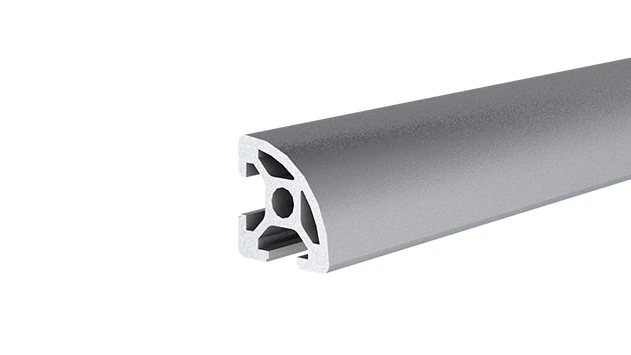
2020R EU Standard Aluminum Profile
2020R is a 2.00 x 2.00CM fractional 20 series square extrusion T-slot profile with four open T-slots, two side with 2.00cm face, the other side with round face. The profile has align-a-grooves to assist in aligning connecting profiles.
Let's start with a scenario we've all heard (or lived) before: You're gearing up to build a new production line, and you've carefully selected 2020r EU standard aluminum profiles for the workbench frames. You order from a supplier who swears by their "certified" products, pay the premium, and wait. When the shipment arrives, the profiles feel flimsy, the holes don't line up with your aluminum profile accessories, and worst of all, your quality team flags inconsistencies in the material. Suddenly, your timeline is derailed, your budget takes a hit, and you're left wondering: How did this happen? The answer, more often than not, is a failure to properly verify certification.
In the world of manufacturing, aluminum profiles are the unsung heroes—they form the backbone of workbenches, material racks, and assembly lines. But not all profiles are created equal, especially when it comes to meeting strict EU standards like the 2020r. This guide isn't just about ticking boxes; it's about protecting your operations, your team, and your bottom line. Let's dive into how to spot genuine 2020r EU standard aluminum profiles and avoid the costly pitfalls of subpar alternatives.
What Even Is 2020r EU Standard Aluminum Profile?
Before we talk verification, let's make sure we're all on the same page about what "2020r EU standard" actually means. At its core, this is a specific classification for aluminum extrusion profiles—those long, uniform pieces shaped by forcing molten aluminum through a die. The "2020" typically refers to the profile's cross-sectional dimensions (think 20mm x 20mm, though exact specs can vary slightly by manufacturer), while the "r" might denote a rounded edge or a revised version of the standard. But the real importance lies in the "EU standard" part: these profiles are engineered to meet rigorous European union regulations for safety, durability, and performance.
Why does this matter? EU standards aren't just suggestions. They're the result of years of research into material science, load-bearing capacity, and environmental impact. For example, a 2020r EU standard profile must be made from high-grade aluminum alloy (often 6063-T5, known for its strength and corrosion resistance), undergo strict quality checks during extrusion, and meet specific tolerances for straightness, wall thickness, and surface finish. These profiles are designed to work seamlessly with aluminum profile accessories—think brackets, connectors, and hinges—ensuring that when you build a workbench or a material rack, every component fits like a puzzle piece.
But here's the catch: The term "EU standard" is thrown around loosely by suppliers. Some might claim compliance without actually meeting the criteria, banking on buyers not knowing how to check. That's why verification isn't optional—it's essential.
Why Bother Verifying Certification? (Hint: It's Not Just About Compliance)
You might be thinking, "If my supplier says it's certified, can't I just take their word for it?" Unfortunately, no. The consequences of skipping verification can ripple through your entire operation:
- Costly Rework: Substandard profiles often don't play nice with aluminum profile accessories. Imagine spending hours assembling a workbench only to find the brackets won't tighten, or the profile bends under the weight of tools. Suddenly, you're buying new parts, redoing labor, and missing deadlines.
- Safety Risks: EU standards include load-bearing limits. A fake 2020r profile might look the part but buckle under stress, putting your team at risk of injury from collapsing structures.
- Legal Headaches: If your products end up in the EU market (or even use EU-certified components), non-compliant profiles could lead to fines or product recalls. The EU's CE marking isn't just a sticker—it's a legal requirement for many industries.
- Reputation Damage: Let's say you supply a client with a machine built using uncertified profiles. When it fails, they won't blame the supplier—they'll blame you. Trust is hard to earn and easy to lose.
Pro Tip: Even if you're not based in the EU, verifying 2020r certification is smart. These profiles set a global benchmark for quality. Using them means your equipment will last longer, require less maintenance, and perform more reliably—no matter where you operate.

Step-by-Step: How to Verify 2020r EU Standard Certification
Now, let's get practical. Verifying certification isn't rocket science, but it does require attention to detail. Here's a step-by-step process to ensure you're getting the real deal:
Step 1: Start with the Supplier's Credentials
Your first line of defense is choosing a reputable aluminum profile supplier. But "reputable" isn't just about Google reviews—it's about their ability to prove compliance. Ask for the following before placing an order:
- Declaration of Conformity (DoC): This is a legal document issued by the supplier stating that the product meets all EU requirements. It should include the product name (e.g., "2020r EU Standard Aluminum Extrusion Profile"), the supplier's contact info, the applicable standards (e.g., EN 755-9 for aluminum extrusions), and a signature from a company representative.
- Test Reports from Accredited Labs: The DoC should be backed by third-party test reports. Look for labs accredited by bodies like the United Kingdom Accreditation Service (UKAS) or Deutsche Akkreditierungsstelle (DAkkS). These reports should detail tests for tensile strength, yield strength, and dimensional accuracy—key indicators of 2020r compliance.
- CE Marking Documentation: For products sold in the EU, the CE mark is mandatory. But beware of fake marks! A genuine CE mark should be accompanied by a "CE certificate" that links to the DoC and test reports.
Don't be shy about asking for these documents. A legitimate supplier will provide them promptly and transparently. If they hesitate, stall, or offer vague excuses ("It's in the system, we'll send it later"), that's a red flag.
Step 2: Scrutinize the Product Itself
Even with paperwork in hand, you should inspect the physical profiles. Here's what to look for:
| Feature to Check | What a Genuine 2020r Profile Looks Like | Warning Signs of a Fake |
|---|---|---|
| Surface Finish | Smooth, consistent, with a uniform color (often silver or anodized black). No visible scratches, dents, or discoloration. | Rough texture, uneven coloring, or visible tool marks from poor extrusion. |
| Dimensions | Cross-section matches 20mm x 20mm (or specified size) within tight tolerances (±0.1mm). Use a caliper to measure—wall thickness should be consistent (typically 1.2mm–1.5mm for 2020r). | Walls that are too thin (less than 1.0mm) or vary drastically along the length. Cross-section is "close enough" but not precise. |
| Straightness | Lays flat on a surface with minimal bowing. For a 3m length, deviation should be less than 2mm. | ,. |
| Markings | ,,,CE(EN 755-9).. | (),,. |
If you're ordering a large batch, ask for a sample first. Test it with your aluminum profile accessories—does the connector slide into the T-slot smoothly? Does the bracket bolt align with the pre-drilled holes? A genuine 2020r profile will feel "tight" in all the right ways, with no wiggle room or forced fitting.
Step 3: Cross-Check the Paperwork
Now, take the documents from your supplier and put them under a microscope. Here's how to spot inconsistencies:
- Match the Batch Number: The batch number on the profile should appear on the test report and DoC. If they don't align, the profile might not be from the certified batch.
- Verify the Lab Accreditation: Check the test report's lab logo. Search for the lab's name online and confirm they're accredited for aluminum extrusion testing. Fake labs often have generic names like "Global Testing Services" with no verifiable address or accreditation number.
- Check for Expired Certifications: Certifications aren't forever. Some standards are updated, and test reports might expire after a year. Ensure the documents are dated within the last 12–24 months.
For extra peace of mind, you can even contact the certification body mentioned in the DoC (e.g., TÜV, SGS) to confirm the supplier's registration. Most bodies have online databases where you can look up certification numbers.
Step 4: Trust Your Gut (and Your Team)
Sometimes, even with all the checks, something feels off. Maybe the supplier is pushy to close the deal, or the price is suspiciously low (if it's 30% cheaper than other certified options, there's a reason). In these cases, listen to your instincts. Involve your quality control team—they're on the front lines and can often spot red flags you might miss.
Common Pitfalls to Avoid
Even seasoned buyers can fall for these tricks. Here's what to watch out for:
- The "Generic Certification" Scam: A supplier sends you a DoC that's vague ("certified to EU standards") without specific product names or test results. This is useless—certifications are product-specific.
- Reused Certificates: Some suppliers recycle old certificates from compliant batches to sell non-compliant ones. Always check the batch number against the current shipment.
- "CE Mark Only": The CE mark alone isn't proof of compliance. It should always be paired with a DoC and test reports. Fake CE marks are easy to print—don't be fooled by a sticker.
- Material Substitution: Unscrupulous suppliers might use cheaper aluminum alloys (like 1050, which is weaker) instead of 6063-T5. Ask for a material composition report to confirm the alloy grade.
Putting It All Together: A Verification Checklist
To make this easier, here's a quick checklist you can use before finalizing any order for 2020r EU standard aluminum profiles:
- (DoC),,.
- ,,.
- :,CE.
- ,.
- —.
- .
: .,.,,.
Conclusion: Your Turn to Take Action
2020r,,—,.,—,,,.
,"".,,.().