- Company Articles
- Industry articles
- Industry standards
- How to Verify Authentic 2040 EU Standard Aluminum Profile Certifications

How to Verify Authentic 2040 EU Standard Aluminum Profile Certifications
Related Product
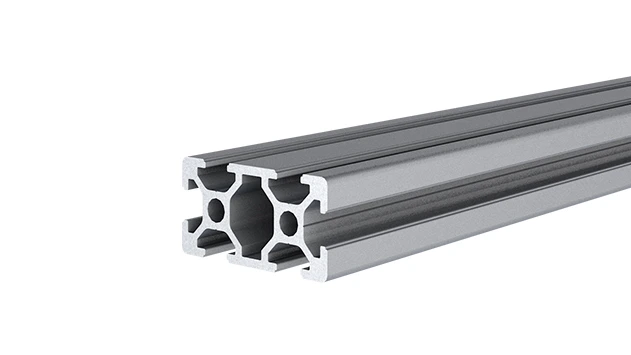
2040 EU Standard Aluminum Profile
2040 is a 2.00 x 4.00CM fractional 20 series square extrusion T-slot profile with four open T-slots, two side with 2.00cm face, the other side with 4.00cm face. The profile has align-a-grooves to assist in aligning connecting profiles.
As a production manager, you've probably stood in your workshop, staring at a stack of aluminum profiles, and wondered: Are these really what the supplier promised? In the world of manufacturing, where precision and reliability can make or break a production line, the difference between a genuine 2040 EU standard aluminum profile and a counterfeit isn't just about quality—it's about protecting your team, your deadlines, and your bottom line. Let's dive into why verifying these certifications matters, and how you can do it like a pro.
What Even Is a 2040 EU Standard Aluminum Profile?
First, let's get clear on the basics. A 2040 EU standard aluminum profile is more than just a piece of metal tubing. It's a meticulously engineered component, designed to meet strict European union standards for strength, durability, and safety. The "2040" refers to its cross-sectional dimensions: typically 20mm in one direction and 40mm in the other, though exact specs can vary slightly by manufacturer (more on that later). These profiles are the backbone of countless industrial setups—think workbenches, material racks, flow racks, and lean manufacturing systems—where stability and consistency are non-negotiable.
EU standards, unlike some regional guidelines, are rigorous. They cover everything from the aluminum alloy composition (often 6063-T5, prized for its balance of strength and workability) to surface treatment (anodization to resist corrosion) and dimensional tolerances (so that every profile fits seamlessly with aluminum profile accessories like connectors and end caps). When a supplier says their product is "2040 EU standard," they're making a promise: this profile has been tested, inspected, and proven to meet those exacting benchmarks.
Why Bother Verifying Certifications? The Stakes Are Higher Than You Think
You might be thinking, "Our supplier has good reviews—can't we just trust them?" Here's the thing: Counterfeit aluminum profiles are a silent epidemic in manufacturing. They look similar to the real deal at first glance, but they cut corners in ways that can cost you dearly. Let's break down the risks:
1. Structural Failures That Stop Production in Its Tracks
Fake profiles often use cheaper alloys or skip heat treatment steps, leaving them prone to bending, warping, or even breaking under load. Imagine a workbench in your assembly line collapsing because the 2040 profiles supporting it couldn't handle the weight of tools and components. Suddenly, you're looking at downtime, damaged products, and potentially injured employees. Genuine EU standard profiles, on the other hand, are tested for tensile strength (typically 160-200 MPa) and yield strength (≥110 MPa), ensuring they stand up to daily use.
2. Compliance Headaches (and Hefty Fines)
Many industries—automotive, aerospace, medical devices—require components to meet EU standards to sell in European markets. If your production line uses uncertified profiles, you could face regulatory penalties or be barred from bidding on contracts. Worse, if a product failure is traced back to non-compliant materials, the legal and reputational damage could be catastrophic.
3. Hidden Costs That Add Up Fast
Counterfeit profiles might be cheaper upfront, but they cost more in the long run. They wear out faster, require frequent replacements, and often don't work with standard aluminum profile accessories. A 2040 aluminum profile end cap that doesn't snap into place properly? That's not just annoying—it means wasted time adjusting parts, and maybe even scrapping an entire assembly. Genuine profiles, paired with compatible accessories, fit like puzzle pieces, reducing friction in your workflow.

Key Certifications: What to Look For
Before you start verifying, you need to know which certifications matter. For 2040 EU standard aluminum profiles, these are the big ones:
CE Marking
– The CE mark isn't just a sticker; it's a legal declaration that the product meets all EU health, safety, and environmental requirements. For aluminum profiles, this includes compliance with EN 755 (the European standard for aluminum and aluminum alloys extruded profiles) and EN 15085 (for railway applications, if applicable).
ISO 9001 Certification
– While not specific to aluminum, ISO 9001 indicates that the supplier has a quality management system in place. It's a good sign that they take consistency seriously, from raw material sourcing to extrusion and testing.
Material Certificates (EN 10204 3.1)
– This document, issued by the manufacturer, confirms the profile's chemical composition and mechanical properties. It should include details like alloy grade, heat treatment, and test results for tensile strength and elongation.
Keep in mind: Certifications alone aren't enough. You need to verify that they're legitimate, not just printed on a piece of paper. A reputable aluminum profile supplier will happily provide these documents upfront—if they hesitate or offer vague "certifications," that's your first red flag.
Step-by-Step: How to Verify Authentic 2040 EU Standard Aluminum Profiles
Verifying certifications isn't rocket science, but it does require attention to detail. Let's walk through the process, from the first conversation with your supplier to inspecting the profiles in your warehouse.
Step 1: Start with the Supplier—Demand Documentation
Before placing an order, ask your aluminum profile supplier for the following documents. Don't accept "I'll send them later"—insist on seeing them upfront:
- Certificate of Conformity (CoC): This should state that the profiles comply with 2040 EU standards (EN 755) and bear the CE mark. Look for the manufacturer's name, product code, batch number, and issue date. Cross-check the batch number with the one on the physical profiles later—they should match.
- EN 10204 3.1 Material Certificate: This is your proof of quality. It will list the aluminum alloy (e.g., 6063-T5), chemical composition (percentages of silicon, magnesium, etc.), and mechanical test results. For 6063-T5, the tensile strength should be between 160-200 MPa, and elongation (how much it stretches before breaking) should be ≥8%.
- ISO 9001 Certificate: Check the issue date and accreditation body (look for recognized bodies like UKAS or ANAB). You can even verify the certificate number on the accreditor's website to ensure it's not expired or fake.
Pro tip: If the supplier is hesitant to share these docs, or if the documents have typos, blurry logos, or missing information, walk away. Legitimate suppliers are proud of their certifications and happy to prove it.
Step 2: Inspect the Physical Profiles—Markings Matter
Once the profiles arrive, start with a visual inspection. Authentic 2040 EU standard aluminum profiles have clear, consistent markings that tell their story:
- CE Mark: Usually stamped or laser-etched along the length of the profile, near the end. It should be sharp, not smudged, and accompanied by the manufacturer's identification number (if applicable).
- Batch Number: This ties the profile to the CoC and material certificate. It might be a combination of letters and numbers (e.g., B230512) and should match exactly what's on the documentation.
- Alloy and Temper: Look for "6063-T5" or similar. This confirms the alloy grade and heat treatment, which directly impact strength and durability.
Counterfeits often skip these markings or use cheap stickers that peel off easily. Run your finger over the markings—genuine ones are etched into the metal, not just printed on top.
Step 3: Check Dimensions—Size Really Does Matter
EU standards specify tight tolerances for 2040 profiles. Even a 1mm difference in width or height can throw off compatibility with aluminum profile accessories like connectors or the 2040 aluminum profile end cap. Here's how to measure:
- Use a digital caliper (precise to 0.01mm) to measure the cross-section. For a standard 2040 profile, the width should be 40mm ±0.3mm, and the height 20mm ±0.3mm.
- Check the wall thickness. Most 2040 profiles have a wall thickness of 1.5mm-2.0mm, depending on the application. The material certificate should specify this—if the actual thickness is thinner, it's a red flag.
- Measure the length. If you ordered 3-meter profiles, they should be 3000mm ±2mm. Inconsistent lengths can mean poor quality control during extrusion.
Don't just measure one profile—check a few from different bundles. If there's significant variation between them, the supplier likely isn't adhering to EU tolerances.
Step 4: Test Compatibility with Accessories
One of the easiest ways to spot a fake? Try fitting it with genuine aluminum profile accessories. For example:
- 2040 Aluminum Profile End Cap: A genuine end cap should snap into place snugly, with no gaps or wobbling. If it's loose, or if you have to force it, the profile's dimensions are off.
- Connectors: T-slot connectors (used to join profiles at 90° angles) should slide into the T-slot smoothly and tighten securely. Counterfeit profiles often have T-slots that are too narrow or misaligned.
- Mounting Hardware: M5 or M6 bolts (common for 2040 profiles) should thread into T-slot nuts without stripping. If the threads bind or the nut spins freely, the T-slot dimensions are incorrect.
Think of it like a puzzle: every piece should fit perfectly. If the accessories don't align, the profile isn't authentic—plain and simple.
Step 5: Assess Surface Quality and Finish
EU standard profiles undergo strict surface treatment to prevent corrosion and ensure a consistent look. Here's what to look for:
- Anodization: Most 2040 profiles have an anodized finish (clear, silver, or black) that's 8-12 microns thick. Run your hand along the surface—it should be smooth, with no rough spots, pits, or discoloration. Fake profiles often have thin or uneven anodization that chips easily.
- Straightness: Roll the profile on a flat surface (like a table). It should lie flat without rocking or curving. Bent profiles are a sign of poor extrusion or handling, which can throw off your assembly.
- Edges: The corners should be sharp but not razor-thin—EU standards require deburred edges to prevent injury. If the edges are rounded or jagged, quality control is lacking.
Red Flags: When to Walk Away
Even with thorough checks, some counterfeits are convincing. Watch for these warning signs:
| Genuine 2040 EU Standard Profiles | Counterfeit Profiles |
|---|---|
| Clear, consistent CE mark and batch numbers etched into the profile | Missing or blurry markings, or stickers that peel off |
| EN 10204 3.1 certificate with detailed test results | Vague "quality certificates" with no specific data or accredited lab stamps |
| Snug fit with 2040 aluminum profile end cap and accessories | Loose or forced fit with accessories; gaps or wobbling |
| Smooth, even anodized finish; no pits or discoloration | Chipped, uneven, or thin finish; visible scratches or dents |
| Consistent dimensions (40mm x 20mm ±0.3mm) | Varied dimensions; often smaller or larger than specified |
Another big red flag? Unusually low prices. If a supplier is offering 2040 EU standard profiles for 30% less than the market rate, they're cutting corners somewhere—usually on material quality or certifications.
Real-World Example: How One Manufacturer Avoided Disaster
Let's take a quick detour into a true story. A mid-sized automotive parts manufacturer in Germany was expanding its production line and ordered 500 meters of 2040 EU standard aluminum profiles from a new supplier offering "unbeatable prices." The supplier provided a CoC, but when the profiles arrived, the production manager noticed something off: the CE mark was a sticker, not etched, and the 2040 aluminum profile end caps wouldn't fit properly.
Instead of brushing it off, the manager dug deeper. They requested the EN 10204 3.1 certificate—and the supplier ghosted. A quick test with a caliper revealed the profiles were actually 39.5mm wide (not 40mm) and made from a cheaper alloy. The manufacturer canceled the order, found a reputable supplier, and avoided what could have been months of production delays and failed safety audits.
The lesson? Trust your gut. If something feels off, take the time to verify—it's always better to delay an order than to deal with the consequences of counterfeit parts.
Long-Term: Building Trust with Suppliers
Verifying certifications isn't a one-and-done task—it's part of building a strong relationship with your aluminum profile supplier. Here's how to ensure quality over time:
- Conduct Regular Audits: Visit the supplier's facility if possible, or hire a third-party inspector to check their production process and quality control measures.
- Include Quality Clauses in Contracts: Specify that profiles must meet 2040 EU standards (EN 755) and include penalties for non-compliance. This gives you legal recourse if issues arise.
- Communicate Clearly: Let your supplier know exactly what certifications and tolerances you require. The more specific you are, the less room there is for misunderstandings (or intentional cutting of corners).
Final Thoughts: Your Production Line Deserves the Best
At the end of the day, verifying 2040 EU standard aluminum profile certifications isn't just about checking boxes—it's about protecting your business. Every component in your production line, from the smallest aluminum profile end cap to the largest workbench frame, plays a role in your success. By taking the time to verify authenticity, you're ensuring smoother operations, fewer headaches, and a safer workplace for your team.
So the next time you order aluminum profiles, remember: certifications are your first line of defense. Demand documentation, inspect the details, and never settle for "good enough." Your bottom line (and your peace of mind) will thank you.