- Company Articles
- Industry articles
- Industry standards
- IEC Standards for 40 Steel Roller Track Black ESD Wheels: Compliance Guide

IEC Standards for 40 Steel Roller Track Black ESD Wheels: Compliance Guide
Related Product
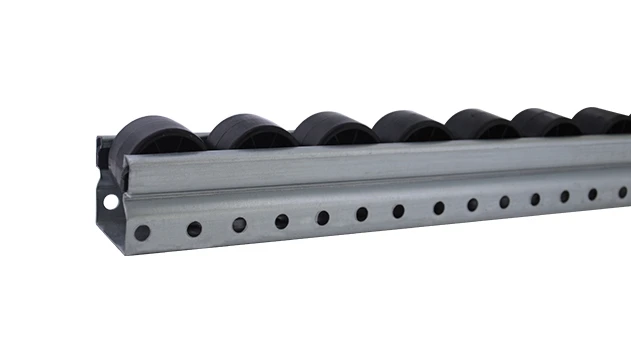
40 Steel Roller Track Black ESD Wheel
The roller track can be installed with multiple accessories to create different slopes and configurations of flow racks.All steel conveyor 40 roller track accessories are engineered to perfectly fit the sliding rail.
Ensuring Safety, Efficiency, and Reliability in Modern Manufacturing Environments
Introduction: The Critical Role of ESD Compliance in Manufacturing
In the fast-paced world of manufacturing—where precision meets productivity—even the smallest oversight can lead to significant losses. For industries handling sensitive electronic components, such as 3C assembly, medical device production, and consumer electronics, electrostatic discharge (ESD) poses a hidden threat. A single ESD event, often imperceptible to the human eye, can damage microchips, disrupt production lines, and compromise product quality. This is where components like the 40 Steel Roller Track Black ESD Wheels become indispensable. As part of a broader lean system, these wheels not only facilitate smooth material flow but also act as a first line of defense against ESD-related failures.
But what makes these wheels stand out? Unlike standard roller tracks, the 40 Steel Roller Track Black ESD Wheels are engineered with specialized materials and designs to dissipate static charges safely. Their compliance with international standards, particularly those set by the International Electrotechnical Commission (IEC), ensures that they meet rigorous benchmarks for electrostatic protection. In this guide, we'll dive deep into the IEC standards governing these critical components, explore their technical specifications, and highlight how they integrate with other lean system elements—such as aluminum lean pipes, flow racks, and conveyors—to create robust, ESD-safe work environments.
Whether you're a production manager looking to upgrade your assembly line, a procurement specialist sourcing reliable components, or an engineer designing a new ESD workstation, understanding these standards is key to making informed decisions. Let's start by unpacking why IEC compliance matters and how it impacts every stage of the manufacturing process.
Understanding IEC Standards for ESD Protection
An Overview of the IEC 61340 Series
The International Electrotechnical Commission (IEC) has developed the IEC 61340 series, the globally recognized benchmark for electrostatic protection in electronic manufacturing. This series is not just a set of guidelines but a comprehensive framework designed to minimize ESD risks across all stages of product lifecycle—from component handling to final assembly. For 40 Steel Roller Track Black ESD Wheels, the most relevant standard is IEC 61340-5-1 , which focuses on "General requirements for the protection of electrostatic sensitive devices (ESDs)."td>
IEC 61340-5-1 outlines specific requirements for materials, equipment, and personnel grounding in ESD-protected areas (EPAs). It defines two critical parameters for ESD materials: surface resistance and volume resistance . Surface resistance measures how easily static charge dissipates across a material's surface, while volume resistance measures charge dissipation through the material itself. For roller track wheels, these values must fall within the "antistatic" or "conductive" range to prevent charge buildup.
| IEC 61340-5-1 Parameter | Definition | Required Range for 40 Steel Roller Track Black ESD Wheels |
|---|---|---|
| Surface Resistance | Resistance between two electrodes on the material's surface | 10⁶ Ω to 10⁹ Ω (antistatic range) |
| Volume Resistance | Resistance between two electrodes on opposite surfaces of the material | 10⁶ Ω to 10¹¹ Ω |
| Friction Voltage | Static charge generated by rubbing the wheel against standard materials (e.g., plastic, cardboard) | ≤ 100 V |
| Decay Time | Time taken for a charge to reduce from 1000 V to 100 V | ≤ 2 seconds |
Why These Standards Matter for Manufacturers
Non-compliance with IEC 61340-5-1 isn't just a regulatory issue—it directly impacts your bottom line. Consider this: a single ESD-damaged component in a smartphone assembly line can lead to product failures during testing, costing manufacturers an average of $0.50 to $50 per unit, depending on the component's complexity. For high-volume production runs, these costs escalate quickly. Worse, latent damage—where components appear functional initially but fail prematurely in the field—can damage brand reputation and lead to expensive recalls.
By adhering to IEC standards, manufacturers ensure that their 40 Steel Roller Track Black ESD Wheels consistently dissipate static charges, protecting sensitive components like microprocessors, circuit boards, and sensors. This compliance also simplifies international trade, as most global markets recognize IEC standards as a mark of quality and safety. For suppliers, it's a competitive advantage—demonstrating a commitment to reliability that customers in industries like 3C assembly and medical device manufacturing demand.

Technical Specifications of 40 Steel Roller Track Black ESD Wheels
Design and Material Engineering
The 40 Steel Roller Track Black ESD Wheels are more than just "wheels on a track"—they're precision-engineered components where every detail, from material selection to structural design, serves the dual goals of ESD protection and mechanical durability. Let's break down their key features:
1. Core Construction: Steel and ESD-Compliant Coatings
The wheel's core is made from high-grade carbon steel, chosen for its strength and load-bearing capacity. Steel ensures that the wheel can withstand the rigors of heavy-duty manufacturing environments, supporting loads up to 50 kg per wheel without deformation. However, steel alone is conductive, which could lead to uncontrolled charge transfer. To address this, the wheel's surface is coated with a specialized black ESD polyurethane (PU) layer. This coating is formulated with carbon black or metallic additives that create a conductive path for static charges, ensuring surface resistance stays within the IEC-recommended 10⁶–10⁹ Ω range.
The PU coating offers additional benefits: it's wear-resistant, reducing the need for frequent replacements, and provides a smooth, low-friction surface that minimizes noise during operation. This is particularly important in high-speed conveyor systems where excessive noise can impact workplace ergonomics.
2. Dimensional Precision: The "40" in 40 Steel Roller Track
The "40" in the product name refers to the wheel's outer diameter: 40 mm. This size is standardized to fit most lean system roller tracks, ensuring compatibility with common aluminum lean pipe profiles and flow rack designs. The wheel's width (typically 12–15 mm) and axle hole diameter (8–10 mm) are also engineered for universal fit, allowing easy integration with existing conveyor systems and workstations.
Pro Tip: When retrofitting existing roller tracks with ESD wheels, always verify axle diameter and track width to ensure a snug fit. Loose wheels can cause jamming, while overly tight fits may increase friction and wear on both the wheel and track.
3. Bearing and Axle Design for Smooth Operation
At the heart of each wheel is a precision ball bearing, which reduces rotational friction and ensures smooth material flow. The bearing is sealed to prevent dust and debris from entering, a critical feature in manufacturing environments where contaminants can compromise performance. The axle, often made from stainless steel, is corrosion-resistant, further enhancing the wheel's lifespan in humid or chemical-exposed settings (common in medical device production).
Load Capacity and Performance Metrics
Mechanical performance is just as important as ESD compliance. The 40 Steel Roller Track Black ESD Wheels are rated for continuous operation under the following conditions:
- Load Capacity: 30–50 kg per wheel (varies by manufacturer; always check datasheets for exact values).
- Operating Temperature Range: -20°C to 60°C, making them suitable for both cold storage and high-temperature assembly lines.
- Maximum Speed: 1.5 m/s when used in conveyor systems, ensuring compatibility with medium-to-high-speed production lines.
- Wear Resistance: ≥ 50,000 cycles under full load before noticeable degradation (tested per ISO 4287 standards).
These metrics ensure that the wheels can keep up with the demands of lean manufacturing, where downtime is minimized and material flow is optimized. When paired with aluminum lean pipes and adjustable joints, they form a flexible roller track system that can be reconfigured as production needs change—aligning with the "sustainable improvement" ethos of lean manufacturing.

Integration with Lean Systems and Aluminum Lean Pipes
Building ESD-Safe Workstations and Conveyor Lines
The 40 Steel Roller Track Black ESD Wheels rarely operate in isolation. They are part of a larger ecosystem of lean system components, including aluminum lean pipes, flow racks, conveyors, and ESD workstations. Their ability to integrate seamlessly with these elements is what makes them a cornerstone of modern ESD-protected manufacturing setups.
1. Aluminum Lean Pipes: The Backbone of Flexible Structures
Aluminum lean pipes (also known as aluminum lean tubes) are lightweight, corrosion-resistant, and infinitely configurable—ideal for building roller track frames, workbench legs, and flow rack supports. When combined with 40 Steel Roller Track Black ESD Wheels, they create modular systems that can be adapted to specific production needs. For example, a 3C assembly line might use aluminum lean pipes to construct a U-shaped conveyor system, with ESD wheels ensuring that circuit boards move smoothly between workstations without static buildup.
The key to this integration lies in compatible joints and connectors. Most aluminum lean pipe systems use internal rotary aluminum joints, which allow 360° rotation and easy height/angle adjustments. These joints are made from anodized aluminum, which is non-conductive but can be grounded using conductive bolts to ensure the entire structure—pipes, tracks, and wheels—forms a continuous ESD-protected path.
| Lean System Component | Role in ESD Protection | Integration with 40 Steel Roller Track ESD Wheels |
|---|---|---|
| Aluminum Lean Pipes | Structural support; can be grounded for ESD continuity | Form track frames; connected via conductive joints to wheels |
| Flow Racks | Store and transport materials with gravity-fed roller tracks | ESD wheels ensure materials slide safely, preventing charge buildup |
| Conveyors | Automated material transport between workstations | Wheels enable smooth, ESD-safe movement at variable speeds |
| ESD Workstations | Static-safe work surfaces for assembly tasks | Roller tracks with ESD wheels connect workstations, maintaining protection |
2. Flow Racks and Conveyors: Enhancing Material Flow with ESD Safety
Flow racks, a staple in lean manufacturing, use inclined roller tracks to move materials from the "load" end to the "pick" end via gravity. In ESD-sensitive environments, standard flow racks pose a risk: as materials slide down the tracks, friction between the material and wheels can generate static charges. By replacing standard wheels with 40 Steel Roller Track Black ESD Wheels, flow racks become ESD-safe, dissipating charges as materials move.
Similarly, powered conveyors—used in high-volume production lines—rely on these ESD wheels to ensure consistent, static-free transport. For example, in a medical device assembly plant, a belt conveyor might use ESD wheels to move sterile components between packaging stations, where even a small static discharge could damage delicate sensors.
3. Custom Solutions for Unique Industries
Every industry has unique needs, and lean system suppliers often offer custom designs tailored to specific applications. For 3C assembly, where components are tiny and highly sensitive, roller tracks with 40 Steel ESD Wheels might be integrated into compact ESD workstations with built-in grounding straps and ionizers. In, longer roller tracks with higher load capacities (using multiple ESD wheels per section) are common, supporting heavy bins and cartons while protecting sensitive electronics inside.
These custom solutions often leverage the flexibility of aluminum lean pipes, allowing suppliers to design structures that fit tight spaces, accommodate unique load requirements, or integrate with existing equipment. The result is a lean system that's not only efficient but also comprehensively ESD-protected.
Industry-Specific Applications and Case Studies
Real-World Impact of IEC-Compliant ESD Wheels
To truly appreciate the value of 40 Steel Roller Track Black ESD Wheels, let's look at how they perform in the industries that rely on them most: 3C assembly, medical device manufacturing, and.
Case Study 1: 3C Assembly Line Upgrade
A leading smartphone manufacturer in China was struggling with intermittent product failures during final testing. Root cause analysis revealed ESD damage to camera modules, with failure rates reaching 2.3%—far above the industry average of 0.5%. The culprit? Standard roller tracks in their assembly line, which generated static charges as circuit boards moved between workstations.
The solution: replacing all roller track wheels with 40 Steel Roller Track Black ESD Wheels and upgrading the track frames to aluminum lean pipe systems with proper grounding. Within three months, failure rates dropped to 0.3%, saving the manufacturer an estimated $2.1 million annually in rework and scrap costs. The IEC 61340-5-1 compliance of the new wheels ensured consistent static dissipation, even during peak production hours when humidity levels fluctuated.
Case Study 2: Medical Device Production
A medical device company producing pacemakers needed to meet strict FDA requirements for ESD protection in their cleanroom facilities. Their existing conveyor system used plastic wheels that failed IEC friction voltage tests, generating up to 500 V of static charge—well above the 100 V limit. This posed a risk to the pacemaker's sensitive electronics, which could malfunction if exposed to ESD.
By switching to 40 Steel Roller Track Black ESD Wheels, the company reduced friction voltage to ≤ 80 V, fully compliant with IEC standards. The wheels' sealed bearings also minimized particle generation, supporting the cleanroom's Class 8 certification. Today, the company reports zero ESD-related failures in pacemaker production, ensuring patient safety and regulatory compliance.
Case Study 3: E-Commerce Warehousing for Electronics
An e-commerce giant specializing in consumer electronics needed to upgrade its fulfillment centers to handle more sensitive products like laptops and drones. Their existing flow racks used non-ESD wheels, leading to occasional damage to products during picking and packing. The company retrofitted 20,000 flow rack sections with 40 Steel Roller Track Black ESD Wheels, creating a static-safe environment for material handling.
The results were clear: product damage claims dropped by 40%, and warehouse efficiency improved as staff no longer needed to perform time-consuming ESD checks on every item. The wheels' durability also reduced maintenance costs, with replacements needed only every 2–3 years instead of annually.
Testing and Certification: Ensuring Ongoing Compliance
From Factory to Field: Maintaining IEC Standards
IEC compliance isn't a one-time achievement—it requires ongoing testing and maintenance. Even the highest-quality 40 Steel Roller Track Black ESD Wheels can degrade over time, with factors like wear, contamination, and environmental changes affecting their ESD performance. Here's how manufacturers and end-users can ensure long-term compliance:
1. Pre-Shipment Factory Testing
Reputable suppliers test each batch of ESD wheels before shipping, conducting surface resistance measurements using a megohmmeter (per IEC 61340-2-2). They also perform friction voltage tests, rubbing the wheel against a standard material (like cotton or plastic) and measuring the charge generated with an electrostatic field meter. Only wheels that meet the ≤ 100 V friction voltage and 10⁶–10⁹ Ω surface resistance criteria are certified and shipped.
Buyers should always request test reports from suppliers, verifying compliance with IEC 61340-5-1. Look for third-party certification marks, such as those from SGS or TÜV, which add an extra layer of assurance.
2. In-House Testing Protocols
Once installed, manufacturers should implement regular in-house testing. A typical schedule includes:
- Daily Checks: Visual inspections for wheel damage (cracks, chips, or excessive wear) and loose axles.
- Weekly Testing: Surface resistance measurements using a portable megohmmeter. Clean wheels first with isopropyl alcohol to remove dirt, which can skew results.
- Quarterly Friction Voltage Tests: Using an electrostatic field meter to ensure charge generation remains below 100 V.
Records of these tests should be kept for at least 2 years, as regulatory bodies like the FDA may request them during audits.
3. Maintenance Best Practices
Proper maintenance extends the life of 40 Steel Roller Track Black ESD Wheels and preserves their ESD performance:
Choosing the Right Supplier: What to Look For
Key Criteria for Selecting IEC-Compliant ESD Wheel Suppliers
Not all 40 Steel Roller Track Black ESD Wheels are created equal. To ensure you're getting a product that meets IEC standards and delivers reliable performance, consider these factors when choosing a supplier:
1. Compliance Documentation
The supplier should provide detailed documentation, including IEC 61340-5-1 test reports, material safety data sheets (MSDS), and certification from accredited third-party labs. Avoid suppliers who cannot produce these documents—they may be cutting corners on ESD performance.
2. Manufacturing Expertise
Look for suppliers with a proven track record in lean system components, particularly aluminum lean pipes and ESD workstations. Experience in your industry (e.g., 3C assembly or medical devices) is a plus, as they'll understand your unique needs.
3. Customization Capabilities
While standard 40 mm wheels fit most applications, some projects require custom sizes, load capacities, or coatings. A good supplier will offer customization options, such as larger diameters for heavier loads or specialized coatings for high-temperature environments.
4. After-Sales Support
Choose a supplier that provides technical support, including installation guidance, testing protocols, and maintenance training. Responsive customer service ensures that any issues—like unexpected ESD failures—are resolved quickly, minimizing downtime.
5. Sustainability Practices
Lean manufacturing emphasizes sustainability, and your ESD wheel supplier should too. Look for suppliers who use recycled materials in their steel cores, offer recycling programs for worn wheels, or use energy-efficient production processes. This aligns with the "reusable," (reusable, continuously improvable) lean highlighted in modern manufacturing.
Conclusion: Investing in ESD Safety for Long-Term Success
The 40 Steel Roller Track Black ESD Wheels are a small but critical component in the complex machinery of modern manufacturing. Their compliance with IEC 61340 standards isn't just a box to check—it's a commitment to protecting sensitive components, ensuring product quality, and maximizing production efficiency. By integrating these wheels with aluminum lean pipes, flow racks, and conveyors, manufacturers create lean systems that are both efficient and ESD-safe, reducing costs and risks in the long run.
As industries like 3C assembly, medical device production, and continue to evolve, the demand for reliable ESD protection will only grow. Choosing IEC-compliant components like the 40 Steel Roller Track Black ESD Wheels is an investment in your company's reputation, customer trust, and bottom line. So whether you're upgrading an existing line or building a new facility, remember: when it comes to ESD protection, the right wheels make all the difference.
With this guide, you're now equipped to understand the standards, evaluate technical specifications, and select the best components for your needs. Here's to safer, more efficient manufacturing—one wheel at a time.