- Company Articles
- Industry articles
- Industry standards
- Industrial Safety: 4080B EU Standard Aluminum Profile in Ergonomic Workspace Design

Industrial Safety: 4080B EU Standard Aluminum Profile in Ergonomic Workspace Design
Related Product
4080B EU Standard Aluminum Profile
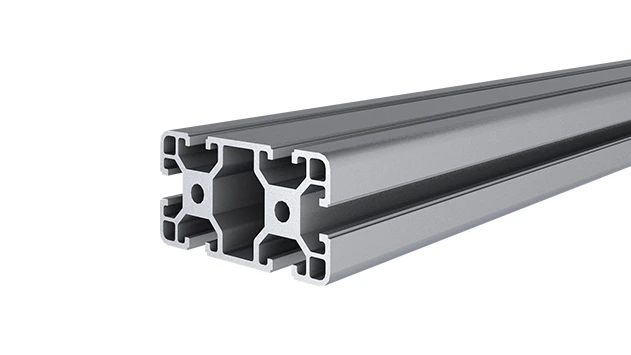
4080B is a 4.00x8.00 CM fractional 40 series square extrusion T-slot profile with two side open T-slots, each side with 4.00cm face, two side with 8.00cm face. The profile has align-a-grooves to assist in aligning connecting profiles.
Walk into any modern manufacturing facility, warehouse, or assembly plant, and you'll quickly notice a common thread: the push for safer, more efficient workspaces. Industrial safety isn't just about following regulations—it's about creating environments where workers feel supported, productive, and protected from harm. At the heart of this transformation lies ergonomic design, a philosophy that prioritizes human well-being by aligning tools, equipment, and spaces with the natural movements and needs of the people using them. And when it comes to building such workspaces, one material stands out for its versatility, durability, and compliance: the 4080B EU standard aluminum profile.
In this article, we'll explore how this specific aluminum extrusion profile is revolutionizing ergonomic workspace design, why it's become a go-to choice for lean system suppliers and safety-conscious facilities, and how integrating it with the right aluminum profile accessories can turn even the most chaotic work area into a model of efficiency and safety. Whether you're a plant manager looking to reduce workplace injuries, a designer tasked with creating user-centric workstations, or simply curious about the materials shaping the future of industrial spaces, this deep dive will show you why the 4080B profile isn't just a component—it's a cornerstone of modern industrial safety.
Why Ergonomics Matters: The Human Cost of Poor Workspace Design
Before we dive into the specifics of the 4080B profile, let's take a step back and understand why ergonomics is non-negotiable in today's industrial settings. Think about a typical assembly line worker: they might spend 8–10 hours a day bending, reaching, lifting, or standing in one position. Over time, these repetitive motions and awkward postures can lead to chronic issues like carpal tunnel syndrome, lower back pain, or muscle strain. According to the Bureau of Labor Statistics, musculoskeletal disorders (MSDs) account for nearly 30% of all workplace injury claims, costing businesses billions in lost productivity, medical bills, and workers' compensation each year.
But the impact goes beyond numbers. A worker struggling with neck pain from hunching over a poorly positioned workbench isn't just less productive—they're more likely to make mistakes, feel demotivated, or even leave the job. Ergonomic design addresses this by asking: How can we adjust the workspace to fit the worker, not the other way around? This is where the 4080B EU standard aluminum profile comes into play. Its unique properties make it the ideal building block for creating workstations that adapt to human needs, rather than forcing humans to adapt to rigid, one-size-fits-all equipment.
Meet the 4080B EU Standard Aluminum Profile: What Sets It Apart?
Aluminum extrusion profiles have been around for decades, but not all profiles are created equal. The 4080B EU standard aluminum profile, in particular, has gained a reputation as a workhorse in ergonomic design—and for good reason. Let's break down what makes it stand out.
Compliance You Can Trust: EU Standards and Safety
First and foremost, the "EU standard" label isn't just a marketing term. It means the 4080B profile meets strict European union regulations for material safety, structural integrity, and environmental impact. For manufacturers operating in the EU or exporting to European markets, this compliance is non-negotiable. But even beyond legal requirements, EU standards ensure the profile is free from harmful substances, has consistent wall thickness (critical for load-bearing), and undergoes rigorous testing for durability. When you're building a workstation that needs to support heavy tools or withstand daily wear and tear, knowing the material meets these standards isn't just reassuring—it's essential for long-term safety.
Dimensions Designed for Versatility: 40mm x 80mm of Possibility
The "4080" in 4080B refers to its cross-sectional dimensions: 40mm in width and 80mm in height. This size strikes a perfect balance between strength and flexibility. Unlike smaller profiles (like the 2020 or 3030), the 4080B can support heavier loads—think power tools, large workpieces, or multi-tiered shelving—without bending or warping. Yet it's not so large that it becomes cumbersome; its sleek design allows for compact workbench setups where space is limited. This versatility makes it ideal for everything from assembly line workstations to material racks, flow racks, and even custom storage solutions.
T-Slots: The Secret to Adaptability
If you've ever worked with aluminum extrusion profiles, you're probably familiar with T-slots—and for good reason. These longitudinal grooves running along the profile's length are what make the 4080B so adaptable. T-slots allow for quick, tool-free installation of aluminum profile accessories like end caps, connectors, brackets, and even custom attachments. Need to adjust the height of a workbench? Swap out a bracket in the T-slot. Want to add a tool holder or a monitor arm? Slide in a compatible fastener. This modularity means workspaces can evolve with changing needs—no need to replace entire workstations when a process updates. For ergonomics, this is a game-changer: workers can tweak their setup to their body type, task, or preference, reducing strain and increasing comfort.

From Profile to Workspace: Aluminum Profile Accessories That Enhance Safety
A profile is only as good as the accessories that bring it to life. The 4080B truly shines when paired with the right aluminum profile accessories, turning a simple extrusion into a fully functional, ergonomic workstation. Let's look at a few key accessories and how they contribute to industrial safety.
End Caps: Safety in the Details
It's the small things that often cause the most injuries. Sharp, exposed ends of aluminum profiles can lead to cuts or scrapes—especially in busy work areas where workers are moving quickly. That's where 4080B EU standard aluminum profile end caps come in. These simple, often rubber or plastic covers snap into the profile's ends, eliminating sharp edges. They're a low-cost, high-impact safety addition that shows a facility cares about the little risks that add up over time.
Adjustable Feet and Leveling Mounts: Stability for Uneven Floors
A wobbly workbench isn't just annoying—it's dangerous. An unstable surface can cause tools or materials to slide off, leading to falls or damage. Adjustable feet and leveling mounts, designed to fit into the 4080B's T-slots, solve this problem by letting you fine-tune the workstation's height and balance, even on uneven factory floors. This stability is crucial for precision tasks (like electronics assembly) and reduces the risk of strain from working at an awkwardly tilted surface.
Ergonomic Handles and Grip Attachments: Reducing Strain During Movement
Many workspaces require workers to move equipment—think mobile workbenches or turnover trolleys built with 4080B profiles. In these cases, ergonomic handles are a must. Unlike rigid, metal handles that dig into palms, soft-grip or contoured handles distribute pressure evenly, reducing hand fatigue and the risk of repetitive strain injuries (RSIs). Some handles even feature anti-slip coatings, a small detail that makes a big difference when hands are sweaty or oily.
Casters with Brakes: Mobility Without Compromise
Mobility is key in dynamic work environments, but it shouldn't come at the cost of safety. Casters designed for the 4080B profile let workstations roll smoothly from one area to another, but the real safety feature is the brake system. Heavy-duty casters with reliable locks ensure the workstation stays put when in use, preventing accidental movement that could lead to spills or collisions. For example, a mobile assembly cart used on a factory floor can be easily moved to the next station, then locked in place to keep workers stable while they work.
Building an Ergonomic Workbench: A Case Study in 4080B Design
To truly understand the impact of the 4080B EU standard aluminum profile, let's walk through a real-world example: designing an ergonomic assembly workbench for a small electronics manufacturer. This facility was struggling with high turnover and frequent complaints of neck and shoulder pain among workers, who spent hours hunched over static, fixed-height workbenches. Their goal? Create a workstation that could adjust to different workers (heights ranging from 5'2" to 6'4"), support tools and components, and reduce strain during repetitive tasks.
The Challenge: One Workbench, Many Workers
The factory's old workbenches were made of solid wood with fixed heights (36 inches) and no adjustability. Workers taller than average had to slouch; shorter workers stood on tiptoes or used unstable step stools. Tools were scattered on the surface, leading to reaching and stretching. The team needed a solution that could adapt to each worker's height, keep tools within easy reach, and provide a stable, clutter-free workspace.
The Solution: A 4080B-Based Modular Workbench
Working with a lean system supplier specializing in aluminum extrusion profiles, the facility opted for a custom workbench built around the 4080B EU standard aluminum profile. Here's how it came together:
- Adjustable Height: Using T-slot brackets and gas-spring height adjusters (fitted into the 4080B's T-slots), the workbench could be raised or lowered between 30 and 42 inches—accommodating all worker heights. A simple lever allowed workers to adjust the height in seconds, no tools required.
- Tool Racks and Pegboards: Aluminum profile accessories like side-mounted tool racks and pegboards were attached to the 4080B frame, keeping frequently used tools (screwdrivers, pliers, soldering irons) within arm's reach. This eliminated the need for workers to twist or stretch across the bench.
- Anti-Fatigue Matting: The base of the workbench, built with 4080B legs and adjustable feet, was paired with anti-fatigue mats to reduce foot and leg strain during long standing shifts.
- Integrated Cable Management: T-slots were used to route power cords and through the bench, keeping the surface clutter-free and reducing trip hazards.
- Overhead Shelving: A lightweight, 4080B-based overhead shelf provided storage for manuals and reference materials, positioned at eye level to prevent neck strain from looking down at papers on the bench.
The Results: Safety, Productivity, and Happier Workers
Six months after installing the new workbenches, the facility saw measurable improvements: MSD-related absences dropped by 40%, and worker surveys showed a 65% reduction in reported neck and shoulder pain. Productivity also increased—workers reported spending less time adjusting their positions and more time focused on tasks. Perhaps most importantly, turnover rates decreased, with several employees noting the new workbenches made them feel "valued and supported."
Beyond Workbenches: Other Applications of 4080B in Industrial Safety
While workbenches are a common application, the 4080B EU standard aluminum profile's impact on industrial safety extends far beyond assembly lines. Let's explore a few other ways it's being used to create safer workspaces.
Material Racks and Flow Racks: Reducing Lifting Injuries
Heavy lifting is one of the leading causes of back injuries in warehouses. Traditional material racks often require workers to bend, stoop, or reach overhead to retrieve items—movements that strain the spine. 4080B-based material racks, however, can be designed with adjustable shelving heights, ensuring items are stored at waist level (the "golden zone" for safe lifting). Paired with flow rack accessories like roller tracks (which let materials slide forward as items are removed), these racks minimize bending and reaching, turning a high-risk task into a low-effort one.
Machine Guards: Protecting Workers from Moving Parts
Machinery with exposed moving parts is a constant safety hazard. The 4080B profile, combined with clear polycarbonate panels, makes for durable, customizable machine guards. Unlike rigid metal guards that are hard to remove for maintenance, 4080B-based guards use quick-release T-slot fasteners, allowing workers to access machines safely during repairs—without compromising on protection during operation.
Assembly Line Carts: Streamlining Workflow, Reducing Strain
In facilities where materials need to move between stations, assembly line carts built with 4080B profiles are a game-changer. These carts can be customized with shelves, dividers, and even integrated scales, ensuring materials are organized and easy to access. With ergonomic handles and lockable casters, they reduce the need for manual lifting and carrying, cutting down on overexertion injuries.
Choosing the Right Partner: Why Lean System Suppliers Matter
While the 4080B EU standard aluminum profile is a powerful tool, its effectiveness depends on how it's sourced and implemented. This is where partnering with a reputable lean system supplier becomes critical. A knowledgeable supplier doesn't just sell profiles and accessories—they collaborate with you to design solutions that meet your specific safety and ergonomic needs.
Look for suppliers who:
- Understand Ergonomics: They should be able to explain how different profiles and accessories contribute to worker safety, not just list product specs.
- Offer Customization: Every workspace is unique. A good supplier will help you design custom workbenches, racks, or carts, not just push off-the-shelf products.
- Prioritize Quality: Cheap, non-compliant profiles might save money upfront, but they'll bend, break, or fail to meet safety standards over time. Look for suppliers who stand by their materials with warranties and compliance certificates.
- Provide Support: From installation guidance to post-purchase maintenance tips, a reliable supplier is there to ensure your investment in ergonomic design pays off long-term.
The Future of Industrial Safety: Where 4080B and Ergonomics Meet
As workplaces continue to evolve—with a growing focus on human-centric design, automation, and flexible manufacturing—the role of materials like the 4080B EU standard aluminum profile will only become more important. Imagine a future where workstations automatically adjust to a worker's height using sensors, or where modular profiles are reconfigured in minutes to accommodate new production lines. Thanks to the 4080B's adaptability and the ongoing innovation in aluminum profile accessories, this future is closer than you might think.
But even as technology advances, the core principle remains the same: industrial safety starts with putting people first. The 4080B profile isn't just a piece of metal—it's a commitment to creating workspaces where workers don't have to choose between productivity and well-being. It's about recognizing that a safe worker is a happy, efficient worker, and that investing in ergonomic design is an investment in your team's success.
Conclusion: Building a Safer, Smarter Workplace with 4080B
Industrial safety is a journey, not a destination. It requires ongoing attention to the needs of workers, a willingness to adapt to new challenges, and the right tools to turn good intentions into action. The 4080B EU standard aluminum profile, with its strength, versatility, and compatibility with aluminum profile accessories, is more than just a tool—it's a foundation for that journey.
Whether you're retrofitting an existing workspace or building a new facility from the ground up, remember this: every detail matters. From the T-slots that allow for quick adjustments to the end caps that prevent cuts, the choices you make in materials and design directly impact the people who keep your operation running. By choosing the 4080B profile, you're not just building workbenches or racks—you're building a culture of safety, one extrusion at a time.
| Aluminum Profile Type | Dimensions (W x H) | Key Use Cases | Safety Features | Load Capacity (Approx.) |
|---|---|---|---|---|
| 4080B EU Standard | 40mm x 80mm | Workbenches, material racks, machine guards | T-slots for accessories, EU compliance, high stability | Up to 500kg (static load) |
| 3030 EU Standard | 30mm x 30mm | Light-duty shelving, small tool holders | Lightweight, easy to maneuver | Up to 200kg (static load) |
| 2020 EU Standard | 20mm x 20mm | Prototyping, small electronics workstations | Compact, ideal for tight spaces | Up to 100kg (static load) |