- Company Articles
- Industry articles
- Industry standards
- Industry Certifications for Gusset ALP 4040: ISO, RoHS, and CE Compliance Explained

Industry Certifications for Gusset ALP 4040: ISO, RoHS, and CE Compliance Explained
Related Product
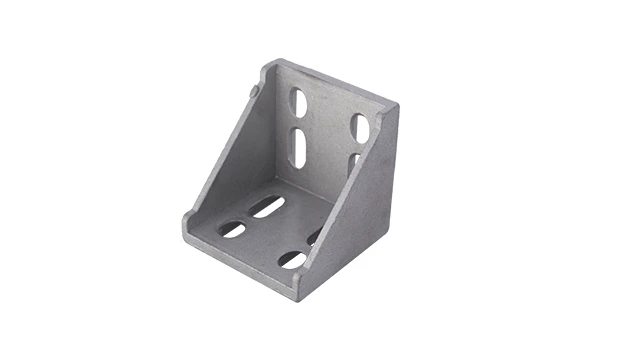
Gusset ALP 4040
The 4040 bracket/Gusset is an external fastening method that creates a 90 degree connection. 4040 means this size is used for 40 series aluminum profile with a quick connection by bolt and nut. It is a lightweight bracket that requires no machining servic
Why these stamps of approval matter for your aluminum profile structures, from workbenches to material racks
What Even Is a Gusset ALP 4040, Anyway?
Let's start with the basics. If you've ever walked through a manufacturing plant, a warehouse, or even a tech workshop, you've probably seen those sturdy, modular structures holding tools, parts, or products. Think workbenches where assembly line workers stand, or material racks stacked with components ready for production. Behind the scenes, those structures—often built from aluminum profiles—rely on small but mighty parts to stay strong. One of those unsung heroes? The gusset ALP 4040 .
Simply put, a gusset ALP 4040 is a reinforcement plate designed specifically for 4040 aluminum profiles (those long, groove-lined beams you see in modular setups). Picture it as a "corner helper": when two aluminum profiles meet at a joint—say, the corner of a workbench or the shelf of a material rack—the gusset ALP 4040 bolts onto both profiles, adding rigidity and preventing the joint from bending or twisting under load. It's the difference between a wobbly shelf that sags under weight and one that stays rock-solid, even when stacked with heavy components.
But here's the thing: not all gussets are created equal. The material (usually aluminum), the thickness, the precision of the bolt holes, and even the finish can affect how well it performs. And when you're building structures that keep production lines moving—like a material rack b (3 row and 3 floor) loaded with expensive parts—you can't afford to cut corners. That's where industry certifications come in. ISO, RoHS, CE—these aren't just random letters. They're guarantees that the gusset ALP 4040 in your aluminum profile setup is safe, reliable, and built to last.
Why Certifications Matter More Than You Think
Let's say you're a facility manager tasked with ordering parts for a new production line. You need workbenches, material racks, and all the aluminum profile accessories to put them together. A supplier sends you a quote for gusset ALP 4040s at half the price of their competitors. The photos look similar—same shape, same color. Why not save the money?
Here's the risk: that cheap gusset might be made from low-grade aluminum, with bolt holes drilled slightly off-center. Over time, as workers load parts onto the material rack, the misaligned holes cause stress on the joint. One day, the rack sags, parts topple, and suddenly you're dealing with damaged inventory, a halted production line, and maybe even worker injuries.
Certifications like ISO, RoHS, and CE exist to prevent that scenario. They're third-party verifications that a product meets strict standards for quality, safety, and environmental responsibility. For buyers, they're a shortcut to trust: instead of testing every component yourself, you can rely on these stamps to know the part will perform as promised. For manufacturers, they're a way to stand out in a crowded market—proof that they take their craft seriously.
And it's not just about avoiding disasters. Certifications open doors, too. If you want to sell your aluminum profile structures in Europe, for example, CE compliance is legally required. If a customer in another country asks for proof of quality, an ISO certification can be the difference between closing the deal and losing it to a competitor with better credentials.

ISO Compliance: The Gold Standard for Quality
What Is ISO, Anyway?
ISO stands for the International Organization for Standardization, a global body that develops voluntary standards for everything from technology to food safety. When we talk about ISO compliance for gusset ALP 4040, we're usually referring to ISO 9001 —the standard for quality management systems (QMS). Think of it as a playbook for how a company should run its operations to ensure consistent, high-quality products.
What ISO 9001 Requires for Gusset ALP 4040
To earn ISO 9001 certification, manufacturers of gusset ALP 4040 can't just "wing it." They have to document every step of the production process, from sourcing raw aluminum to shipping the final product. Here's what that looks like in practice:
- Material Traceability: The aluminum used to make the gusset must be traceable back to its source. That means keeping records of where the aluminum was mined, how it was alloyed, and even the batch number. If a defect is found later, the manufacturer can track exactly which gussets are affected and recall them—no guessing games.
- Dimensional Accuracy: Gusset ALP 4040 is designed to fit 4040 aluminum profiles, which have standardized dimensions (40mm x 40mm, hence the "4040"). ISO 9001 requires that every gusset's bolt holes, thickness, and shape are measured and checked against strict tolerances. A hole that's even 0.1mm off could mean the gusset doesn't align with the profile, weakening the joint.
- Process Control: From cutting the aluminum sheet to stamping the holes to finishing the surface, every step must be documented and controlled. For example, if the stamping machine is calibrated incorrectly, it might produce gussets with uneven edges. ISO 9001 mandates regular machine checks and operator training to prevent this.
- Continuous Improvement: ISO 9001 isn't a one-and-done certification. Manufacturers have to conduct regular audits, collect customer feedback, and fix any issues that pop up. If several customers report that gussets are bending under heavy loads, the company might adjust the aluminum alloy or increase the thickness—then update their processes to prevent the problem from recurring.
Real-World Impact: A manufacturer in China once struggled with high return rates for their gusset ALP 4040. Customers complained that the gussets didn't fit their 4040 aluminum profiles, causing assembly delays. After implementing ISO 9001, they added a second inspection step for bolt hole alignment. Within six months, returns dropped by 78%, and customers reported faster, smoother assembly times. That's the power of ISO 9001: it turns "good enough" into "consistently great."
Why This Matters for Your Workbench or Material Rack
When your workbench or material rack b (3 row and 3 floor) is built with ISO 9001-certified gusset ALP 4040, you're not just getting a part—you're getting peace of mind. You know the gusset will fit the first time, every time, so your team isn't wasting time filing down edges or drilling new holes. You know it's made from high-quality aluminum that won't corrode or crack after a few months of use. And if something does go wrong? The manufacturer's ISO 9001 QMS means they'll have a process to fix it quickly.

RoHS Compliance: Keeping Hazardous Substances Out
What Is RoHS, and Why Should You Care?
RoHS stands for "Restriction of Hazardous Substances," a European union directive that limits the use of certain dangerous materials in electrical and electronic equipment. While gusset ALP 4040 isn't "electronic," it's often used in structures that hold or support electronic devices (think workbenches in a smartphone factory). Plus, many countries outside the EU—including China, Japan, and the U.S.—have adopted similar regulations, making RoHS compliance a global expectation.
The "Bad Actors" RoHS Targets
RoHS bans or restricts six key substances in products: lead, mercury, cadmium, hexavalent chromium, polybrominated biphenyls (PBBs), and polybrominated diphenyl ethers (PBDEs). These chemicals are linked to health issues like neurological damage, cancer, and reproductive problems, and they're harmful to the environment when products are discarded.
For gusset ALP 4040, the biggest concern is usually the aluminum alloy itself. Some low-quality aluminum might contain trace amounts of lead or cadmium, added to make the metal easier to machine. RoHS compliance means testing the aluminum to ensure these substances are below strict limits (for example, lead must be less than 0.1% by weight).
How Manufacturers Ensure RoHS Compliance
RoHS isn't just about testing the final gusset—it starts with the raw materials. Reputable manufacturers will only source aluminum from suppliers who provide "RoHS compliance certificates" for their alloys. Then, during production, they might use X-ray fluorescence (XRF) analyzers to spot-check batches of gussets for hidden hazardous substances. If a batch fails, it's rejected—no exceptions.
Why go to all this trouble? For one, it's the law in the EU. Import a non-compliant gusset into Germany, and you could face fines or have your shipment seized. But beyond legal requirements, RoHS compliance is a selling point for eco-conscious buyers. More and more companies are prioritizing sustainability, and they want to know the parts they use aren't poisoning the planet or their workers.
A Cautionary Tale: A small U.S.-based supplier once tried to cut costs by buying cheap aluminum from an uncertified vendor. They didn't test for RoHS compliance, assuming "aluminum is aluminum." When a European customer ordered a batch of gusset ALP 4040 for their medical device assembly line, EU customs tested the shipment and found lead levels above RoHS limits. The shipment was destroyed, the supplier was fined €20,000, and they lost the customer for good. Moral of the story: RoHS compliance isn't optional if you want to play in the global market.
CE Compliance: The Key to Selling in Europe
What "CE" Stands For (and What It Doesn't)
CE stands for "Conformité Européene," which translates to "European Conformity." Unlike ISO 9001 (which is a voluntary QMS standard) or RoHS (which targets specific substances), CE marking is a legal requirement for products sold in the European Economic Area (EEA). It indicates that a product meets all EU health, safety, and environmental protection requirements.
But here's a common misconception: CE marking isn't a "certification" issued by a third party. Instead, it's a declaration by the manufacturer that their product complies with EU directives. To back up that declaration, manufacturers must conduct thorough testing, keep technical documentation, and even issue a "Declaration of Conformity" (DoC) if asked.
Which EU Directives Apply to Gusset ALP 4040?
Gusset ALP 4040 is typically used in structures like workbenches, material racks, or machine guards—all of which fall under the EU Machinery Directive (2006/42/EC) . This directive sets safety standards for machinery and "partly completed machinery" (like the components used to build it). For gusset ALP 4040, the key requirements include:
- Mechanical Strength: The gusset must withstand the loads it's designed for without breaking or deforming. For example, if it's used in a material rack holding 50kg per shelf, the gusset should pass load tests at 1.5 times that weight (75kg) to account for sudden impacts or overloading.
- Compatibility: The gusset must work safely with other components (like aluminum profiles and bolts) to prevent accidents. Sharp edges, for example, could cut workers during assembly—so CE-compliant gussets have rounded edges and smooth finishes.
- Documentation: The manufacturer must provide technical files that prove compliance, including test reports, design drawings, and risk assessments. If a customer in France asks for proof the gusset is safe, the manufacturer should be able to produce these documents within days.
Why CE Matters (Even If You're Not in Europe)
You might be thinking, "I'm based in the U.S.—why should I care about CE?" Here's the thing: CE compliance is a global benchmark for safety. Many buyers outside the EU look for CE marking as a quick way to verify that a product meets rigorous standards. For example, a manufacturer in India building a factory for a European client will likely require CE-compliant components to align with their client's safety protocols. Even if you never sell to Europe, CE marking can make your gusset ALP 4040 more attractive to international buyers.
ISO vs. RoHS vs. CE: How They Work Together
By now, you might be wondering: Do I need all three certifications? The short answer is: It depends on your needs. But here's the thing—these certifications aren't competing. They're complementary, each focusing on a different aspect of quality and safety. To show you how they overlap and differ, let's break them down side by side:
| Certification | Primary Focus | Key Question It Answers | Who Enforces It? | Most Valuable For |
|---|---|---|---|---|
| ISO 9001 | Quality management systems | "Can I trust this manufacturer to produce consistent, defect-free gussets?" | Accredited third-party auditors (e.g., SGS, Bureau Veritas) | Buyers who want reliable, repeatable performance |
| RoHS | Hazardous substance restriction | "Is this gusset safe for workers and the environment?" | EU member states (via customs and market surveillance) | Eco-conscious buyers and EU market access |
| CE | EU safety/health/environmental standards | "Is this gusset legal to sell in Europe?" | EU member states (legal requirement for EEA sales) | Manufacturers targeting European or global markets |
The best manufacturers don't just pick one—they aim for all three. Why? Because together, ISO 9001, RoHS, and CE create a "triangle of trust": consistent quality (ISO), safety for people and the planet (RoHS), and legal compliance (CE). When you see all three stamps on a gusset ALP 4040, you know the manufacturer takes their responsibility seriously.
Real-World Applications: How Certifications Protect Your Setup
Let's bring this down to earth. How do these certifications actually affect the day-to-day of running a facility? Let's look at two common scenarios where gusset ALP 4040 plays a starring role: workbenches and material racks.
Scenario 1: The Assembly Line Workbench
Imagine a workbench in an automotive parts factory. Every day, workers stand at this bench, using power tools to assemble engine components. The workbench is built from 4040 aluminum profiles, with gusset ALP 4040 reinforcing the corners. Now, what happens if those gussets aren't certified?
- No ISO 9001: The gussets might have uneven bolt holes, making the bench wobble. A wobbly bench leads to shaky hands, which leads to mistakes—like misaligned parts that fail quality checks. Over time, this costs the factory time and money in rework.
- No RoHS: The aluminum might contain lead, which can leach into the air as workers sand or drill the gussets. Over years, exposure could lead to lead poisoning, putting workers at risk and opening the company to lawsuits.
- No CE: If the bench is used in a European factory, the non-compliant gussets could lead to safety inspections, fines, or even a shutdown until the issue is fixed.
With all three certifications? The bench is stable (ISO), safe (RoHS), and legal (CE). Workers can focus on their jobs, not worrying about the bench falling apart or getting sick. The factory avoids costly mistakes and stays on the right side of regulations.
Scenario 2: The Material Rack B (3 Row and 3 Floor)
Now, picture a material rack b (3 row and 3 floor) in a warehouse, stacked with heavy plastic injection molds. Each shelf holds 200kg, and the rack is loaded and unloaded multiple times a day by forklifts. The gusset ALP 4040 at each joint is what keeps the rack from collapsing under that weight.
Without certifications, the risk is clear: a gusset could crack, causing a shelf to collapse. Molds crash to the floor, damaging equipment and delaying production. Worse, someone could be hurt. With ISO 9001, you know the gussets are made from high-strength aluminum and tested to handle the load. With RoHS, you know the aluminum isn't leaching toxins into the warehouse air. With CE, you know the rack meets EU safety standards—critical if the warehouse is in Spain or Germany.
In short, certifications turn "what if?" into "we're covered."
How to Verify Certifications (Because Not All Stamps Are Real)
Here's a dirty little secret: Some suppliers slap "ISO Certified" or "CE Compliant" stickers on their products without actually earning the certifications. It's called "certification fraud," and it's more common than you might think. So how do you make sure the gusset ALP 4040 you're buying is the real deal?
Ask for Documentation
Don't just take a supplier's word for it. Ask for copies of their ISO 9001 certificate (issued by an accredited body like SGS or TÜV), RoHS test reports, and CE Declaration of Conformity. A legitimate supplier will have these documents ready to share. If they hesitate or say, "We're certified, but we can't share the paperwork," that's a red flag.
Check Accreditation Bodies
ISO certificates should include the name of the accrediting body. You can verify this by searching the body's database (e.g., the International Accreditation Forum's directory). If the accrediting body isn't listed, the certificate is likely fake.
Inspect the Product
Certified gusset ALP 4040 often has subtle signs of quality: clean, even edges, precise bolt holes, and a consistent finish. Non-certified gussets might have rough edges, mismatched holes, or discoloration—clues that corners were cut in production.
Talk to References
Ask the supplier for references from other customers who use their gusset ALP 4040. A quick call to another facility manager can tell you if the supplier's certifications hold up in real-world use.
Final Thoughts: Certifications Are an Investment, Not a Cost
At the end of the day, certifications like ISO, RoHS, and CE aren't just "nice-to-haves." They're investments in your business's reputation, safety, and bottom line. A gusset ALP 4040 with all three certifications might cost a few cents more than a non-certified one, but that extra cost pales in comparison to the price of a collapsed rack, a workplace injury, or a lost customer.
Whether you're building a workbench, a material rack, or an entire production line, the components you choose matter. The next time you're shopping for gusset ALP 4040 or other aluminum profile accessories, remember: those little stamps of approval are more than just ink on paper. They're promises—promises that the part you're buying is safe, reliable, and built to keep your operations running smoothly, today and tomorrow.
So ask questions. Demand documentation. And don't settle for anything less than certified. Your team, your customers, and your bottom line will thank you.