- Company Articles
- Industry articles
- Industry standards
- Industry Compliance: 3060 National Standard Profile A for Regulatory-Compliant Manufacturing

Industry Compliance: 3060 National Standard Profile A for Regulatory-Compliant Manufacturing
Related Product
3060 National Standard Profile A
Workbench, production line, logistic rack, warehouse rack Industry: Manufacturer workshop, Automobile, Electronic, Assembling, logistic
In the fast-paced world of modern manufacturing, where innovation and efficiency often take center stage, there's a quiet but critical player that can make or break a company's success: regulatory compliance. Whether you're building medical devices that must adhere to FDA standards, automotive components governed by ISO regulations, or aerospace parts with zero-tolerance for defects, compliance isn't just a box to check—it's the foundation of trust, safety, and long-term viability. And at the heart of many compliant manufacturing facilities lies an unsung hero: the 3060 National Standard Profile A. This aluminum extrusion profile, often overlooked in favor of flashier technology, is the backbone of infrastructure that meets strict regulatory demands. Let's dive into why this humble piece of aluminum matters, how it supports compliance, and why it's become indispensable for manufacturers who refuse to cut corners.
1. The Stakes of Regulatory Compliance: Why Getting It Right Isn't Optional
Before we unpack what makes 3060 National Standard Profile A special, let's ground ourselves in why compliance matters in the first place. For manufacturers, non-compliance isn't just a slap on the wrist—it's a threat to everything from brand reputation to bottom lines, and in some cases, even legal liability. Imagine a scenario where a pharmaceutical packaging line uses a poorly constructed workbench made from substandard materials. If that workbench sags under the weight of equipment, causing a batch of medication to be contaminated, the fallout could include product recalls, fines from regulatory bodies like the FDA, and a loss of consumer trust that takes years to rebuild. In industries like aerospace, where a single faulty part can lead to catastrophic failures, compliance isn't just about following rules—it's about protecting lives.
Regulatory standards vary by industry, but they all share common goals: ensuring product safety, maintaining quality consistency, reducing environmental impact, and safeguarding worker health. For example, ISO 9001 sets guidelines for quality management systems, while ISO 13485 specifically targets medical device manufacturers. In the EU, CE marking certifies that products meet health, safety, and environmental requirements. In China, national standards (GB standards) dictate everything from material composition to structural integrity for industrial components. These standards aren't arbitrary; they're developed through rigorous testing and collaboration between industry experts, policymakers, and safety advocates to address real-world risks.
The challenge for manufacturers is that compliance isn't a one-and-done task. Regulations evolve as new risks emerge, technologies advance, and public expectations shift. A facility that was compliant five years ago might now be falling short due to updated safety protocols or material standards. This is where infrastructure plays a key role. The equipment, workstations, and material handling systems you use must not only meet today's regulations but also be adaptable enough to meet tomorrow's. Enter the 3060 National Standard Profile A—an aluminum extrusion profile designed with compliance and adaptability in mind.
2. Meet 3060 National Standard Profile A: More Than Just a Piece of Aluminum
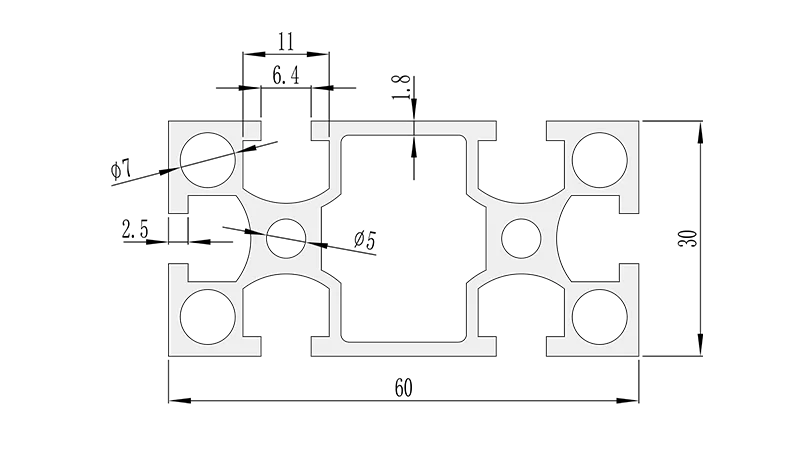
At first glance, the 3060 National Standard Profile A might look like any other aluminum extrusion—long, sleek, and defined by its T-slot design. But looks can be deceiving. This profile is the result of meticulous engineering to meet national standards, which means it's been tested for strength, durability, precision, and compatibility. Let's start with the basics: what exactly is it? The "3060" refers to its cross-sectional dimensions: 30 millimeters in width and 60 millimeters in height. This specific sizing isn't random; it strikes a balance between structural stability and versatility, making it suitable for a wide range of applications, from lightweight workbenches to heavy-duty material racks.
As an aluminum extrusion profile, 3060 Profile A is created through a process where aluminum alloy is forced through a die to create a consistent, uniform shape. This method ensures that every piece has the same dimensions and mechanical properties, eliminating the variability that comes with other manufacturing methods like welding or casting. The result is a profile with exceptional strength-to-weight ratio—aluminum is lightweight, which reduces strain on floors and makes installation easier, but it's also surprisingly strong, capable of supporting heavy loads without bending or warping over time. For manufacturers, this means infrastructure that can handle the demands of daily operations while maintaining structural integrity—a critical factor for compliance, where "good enough" isn't enough.
But what truly sets 3060 National Standard Profile A apart is the "National Standard" label. In China, national standards (often referred to as GB standards) are developed and enforced by the Standardization Administration of China (SAC) to ensure uniformity, safety, and quality across industries. When a profile is labeled as "National Standard," it means it has undergone rigorous testing to meet specific criteria, such as tensile strength, corrosion resistance, and dimensional accuracy. For example, GB/T 6892-2015 outlines standards for aluminum and aluminum alloy extruded profiles for general industrial use, covering everything from chemical composition to surface treatment. 3060 Profile A isn't just a generic aluminum extrusion—it's a profile that has been certified to meet these exacting standards, giving manufacturers confidence that it will perform as expected in regulated environments.
3. Why "National Standard" Matters: Beyond the Label
You might be wondering: Does a "National Standard" label really make that much of a difference? Can't I just use a cheaper, non-standard aluminum profile and get similar results? The short answer is no—and the long answer involves understanding the risks of cutting corners. Non-standard profiles often lack the consistency and quality control of their national standard counterparts. They might be made from lower-grade aluminum alloys, have imprecise dimensions, or fail to undergo proper testing for structural integrity. This might save money upfront, but it (buries hidden dangers) that can surface when you least expect them.
Consider the issue of dimensional accuracy. A non-standard profile might have T-slots that are slightly off-spec, making it difficult to attach aluminum profile accessories like brackets, shelves, or conveyor tracks securely. Over time, loose connections can lead to wobbling workbenches or unstable material racks—both of which are red flags during regulatory audits. In contrast, 3060 National Standard Profile A is manufactured to tight tolerances, ensuring that T-slots align perfectly with accessories, creating a secure, stable infrastructure. This precision isn't just about convenience; it's about safety. A workstation that doesn't wobble is less likely to cause operator fatigue or accidents, which is a key concern for occupational health and safety regulations.
Another critical factor is material quality. National standard profiles are made from high-purity aluminum alloys (often 6063 or 6061) that offer excellent corrosion resistance, thermal conductivity, and mechanical strength. These alloys are chosen for their ability to withstand the rigors of industrial environments, from exposure to chemicals to heavy loads. Non-standard profiles, on the other hand, might use recycled or impure aluminum, which can be prone to cracking, warping, or corrosion over time. In regulated industries like food processing or pharmaceuticals, corrosion isn't just a maintenance issue—it's a contamination risk. A rusted profile could flake into products, leading to recalls and regulatory penalties. 3060 Profile A's corrosion resistance, thanks to its high-quality aluminum alloy and optional anodized finish, eliminates this risk, making it suitable for even hygienic environments.
Perhaps most importantly, national standard profiles ensure interoperability. In a manufacturing facility, infrastructure isn't made up of isolated components—it's a system. Workbenches connect to conveyor systems, which feed into material racks, all of which need to work together seamlessly. National standards ensure that 3060 Profile A is compatible with other standard components, from aluminum profile accessories to lean system elements like flow racks and turnover trolleys. This interoperability reduces the risk of mismatched parts that could compromise structural integrity or efficiency. For example, a 3060 Profile A workbench can easily integrate with a roller track system (another common component in lean manufacturing) because both adhere to national standards for connection points and load capacities. This compatibility isn't accidental—it's built into the design of the profile.
4. Key Features of 3060 National Standard Profile A That Drive Compliance
So, what specific features of 3060 National Standard Profile A make it a compliance powerhouse? Let's break them down, one by one, to see how they address common regulatory requirements.
a. T-Slot Design: Flexibility Without Compromise
The T-slot is perhaps the most recognizable feature of aluminum extrusion profiles, and for good reason. These slots, running the length of the profile, allow for easy attachment of aluminum profile accessories—brackets, shelves, handles, lights, and more—without the need for welding or drilling. This might seem like a convenience feature, but it's actually a compliance game-changer. In regulated environments, flexibility is key because workflows and equipment needs change over time. For example, a medical device manufacturer might need to reconfigure a workbench to accommodate a new piece of testing equipment. With T-slots, this reconfiguration can be done quickly and without damaging the profile, ensuring that the workstation remains stable and secure after adjustments. Welding, on the other hand, weakens the material and creates uneven surfaces that can harbor contaminants—both of which are violations in cleanroom environments.
T-slots also promote modularity, which is essential for maintaining compliance during upgrades. Instead of replacing an entire workbench when regulations change (e.g., requiring higher load capacities), manufacturers can simply add reinforcement brackets or upgrade to heavier-duty accessories. This not only saves money but also reduces downtime, which is critical for meeting production deadlines while staying compliant.
b. Strength and Load Capacity: Meeting the Demands of Regulated Work
Regulatory standards often include specific requirements for load capacity—how much weight a workstation, rack, or conveyor system can safely support. For example, OSHA standards in the U.S. mandate that industrial workbenches must be able to withstand the weight of equipment, materials, and operator use without failure. 3060 National Standard Profile A is engineered to meet these demands, with a load capacity that's been tested and certified under national standards. Its 30x60mm cross-section provides a balance of vertical and horizontal strength, making it suitable for both heavy-duty applications (like material racks) and precision work (like assembly workbenches).
The secret to its strength lies in the aluminum extrusion process. During extrusion, the aluminum alloy is forced through a die under high pressure, resulting in a uniform grain structure that enhances tensile strength and rigidity. Unlike welded or bolted structures, which have weak points at connection joints, extruded profiles distribute weight evenly along their length. This means that a workbench built with 3060 Profile A is less likely to sag or warp under load, even over extended periods of use—critical for maintaining accuracy in quality control processes, another regulatory requirement.
c. Corrosion Resistance: Ideal for Clean and Harsh Environments
Many regulated industries, such as food processing, pharmaceuticals, and electronics manufacturing, require equipment that can withstand exposure to cleaning agents, moisture, or chemicals without corroding. Aluminum, by nature, forms a protective oxide layer when exposed to air, which resists corrosion. 3060 National Standard Profile A takes this a step further by using high-purity aluminum alloys and optional surface treatments like anodizing, which thickens the oxide layer and enhances resistance to chemicals and abrasion. This makes the profile suitable for use in cleanrooms, where frequent sanitization is required, and in outdoor or humid environments, where rust and corrosion are common concerns.
In electronics manufacturing, where electrostatic discharge (ESD) can damage sensitive components, some versions of 3060 Profile A even offer ESD-safe properties. By adding conductive additives to the aluminum alloy or applying an ESD coating, the profile can dissipate static electricity, preventing it from building up and causing damage. This is a critical feature for compliance with standards like ANSI/ESD S20.20, which governs ESD protection in electronics manufacturing.
d. Precision and Consistency: Avoiding Variability in Regulated Processes
Regulatory standards often require strict consistency in manufacturing processes to ensure product quality. For example, in automotive manufacturing, components must be assembled with precise tolerances to ensure they fit together correctly. 3060 National Standard Profile A is manufactured to tight dimensional tolerances, meaning that every piece of profile has the same width, height, and slot dimensions. This consistency ensures that workbenches, racks, and other infrastructure built with the profile are uniform, reducing variability in workflows. When operators work at identical workstations, they can perform tasks more consistently, leading to fewer errors and higher-quality products—both of which are key to passing regulatory audits.
Consistency also extends to load capacity and structural integrity. Because each profile is made from the same alloy and manufactured using the same process, manufacturers can rely on published load ratings without worrying about batch-to-batch variations. This predictability is essential for safety compliance, as it allows engineers to design infrastructure with confidence that it will meet or exceed regulatory load requirements.
e. Compatibility with Lean Systems: Streamlining Compliance Through Efficiency
While lean manufacturing is often associated with efficiency and waste reduction, it also has a direct impact on compliance. Lean systems, which focus on minimizing waste (including defects), are inherently aligned with regulatory goals of quality and safety. 3060 National Standard Profile A integrates seamlessly with lean manufacturing principles, making it easier for facilities to maintain compliance while improving efficiency. For example, the profile can be used to build flow racks, which organize materials for "first-in, first-out" (FIFO) processing—reducing the risk of expired or obsolete inventory, a common compliance issue in industries like food and pharmaceuticals. It can also be used to construct workstations designed for ergonomic efficiency, reducing worker fatigue and the risk of injuries, which is critical for compliance with occupational health and safety regulations like OSHA's General Duty Clause.
By supporting lean systems, 3060 Profile A helps manufacturers create a culture of continuous improvement, where compliance isn't just enforced from the top down but becomes part of daily operations. When infrastructure is flexible, modular, and efficient, employees are more likely to follow standardized work processes, reducing the risk of non-compliant shortcuts.
5. Real-World Applications: How Manufacturers Use 3060 Profile A to Stay Compliant
To truly understand the impact of 3060 National Standard Profile A, let's look at how it's used in real manufacturing settings. These examples highlight how the profile addresses specific compliance challenges across different industries.
Example 1: Medical Device Assembly Workbench
A medical device manufacturer in China produces surgical instruments that must meet ISO 13485 standards for quality management. One of their key compliance requirements is maintaining a clean, organized workspace to prevent contamination. They use 3060 National Standard Profile A to build modular workbenches for assembly. The T-slot design allows them to attach ESD-safe shelves, tool holders, and task lights, ensuring that all equipment is within reach and organized. The aluminum material is easy to clean with disinfectants, and the anodized surface resists corrosion from frequent sanitization. When the manufacturer needs to add a new inspection camera to the workbench, they simply attach a bracket to the T-slot—no welding, no drilling, and no disruption to the cleanroom environment. This flexibility allows them to adapt to new regulatory requirements (like updated inspection protocols) without overhauling their entire workspace.
Example 2: Automotive Component Material Rack
An automotive parts supplier produces engine components that must adhere to IATF 16949 (the global standard for automotive quality management). A key compliance challenge is ensuring that materials are stored safely to prevent damage and ensure traceability. The supplier uses 3060 Profile A to build material racks with adjustable shelves (using aluminum profile accessories like shelf brackets and dividers). The racks are designed to hold heavy pallets of components, and the profile's load capacity (certified to national standards) ensures that the shelves won't collapse under weight. The T-slot design allows them to add label holders for tracking materials via barcode scanners, supporting traceability requirements. When the supplier expands production to include larger components, they simply adjust the shelf height using the T-slots, avoiding the need to purchase new racks and minimizing downtime.
Example 3: Pharmaceutical Packaging Line Conveyor Support
A pharmaceutical company packages medications in blister packs, subject to FDA regulations that require strict control over product handling to prevent contamination. They use 3060 Profile A to support their conveyor systems, which transport blister packs through filling, sealing, and inspection stations. The profile's corrosion resistance is critical here, as the conveyor area is cleaned daily with chemical disinfectants. The T-slot design allows for easy attachment of guards and covers to prevent dust and debris from falling onto the product. Additionally, the profile's precision ensures that the conveyor runs smoothly, reducing jams that could lead to product damage or contamination. When the FDA updates its requirements for conveyor system cleanliness, the company can quickly reconfigure the guards using aluminum profile accessories, ensuring continued compliance without disrupting production.
6. The Role of Aluminum Profile Accessories: Completing the Compliance Puzzle
While 3060 National Standard Profile A is the star of the show, it can't do it alone. Aluminum profile accessories—brackets, connectors, end caps, hinges, and more—are the supporting cast that turn the profile into a fully functional, compliant system. These accessories are just as critical to compliance as the profile itself, because they ensure that the entire structure remains stable, secure, and adaptable.
Take brackets, for example. A workbench built with 3060 Profile A might use angle brackets to connect vertical and horizontal profiles. If those brackets are made from low-quality steel or have loose fasteners, the workbench could wobble, creating a safety hazard. National standard accessories, however, are designed to fit the profile's T-slots precisely, with secure fastening mechanisms (like T-bolts and nuts) that won't loosen over time. They're also made from materials that match the profile's corrosion resistance, ensuring that the entire system remains durable in harsh environments.
End caps are another small but important accessory. These plastic or aluminum caps fit over the ends of the profile to cover sharp edges, preventing cuts to workers—a key requirement for occupational safety regulations. They also prevent dust, debris, and liquids from entering the T-slots, which could compromise the profile's functionality over time. In cleanroom environments, end caps are even more critical, as they eliminate crevices where contaminants can hide.
Connectors, like corner brackets and T-joints, ensure that profiles are joined at precise angles, maintaining the structural integrity of the system. For example, a 90-degree corner bracket designed for 3060 Profile A will ensure that vertical and horizontal profiles meet at a perfect right angle, preventing the structure from racking (twisting) under load. This precision is essential for compliance with load capacity standards, as a misaligned joint could create weak points that fail under stress.
The takeaway here is that compliance isn't just about the profile—it's about the entire ecosystem of components. Manufacturers who use 3060 National Standard Profile A should always pair it with national standard accessories to ensure that the system as a whole meets regulatory requirements. Using non-standard accessories with a standard profile is like putting cheap tires on a luxury car: it undermines the performance and safety of the entire system.
7. Choosing the Right Supplier: Why Source Matters for Compliance
Even the best profile design is only as good as the supplier who manufactures it. When it comes to 3060 National Standard Profile A, not all suppliers are created equal. To ensure compliance, manufacturers must choose a supplier who adheres to strict quality control processes and can provide documentation to back up their claims.
What should you look for in a supplier? First, verify that they are certified to produce national standard profiles. This might include certifications like ISO 9001 for quality management or specific SAC certifications for compliance with GB standards. A reputable supplier will be happy to share these certifications and provide test reports for the profile, including data on tensile strength, load capacity, and corrosion resistance. They should also be able to trace the aluminum alloy used in the profile back to its source, ensuring that it meets chemical composition standards.
Second, look for a supplier with a track record of serving regulated industries. Manufacturers in medical device or aerospace manufacturing have stricter compliance requirements than those in general manufacturing, so a supplier who works with these industries is more likely to understand the nuances of regulatory standards. They may also offer value-added services, like custom cutting or surface treatments (anodizing, ESD coating), to meet specific compliance needs.
Finally, consider the supplier's commitment to consistency. Do they have rigorous quality control checks in place during production? Can they guarantee that every batch of 3060 Profile A meets the same dimensional and performance standards? Inconsistent profiles can lead to structural weaknesses or compatibility issues with accessories, both of which are compliance red flags. A good supplier will have processes like automated inspection systems and batch testing to ensure uniformity.
8. Conclusion: 3060 National Standard Profile A—Your Compliance Foundation
In the world of manufacturing, compliance is a journey, not a destination. Regulations evolve, technologies advance, and consumer expectations rise. To keep up, manufacturers need infrastructure that is not just compliant today but adaptable tomorrow. 3060 National Standard Profile A is more than just an aluminum extrusion—it's a compliance partner. Its national standard certification ensures quality and consistency, its T-slot design offers flexibility, and its durable, corrosion-resistant construction meets the demands of regulated environments. When paired with compatible aluminum profile accessories and sourced from a reputable supplier, it becomes the backbone of infrastructure that supports safety, quality, and efficiency.
Whether you're building workbenches for medical device assembly, material racks for automotive components, or conveyor supports for pharmaceutical packaging, 3060 National Standard Profile A delivers the reliability and adaptability you need to stay compliant. It's a reminder that compliance doesn't have to be a burden—in fact, with the right tools, it can be a competitive advantage. By investing in infrastructure that prioritizes standards, you're not just avoiding fines or recalls; you're building a reputation for quality and safety that sets you apart in the market.
So, the next time you walk through a manufacturing facility, take a closer look at the workbenches, racks, and conveyor systems. Chances are, you'll spot 3060 National Standard Profile A hard at work—quietly supporting compliance, one extrusion at a time.