- Company Articles
- Industry articles
- Industry standards
- Industry Safety Standards for Suction Cup Anti-Slip Foot Adjusters

Industry Safety Standards for Suction Cup Anti-Slip Foot Adjusters
Related Product
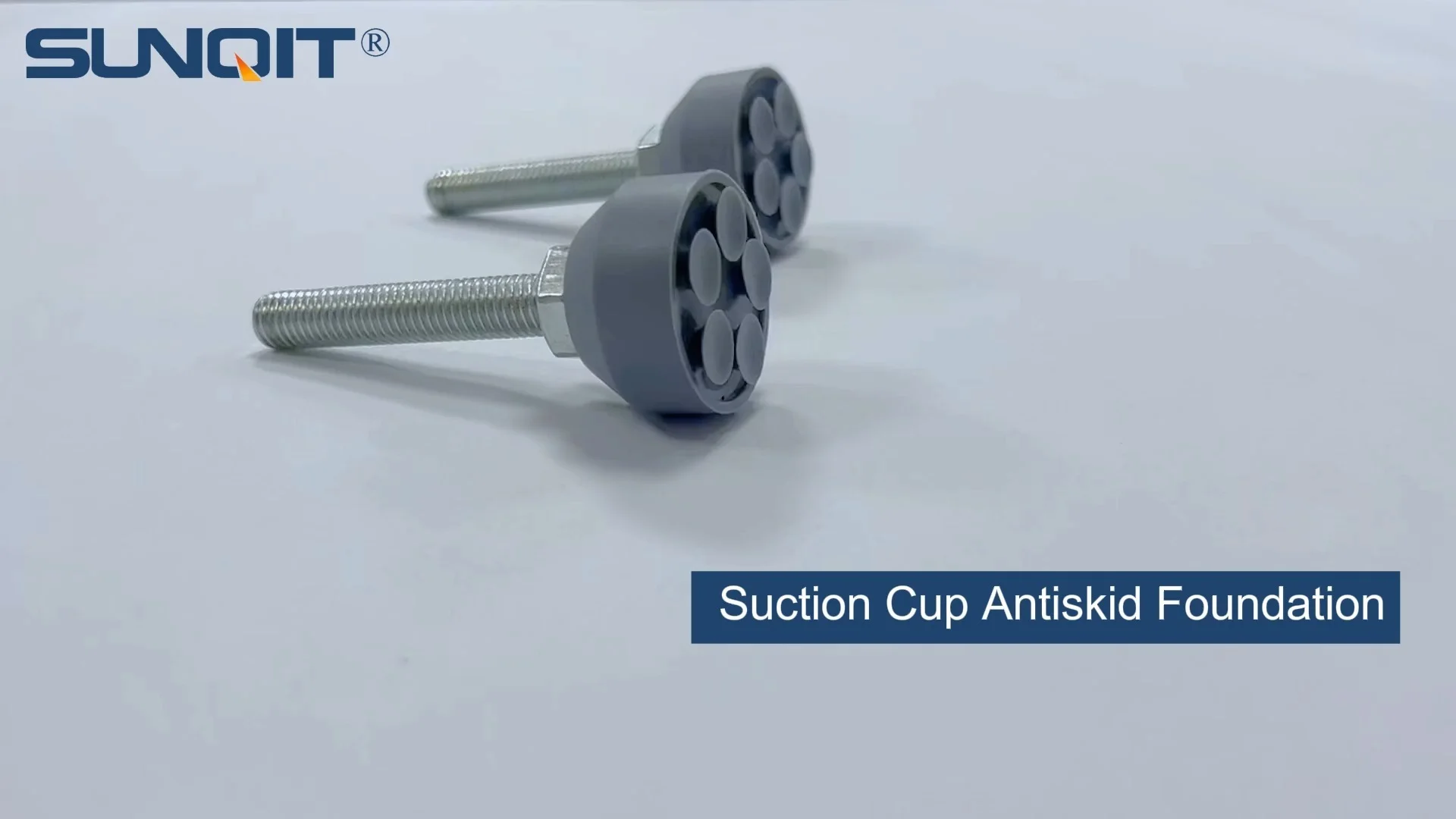
Suction Cup Anti-slip Foot Adjuster
D=35mm suction cup anti-slip foot adjusterï¼screw M10*55ï¼with a blot, used for workbench, flowrack pipe contact with groud.
Walk into any manufacturing plant, warehouse, or assembly line, and you'll notice a quiet hero holding everything together: the humble workbench. From electronics assembly to heavy machinery repair, workbenches are the backbone of daily operations. But what keeps these workbenches steady, even when tools clatter, parts pile up, or workers lean into tasks? Often, it's a component so unassuming it's easy to overlook: the suction cup anti-slip foot adjuster. These small but critical devices don't just prevent wobbling—they safeguard against accidents, protect equipment, and ensure compliance with strict industry safety regulations. In this article, we'll dive deep into the world of these unsung stabilizers, exploring why safety standards matter, how they're tested, and how they integrate with systems like lean pipe workbenches and aluminum profiles to create safer, more efficient workspaces.
The Hidden Risk: What Happens When Workbenches Fail
Imagine a scenario that plays out more often than we'd like to admit: A technician is midway through soldering a delicate circuit board on a lean pipe workbench. The bench, loaded with a microscope, soldering iron, and bins of tiny components, suddenly shifts. The technician jerks, the soldering iron skips, and the circuit board is ruined. Worse, if the bench tips further, tools could fall, or the worker might lose balance—leading to cuts, burns, or worse. This isn't just a hypothetical. According to the Occupational Safety and Health Administration (OSHA), unstable work surfaces contribute to nearly 15% of non-fatal workplace injuries annually, with costs averaging $40,000 per incident for medical bills, lost productivity, and workers' compensation.
The root cause? Often, it's inadequate foot support. Uneven floors, heavy loads, or daily wear and tear can turn a stable workbench into a hazard. That's where suction cup anti-slip foot adjusters step in. Unlike basic rubber feet or fixed pads, these adjusters combine two key features: a suction cup base that grips smooth surfaces (like concrete or tile) and a threaded stem that lets users tweak height to compensate for uneven ground. The result? A workbench that stays anchored, even when pushed, pulled, or loaded to capacity.
Real-World Impact: In 2023, a automotive parts manufacturer in Ohio reported a 60% drop in workbench-related incidents after upgrading to suction cup anti-slip foot adjusters. Prior to the switch, workers frequently adjusted wobbly benches by stacking cardboard or wood shims—quick fixes that often slipped out of place. After installing adjustable feet with suction bases, the plant saw zero reported falls or tool damage from unstable workbenches over six months. "It's like night and day," said the facility manager. "We used to spend hours fixing shims; now, we set the adjusters once and forget them."
What Are Suction Cup Anti-Slip Foot Adjusters, Exactly?
At first glance, a suction cup anti-slip foot adjuster might look like a simple plastic or metal cylinder with a rubber bottom. But its design is the result of careful engineering. Let's break down its components:
1. The Suction Cup Base: Grip That Doesn't Let Go
The bottom of the adjuster features a flexible suction cup, typically made of nitrile rubber or polyurethane. These materials are chosen for their elasticity and resistance to oils, chemicals, and temperature extremes—common in industrial environments. When the adjuster is pressed down, the suction cup expels air, creating a vacuum seal with the floor. This seal isn't just for show: it can generate up to 50 pounds of holding force, depending on the cup size and surface texture. For rough floors, some models add a ribbed or patterned anti-slip layer to the suction cup, ensuring grip even when the vacuum seal isn't perfect.
2. The Threaded Stem: Adjusting for Imperfection
Above the suction cup is a threaded stem, usually made of steel or aluminum, that screws into the workbench leg. By turning the stem, users can raise or lower the foot by fractions of an inch—enough to level a bench on a floor with small cracks, bumps, or slopes. Most stems have a hex nut or knurled surface for easy adjustment, even with gloved hands. Some premium models include a lock nut to prevent the stem from unscrewing over time, a critical feature in high-vibration environments like near conveyor belts or heavy machinery.
3. The Housing: Durability Under Pressure
The housing connects the suction cup to the stem and is often made of reinforced plastic (like ABS) or die-cast aluminum. It needs to withstand heavy loads—some adjusters support up to 1,000 pounds per foot—and resist impacts from dropped tools or shifting equipment. Aluminum housing, in particular, is popular for its strength-to-weight ratio, making it ideal for portable workbenches or aluminum profile setups where weight matters.
Together, these components transform a basic workbench into a stable platform. But to ensure they perform reliably, the industry has developed strict safety standards that govern everything from material quality to performance testing.

Why Industry Safety Standards Matter: Beyond "Good Enough"
In manufacturing, "good enough" is never good enough—especially when lives are on the line. Safety standards for suction cup anti-slip foot adjusters aren't just guidelines; they're legal requirements, designed to protect workers, reduce liability, and ensure consistency across products. Let's explore the key standards that manufacturers and facility managers need to know.
OSHA: The Baseline for Workplace Safety
In the United States, the Occupational Safety and Health Administration (OSHA) sets the floor for workplace safety. While OSHA doesn't have a specific standard dedicated to foot adjusters, it does mandate that "all working surfaces shall be kept in a clean, orderly, and sanitary condition" (29 CFR 1910.22) and that "permanent aisles and passageways shall be appropriately marked" (29 CFR 1910.22(b)). An unstable workbench violates these rules by creating a disorderly, unsafe surface. OSHA inspectors often cite facilities for wobbly workbenches, with fines reaching $13,653 per violation for serious offenses. By using foot adjusters that meet recognized safety standards, employers can demonstrate compliance and avoid costly penalties.
ISO 12100: Designing for Safety
Internationally, the International Organization for Standardization (ISO) provides guidelines for machine safety, including workbenches and their components. ISO 12100:2010, "Safety of machinery — General principles for design — Risk assessment and risk reduction," requires manufacturers to identify hazards in their products and take steps to mitigate them. For foot adjusters, this means testing for slip resistance, load capacity, and durability. ISO 12100 also emphasizes "ergonomic design," ensuring that adjusters are easy to use without straining—for example, requiring that height adjustments can be made with minimal force, even for workers with limited hand strength.
ANSI/BIFMA X5.5: Furniture Safety Standards
For workbenches and office furniture, the American National Standards Institute (ANSI) and Business and Institutional Furniture Manufacturers Association (BIFMA) have developed ANSI/BIFMA X5.5-2017, which includes testing protocols for stability. While this standard focuses on office furniture, many industrial workbench manufacturers adopt its criteria for load testing and stability. For example, ANSI/BIFMA requires that a workbench loaded to 150% of its rated capacity must not tip when a 50-pound horizontal force is applied to the top edge—a test that directly relies on the performance of foot adjusters.

Testing Protocols: Ensuring Foot Adjusters Meet the Mark
Meeting safety standards isn't just about checking a box—it requires rigorous testing. Let's walk through the key tests that suction cup anti-slip foot adjusters undergo before they reach the market.
1. Slip Resistance Testing: No Slipping, No Sliding
Slip resistance is measured using a tribometer, a device that simulates friction between the foot adjuster and different floor surfaces (concrete, tile, vinyl, etc.). The test involves pulling the adjuster across the surface at a constant speed and measuring the force required to break the suction or cause sliding. For industrial use, the adjuster must achieve a coefficient of friction (COF) of at least 0.6 on dry concrete—a standard set by OSHA to prevent slips. On wet or oily surfaces, the COF should still exceed 0.4 to maintain safety.
2. Load Capacity Testing: Bearing the Weight
Workbenches aren't light. A typical lean pipe workbench with tools, materials, and a worker can weigh 500 pounds or more. Foot adjusters must support their share of that load without deforming or failing. Testing involves mounting the adjuster to a steel plate and applying a static load (often 1,000 pounds for 24 hours) to check for cracks, bending, or loss of suction. Dynamic load testing is also critical: the adjuster is subjected to repeated weight changes (mimicking workers adding/removing tools) to ensure it doesn't loosen or fail over time.
3. Environmental Testing: Surviving the Workspace
Industrial environments are tough. Foot adjusters may be exposed to oil, coolant, cleaning chemicals, extreme temperatures (-40°F to 180°F), and UV light. Testing involves immersing adjusters in common industrial fluids for 72 hours to check for swelling or degradation of the suction cup. Thermal cycling—exposing the adjuster to extreme hot and cold—ensures the materials don't become brittle in winter or lose elasticity in summer. For outdoor or warehouse use, UV testing simulates years of sunlight exposure to prevent cracking.
The table below summarizes key testing standards and their requirements:
| Test Type | Standard | Requirement | Why It Matters |
|---|---|---|---|
| Slip Resistance | OSHA 1910.22 | COF ≥ 0.6 (dry concrete); ≥ 0.4 (wet/oily) | Prevents workbench sliding during use |
| Static Load | ANSI/BIFMA X5.5 | Supports 1,000 lbs for 24 hours without failure | Ensures stability under heavy, constant loads |
| Chemical Resistance | ISO 1817 | No swelling/degradation after 72-hour fluid exposure | Maintains performance in oily/chemical-rich environments |
| Thermal Cycling | ASTM D638 | No cracking after 100 cycles (-40°F to 180°F) | Works reliably in extreme temperature conditions |
| Adjustment Durability | Custom Industry Test | 500 height adjustments without thread stripping | Long-term usability for frequent re-leveling |

Integration with Lean Pipe Workbenches and Aluminum Profiles
Suction cup anti-slip foot adjusters don't work in isolation—they're part of a larger system, often paired with lean pipe workbenches and aluminum profiles. Lean manufacturing principles emphasize efficiency, flexibility, and waste reduction, and these workbenches are designed to adapt to changing production needs. But flexibility shouldn't come at the cost of stability. That's where adjusters shine.
Lean Pipe Workbenches: Flexibility Meets Stability
Lean pipe workbenches are built using lightweight steel or aluminum pipes (called "lean pipes") and modular joints, allowing workers to reconfigure the bench layout in minutes. But this modularity can make the bench top-heavy or uneven if not properly stabilized. Suction cup anti-slip foot adjusters are the perfect complement: their adjustable height compensates for uneven pipes or floors, while the suction base prevents the bench from shifting during reconfiguration. For example, a workbench used for small-parts assembly one week and tool storage the next can be re-leveled quickly with a few twists of the adjusters, ensuring safety no matter the setup.
Aluminum Profiles: Strength in Lightweight Design
Aluminum profiles are another staple of modern workspaces, prized for their strength, corrosion resistance, and sleek appearance. Workbenches made with aluminum profiles are lighter than steel models, making them easier to move—but that mobility increases the risk of sliding. Suction cup anti-slip foot adjusters address this by anchoring the bench to the floor when in use. Many aluminum profile manufacturers design their legs with threaded holes specifically for these adjusters, ensuring a secure fit that won't strip or loosen over time. For added versatility, some adjusters even come with swivel bases, allowing the bench to tilt slightly (for ergonomic tasks) while still maintaining anti-slip grip.
Caster wheels are often paired with foot adjusters in these setups, creating a "mobile-stable" hybrid. When workers need to move the bench, they raise the adjusters, lower the casters, and roll. When in use, they lower the adjusters, raise the casters, and lock the bench in place. This combination of mobility and stability is a game-changer for dynamic work environments, where floor layouts change weekly or even daily.
Case Study: A Electronics Assembly Plant's Transformation
A California-based electronics manufacturer recently switched from fixed steel workbenches to lean pipe workbenches with aluminum profiles. The goal was to reduce setup time for new product lines, but initial feedback was concerning: workers reported benches sliding during assembly, especially when using power tools. The solution? Adding suction cup anti-slip foot adjusters to each bench leg. "We were worried the adjusters would slow down reconfiguration," said the production supervisor, "but they actually sped things up. Now, we roll the bench into place, twist the adjusters to level, and start working—no more shims, no more slipping. The adjusters even help with ergonomics: we can tweak the height by half an inch to match each worker's posture." Within three months, the plant saw a 25% reduction in assembly errors (attributed to steadier work surfaces) and a 40% faster setup time for new lines.
Installation and Maintenance: Getting the Most from Your Foot Adjusters
Even the best foot adjusters won't perform well if installed incorrectly or neglected. Here's how to ensure they deliver maximum safety and longevity.
Installation Best Practices
1. Clean the Floor First: Dirt, oil, or debris under the suction cup will break the vacuum seal. Wipe the floor with a degreaser before installing the adjusters, and ensure the surface is dry. For rough concrete, use a wire brush to remove loose particles.
2. Align the Threads Properly: Cross-threading the adjuster into the workbench leg can strip the threads, rendering it useless. Start by hand, turning the adjuster clockwise until it seats snugly, then use a wrench for final tightening (don't over-tighten—this can crack plastic housings).
3. Level in All Directions: Use a spirit level on the workbench top to check for both front-to-back and side-to-side wobble. Adjust each foot individually, alternating between legs, until the bubble is centered. Lock the adjusters with the lock nut (if included) to prevent future movement.
4. Test the Grip: After installation, push the workbench firmly from all sides to ensure it doesn't slide. If it moves, check for debris under the suction cup or re-tighten the adjuster to improve contact pressure.
Maintenance Tips for Longevity
1. Inspect Monthly: Check the suction cups for cracks, tears, or hardening (a sign of aging). replace any damaged cups immediately—even a small tear can reduce suction by 50%. Also, tighten lock nuts if they've loosened from vibration.
2. Clean the Suction Cups: Wipe the cups with soapy water every month to remove oil or grime. For stubborn residue, use rubbing alcohol (avoid harsh solvents, which can degrade rubber).
3. Lubricate Threads: Apply a small amount of silicone grease to the threaded stem twice a year to prevent rust and make adjustments smoother. Avoid oil-based lubricants, which can attract dirt.
4. replace Every 2–3 Years: Even with proper maintenance, rubber suction cups degrade over time (UV light, temperature cycles, and chemical exposure take their toll). Plan to replace adjusters every 2–3 years for optimal performance.
The Future of Foot Adjusters: Smart Stability and Sustainability
As workplaces evolve, so too do the tools that keep them safe. The next generation of suction cup anti-slip foot adjusters is poised to bring even more innovation, driven by two trends: smart technology and sustainability.
Smart Adjusters: Sensors for Proactive Safety
Imagine a foot adjuster that alerts you before it fails. Some manufacturers are developing "smart" adjusters with built-in sensors that measure suction pressure, load, and temperature. These sensors wirelessly transmit data to a central dashboard, where managers can monitor the health of every workbench in real time. If an adjuster's suction drops below a safe threshold (due to a cracked cup or debris), the system sends an alert, prompting maintenance before an accident occurs. For large facilities, this predictive maintenance can reduce downtime and prevent costly injuries.
Sustainable Materials: Green Grip
Eco-conscious manufacturers are also rethinking materials. Traditional suction cups are made from petroleum-based rubber, but new options include plant-based rubbers (derived from soy or castor oil) and recycled plastics for the housing. Some companies are even experimenting with mushroom mycelium—a biodegradable, shock-absorbent material—as a sustainable alternative to plastic components. These green adjusters perform as well as their traditional counterparts but leave a smaller environmental footprint, aligning with corporate sustainability goals.
Another sustainable trend is modular design: adjusters that allow users to replace just the suction cup (instead of the entire unit) when it wears out. This reduces waste and lowers long-term costs, making safety more accessible for small businesses.
Conclusion: Safety Starts from the Ground Up
Suction cup anti-slip foot adjusters may be small, but their impact on workplace safety is enormous. By anchoring workbenches, absorbing uneven floors, and resisting slips, these unassuming devices prevent injuries, protect equipment, and keep operations running smoothly. Whether paired with lean pipe workbenches, aluminum profiles, or caster wheels, they're a cornerstone of modern, efficient, and safe workspaces.
As we've explored, industry safety standards—from OSHA to ISO—ensure these adjusters perform when it matters most. Rigorous testing, proper installation, and regular maintenance are key to unlocking their full potential. And with innovations like smart sensors and sustainable materials on the horizon, the future of foot adjusters looks brighter (and safer) than ever.
So the next time you stand at a workbench, take a moment to glance down. Chances are, there's a suction cup anti-slip foot adjuster quietly doing its job—keeping you steady, secure, and focused on the task at hand. In the world of workplace safety, sometimes the smallest components make the biggest difference.