- Company Articles
- Industry articles
- Industry standards
- Industry Standards for 3030 Aluminum Profile End Caps: ISO & DIN Compliance

Industry Standards for 3030 Aluminum Profile End Caps: ISO & DIN Compliance
Related Product
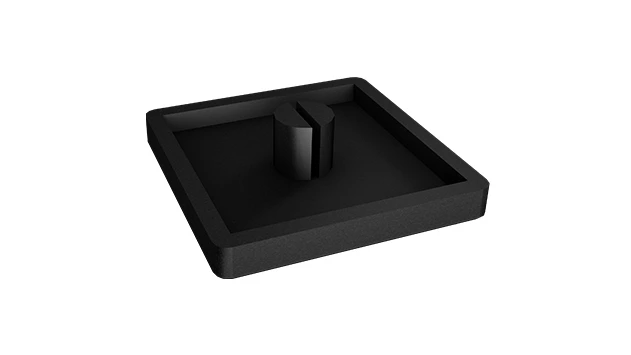
3030 Aluminum Profile End Cap
The aluminum profile end cap adds a finishing touch to your project and closes off profile ends to limit dust and debris buildup, also it can avaid some scratch for material and labor during the assemble work.
Walk into any modern factory, warehouse, or even a high-tech office, and you'll likely spot aluminum profiles hard at work. These sleek, versatile structures form the backbone of everything from assembly line workbenches to modular shelving, thanks to their unique blend of strength, lightweight design, and adaptability. But for all their robustness, aluminum profiles—especially the popular 3030 series—rely on small, often overlooked components to perform at their best. Enter the 3030 aluminum profile end cap: a humble accessory that plays a critical role in safety, durability, and functionality. Yet, not all end caps are created equal. To ensure these tiny components deliver consistent performance, two major sets of standards reign supreme: ISO (International Organization for Standardization) and DIN (Deutsches Institut für Normung). In this article, we'll dive into why these standards matter, what they entail, and how compliance shapes the way we design, build, and maintain aluminum extrusion profile systems—from lean manufacturing setups to everyday industrial applications.
What Are 3030 Aluminum Profile End Caps, Anyway?
Before we get into standards, let's start with the basics: What exactly is a 3030 aluminum profile end cap? If you've ever run your hand along the edge of an aluminum extrusion profile, you know the raw ends can be sharp, rough, or prone to collecting dust and debris. End caps are the simple, often unassuming covers that snap or press onto these exposed ends, transforming a functional but unfinished profile into a polished, safe, and efficient component.
The "3030" in their name refers to the profile's dimensions: 30mm in width and 30mm in height—a common size used in everything from lightweight workbenches to medium-duty material racks. These end caps are typically made from plastic (like polypropylene or ABS), rubber, or even aluminum, depending on the application. Plastic end caps, for example, are popular for indoor use where cost and impact resistance matter, while aluminum end caps might be chosen for heavy-duty or high-temperature environments.
But their purpose goes beyond aesthetics. A well-designed end cap prevents moisture, dirt, or small tools from getting stuck inside the profile's hollow core—critical for maintaining the structural integrity of the extrusion over time. They also eliminate sharp edges, reducing the risk of cuts or scrapes for workers handling the profiles. In dynamic settings, like conveyor systems or turnover trolleys, end caps even help dampen vibrations, ensuring the profile stays securely connected to its accessories.
Why Industry Standards Matter: It's Not Just About "Fitting In"
Imagine ordering a set of end caps for your 3030 aluminum profiles, only to find they're too loose and fall off during use, or too tight and crack when you try to install them. Or worse, they're made from brittle plastic that shatters after a few months, leaving the profile ends exposed and unsafe. These scenarios aren't just frustrating—they're costly. Loose end caps can jam conveyor belts, sharp edges can lead to workplace injuries, and frequent replacements eat into maintenance budgets. This is where industry standards step in.
ISO and DIN standards act as a universal language between manufacturers, suppliers, and end-users. They define everything from the material composition of end caps to their dimensional tolerances, ensuring that a 3030 aluminum profile end cap made in Germany fits just as well as one made in China. For businesses relying on lean system setups—where efficiency and reliability are paramount—this consistency is non-negotiable. A lean system thrives on predictable, interchangeable components; non-compliant end caps introduce variables that disrupt workflows and erode trust in the entire setup.
Beyond compatibility, standards also prioritize safety. For example, ISO standards might specify impact resistance requirements to ensure end caps don't break under normal handling, while DIN standards could set limits on harmful chemicals in plastic end caps, protecting workers from exposure. In regulated industries like healthcare or aerospace, compliance with these standards isn't just a best practice—it's legally required.

ISO Standards: Global Benchmarks for Aluminum Profile End Caps
ISO, a worldwide federation of national standards bodies, is known for its focus on global interoperability. When it comes to aluminum extrusion profile components like end caps, ISO standards take a broad approach, covering everything from material properties to performance testing. Let's break down the key ISO standards that apply to 3030 aluminum profile end caps:
ISO 2768: General Tolerances – This standard is foundational for dimensional accuracy. It defines the permissible deviations in size, shape, and position for components like end caps. For a 3030 end cap, ISO 2768 might specify that the inner diameter must be within ±0.2mm of the profile's outer diameter to ensure a snug fit without being too tight. This tolerance ensures that end caps from different suppliers can be used interchangeably, a boon for businesses with global supply chains.
ISO 6892-1: Tensile Testing of Metals – While end caps are often made of plastic, if they include metal components (like reinforced inserts), ISO 6892-1 applies. It outlines procedures for testing the tensile strength of these materials, ensuring they can withstand the forces of installation and daily use without deforming or breaking.
ISO 10299: Plastics – Determination of Impact Strength – For plastic end caps, impact resistance is critical. ISO 10299 specifies methods for testing how well a plastic end cap absorbs sudden shocks—like being dropped or hit by a tool. A compliant end cap should crack only under extreme force, ensuring longevity in busy industrial environments.
What makes ISO standards unique is their emphasis on consensus. They're developed by experts from around the world, ensuring they reflect the needs of diverse industries and climates. For example, an ISO-compliant end cap must perform consistently whether it's installed in a hot factory in Texas or a cold warehouse in Sweden.

DIN Standards: Precision and Rigor from Germany
If ISO is the global generalist, DIN is the European specialist—known for its precision and attention to detail. Developed by Germany's national standards body, DIN standards are widely adopted across Europe and often serve as the basis for other regional standards. When it comes to 3030 aluminum profile end caps, DIN standards dive deep into application-specific requirements, making them a favorite among engineers and manufacturers who prioritize exacting performance.
DIN EN 755: Aluminum and Aluminum Alloys – Extruded Profiles – While this standard focuses on the profiles themselves, it indirectly impacts end caps by setting strict tolerances for the profile's dimensions and surface finish. A 3030 profile that meets DIN EN 755 will have consistent outer diameters and smooth edges, ensuring end caps designed to DIN specs fit perfectly.
DIN 53438: Testing of Plastics – Determination of Hardness – For plastic end caps, hardness is a key (indicator) of durability. DIN 53438 specifies methods for measuring hardness using a Shore durometer, ensuring end caps are rigid enough to protect profile ends but not so brittle that they crack during installation. For example, a DIN-compliant end cap might require a Shore A hardness of 70±5, balancing flexibility and strength.
DIN ISO 11925-2: Reaction to Fire Tests for Building Products – In industries where fire safety is critical (like automotive or construction), DIN ISO 11925-2 sets standards for how end caps behave in fire. It classifies materials based on flame spread, heat release, and smoke production, ensuring end caps don't contribute to fire hazards.
DIN standards are also known for their rigorous testing protocols. Unlike some ISO standards, which may offer guidelines, DIN often specifies exact testing equipment and procedures, leaving little room for interpretation. This precision makes DIN-compliant end caps a top choice for applications where failure is not an option—think aerospace manufacturing or medical device production.
ISO vs. DIN: Key Differences and Overlaps
At first glance, ISO and DIN standards might seem interchangeable, but they have distinct focuses that cater to different needs. To help you understand which is right for your project, let's compare them side by side:
| Criteria | ISO Standards | DIN Standards |
|---|---|---|
| Scope | Global focus, designed for interoperability across industries and regions. | European focus, with detailed, application-specific requirements. |
| Material Requirements | Broad guidelines (e.g., "suitable for intended use"). | Specific metrics (e.g., exact Shore hardness for plastics). |
| Dimensional Tolerances | General tolerances (e.g., ±0.2mm for 30mm components). | Tighter, application-specific tolerances (e.g., ±0.1mm for precision machinery). |
| Testing Methods | Flexible, allowing alternative methods if they meet performance goals. | Rigid, specifying exact equipment and procedures. |
| Adoption | Widely used in North America, Asia, and global supply chains. | Predominant in Europe and industries with strict precision requirements. |
Despite these differences, there's significant overlap. Many DIN standards are actually "DIN EN ISO" standards, meaning they adopt ISO standards with minor European adaptations. For example, DIN EN ISO 2768 is identical to ISO 2768 but includes notes specific to European manufacturing practices. This overlap makes it easier for suppliers to meet both sets of standards, offering end-users more flexibility.
So, which should you choose? If your business operates globally or uses components from multiple regions, ISO compliance is a safe bet. If you're based in Europe or work in a high-precision industry (like automotive engineering), DIN compliance may be required by law or customer specifications. In many cases, the best approach is to look for end caps that meet both—many reputable aluminum profile accessories suppliers offer dual-compliant products to cater to diverse needs.
Compliance Testing: How End Caps Earn Their Certification
Claiming compliance is one thing; proving it is another. To earn ISO or DIN certification, manufacturers must subject their 3030 aluminum profile end caps to rigorous testing. Let's walk through the key tests a compliant end cap must pass:
Fit and Retention Test – The most basic test: Can the end cap be installed easily, and will it stay in place? Testers measure the force required to push the end cap onto a 3030 profile (installation force) and the force needed to pull it off (retention force). ISO might specify a retention force of at least 50N, while DIN could require 60N for high-vibration environments. If an end cap fails this test, it's rejected—no exceptions.
Environmental Aging Test – End caps don't live in perfect conditions. They're exposed to heat, cold, humidity, and even chemicals. Testing involves placing end caps in chambers that simulate extreme temperatures (-40°C to 80°C) and high humidity (95%) for weeks at a time. After aging, the end caps are retested for fit and impact resistance. A compliant end cap should perform as well as a new one, ensuring longevity in harsh settings.
Chemical Resistance Test – In factories, end caps might come into contact with oils, solvents, or cleaning agents. DIN standards often require testing resistance to common industrial chemicals, like mineral oil or isopropyl alcohol. A compliant end cap should show no signs of swelling, cracking, or discoloration after prolonged exposure.
Flammability Test – For end caps used in public spaces or near ignition sources, flammability testing is critical. ISO 10294 and DIN 4102 outline procedures for measuring how quickly a flame spreads across an end cap and whether it self-extinguishes. A compliant end cap should have a low flame spread index, reducing fire risk.
Most manufacturers work with third-party labs to conduct these tests, as independent certification adds credibility. Look for end caps with certificates from accredited bodies like SGS or TÜV—these are your assurance that the product truly meets the standards it claims.
Real-World Impact: Why Compliance Matters for Your Business
You might be thinking, "Do I really need to splurge on ISO or DIN compliant end caps? Can't I just buy the cheapest ones?" The answer depends on how much you value efficiency, safety, and long-term cost savings. Let's look at a real-world example to illustrate the impact of compliance:
Consider a mid-sized electronics manufacturer using a lean system to assemble circuit boards. Their production line relies on aluminum extrusion profile workbenches and flow racks, each fitted with 3030 profiles. To cut costs, they purchase non-compliant end caps from a budget supplier. At first, everything seems fine. But after a few months, issues arise: The end caps loosen and fall off, leaving sharp profile ends that snag workers' gloves. A loose end cap even jams a conveyor belt, halting production for two hours. The manufacturer spends $5,000 on repairs and loses $10,000 in downtime—all because they saved $200 on end caps.
Now, imagine the same manufacturer chooses ISO/DIN compliant end caps. The end caps fit snugly, withstand daily wear and tear, and require no replacements for years. Workers avoid injuries, the conveyor runs smoothly, and the company saves thousands in maintenance and downtime. The upfront cost is higher, but the ROI is clear.
Compliance also matters for customer trust. If you supply components to industries like automotive or medical devices, your clients will ask for proof of ISO or DIN compliance. Without it, you risk losing contracts to competitors who can demonstrate their commitment to quality. In short, compliant end caps aren't just a "nice-to-have"—they're a strategic investment in your business's reputation and bottom line.
Choosing the Right End Caps: A Buyer's Guide
Now that you understand the importance of ISO and DIN compliance, how do you choose the right 3030 aluminum profile end caps for your project? Here are the key factors to consider:
Profile Size – This might seem obvious, but double-check that the end caps are designed for 3030 profiles. A 2020 end cap will be too small, and a 4040 end cap will be too loose. Look for "3030" in the product name or specifications.
Material – Plastic end caps are affordable and lightweight, ideal for indoor use. Aluminum end caps are stronger and more heat-resistant, better for outdoor or heavy-duty applications. Rubber end caps offer extra grip, useful in high-vibration settings.
Compliance – Ask suppliers for certification documents (ISO 2768, DIN EN 755, etc.). If they can't provide them, walk away. Reputable aluminum profile accessories suppliers will happily share compliance details.
Application – Consider where the end caps will be used. For a cleanroom, choose end caps with low particle emission (ISO 14644). For a food processing plant, opt for FDA-approved materials. For a lean system workbench, prioritize impact resistance and retention force.
Supplier Reputation – Not all suppliers are equal. Look for those with a track record of delivering compliant products. Check reviews, ask for references, and verify their manufacturing processes. A supplier who specializes in aluminum extrusion profile components is more likely to understand the nuances of ISO and DIN standards.
Conclusion: Small Components, Big Impact
3030 aluminum profile end caps might be small, but their role in industrial systems is enormous. They protect workers, ensure equipment reliability, and keep lean system workflows running smoothly. By adhering to ISO and DIN standards, manufacturers ensure these tiny components deliver consistent, safe performance—no matter where they're used in the world.
As you source end caps for your next project, remember: Compliance isn't just a box to check. It's a commitment to quality, safety, and efficiency. Whether you choose ISO, DIN, or both, investing in compliant end caps will save you time, money, and headaches in the long run. After all, in the world of aluminum extrusion profiles, the smallest components often make the biggest difference.
So, the next time you're assembling a workbench, flow rack, or conveyor system, take a moment to appreciate the end caps. They might not grab headlines, but they're the unsung heroes keeping your operations running strong—one 3030 profile at a time.