- Company Articles
- Industry articles
- Industry standards
- Industry Standards for Gusset ALP 4040: Ensuring Quality and Compatibility

Industry Standards for Gusset ALP 4040: Ensuring Quality and Compatibility
Related Product
Gusset ALP 4040
The 4040 bracket/Gusset is an external fastening method that creates a 90 degree connection. 4040 means this size is used for 40 series aluminum profile with a quick connection by bolt and nut. It is a lightweight bracket that requires no machining servic
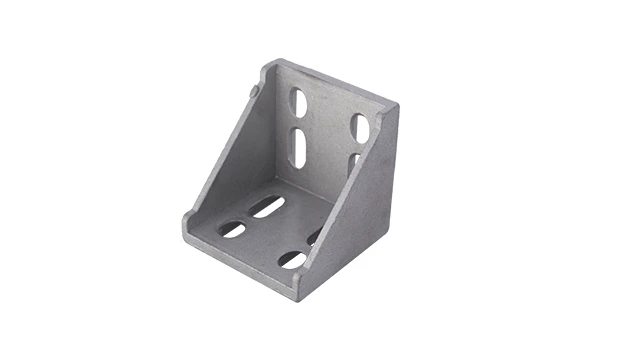
Walk into any modern factory, warehouse, or manufacturing plant, and you'll likely spot a familiar sight: sturdy, silver structures holding up workbenches, material racks, or assembly lines. These aren't just random metal frames—they're often built with aluminum profiles, the backbone of flexible, modular industrial setups. And if aluminum profiles are the backbone, then components like the Gusset ALP 4040 are the unsung heroes keeping everything stable. But what exactly is this small but mighty part, and why do industry standards matter so much when it comes to something as "simple" as a gusset? Let's dive in and unpack the world of Gusset ALP 4040, exploring how standards shape its quality, compatibility, and reliability in real-world applications.
First Things First: What Even Is a Gusset ALP 4040?
Before we get into standards, let's make sure we're all on the same page. A gusset, in engineering terms, is a flat piece of material (usually metal) used to reinforce connections between two or more parts. Think of it like a bracket that adds extra strength to a corner or joint. Now, the "ALP 4040" part? That's where it gets specific. "ALP" likely stands for "Aluminum Light Profile," a nod to its role in aluminum-based systems, and "4040" refers to the type of aluminum profile it's designed to work with—the 4040 series, which is one of the most common sizes in industrial aluminum extrusions (measuring roughly 40mm by 40mm in cross-section).
So, Gusset ALP 4040 is a specialized gusset plate engineered to reinforce connections between 4040 aluminum profiles. It's the kind of part you might not notice at first glance, but you'd definitely miss it if it failed. Imagine building a bookshelf without corner brackets—eventually, the weight of the books would warp the shelves. The same logic applies here: in industrial settings, where structures hold heavy tools, raw materials, or even machinery, a weak or poorly made gusset could lead to wobbly workbenches, sagging racks, or worse, safety hazards. That's where industry standards come in.
Why Industry Standards Matter for Something as Small as a Gusset
You might be thinking, "It's just a metal plate—how complicated can it be?" But in manufacturing, even the smallest components play a big role in overall system performance. Industry standards for Gusset ALP 4040 aren't just arbitrary rules; they're guidelines developed by experts to ensure consistency, safety, and reliability. These standards cover everything from the materials used to the way the gusset is shaped, drilled, and tested. Without them, you could end up with gussets that are too thin to handle heavy loads, too brittle to withstand daily wear, or sized incorrectly to fit the 4040 aluminum profiles they're supposed to reinforce. In short, standards turn "maybe this works" into "we know this works."
Quick example: Suppose a factory orders Gusset ALP 4040 from two different suppliers. One follows industry standards, using high-grade aluminum and precise drilling. The other cuts corners, using thinner metal and off-kilter holes. When installed, the first gusset locks tightly onto the 4040 aluminum profile, distributing weight evenly. The second? It wobbles, the holes don't align with the profile's T-slots, and within weeks, the joint starts to loosen. That's the difference standards make.

Breaking Down the Key Industry Standards for Gusset ALP 4040
1. Material Standards: Not All Aluminum Is Created Equal
The first thing industry standards tackle is the material itself. Gusset ALP 4040 is typically made from aluminum alloy, and not just any alloy will do. Most standards specify using alloys like 6063-T5, a popular choice for aluminum profiles and their accessories. Why 6063-T5? It's lightweight, corrosion-resistant, and has excellent mechanical properties—meaning it's strong enough to handle heavy loads without being brittle. But standards go beyond just naming the alloy; they also set requirements for purity. For example, the aluminum must be free of excessive impurities like iron or copper, which can weaken the material or cause it to crack under stress.
Another material-related standard is surface treatment. Gusset ALP 4040 often undergoes anodizing, a process that coats the aluminum with a protective oxide layer. This isn't just for looks (though the matte silver finish is a nice bonus); it helps resist scratches, rust, and chemical exposure—critical in environments where oils, coolants, or cleaning agents are common. Standards dictate the thickness of this anodized layer (usually around 5-10 micrometers) to ensure it actually provides protection, not just a thin cosmetic coating.
2. Dimensional Accuracy: Precision in Every Millimeter
If you've ever tried to fit a square peg into a round hole, you know how frustrating poor sizing can be. For Gusset ALP 4040, dimensional accuracy is non-negotiable—and industry standards leave no room for error. Let's break down the key measurements:
- Thickness: Most standards specify a thickness of 2mm to 3mm for Gusset ALP 4040. Why this range? Too thin, and it won't add enough rigidity; too thick, and it becomes unnecessarily heavy, defeating the "light profile" purpose of aluminum systems.
- Length and width: The gusset needs to overlap with the 4040 aluminum profile sufficiently to distribute weight. Common dimensions are around 40mm x 40mm or 50mm x 50mm, depending on the specific application (e.g., heavier loads might call for a slightly larger gusset).
- Drill holes: The holes in the gusset are where bolts or screws pass through to attach it to the aluminum profile. These holes must align perfectly with the T-slots on 4040 aluminum profiles, which are spaced at standard intervals (usually 20mm or 40mm apart). A hole that's even 1mm off-center can make installation a nightmare and weaken the joint.
To give you a clearer picture, let's look at a typical dimensional standard for Gusset ALP 4040:
| Dimension | Standard Range | Tolerance (Allowable Variation) |
|---|---|---|
| Thickness | 2.5mm | ±0.1mm |
| Length | 50mm | ±0.2mm |
| Width | 50mm | ±0.2mm |
| Hole Diameter | 6mm (for M6 bolts) | ±0.05mm |
| Hole Spacing | 40mm (matching 4040 profile T-slots) | ±0.1mm |
These tolerances might seem tiny, but in the world of industrial components, fractions of a millimeter matter. A hole that's 0.1mm too small won't fit a standard bolt; one that's 0.1mm too large could let the bolt wiggle, leading to a loose joint.
3. Load Capacity and Structural Integrity: How Much Weight Can It Really Handle?
At the end of the day, a gusset's job is to strengthen a joint—and that means it needs to handle weight. Industry standards set clear load capacity requirements for Gusset ALP 4040, ensuring it can withstand both static loads (like a stack of boxes sitting on a shelf) and dynamic loads (like tools being placed and removed from a workbench repeatedly).
Testing for load capacity is rigorous. Manufacturers will subject gussets to controlled stress tests, applying increasing amounts of weight until the material deforms or fails. Standards typically require Gusset ALP 4040 to handle a minimum static load of 500 Newtons (about 50kg) per joint without permanent deformation. For dynamic loads, the threshold is often lower—around 300 Newtons—but tested over thousands of cycles to simulate years of use. These numbers aren't pulled out of thin air; they're based on real-world scenarios, like a typical workbench holding 20kg of tools, or a material rack supporting 100kg of parts.
4. Compatibility: Playing Nice with Other Aluminum Profile Accessories
Industrial setups are rarely one-and-done. A single aluminum profile structure might include 4040 aluminum profile end caps to cover sharp edges, brackets to hold shelves, and T-slot nuts to secure components. Gusset ALP 4040 doesn't exist in a vacuum—it needs to play nicely with all these other parts. That's why compatibility is a cornerstone of industry standards.
For starters, the gusset must align with the T-slots of 4040 aluminum profiles. These slots are standardized, with widths (usually 8mm or 10mm) and depths that match common fasteners like M6 or M8 bolts. The holes in Gusset ALP 4040 are drilled to fit these bolts perfectly, ensuring that when you slide a T-slot nut into the profile and thread a bolt through the gusset, everything locks into place without gaps. But compatibility goes beyond just bolts. It also means the gusset's shape won't interfere with other accessories. For example, if a 4040 aluminum profile end cap is installed on the end of the profile, the gusset shouldn't stick out so far that it blocks the cap or creates a safety hazard.
This compatibility is what makes aluminum profile systems so flexible. A factory can mix and match components—Gusset ALP 4040, end caps, brackets—from different suppliers, confident they'll work together, as long as everyone follows the same standards. It's like how Lego bricks from different sets fit together because they all adhere to the same size rules.

How Manufacturers Ensure Compliance with These Standards
Meeting industry standards isn't a one-time checkmark—it's a process that starts the moment raw materials arrive at the factory and doesn't end until the gusset is shipped. Let's walk through a typical manufacturer's quality assurance steps:
1. Raw Material Inspection
Before production even starts, suppliers test the aluminum alloy to ensure it meets the required grade (like 6063-T5). This might involve chemical analysis to check for impurities or mechanical tests to verify strength and ductility. If the material doesn't pass, it's rejected—no exceptions.
2. Precision Manufacturing
Modern factories use CNC (Computer Numerical Control) machines to cut, drill, and shape Gusset ALP 4040. These machines are programmed to follow exact measurements, ensuring every gusset is identical. After cutting, the gusset undergoes surface treatment (like anodizing), with quality checks to confirm the oxide layer's thickness and uniformity.
3. Dimensional and Load Testing
Random samples from each batch are pulled for testing. Inspectors use calipers and gauges to check thickness, hole spacing, and overall dimensions. Load testing machines apply pressure to the gusset to verify it meets the required weight thresholds. If even one sample fails, the entire batch might be rechecked or scrapped.
4. Certifications and Traceability
Reputable manufacturers will often hold certifications like ISO 9001, which ensures their quality management system is up to par. They'll also provide traceability documents, so buyers can see where the aluminum came from, how it was processed, and when it was tested. This transparency isn't just for show—it gives customers confidence that the Gusset ALP 4040 they're buying is truly standards-compliant.
Real-World Impact: How Standards Improve Daily Operations
Okay, so standards sound great on paper—but how do they actually affect the people using Gusset ALP 4040 day in and day out? Let's take a look at a few scenarios:
Scenario 1: A Busy Automotive Parts Warehouse
Imagine a warehouse storing car parts, with tall material racks built from 4040 aluminum profiles. Each rack uses Gusset ALP 4040 at the corners to reinforce the joints. Because the gussets meet load capacity standards, the racks can safely hold heavy engine components without bending. Workers don't have to worry about the racks leaning or collapsing, and the warehouse manager can sleep easy knowing OSHA compliance is a given. If a rack needs to be reconfigured (say, to store larger parts), the gussets' compatibility with other aluminum profile accessories means adding a new shelf is as simple as sliding in T-slot nuts and bolting on brackets—no custom fabrication needed.
Scenario 2: A Small Electronics Assembly Shop
A small shop builds circuit boards on workbenches made from 4040 aluminum profiles. The workbenches need to stay stable, even when workers lean on them or place heavy soldering equipment. Gusset ALP 4040 at the bench legs and corners ensures the structure doesn't wobble, which is critical for precise assembly work (you don't want a shaky bench ruining a delicate solder joint). Since the gussets are anodized (per surface treatment standards), they resist the flux and cleaning solvents used daily, so they stay looking new and functional for years.
Common Misconceptions About Gusset ALP 4040 Standards
Even with all these standards in place, there are still myths floating around. Let's debunk a few:
Myth: "If it looks like a gusset, it'll work."
Nope. A gusset that's the right shape but made from low-grade aluminum or with imprecise holes might fit initially, but it won't hold up. One manufacturer we spoke to shared a story of a customer who tried using a generic steel gusset (instead of aluminum) with 4040 profiles. The steel was heavier, causing the profile to bend, and the holes didn't align, leading to a wobbly joint. Stick to standards-compliant Gusset ALP 4040—your joints will thank you.
Myth: "Higher load capacity is always better."
Not necessarily. A gusset rated for 1000 Newtons might sound impressive, but if your application only needs 500 Newtons, you're paying extra for capacity you don't need. Standards help match gussets to real-world needs, so you get the right balance of strength and cost.
Myth: "Compatibility doesn't matter if I buy all parts from one supplier."
While buying from one supplier can simplify things, what if they discontinue a part, or you need to expand and they're out of stock? Standards ensure you're not locked into a single brand. You can mix components from different suppliers and still have confidence they'll work together.
The Future of Gusset ALP 4040: What's Next for Standards?
As manufacturing evolves, so do the standards that govern components like Gusset ALP 4040. One trend we're seeing is a push for more sustainable materials—think recycled aluminum alloys that still meet strength requirements. There's also growing interest in smart manufacturing, where sensors embedded in gussets could monitor stress or wear, alerting maintenance teams before a joint fails. While these innovations are still emerging, they'll likely be integrated into future standards, ensuring Gusset ALP 4040 stays relevant in a rapidly changing industry.
Final Thoughts: Why Standards Are the Foundation of Reliable Industrial Systems
At the end of the day, Gusset ALP 4040 might seem like a small part of a big system, but its role is huge. It's the difference between a wobbly workbench and a rock-solid one, between a material rack that lasts 10 years and one that fails in 10 months. Industry standards ensure that this small part does its job consistently, safely, and effectively—no guesswork required.
So the next time you walk past an aluminum profile structure, take a second to look for the Gusset ALP 4040 (you'll find it at the corners, quietly holding things together). Behind that simple metal plate is a world of engineering, testing, and standards—all working to keep our factories running smoothly, our workers safe, and our industrial systems as flexible and reliable as possible. And that, in the end, is what standards are all about: turning "good enough" into "built to last."