- Company Articles
- Industry articles
- Industry standards
- Industry Whitepaper: Lean Pipe Clamp B's Impact on Modern Lean Manufacturing

Industry Whitepaper: Lean Pipe Clamp B's Impact on Modern Lean Manufacturing
Related Product
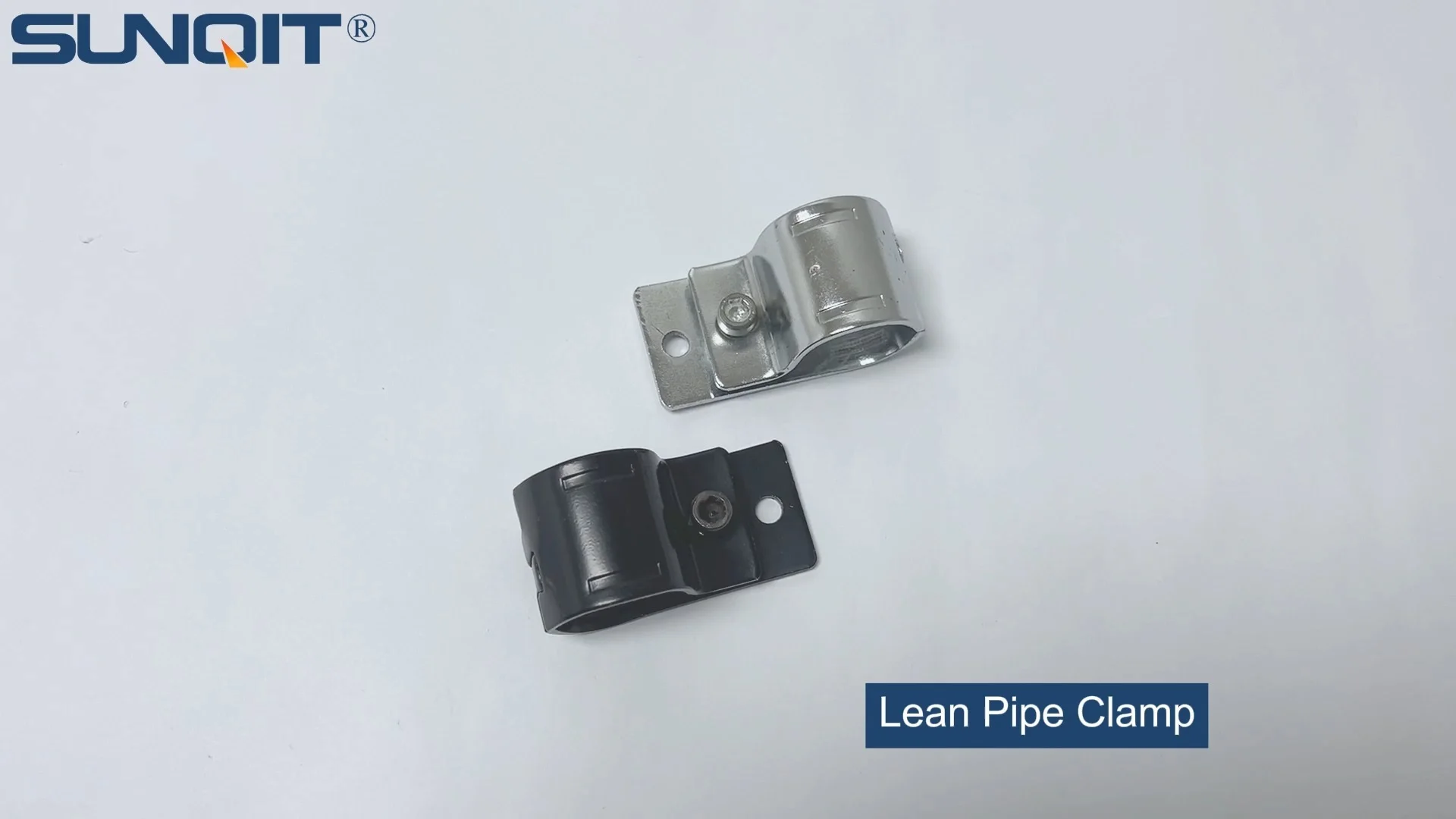
Lean Pipe Clamp
Lean pipe clamp is used for rack system hang monitor or other panel for workbenck, flowrack in production daily use.
Introduction: The Evolution of Lean Manufacturing and the Need for Adaptive Tools
In today's fast-paced manufacturing landscape, where consumer demands shift overnight and production lines must pivot at a moment's notice, the ability to stay agile isn't just an advantage—it's a survival skill. This is where lean manufacturing has emerged as a cornerstone philosophy, emphasizing waste reduction, workflow optimization, and continuous improvement. At the heart of lean systems lies a network of tools and components designed to make production more efficient, flexible, and cost-effective. Among these, lean pipe systems—comprising pipes, joints, clamps, and accessories—have become indispensable, enabling manufacturers to build custom workbenches, flow racks, and assembly lines tailored to their unique needs. Yet, within this ecosystem, one component often flies under the radar despite its critical role: the Lean Pipe Clamp B. This unassuming yet powerful tool is the glue that holds lean systems together, quite literally, and its impact on modern manufacturing efficiency cannot be overstated. In this whitepaper, we'll explore how Lean Pipe Clamp B transforms lean systems, enhances workflow adaptability, and why partnering with a reliable lean pipe supplier is key to unlocking its full potential.
Understanding Lean Systems: Beyond the Basics
Before diving into the specifics of Lean Pipe Clamp B, it's essential to ground ourselves in what lean systems are and why they matter. Lean manufacturing, born from the Toyota Production System (TPS) in the mid-20th century, is built on the principle of "doing more with less." It targets seven key types of waste—overproduction, waiting, transportation, overprocessing, inventory, motion, and defects—and seeks to eliminate them through streamlined processes and adaptive tools. Lean pipe systems embody this philosophy by providing modular, reconfigurable structures that can be assembled, disassembled, and retooled with minimal effort. Unlike rigid, fixed production lines of the past, these systems use lightweight yet durable materials like aluminum lean pipe, stainless steel pipe, and plastic-coated lean pipe, paired with joints and clamps to create everything from simple workbenches to complex flow racks and conveyor systems.
The magic of lean systems lies in their adaptability. A single set of pipes and accessories can be repurposed to build a packing station one month and a testing workbench the next. This flexibility is particularly valuable in industries like electronics, automotive, and consumer goods, where product lifecycles are short and production demands fluctuate. However, this adaptability hinges on the quality of the components that make up the system. Even the most durable lean pipe or versatile joint is useless if the clamp holding it all together fails. This is where Lean Pipe Clamp B enters the picture—a component designed to balance strength, ease of use, and longevity, ensuring that lean systems deliver on their promise of efficiency.

Lean Pipe Clamp B: Design, Function, and Why It Stands Out
What Is Lean Pipe Clamp B?
Lean Pipe Clamp B is a specialized fastening device engineered to secure lean pipes to joints, frames, or other structural elements in lean manufacturing setups. While "clamp" might sound simple, not all clamps are created equal. Clamp B is distinguished by its robust design, which prioritizes three critical factors:
grip strength
,
ease of installation
, and
compatibility
. Typically made from high-grade steel or aluminum (depending on the application), it features a unique locking mechanism that tightens securely around the pipe without damaging its surface—a crucial detail for maintaining the integrity of coated or sensitive materials like ESD-safe pipes.
Key Design Features of Clamp B
Let's break down the design elements that make Clamp B a standout component:
- Non-Marring Grip: Unlike traditional clamps that use serrated edges which can scratch or weaken pipes, Clamp B often incorporates rubberized or smooth inner surfaces. This protects the pipe's coating (whether PE, aluminum, or stainless steel) and ensures a longer lifespan for both the clamp and the pipe.
- Tool-Free Adjustment: Many Clamp B models feature a thumb screw or quick-release lever, allowing operators to tighten or loosen the clamp without wrenches or specialized tools. This cuts down on assembly time and makes on-the-fly adjustments possible—critical in environments where production lines need to be reconfigured quickly.
- Wide Compatibility: Clamp B is designed to work with standard lean pipe diameters (often 28mm or 30mm) but can also accommodate variations, including aluminum lean pipe and stainless steel pipe series. This versatility means manufacturers don't need to stock multiple clamp types for different pipe materials.
- High Load Capacity: Despite its lightweight design, Clamp B is engineered to withstand significant weight, making it suitable for heavy-duty applications like material racks and turnover trolleys. A typical Clamp B can support loads of up to 50kg per unit, depending on the material and installation.
How Clamp B Compares to Other Clamps
To appreciate Clamp B's value, it helps to compare it to common alternatives. For example, fixed clamps (often called "Type A") are rigid and require tools to adjust, making them impractical for frequent reconfigurations. Swivel clamps, while flexible, may sacrifice grip strength for movement, leading to instability in high-vibration environments. Clamp B strikes a balance: it offers the adjustability of swivel clamps with the stability of fixed clamps, all while being easier to use than both. This middle ground is why it has become a go-to choice for lean pipe suppliers and manufacturers alike.

The Impact of Clamp B on Workflow Efficiency: From Setup to Reconfiguration
Faster Setup Times for Workbenches and Flow Racks
One of the most tangible benefits of Lean Pipe Clamp B is its ability to reduce setup time for lean structures like workbenches and flow racks. Consider a scenario: a manufacturer needs to assemble a new assembly workbench for a product launch. With traditional clamps, this might involve multiple tools, precise measurements, and a team of two workers spending half a day tightening bolts. With Clamp B's tool-free design, a single operator can assemble the same workbench in under an hour. The quick-release mechanism allows for trial-and-error positioning—if a shelf is too high, the clamp can be loosened, adjusted, and retightened in seconds, eliminating the need to start over.
Flexibility to Adapt to Changing Production Needs
In manufacturing, change is constant. A sudden surge in demand for a particular product might require adding an extra shelf to a flow rack, or a design update could necessitate repositioning a workbench's components. Clamp B excels in these situations. For example, a consumer electronics plant producing smartphones might need to switch from assembling 6-inch to 7-inch models, which requires wider work surfaces. With Clamp B, the existing workbench can be disassembled, the frame extended by adding a few extra pipes, and the clamps retightened—all in a matter of hours. Without Clamp B, this process could take days, as workers struggle with tools and risk damaging components during disassembly.
Reduced Downtime and Maintenance Costs
Clamp B's durability also translates to long-term cost savings. Unlike cheaper clamps that may loosen over time or corrode in harsh environments, Clamp B is built to withstand the wear and tear of daily manufacturing operations. Its corrosion-resistant coating (often zinc-plated or anodized) makes it suitable for use in factories with high humidity or exposure to chemicals. This reduces the need for frequent replacements, cutting down on maintenance downtime and inventory costs. A lean pipe supplier survey found that manufacturers using Clamp B reported 30% fewer clamp-related breakdowns compared to those using generic clamps, leading to an average annual savings of $12,000 per production line.

Real-World Applications: Case Studies in Efficiency
Case Study 1: Automotive Parts Manufacturer Streamlines Assembly Lines
A mid-sized automotive parts manufacturer in the Midwest was struggling with bottlenecks in its transmission assembly line. The line used outdated, fixed workbenches that couldn't be adjusted to accommodate new, larger transmission models. The company considered replacing the entire line, a project estimated to cost $150,000 and take six weeks of downtime. Instead, they opted to upgrade to a lean pipe system using aluminum lean pipe and Lean Pipe Clamp B.
The results were striking: using Clamp B, the manufacturer was able to reconfigure existing workbenches and build new flow racks in just three days. The tool-free adjustment of Clamp B allowed workers to tweak the height and angle of assembly stations on the fly, reducing worker fatigue and cutting down on errors. Within six months, the line's throughput increased by 22%, and the company avoided the high cost of a full line replacement. "Clamp B made the system feel almost alive," said the plant manager. "We can adapt to new parts or production targets without skipping a beat."
Case Study 2: Electronics Plant Enhances ESD Workstation Safety
An electronics manufacturer specializing in printed circuit boards (PCBs) faced a different challenge: ensuring ESD (electrostatic discharge) safety in its assembly workbenches. ESD-sensitive components require work surfaces and frames that dissipate static electricity, and any damage to the ESD coating on pipes could compromise safety. The plant had previously used generic clamps that scratched the pipes, leading to frequent replacements and occasional static-related defects.
After switching to Lean Pipe Clamp B—chosen for its non-marring grip—the plant saw a 40% reduction in ESD-related defects. The clamps' smooth inner surface preserved the ESD coating, and their tool-free adjustment made it easier to reposition components without risking damage. "We used to spend hours replacing scratched pipes," noted the production supervisor. "With Clamp B, we haven't replaced a single pipe in over a year. It's a small change that made a huge difference in our bottom line."
Choosing the Right Lean Pipe Supplier: Why Quality Clamps Start with the Right Partner
While Lean Pipe Clamp B's design is impressive, its performance ultimately depends on the quality of its manufacturing. Not all lean pipe suppliers adhere to the same standards, and cutting corners on clamp quality can lead to loose joints, frequent failures, and compromised safety. When selecting a supplier for Clamp B (and other lean system components), manufacturers should prioritize the following factors:
| Factor to Consider | Why It Matters | Questions to Ask a Supplier |
|---|---|---|
| Material Quality | Clamps made from low-grade steel or aluminum may bend, corrode, or lose grip over time. | "What materials are used in your Clamp B? Do you test for tensile strength and corrosion resistance?" |
| Quality Control Processes | Suppliers with rigorous QA/QC (e.g., ISO 9001 certification) are more likely to deliver consistent, defect-free clamps. | "What quality control checks do Clamp B undergo before shipping? Can you provide test reports?" |
| Inventory Availability | Delays in clamp deliveries can halt production line reconfigurations. | "What is your typical lead time for Clamp B? Do you maintain safety stock for rush orders?" |
| Technical Support | Suppliers who offer guidance on clamp selection and installation can help optimize system performance. | "Do you provide installation guides or on-site support for Clamp B? Can you help us choose the right clamp for our pipe material?" |
| Cost vs. Value | The cheapest clamp may cost more in the long run due to replacements and downtime. | "What is the expected lifespan of your Clamp B? Do you offer a warranty?" |
A reputable lean pipe supplier will be transparent about these factors and willing to provide documentation to back up their claims. For example, some suppliers offer samples of Clamp B for testing, allowing manufacturers to verify grip strength and compatibility before placing a large order. Investing in a quality supplier may cost slightly more upfront, but the savings in maintenance, downtime, and efficiency make it well worth it.
The Future of Lean Manufacturing: Clamp B and Beyond
As manufacturing evolves, so too will lean systems. Industry 4.0, smart factories, and the rise of automation are pushing lean manufacturing to new heights, with a focus on data-driven optimization and even greater adaptability. Where does Lean Pipe Clamp B fit into this future? While the core function of securing pipes won't change, we can expect to see innovations in materials and design. For example, clamps with integrated sensors could monitor grip tightness in real time, alerting maintenance teams before a clamp fails. Lightweight, high-strength composites might replace traditional metals, reducing weight without sacrificing durability.
Additionally, as sustainability becomes a priority, suppliers may develop Clamp B models using recycled materials or designed for easy disassembly and recycling. Whatever the future holds, one thing is clear: the need for reliable, adaptable clamps like Clamp B will only grow. In a world where production lines must be as flexible as the markets they serve, components that enable quick, secure, and durable configurations will remain essential.
Conclusion: Lean Pipe Clamp B—Small Component, Big Impact
Lean manufacturing is about the details—the small, often overlooked components that add up to big gains in efficiency. Lean Pipe Clamp B is one such component. By combining strength, ease of use, and durability, it ensures that lean systems deliver on their promise of adaptability, reducing waste, cutting costs, and keeping production lines running smoothly. From automotive assembly lines to electronics workbenches, Clamp B has proven its value as a critical tool in the modern manufacturer's toolkit.
As we look to the future, the importance of choosing the right lean pipe supplier and investing in quality components like Clamp B will only increase. In a landscape where every second of downtime and every dollar of waste matters, Clamp B is more than just a clamp—it's a catalyst for efficiency. For manufacturers ready to embrace lean principles and stay ahead of the competition, there's no better place to start than with the foundation of their lean system: reliable, high-performance components like Lean Pipe Clamp B.