- Company Articles
- Industry articles
- Industry News
- Innovative Three Way Lean Pipe Joint Designs: Latest Industry Trends

Innovative Three Way Lean Pipe Joint Designs: Latest Industry Trends
Related Product
Three Way Lean Pipe Joint
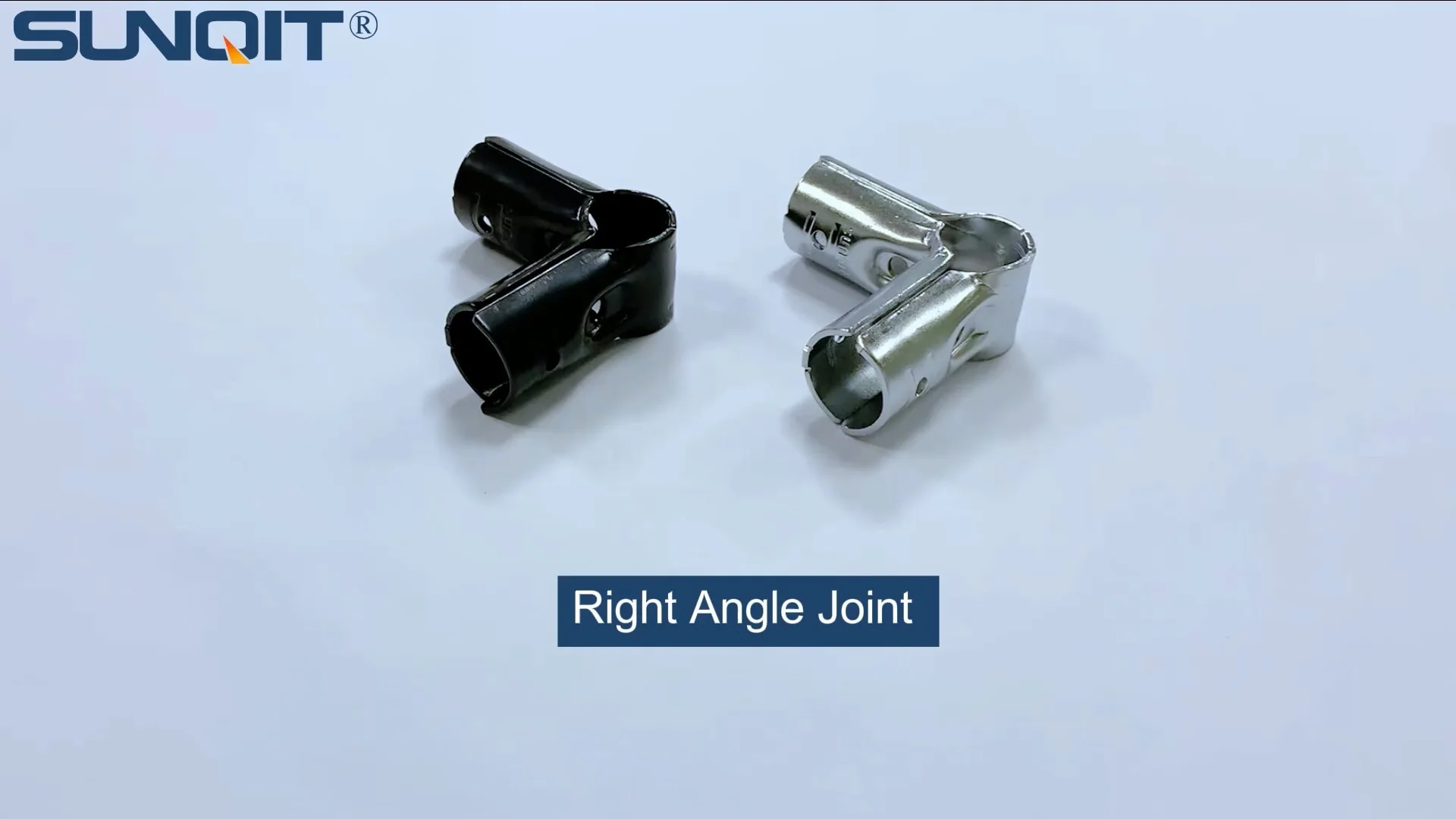
Three way lean pipe joint for 3 pcs 28MM lean pipe connection in straight angle, which used widely in workbench, flow rack, hand trolley frame connection.
Walk into any modern manufacturing facility, and you'll notice a quiet revolution unfolding. It's not in the flashy robots or high-tech software—though those play their part. No, the real magic lies in the details: the unassuming components that hold everything together, making workflows smoother, teams more agile, and productivity feel almost effortless. Among these unsung heroes? The three way lean pipe joint. These small but mighty connectors are the backbone of lean systems worldwide, and their evolution is reshaping how factories, warehouses, and assembly lines operate.
Think about the last time you tried to build something with mismatched parts. Frustration mounts, progress stalls, and what should be a simple task becomes a battle against inefficiency. Now imagine that feeling multiplied across an entire production floor. For decades, manufacturers dealt with rigid, one-size-fits-nothing lean pipe joints that limited creativity, slowed reconfigurations, and often failed under pressure. But today? The game has changed. Innovative three way lean pipe joint designs are breaking those barriers, turning once-static workspaces into dynamic, adaptable environments that keep pace with the demands of modern industry.
The Backbone of Lean Systems: Why Joints Matter More Than You Think
Before diving into the latest trends, let's ground ourselves in why these joints are so critical. Lean systems—whether they're building workbenches, flow racks, or conveyor setups—rely on modularity. The ability to quickly assemble, disassemble, and reconfigure structures is what makes lean manufacturing "lean." And at the heart of that modularity? Joints. A three way lean pipe joint, in particular, is a multitasker: it connects three pipes at once, enabling the creation of complex, three-dimensional structures that form the basis of workstations, material racks, and beyond.
But not all joints are created equal. Traditional designs often forced teams into trade-offs: prioritize strength, and you sacrifice flexibility; opt for adjustability, and you lose load-bearing capacity. Worse, many were made from low-quality materials prone to rust, bending, or breaking, leading to frequent replacements and unplanned downtime. For workers on the floor, this meant wasted time wrestling with stuck joints, unstable structures, and the constant fear that a shelf or workbench might give way under heavy tools or materials.
Today's innovative three way joints? They're rewriting those rules. By combining advanced materials, ergonomic engineering, and forward-thinking design, they're solving the very problems that once held teams back. Let's take a closer look at how they've evolved.
From Rigid to Revolutionary: The Evolution of Three Way Lean Pipe Joints
Cast your mind back to the early days of lean manufacturing. Three way joints were often little more than clunky metal pieces with limited movement. They connected pipes at fixed angles, required specialized tools to adjust, and if you needed to change a structure's layout? Good luck. Disassembling meant wrestling with rusted bolts, bent components, and the sinking realization that you'd probably need to buy new parts anyway.
Fast forward to today, and the contrast is stark. Modern three way lean pipe joints—like the three way lean pipe joint chrome and its stainless steel counterparts—are a study in intentional design. They're lighter, stronger, and smarter, with features that address the real-world challenges workers face daily. Let's break down the key shifts:
- Material Makeovers: ,,,(1.5mm PE).,,,.
- Movement That Matters: 90?——360——,.,.
- Tool-Free Wonder: .,,.,.

Inside the Innovation: What Makes Today's Three Way Joints Stand Out
To truly appreciate the leap forward, let's zoom in on the features that set modern three way lean pipe joints apart. These aren't just incremental improvements—they're thoughtful solutions to problems that have plagued the industry for decades.
Material Science: Strength Without the Bulk
Aluminum has become a star player here, and for good reason. Take aluminum profile -based joints, for example. They're 30% lighter than traditional steel versions, making them easier to handle during assembly or reconfiguration. But don't let the weight fool you: advanced alloys give them a load-bearing capacity that rivals steel, supporting everything from heavy toolboxes on workbenches to stacked material racks in warehouses.
Stainless steel is another heavyweight (pun intended). Ideal for environments where cleanliness is critical—think food processing or pharmaceutical manufacturing—stainless steel three way joints resist corrosion, withstand frequent sanitization, and maintain their integrity even in extreme temperatures. And for those who need the best of both worlds? Hybrid designs that pair stainless steel cores with aluminum exteriors offer strength and lightweight convenience in one.
Ergonomics: Designed for the Humans Behind the Tools
It's easy to forget that every piece of equipment is ultimately used by a person. But the best manufacturers don't forget—and it shows in their joint designs. Modern three way joints feature rounded edges to prevent cuts, textured grips for better handling (even with gloves), and low-profile designs that reduce snags on clothing or materials. Some even include color-coded components to simplify assembly—no more squinting at tiny labels to tell a 45-degree joint from a 90-degree one.
Consider the internal rotary aluminum joint, a game-changer for workbench setups. Its smooth rotation allows workers to adjust shelves or tool holders with a simple twist, eliminating the need to loosen bolts or reposition entire sections. For someone standing at a workstation for 8 hours a day, that small convenience adds up to less fatigue, fewer repetitive strain injuries, and a more pleasant, productive work environment.

Traditional vs. Innovative: A Side-by-Side Look
Curious how these new designs stack up against the old guard? Let's break it down in black and white:
| Feature | Traditional Three Way Joints | Innovative Three Way Joints |
|---|---|---|
| Material | Cast iron or low-grade steel; prone to rust | Aluminum, stainless steel, or PE-coated alloys; corrosion-resistant |
| Adjustability | Fixed angles (90°, 45°); requires tools to reposition | 360° rotation; tool-free adjustments |
| Load Capacity | Limited (often <100kg per joint) | High (up to 300kg+ with reinforced designs) |
| Installation Time | 10-15 minutes per joint (with tools) | 1-2 minutes per joint (tool-free) |
| Compatibility | Works with specific pipe sizes only | Universal fit for multiple pipe diameters (e.g., 28mm, 30mm) |
| Durability | 3-5 years (with frequent replacements) | 10+ years (minimal wear and tear) |

Riding the Wave: The Latest Trends Shaping Joint Design
The innovation doesn't stop at better materials or adjustability. Three way lean pipe joint designs are evolving to meet the most pressing needs of today's manufacturers. Here are the trends leading the charge:
Sustainability: Building for a Greener Tomorrow
Eco-conscious manufacturing isn't just a buzzword—it's a business imperative. Today's joints reflect that, with recyclable materials and longer lifespans that reduce waste. Aluminum, for example, is 100% recyclable and retains its strength through multiple recycling cycles. Many suppliers now offer take-back programs for old joints, ensuring they're repurposed instead of ending up in landfills. Even the packaging is getting a green makeover, with minimal, plastic-free options becoming the norm.
Modularity: Agility in a Box
In a world where consumer demands shift overnight, factories can't afford to be stuck with rigid layouts. Enter modular joints that play well with others. Modern three way joints are designed to seamlessly integrate with aluminum profile systems, roller tracks, and even ESD workbenches, allowing teams to mix and match components like building blocks. Need to convert a static workbench into a mobile assembly station? Swap out fixed feet for casters, add a roller track using compatible joints, and you're good to go—all in under an hour.
This flexibility is a game-changer for small to medium-sized businesses, too. Instead of investing in custom-built structures that become obsolete when product lines change, teams can repurpose existing components, stretching budgets further and reducing the need for new equipment.
Smart Integration: When Joints Meet Data
The future is here, and it's connected. While still emerging, some manufacturers are experimenting with "smart" joints embedded with sensors that monitor load, temperature, or vibration. Imagine a three way joint that alerts maintenance when it's approaching its weight limit, or one that tracks how often a structure is reconfigured—data that can help optimize workflows and predict wear and tear. It's early days, but the potential is enormous: joints that don't just hold things together, but actively contribute to a smarter, more proactive operation.
Real-World Impact: How Innovative Joints Are Changing Lives (and Bottom Lines)
Let's ground all this talk in reality. What does it look like when a factory swaps out old joints for new ones? Take the case of a mid-sized electronics manufacturer in Ohio. Prior to upgrading, their assembly lines used traditional steel three way joints that rusted easily in the humid plant air. Workers spent 2-3 hours just tightening loose joints or replacing corroded ones. When they switched to stainless steel three way lean pipe joints with PE coating, those maintenance hours dropped to zero. But the real win? The new joints' tool-free adjustability let them reconfigure workstations in 15 minutes instead of 2 hours, allowing them to launch a new product line 3 weeks ahead of schedule.
Or consider a warehouse in Texas that handles perishable goods. Their old flow racks, held together by rigid joints, often jammed when boxes shifted, leading to spills and delays. After upgrading to innovative three way joints with swivel capabilities, they adjusted the angle of roller tracks to better accommodate unevenly weighted packages. Spills decreased by 70%, and workers reported feeling less stressed and more in control of their tasks. "It's like night and day," one team lead told us. "We used to dread restocking those racks. Now? It's just another part of the job."
Choosing Your Partner: What to Look for in a Lean Pipe Supplier
With so many options on the market, finding the right three way lean pipe joint supplier can feel overwhelming. But a few key questions can help narrow it down:
- Do they prioritize quality materials? Ask about testing standards for load capacity, corrosion resistance, and durability. A reputable supplier will happily share certifications or test results.
- Can they adapt to your needs? Look for suppliers who offer custom solutions, whether it's a specific coating, size, or compatibility with existing aluminum profile systems.
- What's their support like? Even the best products need backup. Choose a supplier with responsive customer service, clear installation guides, and a warranty that covers more than just defects—like wear and tear in real-world conditions.
Remember, a lean pipe supplier isn't just selling parts—they're selling a partnership. The right one will take the time to understand your workflow, challenges, and goals, helping you select joints that don't just fit your pipes, but fit your vision for the future.
The Future of Lean: Where Joints Lead, Industry Follows
As we look ahead, one thing is clear: the evolution of three way lean pipe joints is far from over. With advancements in materials science, 3D printing, and IoT integration, we're on the cusp of even more exciting innovations. Imagine joints that self-tighten when they sense looseness, or ones made from carbon fiber composites that are lighter than aluminum but stronger than steel. The possibilities are endless.
But perhaps the most powerful trend isn't in the technology itself—it's in the mindset shift it represents. Manufacturers are finally recognizing that "lean" isn't just about cutting costs; it's about creating environments where people can thrive. When workers no longer have to fight with clunky, unreliable tools, they're free to focus on what they do best: innovating, collaborating, and building products that matter.
So the next time you walk through a factory or warehouse, take a moment to appreciate the small things—the three way joints holding up a workbench, guiding a roller track, or connecting a flow rack. They may not grab headlines, but they're the quiet force driving the future of manufacturing. And in their silent efficiency, they remind us that sometimes, the biggest revolutions come in the smallest packages.