- Company Articles
- Industry articles
- Industry standards
- Internal Straight Aluminum Joint in Medical Device Manufacturing: Compliance & Precision

Internal Straight Aluminum Joint in Medical Device Manufacturing: Compliance & Precision
Related Product
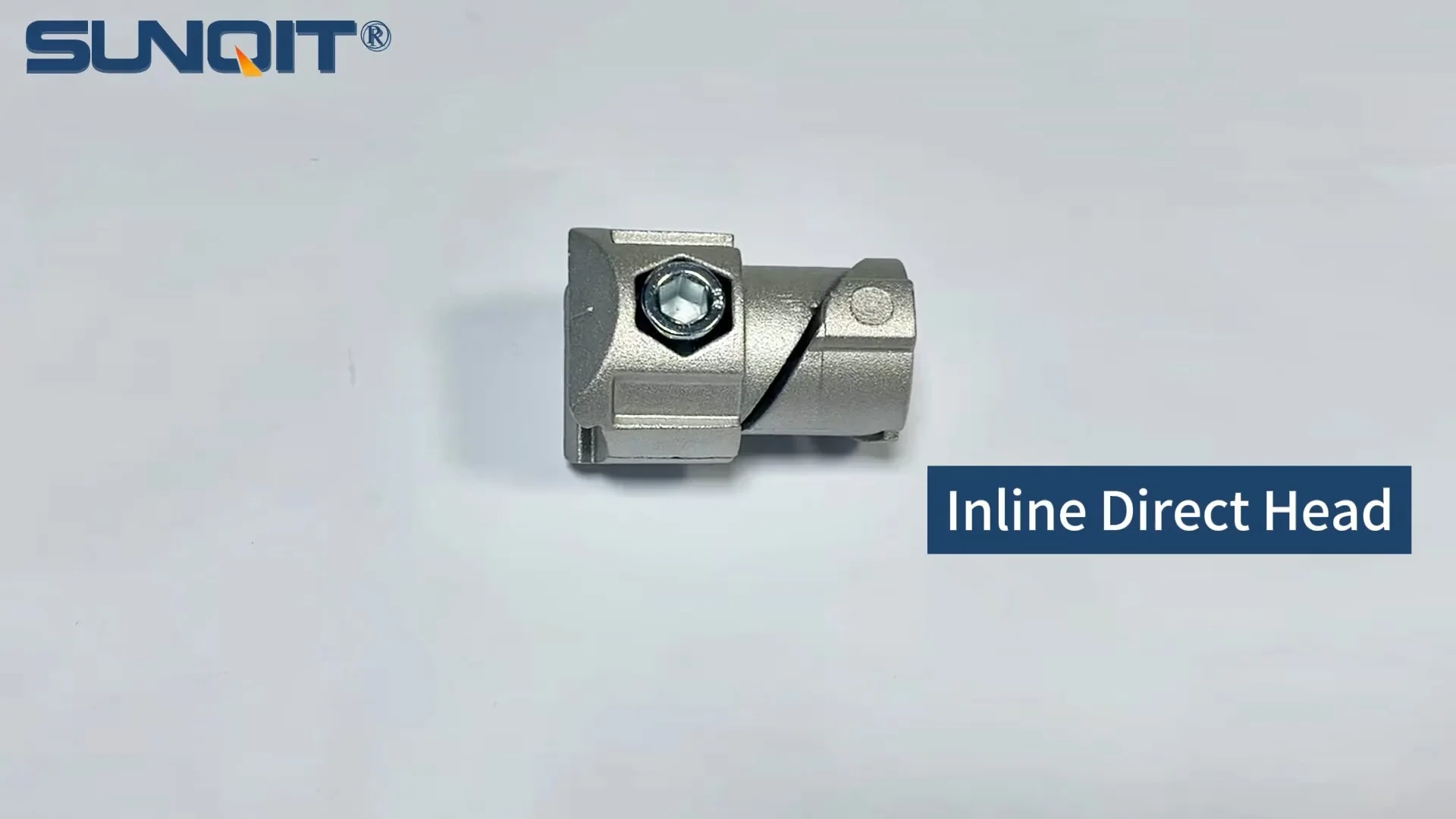
Internal straight aluminum joint
Aluminum pipe joint inside connection used for two pcs 28pcs aluminum pipe connection in straight angle,it connects two pcs pipe from inside.
The Critical Intersection of Small Components and Big Impact
In the world of medical device manufacturing, where the margin for error is measured in fractions of a millimeter and the cost of failure can be a matter of life or death, every component matters. From the sophisticated sensors in diagnostic equipment to the tiny screws in surgical tools, each part carries the weight of regulatory scrutiny, patient safety, and operational excellence. Yet, among these high-profile components, there's a quiet workhorse that often goes unnoticed but is indispensable to the integrity of the entire production process: the
internal straight aluminum joint
.
This unassuming connector, which links lengths of aluminum extrusion profile to form everything from assembly workbenches to material racks, is far more than just a "fastener." It is a bridge between two non-negotiable demands of modern medical manufacturing: compliance with the strictest industry standards and the relentless pursuit of precision. In an environment where a single misaligned work surface or a crevice that traps bacteria could compromise an entire production line, the design, material, and performance of these joints become mission-critical.
Let's take a step back. Walk into any medical device facility, and you'll likely see modular workstations, cleanroom-compatible material racks, and automated assembly lines—all built from lightweight, durable aluminum structures. These setups are not just about organization; they're engineered to support the delicate dance of assembling pacemakers, catheters, and imaging devices. At the heart of these structures lie aluminum profile s, connected by joints that must withstand constant use, repeated sterilization, and the need for quick reconfiguration as production needs evolve. Among these joints, the internal straight aluminum joint stands out for its ability to deliver both rigidity and adaptability, making it a cornerstone of compliant, precise manufacturing environments.
This unassuming connector, which links lengths of aluminum extrusion profile to form everything from assembly workbenches to material racks, is far more than just a "fastener." It is a bridge between two non-negotiable demands of modern medical manufacturing: compliance with the strictest industry standards and the relentless pursuit of precision. In an environment where a single misaligned work surface or a crevice that traps bacteria could compromise an entire production line, the design, material, and performance of these joints become mission-critical.
Let's take a step back. Walk into any medical device facility, and you'll likely see modular workstations, cleanroom-compatible material racks, and automated assembly lines—all built from lightweight, durable aluminum structures. These setups are not just about organization; they're engineered to support the delicate dance of assembling pacemakers, catheters, and imaging devices. At the heart of these structures lie aluminum profile s, connected by joints that must withstand constant use, repeated sterilization, and the need for quick reconfiguration as production needs evolve. Among these joints, the internal straight aluminum joint stands out for its ability to deliver both rigidity and adaptability, making it a cornerstone of compliant, precise manufacturing environments.
Compliance: Building Trust Through Design
Compliance in medical manufacturing is not a box to check—it's a culture, a mindset, and a legal obligation. Regulatory bodies like the FDA (Food and Drug Administration) and ISO (International Organization for Standardization) set rigorous standards for everything from material biocompatibility to surface finish, all to ensure that medical devices are safe, effective, and consistent. For the internal straight aluminum joint, compliance starts with its very design.
Let's consider the basics: medical facilities require surfaces that can withstand frequent cleaning and sterilization, often with harsh chemicals or high-temperature autoclaving. Aluminum, by nature, is corrosion-resistant, but the way it's joined matters. Traditional joints with external threads or crevices can trap moisture, cleaning agents, or bacteria—creating hidden risks for cross-contamination. The internal straight aluminum joint addresses this by minimizing exposed surfaces. Its design tucks the connection point inside the aluminum extrusion profile , leaving only smooth, flush edges that are easy to wipe down and impossible for pathogens to colonize. This isn't just a convenience; it's a direct contribution to meeting ISO 13485's requirements for "control of contamination in the production environment."
Then there's material selection. The best internal straight aluminum joints are machined from high-grade aluminum alloys, often 6061 or 6063, which offer the perfect balance of strength and malleability. These alloys are non-toxic, non-reactive, and free from substances that could leach into the environment—critical for compliance with FDA's USP Class VI standards, which govern materials that may come into contact with human tissue or fluids. Even the anodizing process used to finish the joints is scrutinized: a uniform, hard anodized layer not only enhances corrosion resistance but also ensures the surface doesn't flake or degrade over time, maintaining compliance for the lifecycle of the equipment.
Perhaps most importantly, the internal straight aluminum joint supports traceability—a cornerstone of regulatory compliance. Reputable manufacturers assign batch numbers to each joint, linking them to material certificates, test reports, and production records. This means if a regulatory audit ever questions the integrity of a workstation, engineers can trace the joint's origin, material composition, and quality checks back to the source. In an industry where accountability is non-negotiable, this level of transparency is invaluable.
Let's consider the basics: medical facilities require surfaces that can withstand frequent cleaning and sterilization, often with harsh chemicals or high-temperature autoclaving. Aluminum, by nature, is corrosion-resistant, but the way it's joined matters. Traditional joints with external threads or crevices can trap moisture, cleaning agents, or bacteria—creating hidden risks for cross-contamination. The internal straight aluminum joint addresses this by minimizing exposed surfaces. Its design tucks the connection point inside the aluminum extrusion profile , leaving only smooth, flush edges that are easy to wipe down and impossible for pathogens to colonize. This isn't just a convenience; it's a direct contribution to meeting ISO 13485's requirements for "control of contamination in the production environment."
Then there's material selection. The best internal straight aluminum joints are machined from high-grade aluminum alloys, often 6061 or 6063, which offer the perfect balance of strength and malleability. These alloys are non-toxic, non-reactive, and free from substances that could leach into the environment—critical for compliance with FDA's USP Class VI standards, which govern materials that may come into contact with human tissue or fluids. Even the anodizing process used to finish the joints is scrutinized: a uniform, hard anodized layer not only enhances corrosion resistance but also ensures the surface doesn't flake or degrade over time, maintaining compliance for the lifecycle of the equipment.
Perhaps most importantly, the internal straight aluminum joint supports traceability—a cornerstone of regulatory compliance. Reputable manufacturers assign batch numbers to each joint, linking them to material certificates, test reports, and production records. This means if a regulatory audit ever questions the integrity of a workstation, engineers can trace the joint's origin, material composition, and quality checks back to the source. In an industry where accountability is non-negotiable, this level of transparency is invaluable.

Precision: The Foundation of Reliable Production
If compliance is about meeting standards, precision is about exceeding expectations—specifically, the tight tolerances that define medical device manufacturing. Consider this: a typical surgical robot arm requires components to align within ±0.02mm to ensure smooth, accurate movement. The workbench where that arm is assembled must be equally precise; even a 0.1mm wobble in the surface could throw off calibration, leading to costly rework or, worse, a defective device. Here, the
internal straight aluminum joint
shines as a master of precision.
The secret lies in its engineering. Unlike generic joints that rely on friction or imprecise threading, internal straight aluminum joints are machined to tight tolerances—often ±0.05mm for the internal bore and mating surfaces. When paired with a properly sized aluminum extrusion profile , this precision creates a connection that's not just strong but stable . There's no "play" or flex in the joint, meaning the structure it supports maintains its geometry even under load. For a workbench used to assemble delicate stents, this stability ensures that the tools and components stay perfectly aligned, reducing the risk of misassembly.
Modularity is another dimension of precision. Medical device production lines rarely stay static; as new products are developed or production scales, workstations need to adapt. The internal straight aluminum joint enables this adaptability without sacrificing precision. Because each joint locks into the aluminum profile with consistent force and alignment, manufacturers can reconfigure workbenches, material racks, or testing stations with confidence. Add a section to a conveyor track, extend a work surface, or adjust the height of a shelving unit—the joint ensures the new configuration is as precise as the original. This flexibility is a boon for lean manufacturing principles, allowing teams to optimize workflows without rebuilding entire systems from scratch.
To put this in perspective, let's compare traditional steel welding to using internal straight aluminum joints. Welded structures, while strong, are prone to warping during cooling, leading to slight distortions that can throw off tolerances. They're also permanent, making modifications expensive and time-consuming. In contrast, a joint-based aluminum frame can be disassembled, reconfigured, and reassembled with the same precision as the day it was built. For a facility producing multiple device types—say, orthopedic implants one month and diagnostic probes the next—this adaptability is a game-changer.
The secret lies in its engineering. Unlike generic joints that rely on friction or imprecise threading, internal straight aluminum joints are machined to tight tolerances—often ±0.05mm for the internal bore and mating surfaces. When paired with a properly sized aluminum extrusion profile , this precision creates a connection that's not just strong but stable . There's no "play" or flex in the joint, meaning the structure it supports maintains its geometry even under load. For a workbench used to assemble delicate stents, this stability ensures that the tools and components stay perfectly aligned, reducing the risk of misassembly.
Modularity is another dimension of precision. Medical device production lines rarely stay static; as new products are developed or production scales, workstations need to adapt. The internal straight aluminum joint enables this adaptability without sacrificing precision. Because each joint locks into the aluminum profile with consistent force and alignment, manufacturers can reconfigure workbenches, material racks, or testing stations with confidence. Add a section to a conveyor track, extend a work surface, or adjust the height of a shelving unit—the joint ensures the new configuration is as precise as the original. This flexibility is a boon for lean manufacturing principles, allowing teams to optimize workflows without rebuilding entire systems from scratch.
To put this in perspective, let's compare traditional steel welding to using internal straight aluminum joints. Welded structures, while strong, are prone to warping during cooling, leading to slight distortions that can throw off tolerances. They're also permanent, making modifications expensive and time-consuming. In contrast, a joint-based aluminum frame can be disassembled, reconfigured, and reassembled with the same precision as the day it was built. For a facility producing multiple device types—say, orthopedic implants one month and diagnostic probes the next—this adaptability is a game-changer.

Real-World Applications: From Workbench to Wards
To truly understand the impact of the internal straight aluminum joint, let's look at how it performs in real medical manufacturing scenarios. Take, for example, a
workbench
used in the assembly of cardiac pacemakers. These devices are roughly the size of a matchbox, with components that include microchips, batteries, and thin wires (leads) that connect to the heart. Assembling them requires a surface that is not only sterile but also perfectly level—even a tiny slope could cause a lead to shift, affecting the device's performance.
The workbench in question is built from 40x40mm aluminum extrusion profiles, connected end-to-end with internal straight aluminum joints. Each joint is torqued to a specific value (typically 8-10 Nm) to ensure uniform tightness, eliminating any risk of the surface warping under the weight of tools or components. The result? A work surface with a flatness tolerance of ±0.1mm across its entire 2-meter length. Operators can place delicate pacemaker components on this surface with confidence, knowing that gravity won't pull them out of alignment and that the bench itself won't introduce errors into the assembly process.
Another critical application is in material handling. Medical device components—especially those made of glass, ceramics, or sensitive electronics—require careful storage and transport to prevent damage. A material rack designed with internal straight aluminum joints ensures that shelves are spaced evenly and level, so trays of components don't tip or slide. The joints also allow the rack to be customized with dividers, ensuring each component type has its own secure spot. In one case study, a medical device manufacturer reduced component breakage by 35% after switching from wooden shelves to an aluminum rack system with internal straight joints—simply because the precision of the joints eliminated the "rocking" that had plagued their old setup.
Even in automated environments, these joints play a role. Consider a robotic assembly cell where a mechanical arm picks and places micro-sized screws into a surgical tool. The arm's base is mounted on a frame built with aluminum extrusion profiles and internal straight joints. The joint's rigidity ensures that the arm's movements are repeatable to within ±0.01mm—critical for driving screws into tiny threaded holes without stripping or damaging the surrounding material. Here, the joint isn't just a connector; it's a foundational element of the automation system's accuracy.
The workbench in question is built from 40x40mm aluminum extrusion profiles, connected end-to-end with internal straight aluminum joints. Each joint is torqued to a specific value (typically 8-10 Nm) to ensure uniform tightness, eliminating any risk of the surface warping under the weight of tools or components. The result? A work surface with a flatness tolerance of ±0.1mm across its entire 2-meter length. Operators can place delicate pacemaker components on this surface with confidence, knowing that gravity won't pull them out of alignment and that the bench itself won't introduce errors into the assembly process.
Another critical application is in material handling. Medical device components—especially those made of glass, ceramics, or sensitive electronics—require careful storage and transport to prevent damage. A material rack designed with internal straight aluminum joints ensures that shelves are spaced evenly and level, so trays of components don't tip or slide. The joints also allow the rack to be customized with dividers, ensuring each component type has its own secure spot. In one case study, a medical device manufacturer reduced component breakage by 35% after switching from wooden shelves to an aluminum rack system with internal straight joints—simply because the precision of the joints eliminated the "rocking" that had plagued their old setup.
Even in automated environments, these joints play a role. Consider a robotic assembly cell where a mechanical arm picks and places micro-sized screws into a surgical tool. The arm's base is mounted on a frame built with aluminum extrusion profiles and internal straight joints. The joint's rigidity ensures that the arm's movements are repeatable to within ±0.01mm—critical for driving screws into tiny threaded holes without stripping or damaging the surrounding material. Here, the joint isn't just a connector; it's a foundational element of the automation system's accuracy.
Beyond the Joint: The Ecosystem of Aluminum Profile Accessories
While the internal straight aluminum joint is a star player, it rarely works alone. To fully leverage its benefits, it relies on a supporting cast of
aluminum profile accessories
that enhance compliance, precision, and functionality. These accessories turn a basic frame into a fully optimized medical manufacturing solution.
Take aluminum profile end caps , for example. These simple plastic or aluminum caps snap onto the ends of extrusion profiles, covering any exposed openings that could collect dust or moisture. When paired with internal straight joints, they create a seamless, closed system that's even easier to clean—perfect for cleanroom environments. Similarly, aluminum profile rubber strips can be inserted into the T-slots of the profiles to dampen vibrations, which is critical for workstations used in micro-assembly or testing sensitive electronics.
For workbenches that need to adjust height to accommodate operators of different statures (a key ergonomic consideration in reducing workplace injuries), adjustable feet with threaded inserts work in harmony with internal straight joints. The joints maintain the bench's structural integrity, while the feet allow for precise height calibration—ensuring the surface remains level even as it's adjusted. This combination of rigidity and adjustability is hard to achieve with traditional fixed-height workbenches.
Then there are the connectors and brackets that extend the versatility of the joint system. Right-angle brackets, for instance, allow for the creation of L-shaped workstations, while corner connectors enable smooth transitions between profile sections. All of these accessories are designed to interface with the internal straight aluminum joint, ensuring that every addition to the frame maintains the same precision and compliance as the base structure. It's this ecosystem approach that makes aluminum extrusion systems so powerful in medical manufacturing—they're not just a collection of parts, but a cohesive solution.
Take aluminum profile end caps , for example. These simple plastic or aluminum caps snap onto the ends of extrusion profiles, covering any exposed openings that could collect dust or moisture. When paired with internal straight joints, they create a seamless, closed system that's even easier to clean—perfect for cleanroom environments. Similarly, aluminum profile rubber strips can be inserted into the T-slots of the profiles to dampen vibrations, which is critical for workstations used in micro-assembly or testing sensitive electronics.
For workbenches that need to adjust height to accommodate operators of different statures (a key ergonomic consideration in reducing workplace injuries), adjustable feet with threaded inserts work in harmony with internal straight joints. The joints maintain the bench's structural integrity, while the feet allow for precise height calibration—ensuring the surface remains level even as it's adjusted. This combination of rigidity and adjustability is hard to achieve with traditional fixed-height workbenches.
Then there are the connectors and brackets that extend the versatility of the joint system. Right-angle brackets, for instance, allow for the creation of L-shaped workstations, while corner connectors enable smooth transitions between profile sections. All of these accessories are designed to interface with the internal straight aluminum joint, ensuring that every addition to the frame maintains the same precision and compliance as the base structure. It's this ecosystem approach that makes aluminum extrusion systems so powerful in medical manufacturing—they're not just a collection of parts, but a cohesive solution.
Lean Systems: Reducing Waste, Maximizing Value
The principles of
lean system
thinking—eliminating waste, optimizing flow, and continuous improvement—are deeply ingrained in modern medical manufacturing. Every minute of downtime, every unnecessary movement of materials, every rework of a defective component eats into profitability and risks delays in getting life-saving devices to patients. Here again, the internal straight aluminum joint proves its worth by aligning with lean goals.
Let's start with waste reduction. Traditional manufacturing setups often require custom-built fixtures or workstations for each product, leading to "overproduction" of equipment that sits idle when not in use. The modularity enabled by internal straight aluminum joints eliminates this waste. A single set of aluminum profiles and joints can be reconfigured into dozens of workstations, adapting to changing production needs. No more storing unused fixtures; no more investing in new equipment for every product line.
Then there's the waste of time. In a welded steel setup, modifying a workstation might take days—waiting for a welder, allowing for cooling, and then re-leveling the structure. With internal straight aluminum joints, that same modification can be done in hours by a single technician with basic tools. This agility reduces downtime and allows teams to respond quickly to process improvements identified through lean kaizen events.
Perhaps most importantly, the precision of these joints reduces the waste of defects. When workbenches, material racks, and assembly lines are consistently aligned and stable, the risk of errors in device assembly drops significantly. Fewer defects mean less rework, fewer scrapped components, and a higher first-pass yield—all of which contribute to lower costs and faster time-to-market. For medical device manufacturers, where the cost of a single defective unit can run into the thousands of dollars, this impact is substantial.
Let's start with waste reduction. Traditional manufacturing setups often require custom-built fixtures or workstations for each product, leading to "overproduction" of equipment that sits idle when not in use. The modularity enabled by internal straight aluminum joints eliminates this waste. A single set of aluminum profiles and joints can be reconfigured into dozens of workstations, adapting to changing production needs. No more storing unused fixtures; no more investing in new equipment for every product line.
Then there's the waste of time. In a welded steel setup, modifying a workstation might take days—waiting for a welder, allowing for cooling, and then re-leveling the structure. With internal straight aluminum joints, that same modification can be done in hours by a single technician with basic tools. This agility reduces downtime and allows teams to respond quickly to process improvements identified through lean kaizen events.
Perhaps most importantly, the precision of these joints reduces the waste of defects. When workbenches, material racks, and assembly lines are consistently aligned and stable, the risk of errors in device assembly drops significantly. Fewer defects mean less rework, fewer scrapped components, and a higher first-pass yield—all of which contribute to lower costs and faster time-to-market. For medical device manufacturers, where the cost of a single defective unit can run into the thousands of dollars, this impact is substantial.
The Road Ahead: Innovations in Joint Technology
As medical device manufacturing evolves—with trends like personalized medicine, smaller and more complex devices, and the rise of digital health—the demands on production equipment will only grow. The internal straight aluminum joint is not static; manufacturers are constantly innovating to meet these new challenges.
One emerging trend is the integration of smart technology. Imagine a joint embedded with a tiny sensor that monitors torque or vibration, alerting maintenance teams if it begins to loosen. This predictive maintenance could prevent unexpected downtime and ensure that precision is maintained around the clock. Another area of focus is material science: new aluminum alloys with enhanced strength-to-weight ratios are being developed, allowing joints to support heavier loads while remaining lightweight—ideal for automated systems that need to move quickly without sacrificing stability.
There's also a push for even tighter tolerances. As devices shrink—think of ingestible sensors or micro-implants—workstations and assembly tools must shrink with them. Future internal straight aluminum joints may feature ultra-precision machining, with tolerances as low as ±0.005mm, to support these next-generation manufacturing needs. Additionally, surface treatments like antimicrobial coatings could become standard, adding an extra layer of protection against contamination in high-risk environments.
One emerging trend is the integration of smart technology. Imagine a joint embedded with a tiny sensor that monitors torque or vibration, alerting maintenance teams if it begins to loosen. This predictive maintenance could prevent unexpected downtime and ensure that precision is maintained around the clock. Another area of focus is material science: new aluminum alloys with enhanced strength-to-weight ratios are being developed, allowing joints to support heavier loads while remaining lightweight—ideal for automated systems that need to move quickly without sacrificing stability.
There's also a push for even tighter tolerances. As devices shrink—think of ingestible sensors or micro-implants—workstations and assembly tools must shrink with them. Future internal straight aluminum joints may feature ultra-precision machining, with tolerances as low as ±0.005mm, to support these next-generation manufacturing needs. Additionally, surface treatments like antimicrobial coatings could become standard, adding an extra layer of protection against contamination in high-risk environments.
Conclusion: The Unsung Hero of Medical Manufacturing
In the grand scheme of medical device manufacturing, the
internal straight aluminum joint
may seem. It doesn't have the flash of a cutting-edge robot or the complexity of a microchip. But its role is irreplaceable. It is the silent enabler of compliance, ensuring that production environments meet the strictest standards for safety and sterility. It is the guardian of precision, allowing manufacturers to build the intricate devices that save lives with confidence. And it is the backbone of adaptability, empowering teams to innovate, optimize, and grow without being constrained by rigid infrastructure.
As we've explored, this joint is more than just a connector—it's a bridge between the technical demands of medical manufacturing and the human goal of improving patient outcomes. Every time a surgeon uses a precisely assembled tool, every time a patient relies on a life-sustaining device, there's a good chance an internal straight aluminum joint played a role in bringing that product to life.
So the next time you walk through a medical device facility, take a moment to look at the workbenches, the material racks, and the assembly lines. Beyond the shiny equipment and busy operators, you'll see the quiet work of these joints—holding everything together, ensuring compliance, and driving precision. In an industry where every detail matters, the internal straight aluminum joint is proof that even the smallest components can make the biggest difference.
As we've explored, this joint is more than just a connector—it's a bridge between the technical demands of medical manufacturing and the human goal of improving patient outcomes. Every time a surgeon uses a precisely assembled tool, every time a patient relies on a life-sustaining device, there's a good chance an internal straight aluminum joint played a role in bringing that product to life.
So the next time you walk through a medical device facility, take a moment to look at the workbenches, the material racks, and the assembly lines. Beyond the shiny equipment and busy operators, you'll see the quiet work of these joints—holding everything together, ensuring compliance, and driving precision. In an industry where every detail matters, the internal straight aluminum joint is proof that even the smallest components can make the biggest difference.
Key Benefits at a Glance
| Feature | Benefit for Medical Manufacturing |
|---|---|
| Smooth, crevice-free design | Reduces bacterial buildup, supporting ISO 13485 compliance |
| ±0.05mm machining tolerance | Ensures precise alignment in workbenches and assembly lines |
| Modular compatibility with aluminum extrusion profiles | Enables quick reconfiguration, reducing downtime and waste |
| High-grade aluminum alloy construction | Meets FDA USP Class VI standards for biocompatibility |
| Integration with aluminum profile accessories | Enhances functionality (e.g., sterility, ergonomics, vibration dampening) |