- Company Articles
- Industry articles
- Industry standards
- Is 2040 EU Standard Aluminum Profile Suitable for Outdoor Industrial Applications?

Is 2040 EU Standard Aluminum Profile Suitable for Outdoor Industrial Applications?
Related Product
2040 EU Standard Aluminum Profile
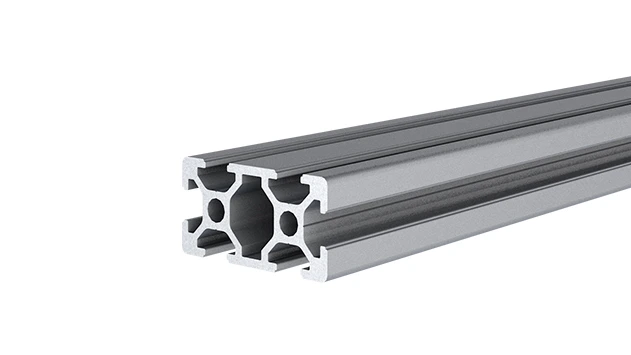
2040 is a 2.00 x 4.00CM fractional 20 series square extrusion T-slot profile with four open T-slots, two side with 2.00cm face, the other side with 4.00cm face. The profile has align-a-grooves to assist in aligning connecting profiles.
On a sweltering July afternoon at Metro Manufacturing's outdoor warehouse, lead foreman Lisa Chen squints at the row of sagging steel material racks lining the loading dock. "These things were supposed to last five years," she mutters, tapping a rusted crossbeam with her clipboard. "It's barely two, and look—half the bolts are seized, the paint's peeling, and last week we had to prop up the third rack with 2x4s because it started leaning." The problem? The racks, made from standard carbon steel, weren't built to withstand the harsh mix of summer humidity, winter snow, and occasional salt spray from the nearby highway. "We need a material that can handle the elements without turning into a maintenance black hole," Lisa tells her team during their weekly huddle. That's when junior engineer Marco pipes up: "What about aluminum profiles? I've seen 2040 EU standard aluminum extrusion profiles used in outdoor setups at the auto plant downtown. They looked pretty solid."
Lisa pauses. Aluminum? She'd always associated it with lightweight, indoor applications—like workbenches or machine guards. But outdoor industrial use? That seemed riskier. "Is it strong enough? Won't it warp in the sun or corrode in the rain?" she asks. Marco shrugs. "I don't know for sure, but maybe we should dig into it."
That conversation is one many industrial managers have had. As facilities expand outdoors—whether for storage, assembly, or logistics—choosing the right structural material becomes critical. In this article, we'll dive into the 2040 EU standard aluminum profile: what it is, how it performs in outdoor industrial settings, and whether it's a viable alternative to traditional materials like steel or wood. We'll also explore key factors like durability, cost, and compatibility with aluminum profile accessories, and share real-world examples of how it's being used today.
What Exactly Is 2040 EU Standard Aluminum Profile?
Before we can judge its suitability for outdoor use, let's clarify what 2040 EU standard aluminum profile is. At its core, it's a type of aluminum extrusion profile—meaning it's formed by pushing heated aluminum through a die to create a specific cross-sectional shape. The "2040" refers to its dimensions: 20mm in width and 40mm in height (though exact measurements can vary slightly by manufacturer, staying within EU tolerance standards). The "EU standard" tag ensures it meets strict European guidelines for material quality, dimensional accuracy, and mechanical properties—think consistent wall thickness, smooth finishes, and reliable strength.
Visually, 2040 profiles typically feature a rectangular cross-section with T-slots running along their length. These T-slots are what make aluminum extrusion profiles so versatile: they allow for easy attachment of aluminum profile accessories like brackets, connectors, end caps, and panels without welding or drilling. For example, a 2040 aluminum profile end cap can snap or screw into the T-slot to seal the end of the profile, preventing water, dust, or debris from entering—critical for outdoor use.
Commonly used in indoor settings for workbenches, machine frames, and shelving, 2040 profiles are prized for their balance of strength and lightweight design. But outdoor industrial environments demand more: resistance to rain, UV rays, temperature swings, and even physical impact from heavy equipment or materials. So, does this indoor favorite have what it takes to go outside?
Key Considerations for Outdoor Industrial Materials
To answer that question, let's first outline what makes a material "outdoor-ready" in an industrial context. When setting up structures like material racks, workbenches, or conveyor supports outdoors, managers need to ask:
- Corrosion Resistance: Will rain, snow, humidity, or industrial chemicals (like cleaning agents or oil spills) cause the material to rust, pit, or degrade?
- UV Stability: Prolonged exposure to sunlight can fade colors, weaken plastics, or make some materials brittle. Does the material hold up under UV rays?
- Load-Bearing Capacity: Can it support the weight of heavy materials, tools, or equipment without bending or breaking—even in wet or windy conditions?
- Thermal Performance: Extreme temperatures (sweltering summers, freezing winters) can cause materials to expand, contract, or warp. Does it maintain structural integrity across a wide temperature range?
- Maintenance Needs: Will it require frequent painting, cleaning, or repairs to stay functional? Time is money in industrial settings, so low-maintenance materials are a plus.
- Cost-Effectiveness: While initial cost matters, long-term value (lifespan, maintenance costs, replacement frequency) is often more important. Is the material a smart investment over 5–10 years?
With these factors in mind, let's put 2040 EU standard aluminum profile to the test.

How Does 2040 Aluminum Profile Perform Outdoors?
1. Corrosion Resistance: A Natural Advantage
Aluminum's biggest selling point for outdoor use is its natural corrosion resistance. Unlike steel, which rusts when exposed to moisture and oxygen, aluminum forms a thin, protective layer of aluminum oxide on its surface almost immediately upon contact with air. This layer is self-healing: if scratched, it quickly reforms, preventing further oxidation. For most outdoor industrial environments—think rain, humidity, or even mild chemical exposure—this natural protection is sufficient.
But what if the environment is more aggressive? For example, facilities near coastal areas with salt spray, or those handling corrosive materials like fertilizers or cleaning solvents. In these cases, 2040 profiles can be enhanced with additional finishes: anodization (an electrolytic process that thickens the oxide layer) or powder coating (a durable, colored resin applied electrostatically and baked on). Both options boost corrosion resistance significantly. Anodized 2040 profiles, for instance, have been used in marine settings for years, with minimal degradation even after decades of saltwater exposure.
Compare this to carbon steel, which requires regular painting or galvanizing to prevent rust—maintenance that adds time and cost. Even stainless steel pipe series, while highly corrosion-resistant, is heavier and more expensive than aluminum, making it overkill for many outdoor industrial applications where weight and cost matter.
2. UV Stability: Standing Up to the Sun
Another concern for outdoor materials is UV radiation. Over time, sunlight can break down organic materials (like wood or plastic) and fade painted surfaces. Aluminum itself is UV-stable—the metal doesn't degrade or become brittle under sunlight. The real question is: how do its finishes and accessories hold up?
Unfinished aluminum profiles may develop a slight patina over time—a thin, dull layer that's purely aesthetic and doesn't affect structural integrity. Anodized or powder-coated profiles fare even better: anodized finishes are colorfast and resistant to fading, while high-quality powder coatings (rated for outdoor use) can retain their color for 10+ years. Aluminum profile accessories, like brackets or end caps made from UV-stabilized plastic or aluminum, also hold up well. For example, a 2040 aluminum profile end cap made from UV-resistant polypropylene won't crack or become brittle in direct sunlight, ensuring it continues to seal the profile and protect against debris.
3. Load Capacity: Strong Enough for Industrial Use?
Industrial settings demand strength. A material rack holding 50kg boxes, or a workbench supporting heavy machinery, can't afford to bend or collapse. So, how much weight can a 2040 EU standard aluminum profile handle?
The answer depends on several factors: wall thickness (typically 1.5–3mm for 2040 profiles), length, and how it's supported (e.g., fixed at both ends vs. cantilevered). As a general rule, a 2040 profile with a 2mm wall thickness, supported at both ends and spanning 1 meter, can safely hold around 50–75kg of evenly distributed weight. For shorter spans (60cm or less), that capacity increases to 100kg or more. This makes it suitable for many outdoor industrial applications: material racks (like the Material Rack B mentioned earlier, with 3 rows and 3 floors), lightweight workbenches, or conveyor supports.
For heavier loads, 2040 profiles can be reinforced by combining them with larger profiles (like 4040 or 4080) or using aluminum profile accessories like gussets or angle brackets to distribute weight. In one case study, a manufacturing plant used 2040 profiles paired with 4040 crossbeams to build an outdoor material rack capable of holding 200kg per shelf—all without welding, thanks to T-slot connectors.
4. Thermal Performance: Handling Temperature Swings
Outdoor environments are subject to extreme temperature fluctuations: freezing winters, scorching summers, and everything in between. Aluminum has a higher thermal expansion coefficient than steel (meaning it expands and contracts more with temperature changes), which can raise concerns about structural stability.
But in practice, this is rarely an issue with proper design. For example, when building a material rack with 2040 profiles, engineers account for thermal movement by leaving small gaps between connected components or using flexible aluminum profile accessories. A 3-meter-long 2040 profile, for instance, will expand by about 4.5mm when heated from -20°C to 40°C—a small amount that can be accommodated with slotted holes or adjustable brackets. In contrast, steel expands less but is heavier, making it harder to adjust if movement does cause stress.
Another thermal advantage of aluminum? It conducts heat quickly, which means snow or ice on an aluminum structure will melt faster than on steel (which retains cold longer). This reduces the risk of ice buildup adding extra weight or creating slippery surfaces—an often-overlooked safety benefit for outdoor work areas.
2040 Aluminum Profile vs. Other Outdoor Materials: A Comparison
To truly understand if 2040 EU standard aluminum profile is suitable for outdoor industrial use, it helps to compare it to common alternatives. Let's take a look at how it stacks up against stainless steel pipe series, lean pipe, and wood in key categories:
| Factor | 2040 EU Standard Aluminum Profile | Stainless Steel Pipe Series | Lean Pipe (PE-Coated Steel) | Wood |
|---|---|---|---|---|
| Corrosion Resistance | Excellent (natural oxide layer; enhanced with anodization/powder coating) | Excellent (but more expensive) | Good (PE coating prevents rust, but coating can chip) | Poor (rots without treatment; needs regular sealing) |
| Weight | Lightweight (2.7g/cm³ density) | Heavy (7.9g/cm³ density) | Moderate (similar to steel, but coated) | Moderate to heavy (varies by species) |
| Load Capacity | Good (50–100kg per meter span, depending on support) | Excellent (higher tensile strength) | Moderate (suitable for light to medium loads) | Good (but weakens when wet) |
| Installation Ease | Easy (T-slots allow tool-free assembly with aluminum profile accessories) | Difficult (requires welding or specialized tools) | Easy (snap-together joints) | Moderate (requires cutting, drilling, painting) |
| Maintenance | Low (occasional cleaning; no painting needed) | Low (but heavier, harder to move/repair) | Moderate (coating may need touch-ups; joints can loosen) | High (sealing, painting, replacing rotted boards) |
| Cost (Initial) | Moderate (more than lean pipe/wood, less than stainless steel) | High | Low | Low |
| Long-Term Value | High (low maintenance, 20+ year lifespan) | High (50+ year lifespan, but higher upfront cost) | Moderate (5–10 year lifespan before coating fails) | Low (5–15 year lifespan, high maintenance) |
As the table shows, 2040 aluminum profile hits a sweet spot: better corrosion resistance and lower maintenance than lean pipe or wood, more affordable and easier to install than stainless steel pipe series. For most outdoor industrial applications—like material racks, workbenches, or lightweight conveyor supports—it offers the best balance of performance and practicality.
Real-World Outdoor Applications of 2040 Aluminum Profile
Talk is cheap—so let's look at how 2040 EU standard aluminum profile is actually being used outdoors in industrial settings today. These examples highlight its versatility and reliability:
1. Outdoor Material Racks
At a automotive parts distributor in Germany, the outdoor storage yard was struggling with rusted steel racks that required annual repainting. The team switched to 2040 aluminum profiles with powder-coated finishes and aluminum profile accessories (angle brackets, 2040 aluminum profile end caps, and heavy-duty casters for mobility). The new racks, designed to hold 150kg per shelf, have been in use for three years with zero signs of corrosion—even through harsh winters with salted roads nearby. "We no longer spend weekends scraping rust and repainting," says warehouse manager Klaus. "And the T-slots make it easy to reconfigure the racks when our inventory changes—something we could never do with the old steel racks."
2. Weather-Resistant Workbenches
A construction equipment manufacturer in France needed outdoor workbenches for assembling large components under a covered but open-air pavilion. They chose 2040 aluminum profiles for the frames, paired with aluminum honeycomb panels for the work surfaces (for added strength and flatness). Aluminum profile accessories like LED light brackets and tool holders were attached via T-slots, creating a fully functional workspace. "The benches get rained on occasionally, but the aluminum frames just dry off—no rust, no warping," says production lead Sophie. "And because aluminum is lightweight, we can move the benches around with a pallet jack when we need extra space for deliveries."
3. Temporary Outdoor Assembly Lines
During peak season, a furniture manufacturer in Italy sets up temporary outdoor assembly lines to handle overflow. They use 2040 aluminum profiles to build modular conveyor supports and workstations, which are disassembled and stored indoors during off-season. The profiles, combined with roller track and accessories (like plastic roller track guide rails), create smooth-moving material flows. "Aluminum is perfect here because it's lightweight enough to carry, strong enough to support the conveyors, and doesn't rust when left outside for a few months," explains operations director Marco. "We've reused the same profiles for five seasons now—they still look brand new."
The Role of Aluminum Profile Accessories in Outdoor Performance
A 2040 aluminum profile is only as good as the accessories that hold it together. For outdoor use, choosing the right aluminum profile accessories is critical to ensuring stability, longevity, and functionality. Here are a few key accessories and how they enhance outdoor performance:
End Caps and Seals
2040 aluminum profile end caps are small but mighty. These plastic or aluminum caps fit into the ends of the profile, preventing water, dirt, or insects from entering the T-slots or hollow interior. In outdoor settings, this is essential—trapped water can freeze and expand in winter, causing cracks, while dirt buildup can jam T-slot connections. Look for end caps made from UV-stabilized plastic or anodized aluminum for maximum durability.
Connectors and Brackets
Aluminum profile connectors (like 90° aluminum profile connectors or T-joints) are the backbone of any aluminum structure. For outdoor use, choose connectors made from corrosion-resistant materials like aluminum or stainless steel. Avoid plastic connectors in high-load or extreme temperature applications, as they may become brittle over time. Many manufacturers offer "heavy-duty" connectors with thicker walls or reinforced designs for outdoor industrial use.
Gaskets and Weatherstripping
For structures that need to be weatherproof (like outdoor enclosures or covered workbenches), gaskets and weatherstripping can be inserted into T-slots to seal gaps between profiles and panels. Silicone or EPDM gaskets are ideal, as they resist UV radiation and temperature extremes better than rubber.
Casters and Leveling Feet
Outdoor surfaces are rarely perfectly flat. Adjustable leveling feet (made from aluminum or stainless steel) allow 2040 profile structures to sit evenly on uneven ground, preventing rocking or stress on the frame. For mobile structures like material carts, heavy-duty casters with locking brakes and weather-resistant bearings ensure smooth movement even on gravel or uneven pavement.
Maintenance Tips for Outdoor 2040 Aluminum Profile Structures
While 2040 EU standard aluminum profile is low-maintenance, a little care goes a long way in ensuring it lasts decades outdoors. Here are some simple tips:
- Clean Regularly: Hose down aluminum structures periodically to remove dirt, leaves, or debris. For stubborn grime, use a mild detergent and soft brush—avoid abrasive cleaners, which can scratch anodized or powder-coated finishes.
- Inspect Accessories: Check aluminum profile accessories like connectors, casters, and end caps quarterly. Tighten any loose bolts, replace cracked end caps, and lubricate caster bearings with waterproof grease if they start to squeak.
- Address Scratches Promptly: While aluminum's oxide layer is self-healing, deep scratches in powder-coated or anodized finishes can expose the metal. Touch up these areas with matching paint or a clear sealant to prevent cosmetic damage from spreading.
- Clear Snow and Ice: Heavy snow buildup can add extra weight to structures. Use a soft-bristled broom to clear snow from shelves and work surfaces—avoid metal shovels, which can scratch the finish.
- Reconfigure When Needed: One of the benefits of aluminum profiles is their modularity. If a structure starts to show signs of stress (e.g., sagging shelves), use T-slots to add extra supports or redistribute weight—no need for welding or major repairs.
Conclusion: Is 2040 EU Standard Aluminum Profile Right for Your Outdoor Industrial Needs?
Let's circle back to Lisa and her team at Metro Manufacturing. After researching 2040 EU standard aluminum profile and visiting a neighboring facility using it for outdoor material racks, they decided to test it with a small pilot project: three outdoor material racks built from 2040 profiles, powder-coated gray, with aluminum profile accessories and 2040 aluminum profile end caps. Six months later, the results are in.
"The racks look brand new," Lisa reports. "We've had rain, snow, and 90-degree heat, and there's not a spot of rust. The T-slots let us add dividers to separate different parts, and we even mounted a small weatherproof shelf for tools using the same profiles. Best of all, when we need to expand, we can just buy more profiles and accessories—no custom fabrication required."
So, is 2040 EU standard aluminum profile suitable for outdoor industrial applications? For most cases, the answer is a resounding yes. Its natural corrosion resistance, UV stability, lightweight design, and compatibility with aluminum profile accessories make it a strong choice for material racks, workbenches, and modular structures. It's not the best fit for ultra-heavy loads (where stainless steel pipe series might be better) or applications requiring extreme heat resistance (like near furnaces), but for the vast majority of outdoor industrial needs, it offers an unbeatable balance of performance, cost, and versatility.
As facilities continue to expand outdoors, materials that can keep up with the demands of industrial life while minimizing maintenance are more valuable than ever. 2040 EU standard aluminum profile isn't just an indoor workhorse—it's a reliable, adaptable solution for the great outdoors, too.