- Company Articles
- Industry articles
- Industry standards
- ISO Certifications for Lean Pipe Clamp B: Ensuring Quality and Compliance

ISO Certifications for Lean Pipe Clamp B: Ensuring Quality and Compliance
Related Product
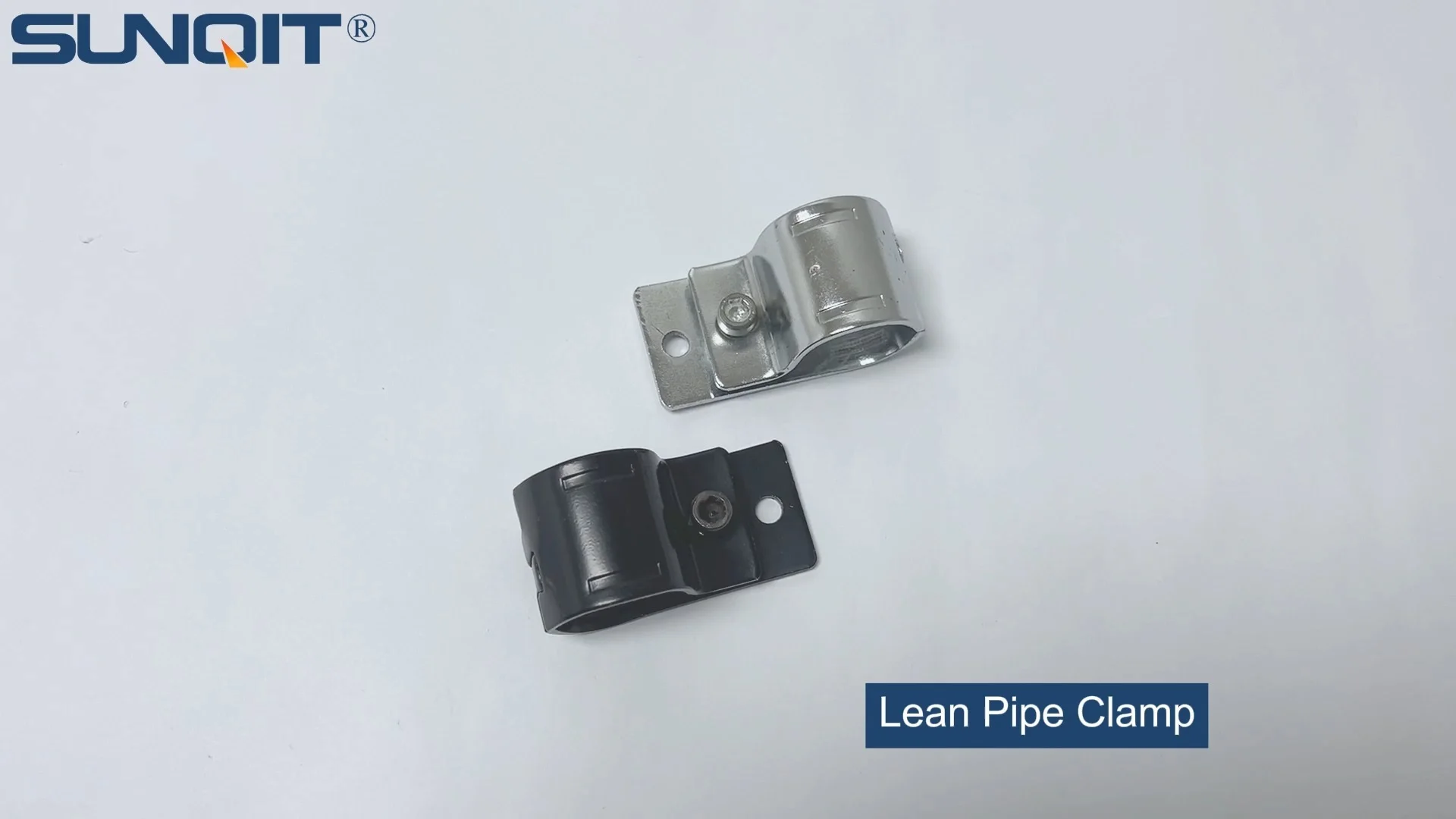
Lean Pipe Clamp
Lean pipe clamp is used for rack system hang monitor or other panel for workbenck, flowrack in production daily use.
On a bustling manufacturing floor, every component has a role to play—from the largest machinery to the smallest fastener. In the world of lean manufacturing, where efficiency and reliability are the cornerstones of success, even the most unassuming parts can make or break a production line. One such component, often overlooked but critically important, is the Lean Pipe Clamp B. These clamps serve as the silent connectors that hold lean systems together, securing pipes, frames, and workbenches in place. But not all clamps are created equal. In an industry where precision and durability directly impact productivity and safety, ISO certifications stand as a gold standard for quality assurance. This article explores why ISO certifications matter for Lean Pipe Clamp B, how they ensure compliance and reliability, and why manufacturers and buyers alike should prioritize certified components in their lean systems.
Understanding Lean Pipe Clamp B: The Unsung Hero of Lean Systems
Before diving into certifications, it's essential to understand what makes Lean Pipe Clamp B so vital. Lean systems—frameworks designed to minimize waste, streamline workflows, and enhance productivity—rely on modular, flexible structures. These structures are typically built using pipes (often aluminum or steel) and clamps that allow for quick assembly, disassembly, and reconfiguration. Enter the Lean Pipe Clamp B: a specialized connector engineered to join pipes at various angles, creating stable frameworks for workbenches, material racks, roller tracks, and turnover trolleys. Unlike generic clamps, Lean Pipe Clamp B is designed with lean principles in mind: it's lightweight yet strong, easy to adjust, and compatible with standard pipe sizes, making it a staple in industries ranging from automotive to electronics manufacturing.
The functionality of Lean Pipe Clamp B extends beyond simple connection. A well-designed clamp ensures that the entire structure remains rigid under load, preventing wobbling or shifting that could disrupt production. For example, in a workbench setup, clamps must securely hold aluminum profiles and pipes to support heavy tools and components without bending or breaking. On a roller track, they keep guide rails aligned, ensuring smooth movement of parts from one station to the next. Even a minor flaw in a clamp—such as a weak joint or inconsistent material—can lead to system failure, causing downtime, rework, or even safety hazards. This is where quality becomes non-negotiable, and ISO certifications step in to guarantee that every Lean Pipe Clamp B meets rigorous standards.
Why Quality Can't Be Compromised: The Risks of Non-Certified Clamps
In the race to cut costs, some manufacturers or buyers may be tempted to opt for cheaper, non-certified clamps. But the short-term savings often come with long-term consequences. Imagine a scenario where a production line uses subpar Lean Pipe Clamp B in its material rack. Over time, the clamps loosen under the weight of inventory, causing the rack to tilt. A worker, unaware of the issue, loads another box onto the rack, and the entire structure collapses. Not only does this damage products and equipment, but it also puts the worker at risk of injury. Beyond safety, non-certified clamps can lead to frequent breakdowns, forcing lines to halt for repairs. In lean manufacturing, where efficiency is measured in seconds, even a 10-minute delay can ripple through the system, delaying orders and eroding customer trust.
Another risk of non-certified clamps is inconsistency. Without standardized production processes, clamps may vary in size, material composition, or strength—even within the same batch. This inconsistency makes it nearly impossible to build uniform lean systems. A workbench assembled with mismatched clamps might have uneven surfaces, leading to errors in assembly or product defects. Similarly, roller tracks with ill-fitting clamps could cause parts to jam or slide unevenly, disrupting the flow of materials. For manufacturers striving for Six Sigma levels of precision, such variability is a nightmare. ISO certifications address these issues by enforcing strict quality control measures, ensuring that every Lean Pipe Clamp B performs as expected, batch after batch.

ISO Certifications: What They Are and Why They Matter
ISO (International Organization for Standardization) is a global body that develops and publishes standards to ensure the quality, safety, and efficiency of products, services, and systems. For manufacturing components like Lean Pipe Clamp B, the most relevant standard is ISO 9001:2015, which focuses on quality management systems (QMS). ISO 9001 sets out criteria for a QMS, including requirements for leadership, planning, support, operation, performance evaluation, and improvement. By certifying to ISO 9001, a manufacturer demonstrates that it has processes in place to consistently deliver products that meet customer and regulatory requirements.
But ISO 9001 is just the starting point. Depending on the industry and application, additional certifications may apply. For example, if Lean Pipe Clamp B is used in environments where electrostatic discharge (ESD) poses a risk—such as electronics manufacturing—certifications related to ESD protection (e.g., ANSI/ESD S20.20) may be required. Similarly, if clamps are made from aluminum or stainless steel, material-specific standards (e.g., ISO 6892 for tensile testing of metals) ensure that the raw materials meet strength and durability benchmarks. Together, these certifications create a comprehensive framework that covers every stage of production, from material sourcing to final inspection.

Key ISO Standards for Lean Pipe Clamp B: A Closer Look
To understand how ISO certifications impact Lean Pipe Clamp B, let's break down the key requirements of ISO 9001 and how they apply to clamp manufacturing:
- Quality Management System (QMS) Documentation: ISO 9001 requires manufacturers to document their processes, from design and development to production and post-sales support. For Lean Pipe Clamp B, this means having clear procedures for material testing, clamp design validation, and production line inspections. Documentation ensures transparency and traceability—if a defect is found, manufacturers can quickly identify the root cause and prevent recurrence.
- Risk-Based Thinking: ISO 9001 emphasizes proactive risk management. Manufacturers must identify potential risks to product quality (e.g., inconsistent material supply, machine calibration errors) and implement controls to mitigate them. For example, a clamp manufacturer might test incoming aluminum pipes for tensile strength before production, or regularly calibrate tools to ensure clamp dimensions are precise.
- Customer Focus: The standard requires manufacturers to understand customer needs and align products with those needs. For Lean Pipe Clamp B, this could involve designing clamps that support higher load capacities for heavy-duty workbenches or creating corrosion-resistant versions for use in humid environments. By incorporating customer feedback into the QMS, manufacturers ensure that clamps solve real-world problems.
- Continuous Improvement: ISO 9001 isn't a one-time achievement; it requires ongoing monitoring and improvement. Manufacturers must track key performance indicators (KPIs), such as defect rates or customer complaints, and use this data to refine processes. Over time, this leads to clamps that are more reliable, durable, and cost-effective.
Beyond ISO 9001, material-specific standards play a critical role. For example, if a Lean Pipe Clamp B is made from aluminum, ISO 6892-1 (tensile testing of metals) ensures that the aluminum has the necessary strength to withstand stress. Similarly, ISO 898-1 (mechanical properties of fasteners) may apply to the screws or bolts used in the clamp, ensuring they don't strip or break under load. These standards work in tandem to create a holistic quality assurance system.

The Benefits of Choosing ISO-Certified Lean Pipe Clamp B
For manufacturers building lean systems, the benefits of choosing ISO-certified Lean Pipe Clamp B are clear. First and foremost, certified clamps offer peace of mind. Buyers can trust that the clamps have been rigorously tested and meet global quality standards, reducing the risk of system failures or safety incidents. This trust translates to fewer disruptions on the production floor, lower maintenance costs, and higher overall productivity.
Certified clamps also enhance compliance. Many industries, such as aerospace or medical device manufacturing, have strict regulatory requirements for production equipment. Using ISO-certified components helps manufacturers meet these requirements, avoiding fines or production shutdowns due to non-compliance. For example, a medical device assembly line using non-certified clamps might fail an FDA audit, whereas one with ISO 9001-certified clamps demonstrates a commitment to quality and safety.
Additionally, ISO-certified clamps support sustainability—a key goal for modern lean systems. ISO 9001 encourages waste reduction and efficient resource use, which often aligns with eco-friendly practices. For instance, manufacturers with ISO 9001 certifications may optimize production processes to minimize scrap metal, or use recyclable materials in their clamps. This not only reduces environmental impact but also lowers costs, making certified clamps a win-win for both businesses and the planet.
The Certification Journey: How Manufacturers Earn ISO Compliance
Earning ISO certification for Lean Pipe Clamp B is a rigorous process that requires dedication and investment. Here's a simplified overview of the steps involved:
- Gap Analysis: Before pursuing certification, manufacturers conduct a gap analysis to identify areas where their current processes fall short of ISO 9001 requirements. This might involve reviewing existing documentation, interviewing staff, or auditing production lines.
- QMS Development: Based on the gap analysis, manufacturers develop or update their QMS. This includes creating process documents, training employees on new procedures, and implementing tools for tracking quality metrics (e.g., defect rates, customer feedback).
- Internal Audit: Before seeking certification, manufacturers conduct an internal audit to ensure the QMS is functioning as intended. This involves checking that processes are followed, documentation is up-to-date, and risks are being managed effectively.
- Certification Audit: An accredited third-party certification body (e.g., SGS, Bureau Veritas) conducts an on-site audit. The auditor reviews the QMS documentation, observes production processes, and interviews staff to verify compliance with ISO 9001. If non-conformities are found, the manufacturer must address them before certification is granted.
- Surveillance Audits: ISO certification isn't permanent. Manufacturers undergo annual surveillance audits to ensure they're maintaining compliance. This ongoing oversight ensures that the QMS continues to improve and adapt to changing needs.
While the certification process requires time and resources, the payoff is significant. Certified manufacturers gain a competitive edge in the market, as buyers increasingly prioritize quality and compliance. For Lean Pipe Clamp B suppliers, ISO certification signals reliability—a critical factor in building long-term partnerships with clients.
Real-World Impact: How Certified Clamps Transform Production Lines
To illustrate the difference ISO-certified Lean Pipe Clamp B can make, consider a hypothetical case study in the automotive industry. A car parts manufacturer was struggling with frequent breakdowns in its material handling system, which used non-certified clamps to support roller tracks. The clamps would loosen under the weight of heavy parts, causing tracks to misalign and parts to jam. This led to daily downtime, averaging 2 hours per shift, and increased labor costs as workers manually unjammed the tracks.
Seeking a solution, the manufacturer switched to ISO-certified Lean Pipe Clamp B. The certified clamps, tested to withstand higher loads and resist corrosion, provided a stable foundation for the roller tracks. Within three months, downtime dropped by 80%, and the manufacturer saved over $50,000 in labor and repair costs. Workers reported feeling safer, and the production line was able to meet tight delivery deadlines consistently. This example highlights a simple truth: investing in certified clamps isn't just about compliance—it's about unlocking tangible business value.
Certified vs. Non-Certified: A Comparison
| Criteria | ISO-Certified Lean Pipe Clamp B | Non-Certified Lean Pipe Clamp B |
|---|---|---|
| Material Consistency | Raw materials (e.g., aluminum, steel) are tested for quality; consistent composition batch to batch. | Materials may vary in quality; no guarantee of tensile strength or durability. |
| Load Capacity | Tested to meet or exceed specified load limits; documentation available for verification. | Load capacity claims may be untested; risk of failure under heavy loads. |
| Durability | Resistant to wear, corrosion, and fatigue; designed for long-term use in industrial environments. | Prone to bending, cracking, or loosening over time; requires frequent replacement. |
| Safety Compliance | Meets global safety standards; reduces risk of workplace accidents. | May lack safety testing; increases risk of structural failure or injury. |
| Traceability | Full traceability from raw materials to finished product; easy to identify and resolve issues. | Limited or no traceability; difficult to address defects or recalls. |
Conclusion: Building a Lean Future with Quality at Its Core
In the fast-paced world of manufacturing, where every component contributes to the bottom line, Lean Pipe Clamp B may seem like a small detail. But as we've explored, these clamps are the backbone of lean systems, ensuring stability, flexibility, and efficiency. ISO certifications elevate these components from mere connectors to trusted partners in production, guaranteeing quality, compliance, and reliability. For manufacturers, choosing certified clamps means reducing waste, enhancing safety, and building systems that stand the test of time. For buyers, it means peace of mind, knowing that the products they rely on are backed by rigorous standards and continuous improvement.
As lean manufacturing continues to evolve, the demand for high-quality, certified components will only grow. ISO-certified Lean Pipe Clamp B isn't just a mark of quality—it's a commitment to excellence. By prioritizing these clamps, businesses can build lean systems that are not only efficient but also resilient, adaptable, and ready to meet the challenges of tomorrow's manufacturing landscape. In the end, the choice is clear: when it comes to Lean Pipe Clamp B, certification isn't optional—it's essential.