- Company Articles
- Industry articles
- Industry standards
- ISO Compliance for Two Way Lean Pipe Joint Chrome: Quality Assurance

ISO Compliance for Two Way Lean Pipe Joint Chrome: Quality Assurance
Related Product
Two Way Lean Pipe Joint Chrome
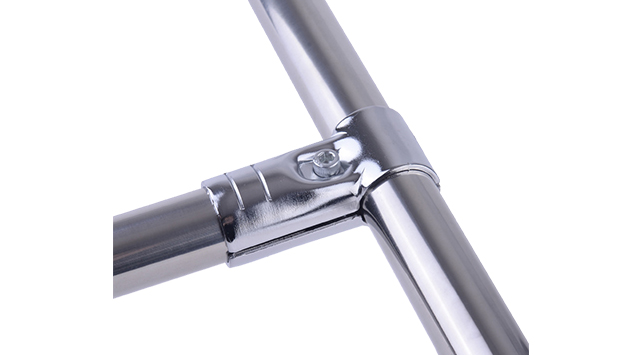
Two way lean pipe joint for 2 pcs 28MM lean pipe connection in straight angle, which used widely in workbench, flow rack, hand trolley frame connection.
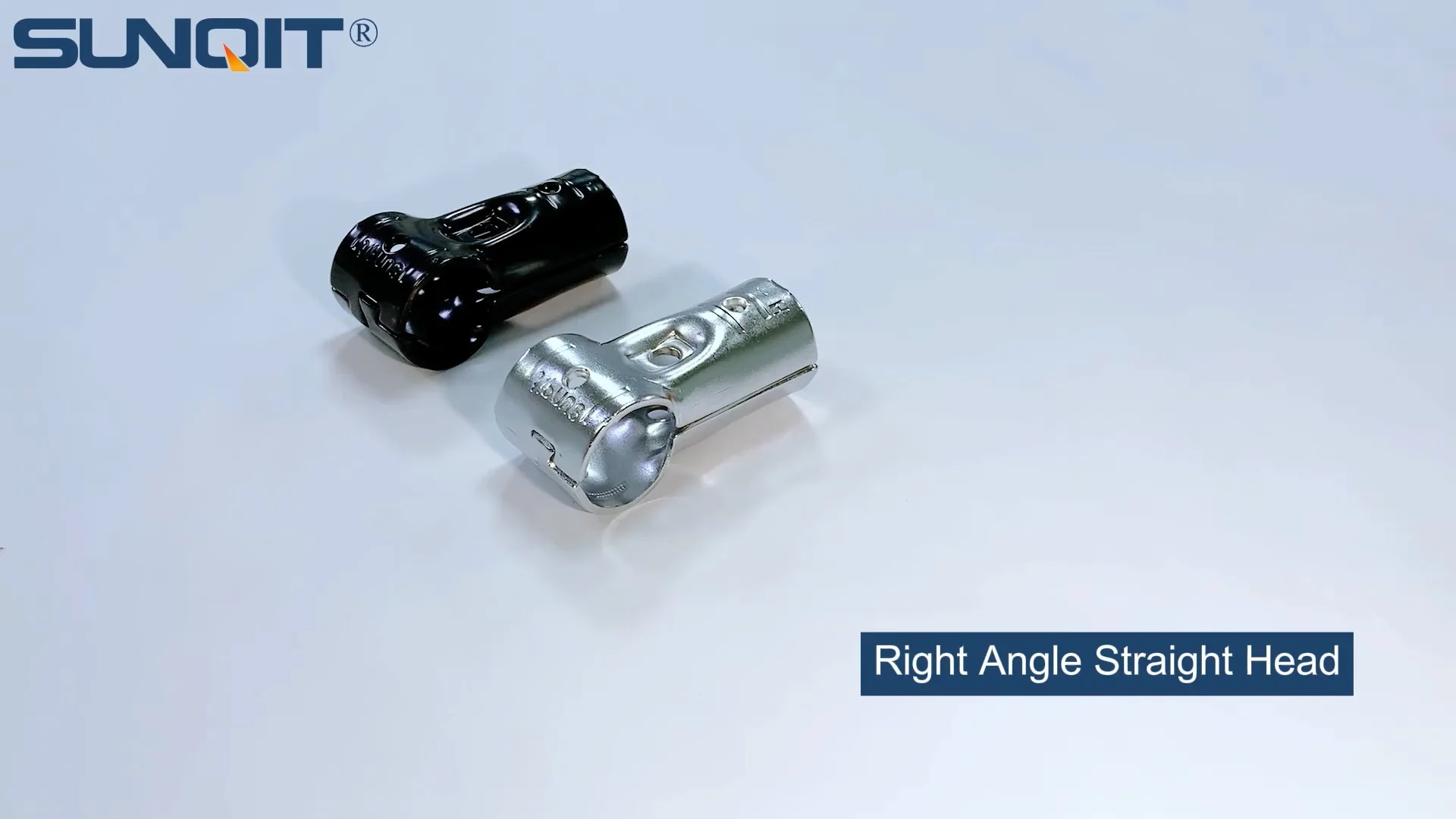
In the fast-paced world of manufacturing and lean operations, every component matters. From the largest workbench to the smallest connector, the reliability of your tools and systems directly impacts productivity, safety, and employee satisfaction. Among these components, the two way lean pipe joint chrome stands out as a quiet workhorse— yet essential, holding together the modular structures that power assembly lines, material handling systems, and workstations. But not all joints are created equal. When precision, durability, and consistency are non-negotiable, ISO compliance becomes the gold standard that separates fleeting fixes from long-term solutions. In this article, we'll dive into why ISO compliance matters for two way lean pipe joint chrome, how it's achieved, and why partnering with a trusted lean pipe supplier can transform your operations from the ground up.
What is ISO Compliance, and Why Does It Matter for Lean Pipe Components?
Before we zoom in on the two way lean pipe joint chrome itself, let's clarify what "ISO compliance" really means. ISO (the International Organization for Standardization) sets globally recognized benchmarks for quality, safety, and efficiency across industries. For manufacturers, ISO 9001—a standard focusing on quality management systems—is the most relevant. It's not just a certificate to hang on the wall; it's a framework that demands rigorous process control, consistent improvement, and accountability at every stage of production.
For lean pipe components like the two way lean pipe joint chrome, ISO compliance isn't optional. These joints are the linchpins of modular systems: they connect lean pipes to build workbenches, support roller tracks, and stabilize turnover trolleys. A weak or inconsistent joint can compromise an entire structure, leading to wobbly work surfaces, jamming material flows, or even safety hazards. ISO compliance ensures that every joint meets strict criteria for material quality, dimensional accuracy, and performance—so you can trust that the structure you build today will still stand strong tomorrow.
Think of it this way: when you buy a two way lean pipe joint chrome, you're not just buying a piece of metal. You're buying peace of mind. ISO compliance guarantees that the joint was manufactured using approved materials, tested to withstand real-world stress, and produced in an environment that prioritizes quality over shortcuts. For lean operations, where efficiency and reliability are the lifeblood, this isn't just a "nice-to-have"—it's a necessity.
The Anatomy of a Compliant Joint: How Two Way Lean Pipe Joint Chrome is Made to ISO Standards
Creating an ISO-compliant two way lean pipe joint chrome is a meticulous process, with checks and balances at every turn. Let's walk through the key steps to understand why these joints are built to last.
1. Raw Materials: The Foundation of Quality
It all starts with the right materials. ISO standards demand traceability, meaning the steel used for the joint's core must come from certified suppliers with documented quality records. This steel isn't just any metal—it's selected for its tensile strength (to withstand heavy loads) and ductility (to resist cracking under stress). Then there's the chrome plating: ISO-compliant plating processes use high-purity chromium, applied in controlled thicknesses (typically 0.0005 to 0.001 inches) to ensure corrosion resistance without compromising the joint's structural integrity. Cheap, non-compliant joints often cut corners here, using recycled or low-grade steel that bends or cracks easily, or thin chrome plating that chips off after minimal use.
2. Precision Manufacturing: Forging, Machining, and Plating
Once the raw materials are approved, the manufacturing process begins. The steel is forged into the joint's shape—two perpendicular sockets designed to connect lean pipes at a 90-degree angle. ISO standards mandate tight tolerances here: the socket diameters must be accurate to within ±0.1mm to ensure a snug fit with lean pipes, preventing wobbling or slippage. After forging, the joint undergoes CNC machining to smooth rough edges and drill precise holes for set screws (which lock the pipes in place). Even the threads on these screws are standardized, ensuring compatibility with common tools and preventing stripping.
The final step is chrome plating, done in a controlled environment to avoid contamination. The joint is cleaned thoroughly (any oil or debris would ruin the plating adhesion), then dipped in a chromium electrolyte bath. The plating process is monitored for temperature, current, and duration to ensure an even, durable finish. Non-compliant manufacturers often skip pre-plating cleaning or rush the plating process, resulting in blistered or uneven chrome that peels off, leaving the steel vulnerable to rust.
3. Testing: Proving Compliance Before It Leaves the Factory
No ISO-compliant joint hits the market without rigorous testing. At a reputable lean pipe supplier, every batch of two way lean pipe joint chrome undergoes multiple checks:
- Load Testing: Joints are mounted to steel pipes and subjected to static loads (e.g., 500kg for 24 hours) to ensure they don't deform or fail.
- Torque Testing: Set screws are tightened to recommended torque levels (usually 15-20 Nm) to verify that the joint grips the pipe securely without cracking.
- Corrosion Testing: A salt spray test (per ISO 9227) exposes joints to a mist of 5% saltwater for 500+ hours. Compliant joints show no signs of rust or pitting afterward.
- Dimensional Inspection: Calipers and micrometers check socket diameters, wall thickness, and overall dimensions against blueprints.
These tests aren't just box-ticking exercises—they're critical to ensuring the joint performs as expected in real-world conditions. A joint that passes load testing, for example, won't sag when supporting a heavy workbench top; one that aces corrosion testing will last years in humid factory environments.
Beyond the Joint: How a Lean Pipe Supplier Ensures System-Wide Compliance
A two way lean pipe joint chrome is rarely used in isolation—it's part of a larger ecosystem of lean pipe and accessories: pipes, connectors, casters, workbench tops, and roller tracks. For your entire system to work seamlessly, every component must meet the same high standards. That's where a reputable lean pipe supplier comes in.
1. Supply Chain Accountability
ISO-compliant suppliers don't just focus on their own factories—they vet their entire supply chain. This means working only with raw material suppliers who provide certificates of analysis (COAs) for steel and chrome, and secondary suppliers (for casters, roller track guides, etc.) who also hold ISO 9001 certification. This ensures that when you buy a two way lean pipe joint chrome, the lean pipe and accessories you pair it with will fit perfectly and perform consistently. For example, a compliant roller track guide rail (like the plastic roller track guide rail yellow or grey) will align with the joint's socket spacing, preventing jams when materials flow through the system.
2. Traceability and Documentation
ISO standards require full traceability, so every two way lean pipe joint chrome can be traced back to its batch, raw materials, and manufacturing date. Reputable suppliers provide batch numbers on packaging, along with test reports (load, torque, corrosion) for that batch. If an issue arises, you can quickly identify affected components and address the root cause—something impossible with non-compliant suppliers who often lack such documentation.
3. Continuous Improvement
ISO 9001 isn't a one-and-done certification; it requires suppliers to constantly review and improve their processes. A lean pipe supplier committed to compliance will track customer feedback, analyze failure data (e.g., a batch of joints with slightly off dimensions), and adjust manufacturing processes to prevent recurrence. This culture of improvement means that the two way lean pipe joint chrome you buy today will be even better next year.

Real-World Impact: How ISO-Compliant Joints Transform Work Environments
Numbers and standards are important, but the true value of ISO-compliant two way lean pipe joint chrome shines through in daily operations. Let's look at two scenarios to see the difference compliance makes.
Scenario 1: The Cost of Cutting Corners
A mid-sized electronics manufacturer needed to build 20 new assembly workbenches. To save money, they sourced two way lean pipe joint chrome from a low-cost, non-compliant supplier. At first, things seemed fine—the workbenches were easy to assemble, and the price was unbeatable. But within three months, problems emerged: joints began to loosen, causing workbench tops to wobble (ruining delicate soldering work). Some joints even cracked under the weight of tools and components, forcing the manufacturer to shut down lines for repairs. By the six-month mark, they'd spent twice the initial savings on replacement joints and lost productivity. Worse, employee morale plummeted—workers complained about unstable surfaces and wasted time adjusting wobbly benches.
Scenario 2: The Benefits of Compliance
A competing manufacturer took a different approach: they partnered with a reputable lean pipe supplier and invested in ISO-compliant two way lean pipe joint chrome. The upfront cost was 30% higher, but the results spoke for themselves. The joints fit snugly with lean pipes, creating rock-solid workbenches that stayed stable even with heavy equipment. Corrosion-resistant chrome plating meant no rust, even in the humid factory. After a year, zero joints had failed or loosened, and maintenance costs dropped by 75%. Workers reported higher satisfaction—no more stopping to fix wobbly surfaces—and assembly accuracy improved, reducing product defects by 15%. The total cost of ownership? Far lower than the "cheap" option, thanks to reduced downtime and maintenance.
These scenarios highlight a key truth: ISO compliance isn't about paying more—it's about investing wisely. When you choose compliant two way lean pipe joint chrome, you're not just buying a component; you're investing in reliability, efficiency, and peace of mind.
Compliant vs. Non-Compliant: A Side-by-Side Comparison
Still on the fence? Let's break down the differences between ISO-compliant and non-compliant two way lean pipe joint chrome:
| Feature | ISO-Compliant Two Way Lean Pipe Joint Chrome | Non-Compliant Joint |
|---|---|---|
| Raw Material | Certified high-strength steel; pure chromium plating (500+ hour salt spray resistance) | Low-grade/recycled steel; thin, impure chrome (rusts within 100 hours) |
| Load Capacity | Withstands 500kg static load for 24 hours without deformation | Fails at 200-300kg; bends or cracks under stress |
| Dimensional Accuracy | Socket diameter ±0.1mm; tight fit with lean pipes | Inconsistent diameters; loose or overly tight fit (causes pipe damage) |
| Durability | 5+ year lifespan in typical factory use | 3-6 month lifespan before failure or corrosion |
| Total Cost of Ownership | Higher upfront cost, but low maintenance and zero downtime | Low upfront cost, but high replacement and downtime costs |
Choosing the Right Lean Pipe Supplier: What to Look For
Not all lean pipe suppliers are created equal. To ensure you're getting ISO-compliant two way lean pipe joint chrome (and other quality components), ask these critical questions:
- "Can you provide ISO 9001 certification and batch test reports?" A reputable supplier will have current ISO certificates and detailed test data for every batch of joints.
- "Where do you source your raw materials?" Look for suppliers who use certified steel and chrome from known, traceable sources.
- "What testing do you perform on finished joints?" They should describe load, torque, corrosion, and dimensional tests—avoid suppliers who vague on details.
- "Do your lean pipe and accessories also meet ISO standards?" System-wide compliance ensures compatibility and reliability.
- "Can I visit your manufacturing facility?" Transparent suppliers welcome factory visits to show their processes and quality controls.
Don't settle for suppliers who pressure you to "just trust them" or offer prices that seem too good to be true. Remember: the cheapest joint today could cost you far more tomorrow in downtime, repairs, and lost productivity.
Conclusion: Compliance as the Foundation of Lean Success
In lean manufacturing, every detail matters. The two way lean pipe joint chrome may seem like a small component, but its role in building reliable, efficient systems is enormous. ISO compliance isn't just a certification—it's a promise: that the joint was made with care, tested rigorously, and built to support your operations for years to come.
By partnering with a trusted lean pipe supplier and investing in ISO-compliant components, you're not just improving your bottom line—you're creating a safer, more productive environment for your team. Stable workbenches, reliable roller tracks, and durable structures mean less frustration, more focus, and better results. In the end, compliance isn't just about meeting standards—it's about building a foundation for success.
So the next time you're sourcing lean pipe and accessories, remember: the right joint isn't just a part. It's a commitment to quality—and that's a commitment worth making.