- Company Articles
- Industry articles
- Industry standards
- Joining 2040 EU Standard Aluminum Profile: Adhesives vs. Mechanical Fasteners

Joining 2040 EU Standard Aluminum Profile: Adhesives vs. Mechanical Fasteners
Related Product
2040 EU Standard Aluminum Profile
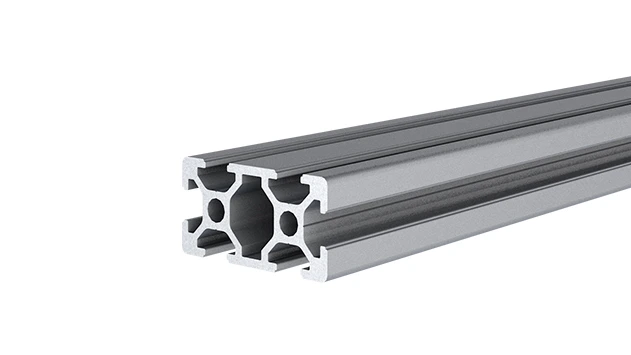
2040 is a 2.00 x 4.00CM fractional 20 series square extrusion T-slot profile with four open T-slots, two side with 2.00cm face, the other side with 4.00cm face. The profile has align-a-grooves to assist in aligning connecting profiles.
Introduction: The Backbone of Modern Workspaces
Walk into any manufacturing plant, warehouse, or even a tech startup's assembly area, and you'll likely spot the unsung heroes holding everything together: aluminum profiles. These sleek, lightweight structures form the skeleton of workbenches, flow racks, conveyor systems, and material trolleys—quietly supporting the rhythm of production. Among the most versatile players in this space is the 2040 EU standard aluminum profile . With its 20mm x 40mm cross-section, it strikes the perfect balance between strength and flexibility, making it a go-to choice for everything from simple workbenches to complex automated systems.
But here's the thing: even the best aluminum profile is only as good as the way it's joined. Whether you're building a sturdy workbench for electronics assembly or a precision flow rack for parts distribution, how you connect those 2040 profiles directly impacts durability, safety, and efficiency. Two methods dominate this process: mechanical fasteners (think connectors, bolts, and brackets) and adhesives (chemical bonding agents). Each has its loyal advocates, but which one is right for your project? Let's dive in.
First, Let's Get to Know the 2040 EU Standard Aluminum Profile
Before we compare joining methods, let's make sure we're all on the same page about the star of the show: the 2040 EU standard aluminum profile. Made from aluminum extrusion profile —a process where molten aluminum is pushed through a die to create consistent, precise shapes—this profile is engineered for practicality. Its T-slot design (those grooves running along its length) is a game-changer, allowing for easy attachment of accessories like brackets, panels, and even other profiles. It's lightweight enough to move around during setup but strong enough to support heavy tools, materials, or even entire assembly lines.
You'll find this profile hard at work in countless scenarios: a workbench in a small electronics workshop, where it holds circuit boards and testing equipment; a flow rack in a automotive parts warehouse, guiding components to assembly stations; or even a custom conveyor frame in a packaging plant. And it rarely works alone— aluminum profile accessories like end caps (to smooth rough edges), rubber strips (to dampen noise and prevent scratches), and connectors (the focus of our discussion) turn basic profiles into functional systems.

Mechanical Fasteners: The Tried-and-True Workhorses
Mechanical fasteners are the old reliables of the aluminum profile world. They're exactly what they sound like: physical components that hold profiles together through friction, pressure, or interlocking parts. For 2040 profiles, the most common suspects include 90° aluminum profile connector s, angle codes, T-slot nuts, bolts, and brackets. Let's break down how they work and why they've stood the test of time.
How Mechanical Fasteners Work
Imagine building with Tinkertoys, but for grown-ups. A 90° aluminum profile connector , for example, is a small, often L-shaped piece that fits into the T-slots of two perpendicular 2040 profiles. You slide it into place, tighten a bolt or screw, and suddenly those two separate pieces become a rigid corner. Angle codes—flat metal plates with holes—do something similar, bridging the gap between profiles and securing them with bolts. Even simpler, T-slot nuts slide into the grooves of the profile, letting you attach brackets or panels anywhere along the length without pre-drilling.
The Pros: Why Workshops Love Mechanical Fasteners
First and foremost: strength. Mechanical fasteners create a direct, physical bond that's easy to quantify. A well-tightened 90° connector can handle significant weight—critical if your workbench is holding heavy machinery or your flow rack is stacked with metal parts. They're also adjustable . Need to reconfigure your workbench layout next month? Loosen the bolts, move the profiles, and retighten. No messy cleanup, no waiting for curing—just quick, on-the-fly changes.
Durability is another win. Unlike adhesives, mechanical fasteners aren't as sensitive to temperature swings or moisture. A 2040 profile frame held together with steel angle codes will keep its shape in a hot factory or a cold warehouse. And let's not forget repairability. If a connector wears out or a bolt strips, you can replace just that part instead of rebuilding the entire structure. For busy shops where downtime is costly, this is a lifesaver.
The Cons: When Fasteners Fall Short
Nothing's perfect, and mechanical fasteners have their quirks. For one, they can create "stress points." A single bolt or connector concentrates force at a specific spot on the profile, which might lead to bending or warping over time, especially under heavy, repeated loads. They also require tools—drills, hex keys, wrenches—which means you can't just "snap" a structure together. If you're assembling a large system, this adds time and labor.
Then there's aesthetics. Let's be honest: bolts, nuts, and connectors aren't exactly invisible. On a sleek workbench or a customer-facing display rack, those metal bits can look clunky. And if you over-tighten a fastener? You might strip the T-slot or even crack the aluminum profile—permanent damage that's hard to fix.
Adhesives: The Invisible Bond
Now, let's talk about the underdog: adhesives. These chemical compounds don't just stick profiles together—they bond them at a molecular level, creating a joint that's often as strong as the aluminum itself. For 2040 profiles, structural adhesives (like epoxies, acrylics, or polyurethanes) are the name of the game. They're applied as liquids or pastes, then cure (harden) into a solid, invisible layer that holds the profiles in place.
How Adhesives Work for 2040 Profiles
Applying adhesives isn't as simple as squeezing glue from a tube (though some are that user-friendly). First, you need a clean surface: oil, dirt, or oxidation on the aluminum can ruin the bond. So you'll wipe the profiles with a solvent, maybe even sand them lightly to create a rough texture for better adhesion. Then, you apply the adhesive—either directly to the profile ends or in a thin, even layer along the joint. Clamp the profiles together (to keep them aligned) and wait for the adhesive to cure, which can take anywhere from 30 minutes to 24 hours, depending on the type.
The result? A joint where the adhesive seeps into the tiny pores of the aluminum, creating a bond that distributes stress evenly across the entire contact area. No single stress point, no visible hardware—just two profiles merged into one.
The Pros: Why Adhesives Are Gaining Ground
Uniform stress distribution is a huge advantage. Unlike mechanical fasteners, adhesives spread force across the entire joint, reducing the risk of cracks or warping. This makes them ideal for lightweight structures that need to be both strong and flexible, like conveyor frames or portable trolleys. They're also great for sealing joints: adhesives fill gaps, preventing dust, moisture, or chemicals from seeping in—perfect for cleanrooms or food processing areas.
Aesthetics matter here, too. With adhesives, there are no visible bolts or connectors. The 2040 profiles look like they were born together, creating a smooth, seamless finish. This is a big plus for workbenches in high-tech labs or customer demo areas where appearance counts.
And let's not forget speed—once you've prepped the surfaces, applying adhesive is quick. No measuring bolt lengths or hunting for the right connector. For mass-produced items (like pre-built workbench frames), adhesives can cut assembly time significantly.
The Cons: Patience Required
The biggest downside? Curing time. Unlike mechanical fasteners, which let you use the structure immediately, adhesives need hours (sometimes days) to fully harden. If you're in a rush to get a workbench up and running, this is a dealbreaker. Temperature and humidity also play havoc with curing—too cold, and the adhesive might not set; too humid, and it could weaken the bond.
Repairability is another issue. If a glued joint fails, you can't just unscrew it. You'll need to dissolve the adhesive (which is tricky) or cut the profiles apart—often ruining them in the process. And while adhesives are strong, they're not great for joints that need to move or flex. Over time, vibration (like from a nearby conveyor) can cause the bond to fatigue and crack.
Finally, surface prep is non-negotiable. Skip cleaning the aluminum, and the adhesive will peel right off. For large projects, this adds extra steps—steps that are easy to mess up if you're not careful.
Adhesives vs. Mechanical Fasteners: A Head-to-Head Comparison
Still on the fence? Let's put these two methods side by side. The table below breaks down their key features, so you can see which one aligns with your project's needs:
| Feature | Mechanical Fasteners (e.g., 90° Connectors, Angle Codes) | Adhesives (Structural Epoxies, Acrylics) |
|---|---|---|
| Strength | High, especially for shear and tensile loads; depends on fastener quality. | High, with uniform stress distribution; can match aluminum strength when cured properly. |
| Installation Time | Moderate to high; requires tools and precise alignment. | Low to moderate for application; high curing time (hours to days). |
| Adjustability | Excellent; easy to disassemble and reconfigure. | Poor; permanent bond once cured. |
| Aesthetics | Visible hardware; can look industrial. | Invisible bond; seamless, clean finish. |
| Environmental Resistance | Good; resistant to temperature and moisture (with corrosion-resistant fasteners). | Variable; some adhesives degrade in extreme heat, cold, or humidity. |
| Repairability | Easy; replace individual fasteners or components. | Hard; often requires cutting or dissolving, damaging profiles. |
| Best For | Heavy loads, adjustable structures, quick assembly, outdoor use. | Light to medium loads, seamless aesthetics, vibration-sensitive applications. |
Real-World Scenarios: Which Method to Choose?
Let's move beyond theory and into the workshop. Here are a few common projects using 2040 EU standard aluminum profiles, and which joining method makes sense for each:
1. Heavy-Duty Workbench for Assembly Lines
Picture a workbench where technicians assemble power tools—think drills, saws, heavy machinery. This bench needs to support 200+ kg of equipment, plus the constant vibration of tools. Mechanical fasteners are the way to go here. Use 90° aluminum profile connector s at the corners, reinforced with angle codes for extra strength. Add T-slot nuts to attach a plywood or aluminum honeycomb top, and you've got a sturdy, adjustable surface that can handle the abuse. Adhesives would struggle with the weight and vibration, and you'd miss out on the ability to swap out the top if it gets damaged.
2. Lightweight Flow Rack for Small Parts
Now, imagine a flow rack in a electronics factory, holding tiny circuit boards and resistors. The loads are light (maybe 50 kg per shelf), but you want it to look clean and modern. Adhesives could work here—bond the vertical and horizontal 2040 profiles for a seamless frame, then add roller tracks (using mechanical fasteners, since they need to be adjustable) for the shelves. The invisible joints keep the focus on the parts, not the rack itself. Just make sure the adhesive is rated for indoor use and low vibration.
3. Mobile Trolley for Material Transport
Mobile trolleys take a beating—bumped into walls, rolled over uneven floors, loaded and unloaded constantly. Here, a hybrid approach might be best: use mechanical fasteners for the main frame (so you can replace wheels or repair bent profiles) and adhesives to attach non-structural parts, like side panels or tool holders. This way, you get the strength of fasteners where it counts and the clean look of adhesives for secondary components.
Pro Tips for Success, No Matter Which Method You Choose
Whichever method you pick, a few best practices will ensure your 2040 profile structure stands the test of time:
For Mechanical Fasteners:
- Invest in high-quality fasteners. Cheap connectors bend, and low-grade bolts strip easily. Look for anodized aluminum or stainless steel to resist corrosion.
- Don't over-tighten. Use a torque wrench if you're unsure—most T-slots can handle 5-8 Nm of torque before damage occurs.
- Use aluminum profile accessories like end caps and aluminum profile rubber strip to protect T-slots from debris and reduce noise.
For Adhesives:
- Clean the aluminum! Use isopropyl alcohol or a dedicated aluminum cleaner to remove oil and oxidation. A quick sand with 120-grit sandpaper will help the adhesive grip.
- Clamp the joint firmly while curing. Even a small gap can weaken the bond.
- Check the adhesive's specs. Some work best at room temperature, others need heat. And always allow full curing time—rushing this step is a recipe for failure.
Conclusion: It's All About Your Project's Needs
At the end of the day, there's no "better" method—only the right method for your project. Mechanical fasteners (like the trusty 90° aluminum profile connector ) shine when you need strength, adjustability, and quick assembly. Adhesives excel at creating seamless, stress-free joints for lightweight, aesthetically focused structures. And sometimes, the best solution is a mix of both—fasteners for the bones, adhesives for the finishing touches.
The 2040 EU standard aluminum profile is a blank canvas, and how you join it is what turns that canvas into something functional, durable, and uniquely yours. Whether you're building a workbench, a flow rack, or a custom conveyor, take the time to consider your loads, timeline, and long-term goals. With the right joining method, your aluminum structure won't just support your work—it'll elevate it.