- Company Articles
- Industry articles
- Industry standards
- Key Characteristics of 3030r EU Standard Aluminum Profile: Strength, Durability & Lightweight

Key Characteristics of 3030r EU Standard Aluminum Profile: Strength, Durability & Lightweight
Related Product
3030R EU Standard Aluminum Profile
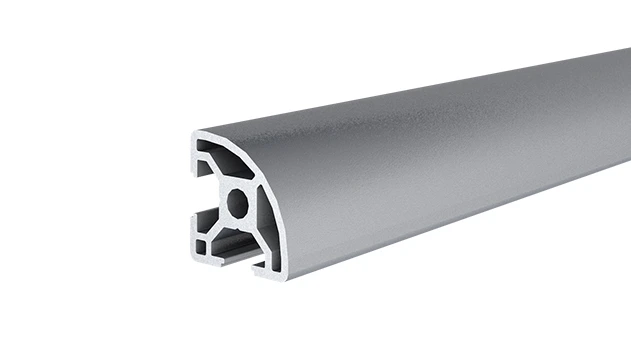
3030R is a 3.00 x 3.00CM fractional 30 series square extrusion T-slot profile with four open T-slots, two side with 3.00cm face, the other side with round face. The profile has align-a-grooves to assist in aligning connecting profiles.
Step into any bustling factory, a high-tech warehouse, or even a creative workshop, and you'll spot a silent hero holding everything together: sleek, silver structures that support tools, move materials, and turn chaos into organized productivity. These are aluminum profiles, and among the most reliable in the game is the 3030r EU Standard Aluminum Profile. It's not just metal—it's the backbone of modern workflows, a problem-solver for engineers, and a favorite for anyone who values efficiency. What makes it stand out? Three big reasons: it's surprisingly strong, built to last, and light enough to make any project feel effortless. Let's dive into why this profile has become a staple in industries worldwide.
What Exactly Is the 3030r EU Standard Aluminum Profile?
Before we jump into its strengths, let's get to know the basics. The "3030r" isn't just a random label. The first two numbers, "30," tell you the profile's cross-section dimensions: 30mm wide and 30mm tall—perfectly balanced for versatility. The "r" likely stands for "rounded," hinting at its smooth, curved edges (a small detail that makes assembly safer by reducing sharp corners). And "EU Standard"? That means it meets strict European union guidelines for quality, safety, and sustainability—no cutting corners here.
This profile is crafted from 6063-T5 aluminum alloy, a blend known for its unbeatable mix of strength, flexibility, and corrosion resistance. It's made using extrusion, a process where heated aluminum is pushed through a die to create its precise shape. This method ensures every inch of the 3030r is consistent—no weak spots, no uneven thickness. But specs aside, what really matters is how these features translate to real-world use. Let's break down its three standout traits.
Lightweight Design: Work Smarter, Not Harder
Lift a length of 3030r, and you'll be surprised by how light it feels. Aluminum itself is about one-third the weight of steel, but the 3030r takes this further. Thanks to its smart extrusion design, it has material only where it needs strength, cutting unnecessary bulk. This lightness isn't just a convenience—it's a game-changer for anyone who moves, assembles, or reconfigures equipment regularly.
Imagine a team in a warehouse needing to rearrange a material rack with three rows and three floors. If that rack were built with steel, it would take two people grunting and straining to move it. With 3030r? One person can shift it effortlessly, saving time and reducing the risk of injuries. In fast-paced environments—like e-commerce fulfillment centers where layouts change with seasonal demand—this flexibility is gold. You're not stuck with a fixed setup; you can adapt on the fly.
Lightweight also means easier transport. Whether you're shipping profiles to a job site or storing extra lengths in a workshop, the 3030r won't weigh you down. I once worked with a startup that needed to build a pop-up production line for a trade show. They used 3030r to construct workbenches and display racks, and the entire setup fit in a minivan—something that would have required a truck with steel. That's the freedom lightweight design brings.

Impressive Strength: Don't Let the Weight Fool You
"Lightweight" might make you think "flimsy," but the 3030r is anything but. This profile is a powerhouse, thanks to its alloy and manufacturing process. The 6063-T5 alloy undergoes "tempering"—quick cooling after extrusion, followed by aging—to boost its hardness. The result? A tensile strength of around 180 MPa (that's about 26,000 psi, for those who prefer imperial units) and a yield strength of 110 MPa. In simple terms, it can handle serious pressure without bending or breaking.
To put this in perspective, let's compare it to other common EU standard aluminum profiles. This table shows how the 3030r stacks up against smaller (2020) and larger (4040) options:
| Profile Type | Dimensions (mm) | Weight per Meter (kg) | Tensile Strength (MPa) | Typical Load Capacity | Best For |
|---|---|---|---|---|---|
| 2020 EU Standard | 20x20 | 0.45 | 160 | Light shelves, small frames | Electronics enclosures, display racks |
| 3030r EU Standard | 30x30 | 0.85 | 180 | Medium workbenches, 3-row material racks | Assembly lines, roller tracks, mobile trolleys |
| 4040 EU Standard | 40x40 | 1.30 | 200 | Heavy machinery frames, large shelving | Industrial workstations, automated systems |
The 3030r hits the sweet spot: lighter than the 4040 but stronger than the 2020. It can easily support a 200kg load on a workbench or hold multiple tiers of heavy parts in a material rack. Its T-slot design—grooves running along its length—adds to this strength. These slots let you attach brackets, connectors, and accessories securely, spreading weight evenly to avoid stress points. I once saw a 3030r workbench in a auto repair shop holding a 150kg engine block during maintenance—no sagging, no wobbling. That's the kind of reliability you can count on.
Durability: Built to Outlast Your Projects
In tough industrial settings—think humid warehouses, busy factories, or even outdoor workshops—the 3030r doesn't just survive; it thrives. Aluminum naturally forms a thin oxide layer when exposed to air, which shields it from rust. But the 3030r goes further with anodizing: an electrolytic process that thickens this layer, making it scratch-resistant, corrosion-proof, and even more durable.
I visited a food processing plant last year where 3030r profiles had been in use for 12 years. They still looked nearly new, with only minor scuffs from daily use. Compare that to steel, which would have rusted without constant repainting, or wood, which would have warped in the humid air. The 3030r's smooth surface also resists grime buildup, so cleaning is a breeze—just wipe it down with a damp cloth. For facilities that need strict hygiene (like pharmaceutical labs or commercial kitchens), this is a huge win.
Durability also means low maintenance. Unlike steel, which needs regular coatings, or plastic, which can crack in extreme temperatures, the 3030r just works. I've heard stories of manufacturers who installed 3030r roller tracks and workbenches and forgot about them for years—no repairs, no replacements, just consistent performance. When you invest in 3030r, you're not just buying a profile; you're buying decades of reliable service.
Aluminum Profile Accessories: The Secret to Versatility
The 3030r is great on its own, but it truly shines when paired with aluminum profile accessories. These small parts—connectors, end caps, brackets—turn a simple length of aluminum into a modular system you can customize on the fly.
Take connectors, for example. The 90° aluminum profile connector lets you join two 3030r pieces at a right angle in seconds—no welding, no drilling. Need extra strength? Add a gusset alp 3030, a triangular bracket that reinforces joints, perfect for heavy-load areas like workbench corners. End caps (like the 3030 aluminum profile end cap) snap on to cover sharp edges, keeping workers safe and preventing dust from getting inside the profile.
These accessories make the 3030r incredibly adaptable. A manufacturer might start with a simple material rack, then add shelves, roller tracks, or even a tool holder later—all without replacing the base profile. This modularity is a cornerstone of lean manufacturing, where minimizing waste and maximizing flexibility are key. I worked with a startup that used 3030r and its accessories to build a prototype assembly line in three days. With traditional materials, that would have taken weeks. The 3030r's accessories turned their vision into reality—fast.
Real-World Wins: Workbenches and Roller Tracks
Workbenches: Where Productivity Begins
Workbenches are the heart of any workshop, and the 3030r is the ideal material to build them. Whether you need a single-deck workbench without casters for a fixed station or a mobile version with wheels, the 3030r delivers. It's light enough to move (even with tools on it) but strong enough to support heavy equipment.
A small electronics company I advised switched from wooden workbenches to 3030r models. Their old benches were so heavy, rearranging the production line took half a day and a team of four. With 3030r, one person could reposition a bench in 10 minutes. Plus, the T-slots let them add tool hooks, monitor mounts, and component bins exactly where workers needed them. Productivity jumped 25% in the first month—all because of a lighter, smarter workbench.
Roller Tracks: Smooth Material Flow
Roller tracks keep materials moving smoothly from station to station, and the 3030r is the perfect frame for them. Its rigid, straight design ensures rollers (like swivel roller balls 1 inch or plastic guide rails) stay aligned, so boxes and parts glide without jams. The profile's durability also means the track won't warp over time, even with constant use.
A logistics company I know replaced their old steel roller tracks with 3030r-based systems. The steel tracks had warped, causing daily jams that slowed shipments. With 3030r, the tracks stayed straight, and the lighter frame made it easy to add extensions as their business grew. Downtime dropped by 80%, and workers no longer wasted time unjamming stuck packages. That's the 3030r difference: strength and lightness working together.
Why the 3030r Should Be Your First Choice
At the end of the day, the 3030r EU Standard Aluminum Profile isn't just a piece of metal. It's a solution to the age-old challenge of balancing strength, weight, and durability. It lets you build smarter, move faster, and adapt to change—all while lasting for years.
Whether you're setting up a workshop, upgrading a factory line, or building custom equipment, the 3030r delivers. Pair it with aluminum profile accessories, and you've got a system that grows with your needs. It's no wonder engineers, facility managers, and DIY enthusiasts alike keep coming back to it.
In a world where efficiency and reliability matter most, the 3030r isn't just a profile—it's a partner in productivity. And that's why it's the first choice for anyone who refuses to compromise.