- Company Articles
- Industry articles
- Industry standards
- Key Differences: 2020 National Standard Profile for Mechanical vs Electrical Manufacturing

Key Differences: 2020 National Standard Profile for Mechanical vs Electrical Manufacturing
Related Product
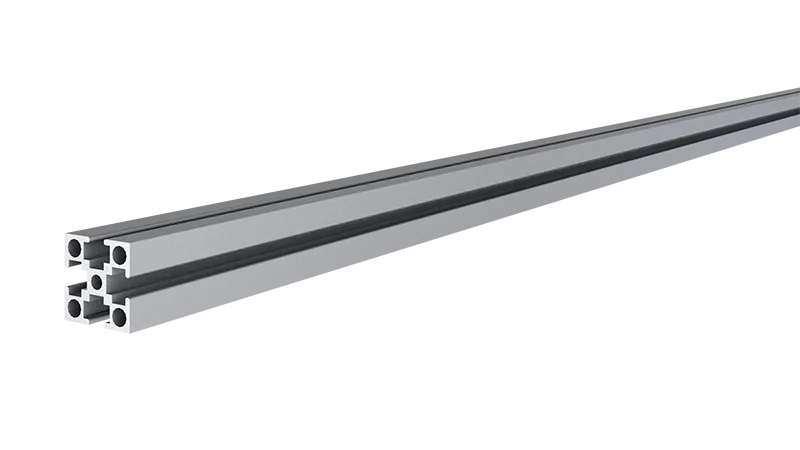
2020 National Standard Profile
45° external bending joint, used for 45° external connection of two aluminum pipes.
Introduction: The Backbone of Modern Manufacturing
Walk into any advanced manufacturing facility today, and you'll notice a silent hero holding everything together: the
2020 national standard profile
. More than just metal or aluminum bars, these profiles are the building blocks of production lines, workstations, and material handling systems. Introduced to streamline manufacturing processes, enhance safety, and improve compatibility across equipment, the 2020 national standard has become a cornerstone for both mechanical and electrical manufacturing. But here's the thing: how this profile is used in a (mechanical plant) versus an electronics factory couldn't be more different. Let's dive in to understand why—and how these differences shape the products we rely on every day.
First Things First: What Exactly Is the 2020 National Standard Profile?
At its core, the 2020 national standard profile refers to a set of specifications for structural materials—most commonly
aluminum extrusion profile
—that define dimensions, tolerances, material composition, and performance criteria. Think of it as a universal language for manufacturers: if two suppliers follow the 2020 standard, their profiles will fit together seamlessly, even if they're made in different factories. This standardization cuts costs, reduces errors, and speeds up production.
The star of the show here is aluminum extrusion. Unlike traditional steel profiles,
aluminum extrusion profile
is created by forcing heated aluminum through a die, resulting in lightweight yet strong shapes with consistent cross-sections. This process allows for intricate designs—like T-slots for easy attachment of accessories—that make the profile incredibly versatile. And when paired with
aluminum profile accessories
(think brackets, connectors, and end caps), it becomes a modular system that can be customized for almost any task.

Mechanical Manufacturing: Built for Brawn and Durability
In mechanical manufacturing—where heavy machinery, metal parts, and repetitive motion are the norm—the 2020 national standard profile is all about strength and resilience. Picture a workshop where workers assemble engine parts or weld metal components: the
workbench
they stand at needs to handle hundreds of pounds of tools and materials without wobbling. The material racks storing raw steel bars must withstand constant loading and unloading. This is where the 2020 profile shines, but with a focus on "toughness first."
Take the
Workbench E (single deck-without caster)
, a common fixture in mechanical shops. Built using 2020 national standard aluminum extrusion profiles, its frame is reinforced with thicker walls (often 2.0mm or more) to support heavy loads. The tabletop, usually a solid aluminum honeycomb panel, resists scratches and impacts from dropped tools. Even the joints—like the
internal rotatary aluminum joint
—are designed to lock tightly, preventing the bench from shifting during use. For material storage, the
Material Rack B (3 row and 3 floor)
uses the same profile but adds extra cross-bracing to hold stacks of metal sheets or bulky components. Here, the profile's job is simple: don't bend, don't break, and last for years.
Another priority in mechanical settings is compatibility with moving parts.
Roller track
systems, used to slide heavy pallets or workpieces between stations, rely on 2020 profiles as their base. The
40 steel roller track yellow wheel
or
38 aluminum roller track yellow
might look like simple components, but their rails are mounted on 2020 profile frames that keep the track perfectly level. Even a tiny misalignment could cause jams, so the profile's precision (thanks to the 2020 standard) ensures smooth, consistent movement.
Electrical Manufacturing: Precision, Safety, and Static Control
Step into an electrical manufacturing plant—say, where circuit boards or smartphones are assembled—and the vibe shifts. Here, the 2020 national standard profile isn't just about strength; it's about protecting sensitive electronics from invisible threats like static electricity and ensuring microscopic precision. Enter the
ESD workstation
and other specialized setups that rely on the 2020 profile but with a "gentler" touch.
ESD, or electrostatic discharge, is the silent killer of electronics. A single static spark can fry a microchip worth hundreds of dollars. That's why
ESD workstations
use 2020 national standard profiles coated with anti-static materials. The aluminum extrusion itself might be the same, but the surface is treated to conduct electricity away from sensitive components, grounding static charges safely. Even the accessories matter:
swivel roller balls 1 inch
on these workstations are made of conductive plastic, and the
plastic roller track guide rail grey
(used to move circuit boards) is designed to minimize friction—and thus static buildup.
Precision is another must. Electrical components are tiny; a misaligned conveyor could scratch a circuit board or misplace a resistor. So,
roller track
systems here use thinner, lighter 2020 profiles (sometimes 1.5mm walls) with tighter tolerances. The
roller track placon mount for aluminum profile flat
ensures the track sits exactly 0.5mm from the workstation edge, keeping components aligned as they move. Even the casters on mobile workstations—like the
flat adjustable swivel castor wheel
—have locking mechanisms that hold the station in place to within a fraction of an inch, preventing vibrations that could disrupt delicate assembly work.
Unlike mechanical settings, where "overbuilt" is often better, electrical manufacturing balances strength with finesse. A 2020 profile frame for an ESD workstation doesn't need to hold 500 pounds, but it does need to maintain a level surface to within 0.1mm and stay grounded at all times. It's a different kind of durability—one that protects the invisible.
Key Differences: A Side-by-Side Comparison
| Aspect | Mechanical Manufacturing | Electrical Manufacturing |
|---|---|---|
| Primary Goal | Maximize load capacity and durability | Ensure ESD protection and precision alignment |
| Profile Thickness | Thicker walls (1.8–2.0mm) for heavy loads | Thinner walls (1.2–1.5mm) for lighter, precise setups |
| Surface Treatment | Anodized or powder-coated for scratch resistance | Anti-static coating or conductive materials to ground static |
| Accessories Focus | Heavy-duty joints (e.g., internal rotatary aluminum joint), reinforced casters | ESD-safe components (e.g., swivel roller balls 0.5 inch conductive), precision guides |
| Typical Applications | Workbench E, Material Rack B, steel roller tracks for heavy parts | ESD workstation, mini aluminum roller track for circuit boards, anti-static conveyor systems |
| Tolerance for Misalignment | More forgiving (±1mm acceptable for most tasks) | Zero tolerance (±0.1mm to protect sensitive electronics) |
Choosing the Right Profile: It's All About the "Why"
So, how do manufacturers decide which 2020 national standard profile setup to use? It all comes down to asking:
What will this system be doing, and what risks does it need to avoid?
For mechanical teams, start with load capacity. A workbench holding welding equipment needs a profile with a higher weight rating than one holding hand tools. Look at the
aluminum profile accessories
too: heavy-duty joints like the
90° aluminum crossing joint
add stability, while
heavy-duty split foot seats
prevent sinking into concrete floors. Don't forget environmental factors—if the shop is humid or exposed to chemicals, opt for stainless steel or anodized aluminum to resist corrosion.
For electrical teams, ESD protection is non-negotiable. Check that the profile and accessories (like
plastic roller track guide rail grey
or
ESD workstation
surfaces) meet industry standards (e.g., ANSI/ESD S20.20). Precision is next: use
aluminum guide rail A
or
B
for conveyor tracks to ensure components move in a straight line. And since space is often tight in electronics factories, modularity matters—choose profiles that can be easily reconfigured as production lines change.
In both cases, the 2020 national standard profile's modularity is a game-changer. Need to add a shelf to a workbench? Just slide an
aluminum pipe clamp
onto the T-slot and secure it. Want to extend a roller track? Connect two sections with a
roller track placon mount for rail connection
. This flexibility means manufacturers don't have to rebuild entire systems when needs change—they can adapt, saving time and money.
Conclusion: One Profile, Two Worlds
The 2020 national standard profile is a testament to how standardization can drive innovation—even when used in wildly different ways. In mechanical manufacturing, it's the backbone of tough, reliable workspaces that keep heavy industry moving. In electrical manufacturing, it's a silent protector, ensuring our phones, laptops, and medical devices work flawlessly by guarding against static and precision errors.
At the end of the day, whether it's a
workbench
in a or an
ESD workstation
in an electronics plant, the 2020 profile does more than hold things together—it holds up the promise of safer, more efficient manufacturing. And as technology advances, we can expect this versatile profile to keep evolving, adapting to new challenges, and proving that sometimes, the best solutions are the ones that can wear many hats.