- Company Articles
- Industry articles
- Industry standards
- Key Features of 4040C EU Standard Aluminum Profile: Why It's Popular in Lean Systems

Key Features of 4040C EU Standard Aluminum Profile: Why It's Popular in Lean Systems
Related Product
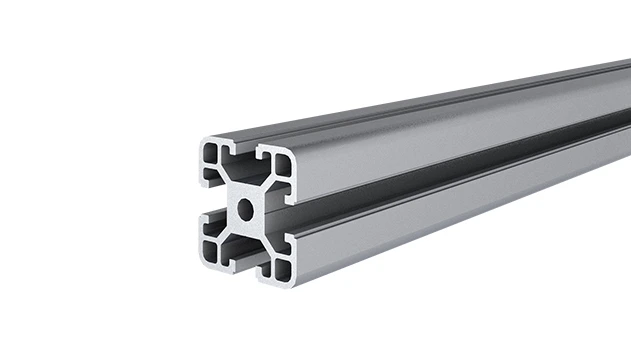
4040C EU Standard Aluminum Profile
4040C is a 4.00x4.00 CM fractional 40 series square extrusion T-slot profile with four open T-slots, each side with 4.00cm face. The profile has align-a-grooves to assist in aligning connecting profiles.
Walk into any modern manufacturing facility, and you'll likely spot a common thread tying together workbenches, material racks, and flow systems: sleek, silver structures that seem to adapt effortlessly to the chaos of the production floor. Chances are, many of those structures are built with aluminum extrusion profiles—and among them, the 4040C EU Standard Aluminum Profile stands out as a quiet workhorse. But what makes this specific profile so indispensable in lean systems? Let's pull back the curtain and explore why factory managers, engineers, and lean coordinators keep coming back to the 4040C.
First Things First: What *Is* the 4040C EU Standard Aluminum Profile?
If you're new to the world of industrial aluminum, think of the 4040C as the Swiss Army knife of structural components. Part of the EU standard series, its name gives a clue to its dimensions: 40mm by 40mm, a square cross-section that balances strength and versatility. But its real magic lies in the T-slot design —longitudinal grooves running along its length that let you slide in bolts, brackets, and accessories without drilling or welding. This might sound like a small detail, but in a lean system—where adaptability and waste reduction are king—it's a game-changer.
Imagine a small electronics manufacturer that suddenly needs to retool its assembly line for a new product. With traditional steel frames, that might mean days of cutting, welding, and repainting. With the 4040C? Loosen a few bolts, reconfigure the structure, and you're back up and running by lunch. That's the flexibility lean systems crave.
Design Flexibility: Because Lean Systems Don't Stand Still
Lean manufacturing thrives on continuous improvement—and continuous improvement means change. A production line that works perfectly today might need to shrink, expand, or pivot tomorrow. The 4040C was practically built for this reality, thanks to two key traits: its T-slot architecture and compatibility with a universe of aluminum profile accessories.
Let's start with the T-slots. Picture assembling a workbench: You need to attach a shelf, mount a lamp, or add a tool holder. With the 4040C, you don't need a drill or a welder. Slide a T-nut into the slot, tighten a bolt, and the accessory locks into place. Need to move that shelf six inches to the left next week? No problem—loosen the bolt, slide, retighten. It's like building with giant, industrial Legos, but sturdier.
Then there are the accessories. From simple brackets to complex corner codes, the 4040C plays well with hundreds of components. Want to add wheels to turn a static workbench into a mobile cart? Screw on caster wheels (another keyword from our list!) using T-slot bolts. Need to create a flow rack for parts to glide from station to station? Attach roller tracks to the profile's slots. Even specialized parts like 3060 aluminum angle yards or 20# aluminum corner codes integrate seamlessly, letting you build everything from small material bins to large-scale conveyor supports.
| Accessory Type | Common Use Case | Why It Works with 4040C |
|---|---|---|
| Aluminum Guide Rail A | Guiding parts on flow racks | Slots into T-grooves for quick alignment |
| Internal Rotary Aluminum Joint | Creating foldable or rotating structures | Rotates 180° while locking securely in position |
| Caster Wheel with Brake | Mobile workbenches or trolleys | Bolts directly into T-slots; no welding needed |
| Plastic Roller Track Guide Rail (Yellow) | Low-friction material flow | Snap-on design fits 4040C's slot dimensions |
This flexibility isn't just about convenience—it's about eliminating waste , a core pillar of lean. When you can reconfigure a structure instead of replacing it, you cut down on material waste. When assembly takes minutes instead of hours, you reduce labor waste. And when workers can tweak their own workstations to fit their needs, you boost efficiency and morale. It's no wonder lean coordinators often call the 4040C "the anti-waste profile."

Durability: Lightweight, but Built to Last
Let's get practical: A flimsy profile might save money upfront, but in a lean system—where downtime equals lost value—it's a liability. The 4040C, made from high-grade aluminum extrusion profile, strikes a rare balance: it's lightweight enough to move by hand (no need for heavy machinery) but strong enough to handle the daily grind of a factory floor.
Aluminum, by nature, is corrosion-resistant—no rust, even in humid or dusty environments. Compare that to steel, which needs regular painting or coating to avoid deterioration. For food processing plants, cleanrooms, or outdoor warehouses, that's a huge advantage. And while aluminum is lighter than steel, don't mistake "lightweight" for "weak." A standard 4040C profile can support up to 200kg per linear meter when properly mounted—more than enough for most workbench tools, material bins, or even small conveyor systems.
Take, for example, a material rack built with 4040C. Let's say it's a three-row, three-floor setup (sound familiar? Think "Material Rack B" from the keyword list). Each shelf holds boxes of circuit boards, weighing 15kg each. The 4040C uprights and cross-braces distribute that weight evenly, without bending or warping—even after months of constant loading and unloading. And because aluminum doesn't fatigue like some plastics, that rack will still be sturdy years down the line, ready to be repurposed when the product line changes.
Compatibility: The Glue That Holds Lean Systems Together
A lean system is only as strong as its weakest link. If your workbench, flow rack, and conveyor don't play well together, you end up with bottlenecks, wasted motion, and frustrated workers. The 4040C solves this by acting as a universal connector, integrating seamlessly with other lean staples like flow racks, roller tracks, and even ESD workbenches (another keyword check!).
Let's zoom in on flow racks—a critical component for "kanban" systems, where materials are pulled to the line just-in-time. A well-designed flow rack keeps parts organized, visible, and easy to access. The 4040C excels here because it can support roller tracks (like the 40 Steel Roller Track or 38 Aluminum Roller Track from the keyword list) with minimal effort. Attach the roller track brackets to the T-slots, snap in the rollers, and suddenly you've got a gravity-fed system that moves parts from the back to the front as they're used—no motors, no fuss, just smooth, waste-free flow.
Or consider workbenches. The 4040C is the backbone of countless custom workstations, from simple single-deck setups (like "Workbench E" mentioned in the keywords) to complex stations with tool rails, LED lights, and ESD mats. Because it's compatible with aluminum honeycomb panels, you can add a flat, sturdy work surface that resists scratches and heat. Throw on some caster wheels, and that workbench becomes a mobile station that can follow the action on the floor—perfect for lean's "gemba walk" philosophy of solving problems where they happen.
Even small accessories matter. Take swivel roller balls (1 inch or 0.5 inch, as listed)—those little omnidirectional rollers that let boxes glide across a surface. Mount them to a 4040C frame, and you've got a flexible transfer station between conveyors. Or plastic roller track guide rails (yellow or grey), which snap into the T-slots to keep parts from veering off course. It's these small, intentional connections that turn a collection of parts into a cohesive, efficient lean system.
Cost-Efficiency: Lean Systems Love a Good ROI
Let's talk money—because at the end of the day, even the most flexible, durable profile has to justify its cost. At first glance, aluminum profiles like the 4040C might seem pricier than steel or plastic alternatives. But lean thinking is about the long game, and here's where the 4040C shines: it's a master of lifecycle value .
Consider this scenario: A manufacturer buys a batch of steel frames for $500. They work well for a year, but then the product line changes. The steel frames are welded together, so they can't be reconfigured—they end up in a scrap heap. The manufacturer spends another $500 on new frames. Now, imagine they'd chosen 4040C profiles instead. The initial cost might be $600, but when the line changes, they disassemble the frames, reuse the profiles, and only buy $100 worth of new accessories. Over five years of changing needs, that $100 premium turns into thousands in savings.
Maintenance is another hidden cost saver. Steel rusts; plastic cracks; wood warps. The 4040C? Wipe it down with a damp cloth, and it's good as new. No repainting, no corrosion treatments, no replacement parts due to wear and tear. And because it's lightweight, installing or reconfiguring structures requires fewer workers—saving on labor costs, too.
Even shipping costs play a role. Aluminum is lighter than steel, so transporting 4040C profiles from the supplier to your facility costs less. And because they're sold in standard lengths, you can order exactly what you need—no paying for excess material that ends up as scrap.
Real-World Stories: When 4040C Meets the Factory Floor
Numbers and specs tell part of the story, but nothing beats hearing how the 4040C performs in the wild. Let's meet Maria, a production manager at a mid-sized automotive parts plant. A few years ago, her team was struggling with a bottleneck in the "kitting" area, where workers gathered parts for assembly. The old setup used wooden shelves and static metal racks—hard to adjust, messy, and prone to jamming when parts were restocked.
Maria's lean coordinator suggested switching to a flow rack system built with 4040C profiles and 38 Aluminum Roller Tracks. "At first, I was skeptical," Maria admits. "We'd tried 'improving' the area before, and it never stuck." But within a week of installation, she noticed a difference. The roller tracks let bins glide forward as parts were used, so workers never had to reach to the back of the shelf. The T-slots let them add dividers and label holders exactly where they needed them. And when a new part was added to the kit? "We just loosened a few bolts, added a new section, and kept going," she says. "No downtime, no hassle." Within three months, kitting time dropped by 22%—and the team hasn't looked back.
Or take Raj, who runs a small furniture workshop. He needed a workbench that could handle both cutting (with a circular saw) and assembly (with clamps). A generic steel workbench was too heavy to move, and a wooden one couldn't take the abuse. He built his own with 4040C profiles, an aluminum honeycomb top, and adjustable height legs. "I can wheel it to the cutting area in the morning and over to assembly in the afternoon," he says. "And when I need to add a vice or a tool rack? I just slide on the brackets. It's like the bench grows with my business."
Wrapping Up: Why the 4040C Is a Lean System's Best Friend
At the end of the day, the 4040C EU Standard Aluminum Profile isn't just a piece of metal. It's a tool for problem-solvers—people who wake up every day asking, "How can we do this better?" Its design flexibility turns chaos into order, its durability ensures it keeps up with the grind, and its compatibility weaves together the many moving parts of a lean system. Whether you're building a simple workbench, a complex flow rack, or a mobile trolley, the 4040C doesn't just support your operations—it elevates them.
So the next time you walk through a factory, warehouse, or workshop, take a closer look at those silver structures. Chances are, you'll spot the 4040C hard at work—quietly, reliably, making lean systems leaner. And that, in the end, is why it's more than a profile. It's a partner in progress.