- Company Articles
- Industry articles
- Industry News
- Key Industries Using Parallel Rotatory Lean Pipe Joint Chrome: Overview

Key Industries Using Parallel Rotatory Lean Pipe Joint Chrome: Overview
Related Product
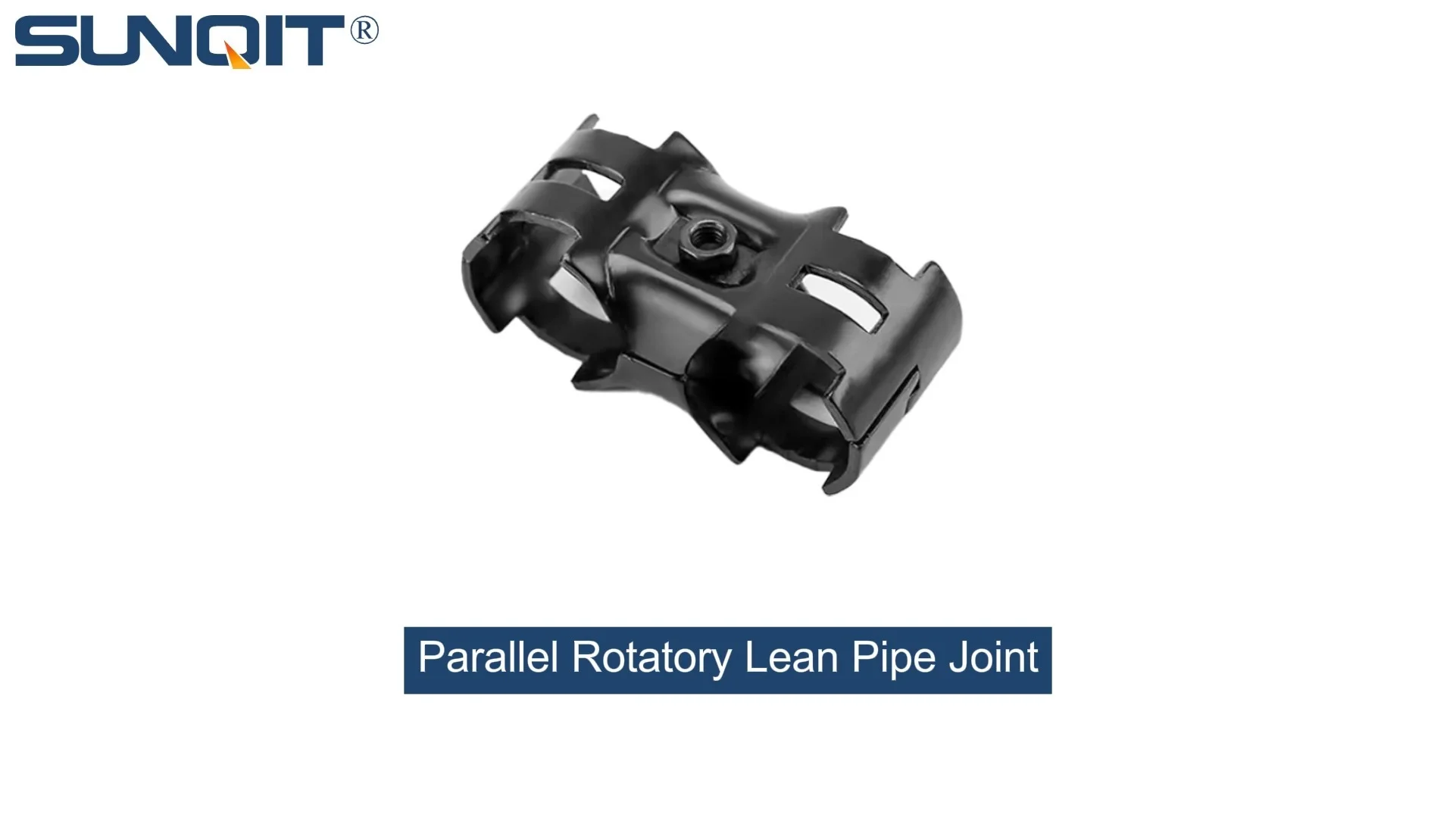
Parallel Rotatory Lean Pipe Joint
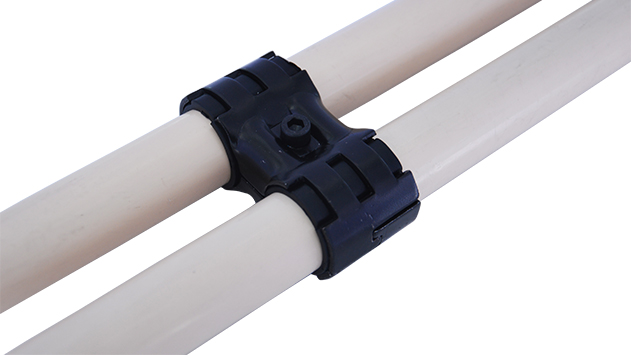
Parallel rotatory lean pipe joint, for 2 pcs pipe conenction in parallel direction with rotatory function.
Introduction: The Backbone of Lean Manufacturing
In the fast-paced world of modern manufacturing, where agility, efficiency, and adaptability are the cornerstones of success, the smallest components often play the biggest roles. Lean manufacturing—with its focus on minimizing waste, streamlining processes, and maximizing value—has become the gold standard for industries worldwide. Yet, behind the scenes of every well-oiled lean operation lies a network of unassuming but critical tools: modular components designed to evolve with changing needs. Among these, the parallel rotatory lean pipe joint chrome stands out as a quiet workhorse, enabling the flexibility that defines lean systems.
At first glance, a pipe joint might seem trivial. But for plant managers, production supervisors, and assembly line workers, the right joint can mean the difference between a rigid, outdated workspace and a dynamic environment that adapts to new products, shifting demands, and evolving workflows. The parallel rotatory lean pipe joint chrome, in particular, is engineered for versatility: its chrome-plated finish resists corrosion and wear, its parallel design ensures stability, and its rotatory function allows for smooth angle adjustments—all without the need for welding, drilling, or specialized tools. Compatible with lean pipes, aluminum profiles, and a range of accessories, this joint is the linchpin of modular workstations, flow racks, conveyors, and more.
But where exactly does this unassuming component make the most impact? From automotive assembly lines to precision electronics manufacturing, from food and beverage processing to pharmaceutical production, the parallel rotatory lean pipe joint chrome is quietly transforming how industries operate. In this article, we'll explore the key sectors that rely on this joint, diving into their unique challenges, how the joint addresses them, and the ripple effects of its use—from reduced downtime to improved ergonomics, and from faster changeovers to long-term cost savings. Along the way, we'll also highlight supporting components like lean pipe workbenches , flow racks , and conveyors that, when paired with the joint, create powerful, adaptable systems.
1. Automotive Manufacturing: Building the Future, One Adjustment at a Time
The automotive industry is a poster child for fast-paced innovation. With new models, features, and safety standards emerging annually, car manufacturers can't afford to be tied to static production lines. Assembly floors must evolve to accommodate new designs, while still maintaining the precision and speed that define the sector. Here, the parallel rotatory lean pipe joint chrome shines as a catalyst for adaptability.
Consider the assembly line for a mid-size sedan. Each station along the line—from installing dashboards to mounting engines—requires specialized tools, parts, and worker positions. A decade ago, reconfiguring these stations for a new model might have taken weeks, involving custom-built fixtures and welding teams. Today, thanks to modular systems built with lean pipes and parallel rotatory joints, that timeline is cut to days, even hours.
Take lean pipe workbenches , for example. In automotive plants, these workbenches are everywhere: used for everything from sorting screws and bolts to assembling intricate electrical harnesses. Equipped with parallel rotatory lean pipe joint chrome, these workbenches can be adjusted in countless ways. Need to lower the surface height for a shorter worker? Loosen the joint, rotate the legs to the desired angle, and lock it in place. Want to add a side shelf for tool storage? Attach a new pipe segment using the joint, rotating it to align perfectly with the main bench. The chrome plating ensures the joints stand up to the daily wear and tear of heavy tools, oil spills, and constant adjustments—critical in an environment where downtime equals lost revenue.
Beyond workbenches, flow racks are another automotive staple, used to feed parts (like door handles, wiring looms, or brake components) to assembly stations. These racks rely on gravity to move parts from the back to the front, ensuring workers always have easy access to the next item. But with different parts requiring different rack configurations—some longer, some wider, some with dividers—modularity is key. Parallel rotatory lean pipe joint chrome allows managers to reconfigure flow racks quickly: adjusting the angle of the roller tracks (to speed up or slow down part movement), adding vertical dividers to separate part types, or even extending the rack length by attaching new segments. The rotatory function ensures that roller tracks align smoothly, preventing jams and ensuring a steady flow of parts to the line.
Conveyors, too, benefit from the joint's versatility. In automotive plants, conveyors transport everything from entire car bodies to small plastic clips. Traditional conveyors are often fixed, making them difficult to modify for new layouts. But modular conveyors, built with lean pipes and parallel rotatory joints, can be disassembled and reassembled with minimal effort. For instance, when introducing a new SUV model that requires a wider conveyor belt, sections can be added using the joints, with angles adjusted to navigate around existing equipment. The chrome finish on the joints resists the lubricants and cleaning agents used on the factory floor, ensuring the conveyor remains reliable even in harsh conditions.
Perhaps the most significant advantage, though, is cost savings. By reducing the need for custom-built fixtures and minimizing downtime during reconfigurations, automotive manufacturers report saving up to 30% on workstation setup costs. For a plant producing 500,000 vehicles annually, those savings add up—funding further innovation and keeping production lines competitive in a global market.
2. Electronics Industry: Precision, Flexibility, and the Race for Innovation
If automotive manufacturing is about scale and speed, the electronics industry is about precision and rapid iteration. From smartphones and laptops to medical devices and semiconductors, electronics products are getting smaller, more complex, and more customized—often with product lifecycles measured in months, not years. For manufacturers, this means production lines must pivot quickly, accommodate tiny, delicate components, and maintain strict quality control. Enter the parallel rotatory lean pipe joint chrome, a component that balances rigidity (for precision) with flexibility (for change).
One of the biggest challenges in electronics manufacturing is ergonomics. Workers spend hours hunched over workstations, assembling circuit boards with components smaller than a grain of rice. Poor ergonomics leads to fatigue, errors, and even repetitive strain injuries. Here, lean pipe workbenches with parallel rotatory joints become ergonomic allies. Unlike fixed-height tables, these workbenches can be adjusted to each worker's ideal height, with the angle of the work surface tilted for better visibility. The rotatory joints make these adjustments seamless: a quick twist to raise the bench, a gentle rotation to tilt the surface 15 degrees, and the joint locks securely in place—no tools required. This not only reduces worker fatigue but also improves precision, as employees can position components exactly where they need them.
Electronics manufacturing also demands strict control over static electricity, as even a small electrostatic discharge can damage sensitive microchips. While ESD (electrostatic discharge) workstations are critical, the supporting infrastructure—like flow racks for transporting circuit boards—must also be static-safe. Parallel rotatory lean pipe joint chrome, when paired with aluminum profiles (which are naturally conductive), helps create grounded flow racks that dissipate static charges. The joints ensure that pipe segments and roller tracks are securely connected, maintaining a continuous ground path. This is especially important for flow racks used in "kitting" areas, where components are grouped before assembly: the smooth rotation of the joints allows for gentle movement of circuit boards, preventing jostling that could dislodge tiny parts.
Another area where the joint excels is in prototyping. Electronics companies often produce small batches of new products to test market demand before scaling up. For these runs, building a full production line is impractical. Instead, manufacturers use modular setups: temporary conveyors, mobile workbenches, and compact flow racks. Parallel rotatory lean pipe joint chrome makes these setups possible. For example, a prototype for a new smartwatch might require a mini-conveyor to move watch cases between assembly steps. Using lean pipes and the joints, workers can assemble this conveyor in a morning, adjusting the length and angle as needed. If the prototype design changes (say, the watch case size increases), the conveyor can be modified in minutes by repositioning the joints—no need to wait for engineering or fabrication.
The chrome plating on the joints is also a boon in electronics cleanrooms, where dust and contamination are enemy number one. Unlike painted or uncoated joints, chrome resists chipping and flaking, ensuring no particles shed into the air. This is critical for semiconductor manufacturing, where a single dust speck can ruin a batch of microprocessors. The joints' smooth surface also makes them easy to wipe down with anti-static cleaners, maintaining the strict hygiene standards of cleanroom environments.
In short, for electronics manufacturers, the parallel rotatory lean pipe joint chrome isn't just a component—it's a enabler of innovation. By allowing rapid reconfiguration, supporting ergonomic and static-safe designs, and standing up to the demands of cleanroom environments, it helps companies stay ahead in a race where the next big product is always just around the corner.

3. Food & Beverage Processing: Balancing Speed, Safety, and Sanitation
The food and beverage industry operates in a unique pressure cooker of demands: speed to meet consumer cravings, safety to comply with strict regulations, and sanitation to prevent contamination. From bottling plants to snack factories, production lines must handle everything from sticky syrups to fragile pastries, all while adhering to FDA, USDA, or EU food safety standards. In this high-stakes environment, the parallel rotatory lean pipe joint chrome emerges as a solution that balances durability, hygiene, and adaptability.
Sanitation is non-negotiable in food processing. Equipment must be cleaned thoroughly between shifts, often with high-pressure hoses, caustic detergents, or steam. Traditional metal joints—prone to rust or with crevices that trap food particles—can become breeding grounds for bacteria. The parallel rotatory lean pipe joint chrome, however, is designed with hygiene in mind. Its chrome plating creates a smooth, non-porous surface that resists corrosion and is easy to sanitize. Unlike welded joints, there are no hidden gaps where food residue can linger; the joint's simple, modular design allows for disassembly if deep cleaning is needed, then reassembly in minutes.
Consider a snack food plant producing potato chips. The packaging line must handle bags of different sizes (small single-serve, large family packs) and flavors (salted, barbecue, sour cream). Flow racks are used to hold stacks of empty bags, feeding them to the packaging machine. With parallel rotatory lean pipe joint chrome, these flow racks can be reconfigured quickly: adjusting the angle of the roller tracks to accommodate stiffer family-pack bags, adding dividers to separate flavors, or raising/lowering the rack to align with different packaging machine heights. During cleaning shifts, the joints can be loosened, and the racks disassembled into smaller parts for soaking or steam cleaning—ensuring no crumbs or oil residue are left behind.
Conveyors are another critical area. In beverage bottling plants, conveyors move bottles from filling to capping to labeling. But with seasonal flavors (like pumpkin spice lattes in fall or holiday-themed sodas), plants often need to switch between bottle sizes (12 oz cans, 20 oz bottles, 2-liter jugs). Modular conveyors, built with lean pipes and parallel rotatory joints, make these transitions seamless. For example, switching from 12 oz cans to 2-liter bottles might require widening the conveyor track. Using the joints, workers can adjust the side rails by rotating them outward, locking them in place, and adding new support pipes—all without stopping the entire line for hours. The chrome joints stand up to the occasional soda spill, resisting corrosion from sugary liquids and cleaning agents.
Ergonomics also play a role in food processing, where repetitive tasks (like hand-packing fresh produce into boxes) can lead to worker fatigue. Lean pipe workbenches with parallel rotatory joints allow for height and angle adjustments, ensuring workers can stand or sit comfortably. For instance, in a fruit-packing facility, workers might need to sort strawberries on a flat surface in the morning and pack them into clamshell containers at a tilted angle in the afternoon. The rotatory joints make switching between these setups effortless, reducing strain and improving productivity.
Perhaps most importantly, the joint's cost-effectiveness aligns with the food industry's tight margins. By extending the lifespan of equipment (thanks to durable chrome plating), reducing downtime during changeovers, and minimizing the need for custom-built fixtures, the parallel rotatory lean pipe joint chrome helps food and beverage manufacturers do more with less—critical in an industry where consumer prices are highly competitive.

4. Pharmaceutical Manufacturing: Where Precision Meets Compliance
Pharmaceutical manufacturing is a world of strict regulations, zero tolerance for errors, and life-saving stakes. From drug discovery to packaging, every step must adhere to Good Manufacturing Practices (GMP), FDA guidelines, and international standards like ISO 13485. The goal? Ensure every pill, injection, and medical device is safe, effective, and traceable. In this environment, flexibility might seem secondary to compliance—but in reality, the two go hand in hand. And the parallel rotatory lean pipe joint chrome is a key player in striking that balance.
One of the biggest challenges in pharma is batch size variability. A drug for a rare disease might have batches of just a few hundred units, while a common antibiotic could require millions. Production lines must scale up or down without compromising quality. Modular systems built with lean pipes and parallel rotatory joints make this possible. For example, a lean pipe workbench used for manually inspecting pills can be expanded by adding pipe segments with the joints when larger batches arrive, then downsized when demand drops. The joint's precision ensures that added segments align perfectly, maintaining the flat, stable surface needed for accurate inspection.
Cleanliness is another non-negotiable. Pharmaceutical cleanrooms are among the most sterile environments on earth, with air filtration systems that remove 99.99% of particles. Equipment must not only be easy to clean but also resistant to the harsh disinfectants (like hydrogen peroxide vapor) used to sanitize rooms. The parallel rotatory lean pipe joint chrome excels here: its chrome plating is impervious to most disinfectants, and its smooth surface leaves no room for bacteria or residue to hide. Unlike painted joints, which can chip and peel under repeated cleaning, chrome maintains its integrity, ensuring the joint remains a reliable part of the cleanroom setup for years.
Traceability is also critical. In pharma, every component—from raw materials to finished products—must be tracked through the production process. Flow racks with built-in labeling systems help manage this, but the racks themselves must be adaptable to different tracking technologies (barcodes, RFID tags). Parallel rotatory lean pipe joint chrome allows for easy attachment of label holders, scanners, or cameras to flow racks. For instance, a flow rack holding vials of vaccine can have an RFID scanner mounted using the joint, positioned to read tags as vials move through. If the scanner needs to be adjusted for a new vial size, the joint can be rotated to the perfect angle, ensuring accurate tracking without disrupting the flow.
Another area where the joint shines is in research and development (R&D) labs. Pharmaceutical R&D is all about experimentation: testing new formulations, dosages, and delivery methods. Lab setups must be flexible to accommodate small-scale trials and frequent changes. A scientist developing a new inhaler, for example, might need a custom workstation to mix ingredients, fill prototypes, and test spray patterns. Using lean pipes and parallel rotatory joints, this workstation can be built in a day, with components (like mixing bowls, scales, or testing fixtures) attached at precise angles. If the formulation changes and a new mixing process is needed, the workstation can be reconfigured in minutes—no need for custom fabrication.
In the pharmaceutical industry, the cost of non-compliance is astronomical—recalls, fines, or damage to reputation can cripple a company. The parallel rotatory lean pipe joint chrome helps mitigate these risks by ensuring equipment is always clean, precise, and adaptable. By supporting modular, easy-to-clean systems, it allows pharma manufacturers to focus on what matters most: developing life-saving drugs and delivering them safely to patients.
Industry Applications at a Glance: A Comparative Table
| Industry | Core Challenges | Role of Parallel Rotatory Lean Pipe Joint Chrome | Supporting Components | Key Benefits |
|---|---|---|---|---|
| Automotive Manufacturing | Rapid model changes, heavy equipment wear, need for adaptable assembly lines | Enables quick reconfiguration of workstations and flow racks; chrome plating resists corrosion and wear | Lean pipe workbenches, flow racks, conveyors | Reduced downtime during reconfigurations, improved durability, cost savings on custom fixtures |
| Electronics Industry | Precision assembly, ESD protection, frequent product iterations | Allows ergonomic adjustments to workbenches; supports static-safe flow rack designs | Lean pipe workbenches, flow racks with roller tracks, aluminum profiles | Enhanced worker ergonomics, reduced static damage, faster prototyping |
| Food & Beverage Processing | Sanitation compliance, quick changeovers for product variants | Easy disassembly for cleaning; modular flow rack/conveyor reconfiguration | Flow racks, conveyors, lean pipe workbenches | Improved hygiene, faster product changeovers, reduced contamination risk |
| Pharmaceutical Manufacturing | Strict GMP compliance, batch size variability, traceability requirements | Supports sterile, easy-to-clean systems; enables scalable workstation designs | Lean pipe workbenches, flow racks with tracking systems | Enhanced compliance, adaptable batch processing, reliable traceability |
Conclusion: The Unsung Hero of Modern Manufacturing
In the grand scheme of manufacturing, it's easy to focus on the big-ticket items: robotic arms, 3D printers, smart sensors. But as we've explored, the true engines of lean, adaptable production are often the smallest components. The parallel rotatory lean pipe joint chrome may not grab headlines, but its impact is felt across industries—enabling automotive plants to retool in days, electronics factories to iterate on new devices, food processors to meet sanitation standards, and pharmaceutical labs to develop life-saving drugs.
What makes this joint so indispensable? It's the perfect blend of simplicity and functionality. No complex electronics, no proprietary tools—just a well-engineered, chrome-plated connector that does exactly what it needs to: connect, rotate, lock, and last. Paired with lean pipe workbenches , flow racks , conveyors , and aluminum profiles, it forms the backbone of modular systems that grow, change, and evolve with the industries that rely on them.
Looking ahead, as Industry 4.0 (the fourth industrial revolution) continues to unfold—with smart factories, IoT integration, and AI-driven production—modularity will only become more critical. Factories won't just need to adapt to new products; they'll need to integrate with digital systems, collect real-time data, and respond to demand in real time. The parallel rotatory lean pipe joint chrome, with its ability to support flexible, reconfigurable infrastructure, will be right there, enabling this next wave of innovation.
So the next time you see a car rolling off the assembly line, a smartphone in a store, a bag of chips at the grocery store, or a bottle of medicine at the pharmacy, take a moment to appreciate the quiet workhorses behind the scenes. The parallel rotatory lean pipe joint chrome may be small, but its role in building the products that shape our world is anything but.