- Company Articles
- Industry articles
- Industry standards
- Key Manufacturing Processes of 2020 EU Standard Aluminum Profile

Key Manufacturing Processes of 2020 EU Standard Aluminum Profile
Related Product
2020 EU Standard Aluminum Profile
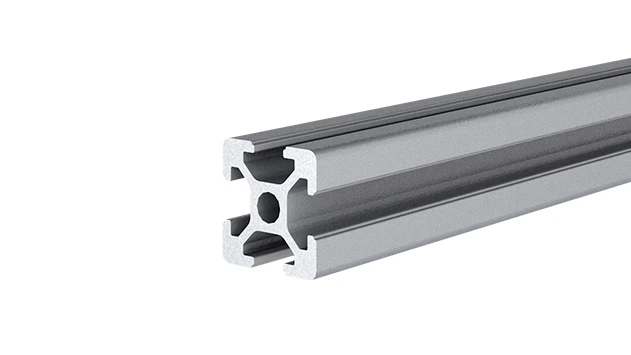
2020 is a 2.00 x 2.00CM fractional 20 series square extrusion T-slot profile with four open T-slots, one on each 2.00 face. The profile has align-a-grooves to assist in aligning connecting profiles.
Walk into any modern factory, warehouse, or workshop, and you'll likely spot a silent workhorse holding everything together: aluminum profiles. From the sturdy frames of workbenches to the sleek rails of conveyor systems, these unassuming pieces of metal are the backbone of efficient manufacturing. But not all aluminum profiles are created equal. The 2020 EU standard aluminum profile, in particular, stands out for its precision, durability, and compliance with strict European regulations. Behind every meter of this high-quality profile lies a journey of meticulous craftsmanship, cutting-edge technology, and unwavering attention to detail. Let's pull back the curtain and explore the key manufacturing processes that transform raw aluminum into the reliable, versatile profiles that keep industries moving.
1. The Foundation: Raw Material Selection
Every great product starts with great ingredients, and 2020 EU standard aluminum profiles are no exception. The process begins with selecting the right aluminum alloy—a decision that shapes everything from the profile's strength to its resistance to corrosion. For most EU standard profiles, the go-to choice is the 6000 series alloys, particularly 6063 and 6061. Why these? 6063, often called "architectural alloy," offers excellent extrudability (meaning it flows smoothly through dies to form complex shapes) and a bright, uniform surface finish—perfect for profiles that need both form and function. 6061, on the other hand, is prized for its higher strength, making it ideal for load-bearing applications like material racks or heavy-duty workbenches.
But it's not just about picking the alloy. EU standards demand strict purity levels. Impurities like iron, copper, or silicon must be kept below tight thresholds to avoid weakening the material or causing defects during processing. For example, the 2020 EU standard limits iron content in 6063 alloy to 0.35% max—any higher, and the profile might develop unsightly "stringers" (long, thin impurities) during extrusion. Suppliers source aluminum ingots from certified mills that adhere to these standards, often using recycled aluminum where possible (EU regulations encourage sustainability, and aluminum is 100% recyclable without losing quality). This commitment to raw material quality ensures the final profile isn't just strong, but also consistent—batch after batch.
2. Shaping the Future: Aluminum Extrusion
If raw material selection is the foundation, then extrusion is the art of sculpting that foundation into shape. Extrusion is where a solid aluminum billet (a cylindrical block) is transformed into a long, continuous profile with the exact cross-section needed—whether it's the T-slot design of the 2020 EU standard profile or a custom shape for specialized equipment. Think of it like squeezing toothpaste from a tube: apply pressure, and the material flows through an opening (the die) to take its form. But in aluminum extrusion, the "toothpaste" is a 500°C billet, and the "tube" is a multi-ton press.
2.1 Billet Preparation
Before extrusion, the billet undergoes two critical steps: homogenization and preheating. Homogenization is a heat treatment that ensures the alloy's microstructure is uniform. Imagine a cake batter with lumps—homogenization "mixes" the alloy at the molecular level, preventing weak spots in the final profile. The billet is heated to around 500–550°C for several hours, then slowly cooled. Next, preheating: the billet is reheated to a precise temperature (typically 480–520°C) to make it malleable but not too soft. Too cold, and it won't flow through the die; too hot, and it might tear or pick up impurities from the die. For 2020 EU standard profiles, this temperature is controlled to within ±5°C—precision that pays off in consistent extrusion quality.
2.2 Die Design and Manufacturing
The die is the blueprint of the extrusion process. For a 2020 EU standard aluminum profile, the die is a steel block with a carefully machined opening that matches the profile's cross-section. Designing a die is a blend of engineering and intuition. Engineers must account for "die swell"—the tendency of the aluminum to expand slightly after exiting the die—so the die opening is actually smaller than the desired final profile. They also add "bearing lengths" (smooth, straight sections) to ensure the material flows evenly, preventing warping. Dies for T-slot profiles, like the 2020 standard, have extra precision in the slot dimensions to ensure compatibility with aluminum profile accessories—after all, a T-slot that's too narrow or too wide won't hold connectors or end caps securely.
Manufacturing the die itself is a feat of precision machining. Using CNC mills and EDM (electrical discharge machining), toolmakers carve the die opening with tolerances as tight as ±0.02mm. For EU standard profiles, dies are inspected under microscopes to ensure no burrs or imperfections could mar the extrusion. A single flaw in the die can lead to thousands of meters of defective profiles, so die quality is non-negotiable.
2.3 The Extrusion Press: Where Pressure Meets Precision
Now, the preheated billet and precision die come together in the extrusion press. The billet is loaded into a cylindrical container, and a ram applies extreme pressure (up to 10,000 tons for large presses) to push the billet through the die. As the aluminum flows through the die, it emerges as a long, continuous profile—like a ribbon of metal stretching into the distance. For the 2020 EU standard profile, the extrusion speed is carefully controlled (around 3–8 meters per minute) to avoid defects. Too fast, and the profile might twist; too slow, and it could overheat, leading to surface discoloration.
Once extruded, the profile is guided onto a runout table, where it's cooled with fans or water sprays to lock in its shape. Then, a flying saw cuts it to the desired length—typically 6–12 meters for easy handling. At this stage, the profile is still "soft" (in metallurgical terms, it's in the "as-extruded" condition), but it already bears the unmistakable T-slot design that makes 2020 EU standard profiles so versatile. It's a sight to behold: raw aluminum transformed into a functional, precise component in a matter of minutes.

3. Strengthening the Core: Heat Treatment
Extrusion gives the profile its shape, but heat treatment gives it strength. The 2020 EU standard aluminum profile isn't just about looks—it needs to withstand the rigors of industrial use, from supporting heavy loads on a workbench to resisting vibrations on a conveyor. Heat treatment enhances the alloy's mechanical properties, turning the soft as-extruded profile into a tough, durable one. For 6000 series alloys, this process is called "solution heat treatment and artificial aging" (T6 temper).
Let's break it down step by step. First, solution annealing: the extruded profiles are heated to 520–540°C and held there for 1–2 hours. This "dissolves" alloying elements (like magnesium and silicon) into the aluminum matrix, creating a uniform solid solution. Imagine stirring sugar into hot water until it disappears—that's what's happening at the atomic level. Next, quenching: the profiles are rapidly cooled, usually by spraying with water or immersing in a water bath. This "freezes" the dissolved elements in place, preventing them from forming large, weak precipitates. The result? A supersaturated aluminum matrix that's ready for the final step: artificial aging.
Aging involves heating the quenched profiles to a lower temperature (160–180°C) for 4–12 hours. During this time, the dissolved elements slowly form tiny, evenly distributed precipitates—like sugar crystals forming in cooled syrup, but on a microscopic scale. These precipitates act as "speed bumps" for dislocations (atomic defects) in the aluminum, making it much harder to bend or break. For 2020 EU standard profiles, the aging process is fine-tuned to meet EU mechanical standards: a minimum tensile strength of 200 MPa and yield strength of 160 MPa, ensuring the profile can handle the demands of industrial environments.
| Heat Treatment Stage | Temperature (°C) | Duration | Purpose |
|---|---|---|---|
| Solution Annealing | 520–540 | 1–2 hours | Dissolve alloying elements into aluminum matrix |
| Quenching | Room temperature (rapid cooling) | Seconds to minutes | Freeze dissolved elements, prevent precipitate growth |
| Artificial Aging | 160–180 | 4–12 hours | Form fine precipitates, increase strength and hardness |
4. Polishing the Gem: Surface Finishing
Strength and precision are essential, but a profile's surface finish is what makes it "workshop-ready." The 2020 EU standard aluminum profile isn't just functional—it needs to resist corrosion, look clean, and sometimes even match a factory's aesthetic. Surface finishing transforms the dull, oxidized surface of extruded aluminum into something both protective and visually consistent. The most common finishes for EU standard profiles are anodizing, powder coating, and electrophoresis—each with its own benefits.
4.1 Anodizing: Nature's Shield
Anodizing is a electrochemical process that grows a protective oxide layer on the aluminum's surface. Unlike painting, which adds a layer on top, anodizing integrates with the aluminum, creating a bond that won't chip or peel. The process starts with cleaning: the profile is degreased and etched to remove any dirt, oil, or extrusion residue. Then, it's immersed in an electrolytic bath (usually sulfuric acid) with the profile as the anode. When an electric current is applied, oxygen ions react with the aluminum to form aluminum oxide (Al₂O₃)—a hard, porous layer. The thickness of this layer (typically 10–20 μm for EU standard profiles) is controlled by the duration of the process.
After anodizing, the profile is sealed to close the pores in the oxide layer, making it resistant to water and chemicals. The result? A finish that's scratch-resistant, easy to clean, and naturally silver in color (though dyes can be added for custom hues). For 2020 EU standard profiles used in cleanrooms or food processing facilities, anodizing is a top choice—it's non-toxic, doesn't emit fumes, and meets EU regulations for hygiene.
4.2 Powder Coating: Color and Durability
When color is key, powder coating takes center stage. This process involves applying a dry powder (usually polyester) to the profile's surface, then curing it with heat to form a hard, glossy finish. Powder coating offers endless color options—from the neutral greys and blacks of factory workbenches to the bright yellows of safety rails. It's also incredibly durable, with resistance to chipping, fading, and corrosion that outperforms many liquid paints.
For 2020 EU standard profiles, powder coating starts with pre-treatment: the profile is cleaned and treated with a phosphate conversion coating to improve powder adhesion. Then, the powder is electrostatically charged and sprayed onto the profile, which is grounded—opposites attract, so the powder clings evenly. The profile is then baked in an oven at 180–200°C for 10–15 minutes, melting the powder into a smooth, continuous film. EU standards dictate that the coating thickness must be between 60–120 μm, ensuring both coverage and flexibility (so the coating doesn't crack when the profile is cut or drilled).
5. Precision in Every Cut: Machining and Cutting
After extrusion, heat treatment, and finishing, the profile is a long, continuous length—but most applications need specific sizes. That's where machining and cutting come in. For 2020 EU standard aluminum profiles, precision is non-negotiable. A workbench frame, for example, needs legs cut to exactly 800mm to ensure stability; a conveyor rail must have holes drilled at 50mm intervals to attach brackets. Even a 1mm error can throw off an entire assembly line.
Cutting is done using saws with diamond-tipped blades or CNC cutting machines. For straight cuts, a miter saw with a carbide blade ensures clean edges without burrs. For complex cuts—like notches or angles—CNC routers or laser cutters take over, guided by digital blueprints. Drilling and tapping (creating threads for screws) are also done with CNC machines, which can drill hundreds of holes per minute with tolerances of ±0.1mm. This precision is why aluminum profile accessories, like 2020 aluminum profile end caps, fit so seamlessly—each cap is designed to match the profile's exact dimensions, and the profile's drilled holes align perfectly with the cap's mounting points.
6. The Final Check: Quality Control
No process is complete without quality control, and for 2020 EU standard aluminum profiles, this step is rigorous. After all, these profiles are used in critical applications—from supporting heavy machinery to ensuring the smooth flow of materials in a warehouse. A single defective profile could lead to production delays, safety hazards, or costly rework. EU standards leave no room for error, so every batch undergoes multiple inspections.
First, dimensional checks: inspectors use calipers, micrometers, and coordinate measuring machines (CMMs) to verify the profile's cross-sectional dimensions, length, and straightness. For T-slot profiles, the slot width and depth are measured at multiple points along the length to ensure consistency. Next, mechanical testing: samples from each batch are tested for tensile strength, yield strength, and elongation (how much the profile stretches before breaking) using universal testing machines. These tests confirm that the heat treatment was successful and the profile meets EU mechanical standards.
Surface inspection is also critical. Profiles are checked for scratches, dents, or discoloration—defects that could compromise corrosion resistance or aesthetics. Anodized profiles are tested for coating thickness and adhesion using specialized gauges. Finally, chemical analysis: samples are tested to ensure they meet EU restrictions on harmful substances like lead, cadmium, and hexavalent chromium (RoHS compliance). Only after passing all these tests is the batch approved for shipment.
7. Bringing It All Together: Assembly with Aluminum Profile Accessories
A 2020 EU standard aluminum profile is powerful on its own, but it truly shines when paired with aluminum profile accessories. These accessories—end caps, connectors, hinges, casters—turn a simple length of aluminum into a fully functional system. Think of the profile as a canvas, and the accessories as the paintbrushes that bring it to life.
Take the 2020 aluminum profile end cap, for example. These small, unassuming pieces snap or screw into the ends of the profile, protecting workers from sharp edges and preventing dust and debris from collecting inside the T-slot. They also give the profile a clean, finished look—important for applications like retail displays or office furniture. For EU standard profiles, end caps are made from durable plastics or aluminum, designed to withstand the same environmental conditions as the profile itself (UV resistance for outdoor use, chemical resistance for factories).
Connectors are another essential accessory. From simple angle brackets to complex 3-way joints, these components allow profiles to be joined at any angle, creating structures like workbenches, shelving units, or machine guards. The T-slot design of the 2020 profile makes assembly a breeze: connectors slide into the slot and are secured with bolts, no welding required. This "tool-less" assembly saves time on the factory floor and allows for easy reconfiguration—if a workbench needs to be extended or a shelf needs to be moved, just loosen the bolts, adjust, and retighten. It's this flexibility that makes EU standard aluminum profiles a favorite among manufacturers who value adaptability.
Conclusion: More Than Metal—A Legacy of Precision
The 2020 EU standard aluminum profile is more than just a piece of metal. It's a testament to the marriage of science and craftsmanship—from the careful selection of raw materials to the precision of extrusion, the strength of heat treatment, and the beauty of surface finishing. Every step of its manufacturing process is guided by a single goal: to create a product that's not just compliant with EU standards, but also reliable, versatile, and ready to tackle the challenges of modern industry.
The next time you see a workbench, a conveyor, or a storage rack, take a closer look at the aluminum profiles holding it together. Chances are, they're 2020 EU standard profiles—each meter a result of hundreds of hours of engineering, testing, and refinement. And as industries evolve, so too will these profiles, adapting to new demands with the same precision and care that's made them indispensable. After all, in the world of manufacturing, the best innovations start with the basics—and the 2020 EU standard aluminum profile is a basic that does extraordinary things.