- Company Articles
- Industry articles
- Industry News
- Latest Trends in Lean Pipe Clamp Chrome Design for Modern Factories

Latest Trends in Lean Pipe Clamp Chrome Design for Modern Factories
Related Product
Lean Pipe Clamp Chrome
Lean pipe clamp is used for rack system hang monitor or other panel for workbenck, flowrack in production daily use.
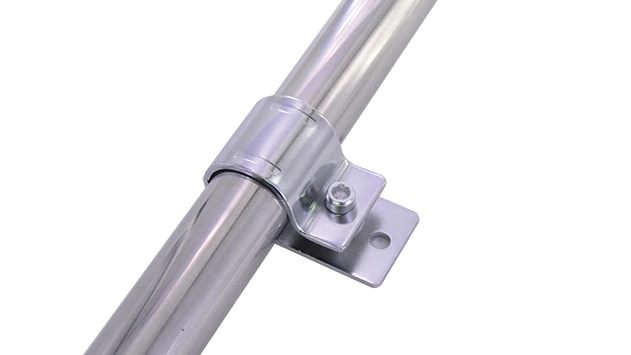
Walk into any modern factory today, and you'll notice a quiet revolution happening on the shop floor. It's not just about high-tech robots or flashy software—though those play their part. Instead, it's in the smaller, often overlooked components that keep operations running smoothly: the humble lean pipe clamps, joints, and profiles that form the backbone of workstations, material racks, and assembly lines. Among these, lean pipe clamp chrome designs have emerged as a standout, blending durability, versatility, and sleek functionality to meet the demands of 21st-century manufacturing. In this article, we'll dive into the latest trends shaping these essential tools, exploring how they're redefining efficiency, sustainability, and worker-centric design in factories worldwide.
From Basic to Brilliant: The Rise of Chrome-Plated Lean Pipe Clamps
Gone are the days when factory equipment was built to "just work"—today, it needs to work harder , last longer , and adapt faster . Traditional lean pipe clamps, often made from plain steel or plastic, struggled with corrosion in busy environments, chipped under heavy use, and required frequent replacements. Enter lean pipe clamp chrome: a game-changer that marries the strength of steel with the protective power of chrome plating.
Chrome plating isn't just about shine (though the sleek, silver finish certainly adds a professional look to workstations). It's a functional upgrade. The thin layer of chromium acts as a barrier against moisture, oils, and chemicals—common culprits in factory settings that cause rust and degradation. This means a chrome-plated clamp can withstand daily exposure to spills, humidity, and even occasional harsh cleaning without losing its grip or structural integrity. For factories in automotive, electronics, or food processing—industries where cleanliness and durability are non-negotiable—this is a game-changer.
But chrome isn't the only material making waves. Aluminum profile has stepped into the spotlight as a versatile companion to chrome clamps. Lightweight yet surprisingly strong, aluminum profiles offer a corrosion-resistant alternative for frames and structures, complementing the robustness of chrome clamps. Together, they create systems that are both sturdy and easy to maneuver—critical for factories embracing agile manufacturing, where reconfiguring workstations on the fly is the norm.
Design Innovations: Modularity and the "Click-and-Go" Revolution
If there's one word that defines modern manufacturing, it's "agility." Factories no longer stick to rigid, fixed layouts—they need to pivot for new product lines, scale up for peak seasons, or downsize for maintenance. This is where the latest lean pipe clamp chrome designs truly shine: modularity. Today's clamps are engineered with "click-and-go" assembly in mind, reducing setup time from hours to minutes.
Take the evolution of the lean pipe joint, for example. Early joints required tools, bolts, and even welding to secure, making reconfiguration a hassle. Now, innovative joint designs pair seamlessly with chrome clamps to create a system that snaps together with minimal effort. Some feature quick-release levers; others use threaded collars that tighten by hand. This means a team can disassemble a material rack at the end of a shift and rebuild it as a workstation by morning—no special skills or heavy equipment needed.
Modularity also extends to customization. Manufacturers now offer clamps in various sizes and shapes to fit different pipe diameters (from 28mm standard lean pipes to slimmer aluminum tubes), ensuring compatibility with existing setups. Need a clamp that can pivot 360 degrees? There's a design for that. Prefer one with a built-in cable management slot to keep workbenches tidy? It exists. These small tweaks add up to big improvements in how factories use space and resources.
Comparing Traditional vs. Modern Lean Pipe Joints
| Feature | Traditional Lean Pipe Joint | Modern Chrome-Clad Lean Pipe Joint |
|---|---|---|
| Assembly Time | 30–60 minutes (requires tools/bolts) | 5–10 minutes (tool-free, hand-tightened) |
| Durability | Prone to rust; weakens after 1–2 years of heavy use | Chrome plating resists corrosion; lasts 5+ years |
| Reconfigurability | Difficult; often requires cutting or welding | Easy; can be disassembled and reused repeatedly |
| Weight Capacity | Up to 50kg per joint | Up to 150kg per joint (reinforced steel core) |
| Cost Over Time | Higher (frequent replacements) | Lower (one-time purchase, minimal maintenance) |

Integrating with Lean Systems: More Than Just Parts—A Philosophy
Lean manufacturing isn't just a buzzword; it's a philosophy centered on eliminating waste, streamlining workflows, and maximizing value. Lean pipe clamp chrome and modern joints aren't just components—they're enablers of this philosophy. Let's break it down: in a lean system, every second of downtime, every unnecessary movement of materials, and every rigid workstation is a form of waste. Chrome clamps and modular joints attack these inefficiencies head-on.
Consider the humble workbench—a staple in any factory. A poorly designed workbench forces workers to reach, bend, or twist to access tools, wasting time and increasing fatigue. With chrome-plated clamps and adjustable aluminum profiles, workbenches become customizable hubs. Height can be tweaked to match a worker's posture, shelves can be added or removed based on daily tasks, and tool holders can be repositioned for left- or right-handed use. This isn't just about comfort; it's about cutting down on the "micro-wastes" that add up over a shift—like taking an extra step to grab a screwdriver or straining to lift a heavy part from a low shelf.
Material flow is another area where these designs excel. Flow racks, conveyor systems, and turnover trolleys—all built with lean pipe clamps and joints—can be adjusted to match production demands. If a line needs to speed up, roller tracks (often secured with chrome clamps) can be tilted slightly to let materials glide faster. If a new product requires smaller batches, a multi-tiered material rack can be reconfigured into a single-row setup to save space. This adaptability ensures factories aren't stuck with "one-size-fits-all" systems that become obsolete as needs change.
Sustainability: Doing More with Less (and Wasting Less, Too)
Modern factories aren't just focused on profit—they're focused on purpose. Sustainability has moved from a "nice-to-have" to a core value, driven by customer expectations, regulatory pressures, and a genuine desire to reduce environmental impact. Lean pipe clamp chrome and aluminum profile designs align perfectly with this mission.
Let's start with longevity. A chrome-plated clamp that lasts 5+ years means fewer replacements, which translates to less raw material use, fewer shipments (and their associated carbon footprints), and less waste ending up in landfills. Compare that to a traditional plastic clamp that cracks after 6 months—requiring constant repurchasing and disposal. It's a small change with a big ripple effect.
Aluminum profile takes sustainability a step further. Aluminum is 100% recyclable, and recycling it uses just 5% of the energy needed to produce new aluminum. Factories that invest in aluminum frames and structures can feel confident that, even if they reconfigure or retire a system, the materials won't go to waste. Many suppliers now offer take-back programs for old aluminum profiles, closing the loop on the circular economy.
There's also the "less is more" angle. Modular systems built with chrome clamps and aluminum profiles use fewer parts overall. Traditional setups often required custom brackets, welding, or overbuilt frames to compensate for weak joints. With modern designs, a single clamp can replace multiple outdated components, reducing the total number of materials needed. It's lean manufacturing at its finest—eliminating waste in both production and product design.
Worker-Centric Design: Putting People at the Heart of Production
At the end of the day, factories are run by people—and happy, healthy workers are productive workers. Lean pipe clamp chrome designs are increasingly prioritizing ergonomics, recognizing that a workstation that fits the worker (not the other way around) leads to fewer injuries, lower turnover, and better output.
Take adjustable height workbenches, for example. Using chrome clamps with telescoping aluminum profiles, workers can raise or lower their work surface with a simple twist, no tools required. A tall worker no longer hunches over a low bench; a shorter worker doesn't strain to reach overhead storage. This reduces musculoskeletal injuries—a leading cause of downtime in factories—and makes shifts feel less tiring. Some clamps even come with built-in locking mechanisms to keep the height steady, preventing accidental slips that could disrupt work.
Another trend is "soft-touch" chrome. While traditional chrome can feel cold and hard, newer designs add a subtle texture or a thin rubberized coating to clamp handles, making them more comfortable to grip during assembly. It's a small detail, but anyone who spends hours adjusting workstations will tell you: comfort matters. These clamps also often feature rounded edges, reducing the risk of cuts or scrapes—critical in fast-paced environments where hands are constantly moving.
Looking Ahead: What's Next for Lean Pipe Clamp Chrome?
The future of lean pipe clamp chrome is bright—and surprisingly down-to-earth. While we might dream of "smart clamps" with IoT sensors (and some manufacturers are experimenting with that), the most impactful innovations will likely focus on refining what already works: making clamps lighter, stronger, and even easier to use.
One area to watch is hybrid materials . Imagine a clamp with a chrome-plated steel core for strength, wrapped in a layer of recycled aluminum for lightweight flexibility. Early prototypes show this could reduce weight by 30% without sacrificing durability—perfect for mobile workstations or overhead racks where every kilogram counts.
Another trend is sustainability 2.0 . Some suppliers are exploring chrome plating processes that use 50% less water and emit fewer harmful chemicals, aligning with global efforts to reduce industrial pollution. Meanwhile, aluminum profile manufacturers are experimenting with plant-based coatings (yes, you read that right!) to add color or grip, cutting down on synthetic additives.
Perhaps most exciting is the push for inclusivity . Factories employ workers of all sizes, strengths, and abilities, and future clamps will reflect that. Think clamps with ergonomic levers designed for workers with limited hand mobility, or color-coded joints that make assembly intuitive even for new hires. The goal? To make lean systems accessible to everyone, regardless of experience or physical capability.
Conclusion: Small Parts, Big Impact
Lean pipe clamp chrome might not grab headlines like AI-powered robots or 3D printers, but they're the unsung heroes of modern manufacturing. By blending durability, modularity, and sustainability, these small components are helping factories reduce waste, boost productivity, and create better work environments for their teams. As we look to the future, one thing is clear: the next wave of factory innovation won't just be about big machines—it will be about the smart, thoughtful design of the parts that hold everything together.
So the next time you walk through a factory, take a closer look at those shiny, silver clamps holding up workbenches or guiding materials along roller tracks. They're not just metal and chrome—they're a testament to how even the smallest tools can drive big change.