- Company Articles
- Industry articles
- Industry standards
- Lean & Green: 2040 EU Standard Aluminum Profile's Role in Circular Economy

Lean & Green: 2040 EU Standard Aluminum Profile's Role in Circular Economy
Related Product
2040 EU Standard Aluminum Profile
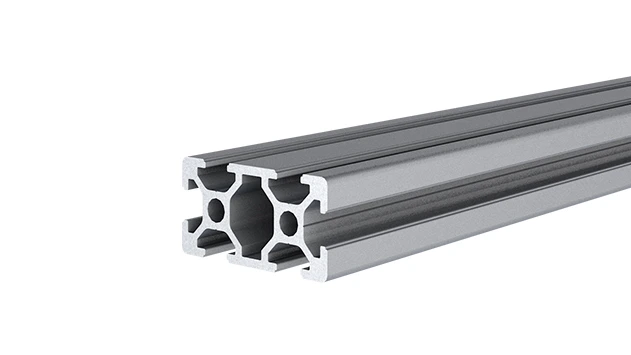
2040 is a 2.00 x 4.00CM fractional 20 series square extrusion T-slot profile with four open T-slots, two side with 2.00cm face, the other side with 4.00cm face. The profile has align-a-grooves to assist in aligning connecting profiles.
Let's start with a familiar scene: Maria, a production manager at a mid-sized electronics assembly plant, stands in the middle of her factory floor, staring at a pile of discarded steel frames. Last month, the team reconfigured the assembly line to accommodate a new product, and those frames—once the backbone of their workstations—are now obsolete. "We spent so much on those," she mutters, "and now they're just taking up space in the warehouse." Sound familiar? For many manufacturers, waste isn't just a buzzword; it's a daily headache. But what if there was a material that could adapt to change, reduce waste, and align with both lean principles and the circular economy? Enter the 2040 EU standard aluminum profile —a quiet game-changer that's redefining how we build, use, and reuse industrial infrastructure.
Understanding the Circular Economy: More Than Just "Going Green"
Before we dive into the specifics of aluminum profiles, let's get clear on what the circular economy really means. It's not just about recycling at the end of a product's life (though that's part of it). Think of it as a loop: design products to be durable, reusable, and recyclable; minimize waste during production; extend their lifespan through maintenance and upgrades; and when they finally reach the end of their useful life, break them down into materials that can be used again. It's the opposite of the traditional "take-make-waste" linear model, where resources are extracted, turned into products, and then tossed aside once they're no longer needed.
Lean manufacturing, with its focus on eliminating waste (muda) and optimizing efficiency, aligns perfectly with this vision. But lean alone isn't enough. To truly thrive in a circular economy, manufacturers need tools and materials that support both efficiency and sustainability. That's where the 2040 EU standard aluminum profile comes in—a material designed with both adaptability and longevity in mind.
What Is the 2040 EU Standard Aluminum Profile, Anyway?
At first glance, it might look like just another metal bar, but the 2040 aluminum profile is far more than that. Let's break it down: "2040" refers to its dimensions—20mm in width and 40mm in height—making it a versatile size for everything from workbenches and material racks to conveyor systems. The "EU standard" part is crucial too: it means the profile meets strict European union guidelines for quality, safety, and environmental performance, including limits on harmful substances and requirements for recyclability.
But what really sets it apart is its aluminum extrusion profile design. Extrusion is a manufacturing process where aluminum is pushed through a die to create a specific cross-sectional shape—in this case, a profile with T-slots running along its length. These T-slots are like built-in highways for aluminum profile accessories : brackets, connectors, hinges, and panels that snap or bolt into place without welding or heavy tools. This modularity is key. Unlike rigid steel frames that require cutting, welding, or drilling to modify, the 2040 profile lets you reconfigure workstations, racks, or conveyors in hours, not days.
Let's talk about aluminum itself. It's lightweight (about one-third the weight of steel), which reduces energy use during transportation and installation. It's also incredibly strong—strong enough to support heavy loads in material racks or workbenches. And perhaps most importantly, aluminum is 100% recyclable. Unlike plastics or even some metals, it can be melted down and reused infinitely without losing quality. In fact, around 75% of all aluminum ever produced is still in use today. That's the kind of sustainability that circular economy dreams are made of.

Bridging Lean and Green: How 2040 Profiles Support Lean Systems
Lean manufacturing is all about creating value with fewer resources. Waste—whether it's time, materials, or space—is the enemy. The 2040 aluminum profile plays into this in three big ways: flexibility, durability, and efficiency.
First, flexibility. Imagine Maria's factory again. When the next product launch comes around, instead of scrapping entire workstations, her team could simply unbolt the aluminum profile accessories (like brackets or panels) from the 2040 frames and reattach them in a new configuration. Need a taller shelf? Add another profile section. Want to angle a conveyor? Swap out a straight connector for a 45-degree joint. This adaptability cuts down on "waste of waiting" (no more delays for custom fabrication) and "waste of inventory" (no need to stockpile extra frames for every possible layout).
Second, durability. Aluminum's natural resistance to corrosion means these profiles last for decades, even in harsh factory environments. Unlike wood, which warps, or steel, which rusts, aluminum profiles require minimal maintenance—just a quick wipe-down now and then. This longevity extends the "use" phase of the circular loop, reducing the need for frequent replacements. A well-maintained 2040 profile workstation could outlast multiple product cycles, making it a smart long-term investment.
Third, efficiency in production. Because the profiles are pre-engineered and standardized, there's no guesswork in ordering or assembly. A lean system supplier can deliver exactly the right lengths and accessories, so you're not paying for excess material. And since assembly is tool-free (or requires only basic hand tools), teams can build or modify structures without specialized labor, saving time and labor costs.
The 2040 Profile in Action: A Circular Economy Case Study
Let's take a real-world example to see how this plays out. A automotive parts manufacturer in Germany recently switched from steel frames to 2040 EU standard aluminum profiles for their assembly line workstations. Here's what happened:
- Design Phase: They worked with a lean system supplier to design modular workstations using 2040 profiles and compatible accessories. The T-slots allowed them to integrate tool holders, LED lights, and even small conveyors directly into the frames, eliminating the need for separate mounting brackets.
- Production Phase: The aluminum profiles arrived pre-cut to length, so on-site assembly took 60% less time than welding steel frames. No more sparks, fumes, or wasted material from cutting errors.
- Use Phase: When the factory introduced a new part line six months later, they reconfigured three workstations in a single weekend by swapping out accessories and adding a few extra profile sections. No new frames were purchased.
- End-of-Life (So Far): After five years, two original workstations were retired—but instead of being scrapped, the aluminum profiles were sent to a local recycler. The recycled aluminum was used to produce new 2040 profiles, closing the loop.
The result? A 35% reduction in waste from workstation reconfigurations, a 20% drop in assembly time, and a 15% lower total cost of ownership over five years. "We used to see workstations as a 'fixed cost'—something you buy once and replace when needed," said the plant manager. "Now, they're an 'adaptive asset.' The profiles grow with us."
Comparing Traditional Materials to 2040 Aluminum Profiles
Still not convinced? Let's put the 2040 aluminum profile head-to-head with common alternatives in a sustainability and efficiency showdown:
| Aspect | Traditional Steel Frames | Wooden Structures | 2040 EU Standard Aluminum Profiles |
|---|---|---|---|
| Recyclability | Recyclable, but energy-intensive to process; often downcycled into lower-grade steel. | Biodegradable, but not recyclable into new wood products; requires reforestation. | 100% recyclable with minimal energy loss; can be recycled into new profiles repeatedly. |
| Flexibility | Rigid; requires welding/cutting to reconfigure, leading to waste. | Limited; prone to damage when modified; not reusable for structural purposes. | Highly modular; reconfigurable with accessories; no cutting/welding needed. |
| Durability | Strong but prone to rust; requires painting/coating for longevity. | Prone to warping, rotting, and pest damage; short lifespan in industrial settings. | Corrosion-resistant; no coating needed; lasts 20+ years with minimal maintenance. |
| Weight | Heavy; increases transportation and installation costs/energy use. | Moderate weight but less strong per unit weight than aluminum. | Lightweight (1/3 the weight of steel); reduces transport/installation energy use. |
| Total Cost of Ownership | Low upfront cost, but high long-term costs due to replacement and waste. | Low upfront cost, but frequent replacement needed; high hidden costs (repairs, disposal). | Higher upfront cost, but 30-40% lower long-term costs due to reusability and durability. |
As the table shows, the 2040 aluminum profile isn't just "greener"—it's often more cost-effective in the long run. That's the beauty of aligning lean and green: sustainability and efficiency go hand in hand.
The Role of Suppliers: More Than Just Material Providers
None of this works without the right partners. A reliable lean system supplier doesn't just sell aluminum profiles—they provide expertise in designing circular solutions. Look for suppliers who offer:
- Custom Design Support: Help in tailoring 2040 profile systems to your specific needs, ensuring you don't overbuy or underutilize materials.
- A Full Range of Accessories: From hinges and brackets to panels and casters, the right accessories make reconfiguration seamless. A supplier with a deep inventory of aluminum profile accessories saves you time and reduces waste from mismatched parts.
- Recycling Programs: Some suppliers will take back old profiles for recycling, closing the loop on your end-of-life waste. Ask about their take-back policies—this is a sign they're committed to the circular economy, not just selling products.
- Training and Documentation: How-to guides for reconfiguring systems, so your team can adapt quickly without relying on external contractors.
Maria, our production manager, found this out firsthand. Her first supplier sent her a box of profiles with no instructions; the second walked her through a 3D design tool to map out her workstation layout and even offered a workshop for her team on using the accessories. "It wasn't just a sale for them," she said. "They wanted us to succeed with the product long-term."
Looking Ahead: The Future of 2040 Profiles in Circular Manufacturing
The 2040 EU standard aluminum profile isn't a passing trend—it's part of a larger shift toward smarter, more sustainable manufacturing. As regulations around waste and carbon emissions tighten (hello, EU's Circular Economy Action Plan), and consumers demand greener products, manufacturers will need to adapt. The 2040 profile is a tool that makes adaptation easier.
What's next? We're already seeing innovations like profiles made with higher recycled content (some suppliers now offer 2040 profiles with 80% recycled aluminum) and accessories made from bio-based plastics. There's also growing interest in "digital twins"—3D models of profile systems that let manufacturers test reconfigurations virtually before making physical changes, further reducing waste.
Perhaps most exciting is the potential for these profiles to support small and medium-sized enterprises (SMEs). Historically, sustainability has been seen as a "big company" luxury, but the 2040 profile's modularity and affordability make it accessible to smaller manufacturers. You don't need a huge budget to start small—swap out one workstation, then another, and build from there.
Final Thoughts: From Waste to Wealth with 2040 Aluminum Profiles
Let's circle back to Maria. A year after switching to 2040 aluminum profiles, she no longer has a warehouse full of obsolete steel frames. Instead, she has a toolkit of profiles and accessories that her team reuses and reconfigures as needed. "Last month, we built a temporary packing station for a rush order in two hours using leftover profiles," she says with a smile. "Two weeks later, we took it apart and used the parts to expand our testing area. That's the circular economy in action—waste becomes wealth."
The 2040 EU standard aluminum profile isn't just a material. It's a mindset shift: seeing industrial infrastructure not as disposable, but as adaptable. It's proof that lean and green don't have to be competing priorities—they can work together to create more efficient, sustainable, and profitable operations.
So, whether you're a production manager like Maria, a sustainability coordinator, or a business owner looking to future-proof your operations, it's time to ask: What would happen if your next workstation, rack, or conveyor wasn't just built to work—but built to adapt ?