- Company Articles
- Industry articles
- Industry standards
- Lean Management Accessories: Compatibility with 4040A EU Standard Aluminum Profile

Lean Management Accessories: Compatibility with 4040A EU Standard Aluminum Profile
Related Product
4040A EU Standard Aluminum Profile
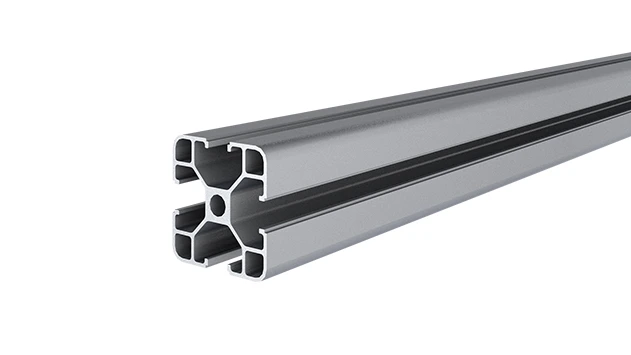
4040A is a 4.00x4.00 CM fractional 40 series square extrusion T-slot profile with four open T-slots, each side with 4.00cm face.
In the fast-paced world of manufacturing and industrial operations, efficiency isn't just a buzzword—it's the backbone of success. Lean management, with its focus on minimizing waste and maximizing value, has become the gold standard for businesses striving to stay competitive. At the heart of any effective lean system lies the right infrastructure: tools and components that work together seamlessly to streamline workflows, reduce downtime, and adapt to evolving needs. Among these, the 4040A EU Standard Aluminum Profile stands out as a versatile, durable, and highly compatible solution. But what truly makes it indispensable is how well it integrates with a wide range of lean management accessories, turning static setups into dynamic, productivity-boosting systems.
Whether you're building a workbench for assembly lines, a flow rack for material handling, or a custom conveyor system, the compatibility of your aluminum profile with accessories can make or break your lean strategy. In this article, we'll dive into the world of 4040A EU Standard Aluminum Profile, exploring why it's a favorite among industry professionals and how its design ensures seamless integration with essential accessories like aluminum profile connectors, lean pipe joints, and workbench components. We'll also share real-world examples of how this compatibility translates to tangible efficiency gains, helping businesses reduce waste, improve ergonomics, and scale operations with ease.
Understanding the 4040A EU Standard Aluminum Profile: A Foundation for Lean Systems
Before we explore compatibility, let's first understand what makes the 4040A EU Standard Aluminum Profile a cornerstone of lean management. As the name suggests, this profile boasts a square cross-section of 40mm x 40mm, a dimension carefully chosen to balance strength, weight, and versatility. Made from high-grade aluminum alloy, it's lightweight yet remarkably sturdy—capable of supporting heavy loads without adding unnecessary bulk to your workspace. But its most defining feature is the T-slot design that runs along all four sides. These slots are not just grooves; they're the key to its modularity, allowing accessories to be attached, adjusted, or removed with minimal tools and downtime.
EU Standard compliance ensures consistency in dimensions and quality, meaning profiles from different suppliers (when adhering to the standard) can work together interchangeably. This is critical for businesses that may need to expand or modify their setups over time. Whether you're adding a new section to a workbench or reconfiguring a flow rack, you can trust that 4040A profiles will fit seamlessly with existing components. Now, let's turn to the accessories that bring this profile to life.
Aluminum Profile Accessories: The Building Blocks of Compatibility
Aluminum profile accessories are the unsung heroes of lean systems, transforming raw profiles into functional workstations, racks, and conveyors. The 4040A profile's T-slot design is engineered to accommodate a wide range of these accessories, from connectors that join profiles at various angles to end caps that protect edges and enhance safety. Let's break down some of the most essential accessories and how they integrate with 4040A:
Connectors: Bringing Profiles Together
Connectors are the glue that holds lean systems together, and 4040A works flawlessly with several types, including:
- 90° Aluminum Profile Connector: Ideal for creating right-angle joints (e.g., the corner of a workbench or flow rack). These connectors slide into the T-slots of two perpendicular 4040A profiles and are secured with bolts, ensuring a tight, wobble-free fit.
- 45° Aluminum Profile Connector: Perfect for angled structures, such as sloped flow racks that rely on gravity to move materials. Like their 90° counterparts, these connectors leverage the T-slot system for quick installation and adjustment.
- Gusset Alp 4040: These triangular brackets reinforce joints, adding stability to heavy-duty setups. Designed specifically for 40mm profiles, they fit snugly into the T-slots and distribute weight evenly, preventing stress on individual connections.
End Caps and Covers: Finishing Touches with Functionality
While end caps might seem like minor details, they play a crucial role in safety and longevity. The 4040A profile pairs with accessories like the 4040 aluminum profile end cap , which snaps into the ends of the profile to cover sharp edges, preventing cuts and reducing dust buildup in the T-slots. Similarly, T-slot rubber seal covers protect the slots from debris when not in use, ensuring accessories can be added later without hassle.
Workbench Components: From Frames to Surfaces
Workbenches are the heart of many production lines, and 4040A profiles form their robust frames. Accessories like workbench E (single deck-without caster) kits are designed to mount directly onto 4040A frames, with pre-drilled holes that align perfectly with the T-slots. This compatibility means you can customize your workbench height, add shelves, or attach tool holders without drilling into the profiles themselves—preserving their integrity for future modifications.
Real-World Example: A small electronics manufacturer recently upgraded their assembly line using 4040A profiles and aluminum profile accessories. They used 90° connectors to build workbench frames, added gusset alp 4040 brackets for stability, and mounted workbench E decks. The result? A setup that took just 4 hours to assemble (down from 2 days with traditional steel frames) and could be reconfigured in minutes when they introduced a new product line. The T-slot design allowed them to add ESD (electrostatic discharge) mats and tool hooks later, all without modifying the original frame.

Lean Pipe Joints: Bridging Aluminum Profiles and Lean Pipes
While 4040A aluminum profiles are versatile on their own, many lean systems combine them with lean pipes (also known as "lean tubes")—flexible, cost-effective tubes used for building racks, trolleys, and light-duty structures. This hybrid approach leverages the strength of aluminum profiles with the flexibility of lean pipes, and lean pipe joints are the key to making this combination work.
Lean pipe joints are designed to connect lean pipes to other components, including 4040A profiles. For example, a parallel lean pipe joint can attach a horizontal lean pipe to a vertical 4040A profile, creating a shelf or material holder. The joint's clamp mechanism fits around the lean pipe and secures to the profile via the T-slot, using bolts or screws. This connection is both strong and adjustable—if you need to raise or lower the pipe, simply loosen the bolts, reposition, and tighten again.
This compatibility is a game-changer for businesses transitioning from all-pipe systems to more robust aluminum setups. Instead of replacing everything, they can integrate 4040A profiles where strength is needed (e.g., workbench legs) and keep lean pipes for lighter components (e.g., overhead racks), saving time and money.
Flow Racks and Conveyors: Optimizing Material Flow with 4040A
Material handling is a critical area of lean management, and flow racks and conveyors are essential for keeping materials moving efficiently from storage to production. 4040A profiles excel here, too, thanks to their compatibility with roller tracks, guides, and other flow-related accessories. Take material rack B (3 row and 3 floor) , a popular flow rack design: its frame is typically built with 4040A profiles, while the shelves use roller tracks to allow gravity-fed movement of bins or boxes.
Roller tracks themselves often rely on 4040A profiles for support. Accessories like roller track placon mount for aluminum profile flat attach the track to the profile's T-slot, ensuring alignment and stability. This setup allows materials to glide smoothly from the back of the rack to the front, reducing the need for workers to reach or bend—improving ergonomics and speeding up access.
Conveyors, too, benefit from 4040A compatibility. Light-duty belt or roller conveyors can be mounted on 4040A frames, with height-adjustable legs (using T-slot accessories) to align with other equipment. This modularity means you can extend a conveyor line or change its angle with minimal effort, adapting to new production layouts as needed.
Compatibility Table: 4040A Profile and Key Flow Rack/Conveyor Accessories
| Accessory Type | Function | How It Integrates with 4040A |
|---|---|---|
| Roller Track Placon Mount (Flat) | Attaches roller tracks to horizontal 4040A profiles | Slides into T-slot; secured with bolts through the mount's base |
| End Support for Roller Track (with Stop) | Supports track ends and prevents materials from sliding off | Bolted to 4040A via T-slot; adjustable height for track alignment |
| Plastic Roller Track Guide Rail (Yellow/Grey) | Guides materials along the track, preventing jams | Clips onto roller tracks, which are mounted on 4040A profiles |
| Caster Wheels | Adds mobility to flow racks or conveyors | Caster mounts bolt into 4040A's T-slot at the base of the frame |
Why Compatibility Matters for Lean Management
At this point, you might be wondering: Why focus so much on compatibility? Can't I just use any accessories with my aluminum profiles? The short answer is yes, but the long answer is that incompatible accessories undermine the very principles of lean management. Here's why:
Reduces Waste (Time and Money)
Incompatible accessories often require modifications—drilling holes, using adapters, or even replacing components. This wastes time during setup and can lead to extra costs for custom parts. With 4040A and its compatible accessories, you spend less time troubleshooting and more time producing.
Enhances Flexibility
Lean systems need to adapt to changing demands—new products, higher volumes, or updated workflows. Compatible accessories allow you to reconfigure your setup quickly. For example, swapping out a fixed shelf for a roller track on a 4040A frame takes minutes, not hours, because the T-slots and accessories are designed to work together.
Improves Safety and Ergonomics
Poorly fitting accessories can create wobbly structures, sharp edges, or unstable surfaces—hazards that risk injury and downtime. 4040A's tight compatibility with accessories ensures a secure fit, reducing accidents. Additionally, adjustable accessories (like height-adjustable workbench legs) let you tailor setups to workers' needs, reducing strain and boosting productivity.
Scalability
As your business grows, you'll need to expand your lean systems. Compatible components mean you can add new sections (e.g., a longer flow rack) using the same 4040A profiles and accessories, ensuring consistency across your operation. There's no need to learn a new system or replace existing parts.
Choosing the Right Accessories: Tips for Maximizing Compatibility
To fully leverage the 4040A profile's compatibility, keep these tips in mind when selecting accessories:
- Stick to EU Standard Accessories: Look for accessories labeled as compatible with EU Standard 4040 profiles. This ensures dimensional consistency.
- Check T-Slot Dimensions: T-slots can vary slightly in width and depth. Most 4040A profiles use a standard slot size (e.g., 8mm or 10mm), so confirm that accessories match this size.
- Consider Load Requirements: While 4040A is strong, accessories have weight limits. For heavy loads, opt for reinforced connectors or gussets.
- Test Before Scaling: If you're trying a new accessory (e.g., a specialized lean pipe joint), test it on a small scale first to ensure it integrates smoothly with your 4040A setup.
Conclusion: 4040A EU Standard Aluminum Profile—Your Partner in Lean Excellence
Lean management is about more than just cutting costs; it's about creating systems that empower workers, adapt to change, and deliver consistent value. The 4040A EU Standard Aluminum Profile, with its unmatched compatibility with aluminum profile accessories, lean pipe joints, workbench components, and flow rack systems, is a powerful tool in achieving this vision. By choosing 4040A and its compatible accessories, businesses can build lean systems that are not just efficient today, but flexible enough to meet tomorrow's challenges.
Whether you're a small workshop looking to upgrade your workbenches or a large manufacturer reconfiguring an entire production line, remember: compatibility is key. It's the difference between a static setup that holds you back and a dynamic system that propels you forward. So, invest in 4040A, choose the right accessories, and watch your lean management efforts thrive.