- Company Articles
- Industry articles
- Industry standards
- Lean Manufacturing: 2060 EU Standard Aluminum Profile as a Core Tool

Lean Manufacturing: 2060 EU Standard Aluminum Profile as a Core Tool
Related Product
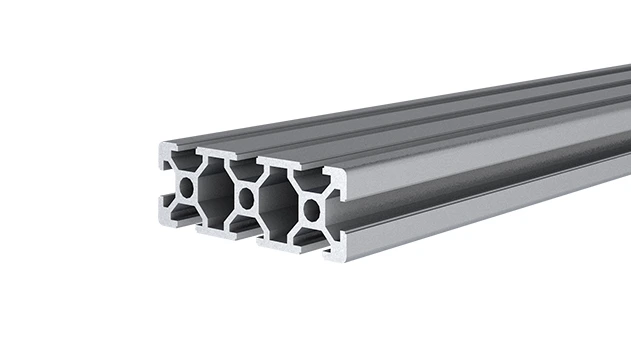
2060 EU Standard Aluminum Profile
2060 is a 2.00 x 4.00CM fractional 20 series square extrusion T-slot profile with four open T-slots, two side with 2.00cm face, the other side with 6.00cm face. The profile has align-a-grooves to assist in aligning connecting profiles.
Walk into any manufacturing facility today, and you'll hear the same refrain: "We need to do more with less." It's the heartbeat of modern production—pressure to cut waste, speed up output, and keep costs in check, all while maintaining quality. For years, many teams turned to rigid, one-size-fits-all equipment to meet these demands, only to find themselves stuck when processes changed, product lines shifted, or team needs evolved. That's where lean manufacturing comes in—not as a distant theory, but as a daily practice of adaptability. And at the center of this adaptability? Tools that grow with your workflow. The 2060 EU standard aluminum profile has emerged as one such tool, quietly transforming how teams build workspaces, organize materials, and keep production flowing. Let's dive into why this unassuming piece of metal is becoming indispensable in lean operations worldwide.
The Lean Dilemma: Rigid Tools in a Flexible World
Lean manufacturing isn't just about cutting costs—it's about creating value. Every step, every tool, every square foot of space should contribute to making products better, faster, or more efficiently for the customer. Yet, walk into many plants, and you'll find workbenches bolted to the floor, material racks that can't be adjusted, and conveyor systems that require a maintenance crew to reconfigure. These rigid setups might work for a static production line, but in today's world—where product lifecycles shrink and customer demands shift overnight—they become liabilities.
Consider a small electronics manufacturer I visited last year. Their assembly line relied on wooden workbenches built in the 1990s. When they introduced a new, larger circuit board, the benches were too short. Workers had to place half the board on the floor, leading to errors and wasted motion. "We thought about building new wooden benches," the plant manager told me, "but by the time we'd design, build, and install them, we'd already be onto the next product change." That's the crux of the problem: traditional tools can't keep up with the pace of lean. What teams need are systems that are as flexible as their workflows—and that's where aluminum profiles shine.
Meet the 2060 EU Standard Aluminum Profile: More Than Just Metal
At first glance, the 2060 EU standard aluminum profile looks simple: a sleek, extruded aluminum beam with T-slots running along its length. But those slots are where the magic happens. They allow teams to attach, adjust, and reconfigure components—like shelves, bins, lights, or tools—without welding, drilling, or specialized skills. It's modularity at its finest, designed to grow and change with your needs.
What Makes the 2060 Profile Unique?
The "2060" in its name refers to its dimensions: 20mm in width and 60mm in height. This sweet spot of size makes it versatile—strong enough to support heavy tools and materials, yet lightweight enough for teams to move and adjust on their own. Unlike steel pipes, which are heavy and prone to rust, or plastic alternatives that lack durability, aluminum profiles offer a rare balance of strength, weight, and longevity. And because they're EU standard, you know you're getting consistent quality, whether you're sourcing from a local supplier or an international partner.
But the real power lies in its compatibility with aluminum profile accessories . Think of the profile as the backbone; the accessories are the muscles and joints that bring it to life. Connectors, end caps, hinges, and brackets snap into those T-slots, turning a single beam into a workstation, a material rack, or even a mobile cart. Need to add a shelf? Slide a bracket into the slot and tighten a screw. Want to lower a work surface by 6 inches? Loosen a few connectors, adjust, and retighten. It's tool-free customization that puts control back in the hands of the people using the space.

Building a Lean System: From Workbenches to Flow Racks
A lean system isn't just about individual tools—it's about how those tools work together to eliminate waste. The 2060 profile excels here, too, because it can be integrated into nearly every corner of your operation. Let's look at two common applications where it's making a measurable difference: workbenches and flow racks.
Case 1: The Adaptable Workbench
Workbenches are the workhorses of manufacturing—where assembly happens, tools are stored, and quality checks are performed. Yet, most traditional workbenches are fixed: same height, same layout, day in and day out. That's a problem when you have operators of different heights, or when tasks change from assembling small parts to testing larger equipment.
Enter the 2060 profile workbench. One automotive parts supplier I worked with replaced their old steel workbenches with 2060-based setups. They added adjustable legs (using aluminum profile accessories like height-adjustable feet) so each operator could set their bench to elbow height, reducing fatigue. They mounted tool holders directly to the profile's T-slots, keeping frequently used tools within arm's reach (eliminating "search and find" waste). And when they shifted to a new product line that required a larger workspace, they simply added extension beams to the benches—no new tools, no downtime.
"Our error rate dropped by 15% in the first month," the production lead told me. "Workers aren't straining to reach tools or hunching over undersized benches anymore. And when we need to reconfigure? Two people can do it in an hour, instead of waiting for maintenance for a week."
Case 2: Flow Racks That Keep Materials Moving
In lean, material flow is everything. If parts are stuck in a corner, or if workers have to walk 20 feet to grab components, you're wasting time and energy. Flow racks —tilted racks with rollers that let materials slide forward as they're used—solve this by keeping parts at the point of use. But traditional flow racks are often welded steel, making them hard to adjust if you need to change bin sizes or add more levels.
A food packaging plant I consulted with faced this exact issue. Their flow racks were built for small, square bins, but when they switched to taller, rectangular bins for a new product, the racks couldn't accommodate them. "We were piling bins on the floor next to the line," the warehouse manager said. "It was a mess, and we kept running out of space."
They replaced the steel racks with 2060 aluminum profile flow racks. Using T-slot brackets and adjustable roller tracks (another type of aluminum profile accessory), they could move the rollers up or down to fit the new bins. They even added extra levels by attaching more profiles vertically, doubling their storage capacity without expanding their footprint. "Now, the bins slide right to the line," the manager said. "Workers don't waste steps, and we can adjust the racks in 10 minutes if we switch products again."
Why Aluminum? Comparing the 2060 Profile to Traditional Materials
You might be wondering: Why not stick with steel, wood, or plastic? Let's break down how the 2060 aluminum profile stacks up against common alternatives. The table below compares key factors that matter in lean operations:
| Factor | 2060 Aluminum Profile | Steel Pipe (1.5mm thickness) | Wood (Plywood Bench Top) | Plastic Extrusion |
|---|---|---|---|---|
| Weight (per meter) | 0.8kg | 2.3kg | 3.5kg (bench top only) | 0.5kg |
| Assembly Time (Basic Workbench) | 1 hour (2 people, no tools beyond hex key) | 4 hours (requires welding/drilling) | 3 hours (cutting, screwing, sanding) | 1.5 hours (limited accessory compatibility) |
| Reconfigurability | Unlimited (adjust accessories in minutes) | Low (requires cutting/welding to modify) | Very Low (permanent once built) | Medium (some adjustments, but weakens over time) |
| Durability (Expected Lifespan) | 15+ years (resistant to corrosion, dents) | 10+ years (prone to rust without coating) | 3–5 years (scratches, warping, water damage) | 2–4 years (prone to cracking under heavy load) |
| Sustainability | 100% recyclable, low energy to produce | Recyclable but high energy to produce | Biodegradable but requires deforestation | Non-biodegradable, hard to recycle |
The data speaks for itself: aluminum profiles outperform traditional materials in nearly every category that matters for lean. They're lighter than steel, more durable than wood, and more reconfigurable than plastic. And because they're recyclable, they align with the growing focus on sustainability in manufacturing—a key part of modern lean systems that aim to eliminate environmental waste, too.
Integrating 2060 Profiles into Your Lean System
Adopting 2060 aluminum profiles isn't just about buying metal beams—it's about rethinking how you build your workspace. Here's how to start:
1. Map Your Current Workflow (and Waste)
Before you start assembling, walk your production line and note where waste lives. Are workers bending to reach tools? Are materials piling up because racks are too small? Are workbenches causing bottlenecks in assembly? These pain points will guide which areas to tackle first. For example, if "motion waste" (unnecessary movement) is a problem, start with adjustable workbenches. If "inventory waste" (excess materials) is an issue, flow racks might be your first project.
2. Start Small, Iterate Fast
You don't need to replace every workstation overnight. Pick one area—a single workbench, a small flow rack—and build a prototype with 2060 profiles. Test it with the team that uses it daily. Ask: Does it reduce motion? Can they adjust it easily? What's missing? Use their feedback to tweak the design, then roll it out to other areas. This "PDCA" (Plan-Do-Check-Act) approach is core to lean, and it ensures you're solving real problems, not just installing new tools for the sake of it.
3. Invest in Quality Accessories
The 2060 profile is only as good as the accessories you pair with it. Look for high-quality brackets, connectors, and roller tracks designed for EU standard profiles. Cheap, off-brand accessories can bend or break, undoing your efficiency gains. A good rule of thumb: Spend a little more on accessories now to avoid replacing them later. Many suppliers offer starter kits with common accessories, which is a great way to experiment without overspending.
4. Train Your Team to Own the System
Lean isn't about managers dictating change—it's about teams owning their workspace. Teach your operators how to use the T-slots, adjust brackets, and reconfigure components. Give them hex keys and basic tools to make changes on the fly. When workers feel empowered to tweak their environment, they'll find efficiencies you never imagined. "We had a line worker add a small shelf to her bench using leftover profiles," one plant manager told me. "It holds her most-used tool, saving her 20 seconds per unit. Multiply that by 500 units a day, and that's over 3 hours saved each week!"
The Future of Lean: Where Aluminum Profiles and Technology Meet
As lean manufacturing evolves, so too will the tools that support it. The 2060 aluminum profile is already adapting to new trends, like the rise of smart factories. Imagine adding sensors to your aluminum workbench via T-slots to track tool usage, or mounting small screens that display real-time production metrics. Some suppliers are even developing "smart" aluminum profile accessories with built-in RFID tags, so you can track which components are attached to which profiles—useful for inventory management or quality control.
Sustainability is another growing focus. Aluminum is 100% recyclable, and its production uses 95% less energy than mining new aluminum. As more companies aim for carbon neutrality, the 2060 profile's eco-friendly credentials will become even more valuable. "We're not just building workspaces—we're building a future where efficiency and sustainability go hand in hand," a sustainability director at a large manufacturer told me. "Aluminum profiles fit right into that vision."
Final Thoughts: Lean Isn't About Perfection—It's About Progress
At the end of the day, lean manufacturing is about making small, constant improvements that add up to big results. The 2060 EU standard aluminum profile isn't a silver bullet, but it's a tool that makes those improvements possible. It lets teams adapt faster, waste less, and focus on what matters: creating value for customers.
Whether you're building a workbench, a flow rack, or an entire production line, the 2060 profile and its accessories give you the flexibility to grow, change, and thrive in a world that won't slow down. So the next time you walk into your facility, look around. Where could a little adaptability make a big difference? Chances are, the answer starts with a simple aluminum beam—and the team that's ready to build something better.