- Company Articles
- Industry articles
- Industry standards
- Lean Pipe Clamp Chrome Certification: Ensuring Quality and Safety Standards

Lean Pipe Clamp Chrome Certification: Ensuring Quality and Safety Standards
Related Product
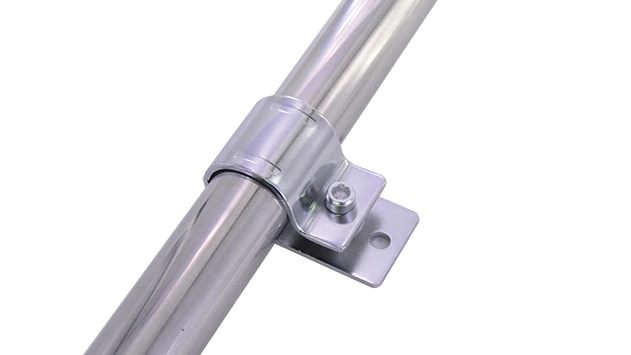
Lean Pipe Clamp Chrome
Lean pipe clamp is used for rack system hang monitor or other panel for workbenck, flowrack in production daily use.
In the bustling world of manufacturing and production, where every second counts and precision is non-negotiable, the smallest components often play the biggest roles. Take, for instance, the humble lean pipe clamp—a yet critical part of lean pipe systems that holds together workbenches, flow racks, and material handling setups. But not all clamps are created equal. When safety, durability, and efficiency hang in the balance, there's one factor that separates reliable components from risky ones: certification. Specifically, lean pipe clamp chrome certification isn't just a stamp of approval; it's a promise that the product has undergone rigorous testing, meets industry standards, and can be trusted to perform day in and day out. In this article, we'll dive into why this certification matters, what it entails, and how it impacts everyone from factory floor managers to frontline workers.
What Are Lean Pipe Clamps, Anyway?
Before we unpack certification, let's get clear on what lean pipe clamps are and why they're so essential. Lean pipe systems—often built with lean pipe (also called "lean tube") and a variety of connectors—are the backbone of flexible manufacturing. They're used to construct everything from workbenches and flow racks to turnover trolleys and conveyor systems. At the heart of these systems are the clamps: small, often metal components that fasten pipes together at angles, ensuring the structure stays stable under load.
Chrome-plated lean pipe clamps, in particular, are prized for their durability and resistance to corrosion. The chrome coating adds a layer of protection against rust and wear, making them ideal for use in environments where moisture or frequent handling is common—think automotive assembly lines, electronics manufacturing, or warehouses with high humidity. But here's the catch: not all chrome clamps are made to the same standards. A poorly made clamp might look the part, but over time, weak materials or shoddy plating can lead to cracks, slippage, or even structural failure.
That's where certification comes in. It's the difference between a clamp that holds steady for years and one that falters when you need it most.
The Hidden Risks of Cutting Corners with Uncertified Clamps
Imagine a busy production line where workers rely on a workbench built with lean pipe and clamps to assemble delicate electronic components. The workbench looks sturdy enough, but its clamps are uncertified—cheaply made, with thin chrome plating and subpar steel. One morning, during a routine shift, a worker places a heavy toolbox on the bench. The added weight strains the clamps, which suddenly give way. The bench wobbles, sending tools crashing to the floor and damaging the components below. Worse, the worker narrowly avoids injury as the structure shifts. This isn't just a hypothetical scenario; it's a risk that uncertified clamps bring into every workplace.
The consequences of using uncertified clamps go beyond safety, too. Production delays are inevitable when equipment fails. A collapsed flow rack might halt an entire assembly process while workers clean up and rebuild. Damaged goods—whether raw materials or finished products—eat into profits. And over time, constant replacements of failed clamps add up, costing more than investing in certified parts upfront. In short, uncertified clamps are a false economy: they save a little money at purchase but cost far more in the long run.

Certification Standards: What Does It Take to Earn the Stamp?
So, what makes a lean pipe clamp chrome "certified"? Certification is a rigorous process that involves testing the clamp against strict industry standards. While specific requirements can vary by region or application, most certifications focus on three key areas: material quality, performance under stress, and durability.
Material Quality: The Foundation of Strength
Certified clamps start with high-grade materials. The base metal—often steel or aluminum—is tested for tensile strength (how much force it can withstand before breaking) and ductility (how well it bends without cracking). For chrome-plated clamps, the plating itself is inspected: it must be uniform in thickness (typically between 0.0005 and 0.001 inches) and free of defects like pits, blisters, or peeling. Even the lean pipe joint design is evaluated to ensure it distributes weight evenly across the clamp, reducing stress points.
Performance Testing: Putting Clamps Through Their Paces
Certification bodies don't just trust manufacturers' claims—they test clamps under real-world conditions. One common test is the "static load test," where a clamp is secured to two pipes and subjected to a gradually increasing weight until it fails. Certified clamps must withstand loads far beyond their intended use (often 1.5 to 2 times the maximum rated weight) to ensure a safety margin. Another test is the "corrosion resistance test," where clamps are exposed to salt spray or humidity chambers for extended periods. Chrome-plated clamps must resist rust for hundreds of hours to pass.
Durability: Longevity Matters
Manufacturing environments are tough on equipment. Clamps are tightened, loosened, and adjusted repeatedly as production needs change. Certification includes "cycle testing," where clamps are fastened and unfastened hundreds of times to simulate years of use. The goal? To ensure the clamp retains its grip and structural integrity over time, without becoming loose or deforming.
Certified vs. Uncertified: A Side-by-Side Look
To truly understand the value of certification, let's compare a certified chrome lean pipe clamp with an uncertified one. The table below breaks down key metrics:
| Metric | Certified Chrome Lean Pipe Clamp | Uncertified Chrome Lean Pipe Clamp |
|---|---|---|
| Material Strength | High-grade steel (tensile strength ≥ 400 MPa); chrome plating ≥ 0.0008 inches thick | Low-carbon steel (tensile strength often < 300 MPa); thin, uneven chrome plating (sometimes < 0.0003 inches) |
| Static Load Capacity | Tested to withstand 2x rated load (e.g., a 50kg-rated clamp holds 100kg without failure) | Untested; may fail at or below rated load (e.g., a "50kg" clamp collapses at 40kg) |
| Corrosion Resistance | Passes 500+ hours of salt spray testing with no rust | Rusts within 100-200 hours of exposure to moisture |
| Cycle Life | Withstands 1,000+ tighten/loosen cycles without loss of grip | Loosens or deforms after 100-200 cycles |
| Safety Compliance | Meets ISO 9001 (quality) and OSHA (workplace safety) standards | No compliance with international or regional safety standards |
The difference is clear: certified clamps are built to last, with safety and reliability baked in. Uncertified clamps, on the other hand, are a gamble—one that manufacturers and workers can't afford to take.
Why Chrome Certification Specifically Matters
You might wonder: why focus on chrome certification? After all, there are other coatings and materials. Chrome plating is unique because it offers a rare combination of strength, corrosion resistance, and low friction. When applied correctly, it creates a smooth, hard surface that resists scratches and wear—critical for clamps that are adjusted or handled frequently. But chrome plating is also tricky to get right. If the plating is too thin, or if the underlying steel isn't properly cleaned before plating, the chrome can peel or bubble, exposing the metal to rust.
Certified chrome clamps undergo strict plating inspections. For example, some certifications require "adhesion testing," where a sharp tool is used to scrape the plating; if it chips or flakes, the clamp fails. Other tests check for "coverage"—ensuring every part of the clamp, including hard-to-reach areas around the lean pipe joint , is evenly plated. This level of scrutiny ensures the chrome does more than look good; it actually protects the clamp and extends its life.
Real-World Impact: How Certification Saves Time and Lives
Let's look at a case study to see certification in action. A mid-sized electronics manufacturer in the U.S. once relied on uncertified lean pipe clamps for their assembly line workbenches. Over six months, they experienced three incidents: two workbenches collapsed under load, and one flow rack failed, damaging $10,000 worth of circuit boards. After each incident, production halted for 4–6 hours, costing an additional $5,000 per hour in lost output. Frustrated, the plant manager switched to certified chrome clamps from a reputable lean pipe supplier .
The results were dramatic. Over the next two years, there were zero structural failures. Workers reported feeling more confident using the equipment, and the plant saved an estimated $120,000 in avoided downtime and damaged goods. "We used to think certified clamps were a luxury," the manager later said. "Now we know they're a necessity."
Another example comes from a food and beverage warehouse in Europe. They replaced uncertified clamps on their roller track systems (used to move crates of products) with certified ones. The old clamps had corroded quickly in the warehouse's cool, damp environment, leading to jams and frequent repairs. The new certified clamps, with their thick chrome plating, resisted rust for years, reducing maintenance costs by 70%.
How to Choose a Certified Lean Pipe Clamp Supplier
Not all certifications are created equal, and not all suppliers are transparent about their testing processes. When shopping for certified chrome lean pipe clamps, here's what to look for:
1. Ask for Documentation
A reputable supplier will happily provide certification documents from third-party bodies (like SGS, TÜV, or ISO). These documents should include test results for material strength, corrosion resistance, and load capacity. If a supplier hesitates to share this info, it's a red flag.
2. Check for Traceability
Certified clamps often come with batch numbers that trace back to their production run. This allows you to verify that the clamps you receive were part of a certified lot, not just a "sample" that passed testing.
3. Evaluate the Supplier's Reputation
Look for suppliers with a track record of quality. Read reviews from other customers, ask for references, and check if they specialize in lean pipe systems (not just general hardware). A supplier that focuses on lean manufacturing is more likely to understand the unique demands of these clamps.
4. Don't Skimp on Cost—But Do Compare Value
Certified clamps cost more upfront than uncertified ones, but the long-term savings in safety, durability, and reduced downtime make them worth it. Compare prices across certified suppliers, but prioritize quality over the lowest bid.
The Bottom Line: Certification is Non-Negotiable
At the end of the day, lean pipe clamp chrome certification isn't just about meeting a standard—it's about protecting your workers, your equipment, and your bottom line. A certified clamp is a promise: that the component you're using has been tested, vetted, and proven to perform. In a world where manufacturing is faster and more complex than ever, that promise is invaluable.
So the next time you're building a workbench, flow rack, or conveyor system, remember: the strength of your structure depends on the smallest parts. Choose certified chrome lean pipe clamps. Your team, your production line, and your peace of mind will thank you.