- Company Articles
- Industry articles
- Industry standards
- Lean Pipe Systems: 2020r EU Standard Aluminum Profile for Workbench E & Material Rack B

Lean Pipe Systems: 2020r EU Standard Aluminum Profile for Workbench E & Material Rack B
Related Product
2020R EU Standard Aluminum Profile
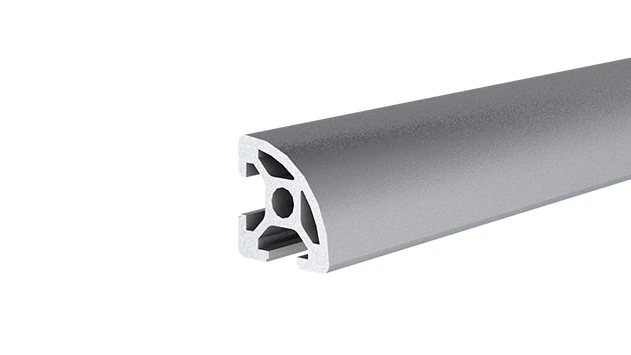
2020R is a 2.00 x 2.00CM fractional 20 series square extrusion T-slot profile with four open T-slots, two side with 2.00cm face, the other side with round face. The profile has align-a-grooves to assist in aligning connecting profiles.
The Hidden Cost of a Disorganized Workspace—And How Lean Pipe Systems Fix It
Walk into any busy manufacturing facility or warehouse, and you'll likely spot the same silent productivity killer: chaos. Tools scattered across workbenches, materials stacked haphazardly, employees wasting precious minutes hunting for parts. It's not just messy—it's expensive. Studies show that disorganized workspaces can drain up to 20% of a company's productivity, with employees spending nearly an hour each day searching for tools or navigating cluttered areas. For small to mid-sized businesses, that's not just time lost; it's profits slipping through the cracks.
This is where lean pipe systems step in. Born from the principles of lean manufacturing—focused on minimizing waste and maximizing efficiency—these systems are the unsung heroes of modern workflow optimization. And at the heart of many of today's most effective lean setups? The 2020r EU standard aluminum profile. Paired with purpose-built solutions like Workbench E (single deck-without caster) and Material Rack B (3 row and 3 floor), this combination is transforming how teams work, one streamlined workspace at a time.
Why 2020r EU Standard Aluminum Profile? It's All About Smart Design
Not all aluminum profiles are created equal. The 2020r EU standard aluminum profile stands out for a reason—and it starts with the "EU standard" label. In a global market, consistency matters. EU standards ensure strict adherence to quality, safety, and dimensional precision, meaning parts from different suppliers fit together seamlessly. For businesses, that translates to less frustration during setup, fewer compatibility issues, and the freedom to expand or reconfigure systems without starting from scratch.
But what makes the 2020r profile specifically a game-changer? Let's break it down. The "2020" refers to its dimensions: 20mm in width and 20mm in height, making it compact enough for tight spaces but sturdy enough to handle daily wear and tear. The "r" denotes its rounded edges—a small detail with big benefits. Sharp edges in a workshop are accidents waiting to happen; rounded edges reduce the risk of cuts, scrapes, or damaged materials, keeping teams safer and products intact.
Aluminum, as a material, is another win. Unlike steel, it's lightweight, so even fully assembled workbenches or racks can be moved (when needed) without heavy machinery. It's also naturally corrosion-resistant, a boon for environments where moisture or chemicals are present—think food processing or electronics manufacturing. And let's not forget sustainability: aluminum is 100% recyclable, aligning with the growing push for eco-friendly operations.
Quick Tip: When comparing aluminum profiles, always check for EU standard compliance. It's a mark of quality that ensures your system will last longer, work better, and adapt as your business grows.

Workbench E (Single Deck-Without Caster): The Quiet Workhorse of Precision Tasks
If there's one piece of equipment that ties a workshop together, it's the workbench. But not all workbenches are designed with lean principles in mind. Many are bulky, fixed in place, or lack the flexibility to adapt to changing tasks. Enter Workbench E—a single-deck, caster-free design built around the 2020r EU standard aluminum profile. It's simple, intentional, and surprisingly versatile.
Design That Puts Function First
At first glance, Workbench E might seem basic: a single flat deck supported by aluminum profile legs. But that simplicity is by design. Without casters, it stays firmly anchored, making it ideal for precision tasks like electronics assembly, small-part fabrication, or quality control inspections. Imagine a technician soldering delicate circuit boards—they need a stable surface that won't shift mid-task. Workbench E delivers that stability, with a deck that sits at a comfortable 800mm height (standard for most workbenches) to reduce strain on the back and shoulders.
The deck itself is customizable, too. Depending on your needs, you can opt for a plywood surface (affordable and easy to replace), a metal top (heat-resistant for welding or soldering), or even an ESD (electrostatic discharge) panel (critical for electronics to prevent static damage). And because it's built with 2020r aluminum profiles, adding accessories is a breeze. Need a tool rail above the deck? Screw on an aluminum profile bracket. Want to attach a small parts bin to the side? Use a T-slot connector—no drilling or welding required.
Who Loves Workbench E? Let's Meet a Small Electronics Shop
Take "TechTiny," a hypothetical startup that assembles custom Arduino kits. Before Workbench E, their team worked at a hodgepodge of old wooden tables, each cluttered with tools and half-finished projects. Setup time for new orders was slow—technicians had to clear space, gather tools, and adjust their posture to compensate for uneven surfaces. Productivity lagged, and errors (like misaligned components) were common.
After switching to Workbench E, everything changed. The stable, flat surface reduced assembly errors by 30%. The aluminum frame allowed them to add overhead tool holders and under-deck storage bins, keeping essentials within arm's reach. Best of all, because the 2020r profile is modular, they could easily expand—adding a second Workbench E side-by-side when they hired more technicians. "It's like night and day," said TechTiny's operations manager. "We're not just faster; we're calmer. The workspace feels intentional now, and that translates to better work."
Material Rack B (3 Row and 3 Floor): Organizing Chaos, One Shelf at a Time
If Workbench E is the "workhorse" of the lean system, Material Rack B is the "organizer in chief." Designed to store raw materials, semi-finished goods, or packaging supplies, this 3-row, 3-floor rack turns cluttered corners into streamlined storage zones. And yes—you guessed it—it's built with the same 2020r EU standard aluminum profile as Workbench E, ensuring a cohesive, compatible system.
3 Rows, 3 Floors: Maximizing Vertical Space (Without Wasting It)
Warehouses and workshops often struggle with storage: either they pile materials on the floor (wasting vertical space) or use rigid metal racks that are hard to reconfigure. Material Rack B solves both problems. With three rows (horizontal sections) and three floors (vertical levels), it uses vertical space efficiently, freeing up floor area for other tasks. Each shelf can hold up to 50kg (depending on the deck type), so it's sturdy enough for boxes of components, rolls of tape, or even small tools.
What sets it apart from generic metal racks? Flexibility. The shelves are adjustable—you can move them up or down by loosening the T-slot connectors on the aluminum profile uprights. Need to store taller boxes? Raise the middle shelf. Switching to smaller parts? Lower the shelves to fit more levels. And because it's aluminum, it's lightweight enough to relocate (with a helper) if your workflow changes—unlike heavy steel racks that require forklifts to move.
From "Where's That Box?" to "Right Here, Ready to Go"
Let's visit "PackPro," a small business that packages and ships artisanal soaps. Before Material Rack B, their storage area was a jumble of cardboard boxes stacked haphazardly. Employees spent 15 minutes per order just finding the right scent of soap, and fragile items often got crushed under heavier boxes. Inventory counts were a nightmare—they never knew exactly how much stock they had, leading to stockouts and rushed reorders.
After installing Material Rack B, PackPro assigned each scent to a specific shelf (e.g., lavender on Row 1, Floor 2; citrus on Row 3, Floor 1). They labeled each shelf with clear signs and used color-coded bins to separate sizes. Now, finding a box takes 30 seconds, not 15 minutes. The adjustable shelves let them expand into new scents without buying a new rack, and the aluminum frame is easy to wipe clean—important for a business that handles beauty products. "We used to dread inventory day," said PackPro's owner. "Now, it's just a quick walk through the rack. Material Rack B didn't just organize our space—it organized our entire day."
Workbench E vs. Material Rack B: How They Work Together
While Workbench E and Material Rack B serve different purposes, they're strongest when used together. Think of them as two pieces of a lean puzzle: one for working, one for storing. Let's compare their key features to see how they complement each other:
| Feature | Workbench E (Single Deck-Without Caster) | Material Rack B (3 Row and 3 Floor) |
|---|---|---|
| Primary Use | Precision work (assembly, inspection, fabrication) | Material storage (raw goods, finished products, tools) |
| Structure | Single flat deck, 4 aluminum profile legs | 3 horizontal rows, 3 vertical floors, aluminum profile frame |
| Stability | Fixed (no casters) for steady work surfaces | Anchored legs; optional floor brackets for extra stability |
| Customization | Deck material (wood, metal, ESD), tool rails, side bins | Adjustable shelf heights, bin dividers, label holders |
| Ideal Environment | Assembly lines, labs, small-part workshops | Warehouses, stock rooms, packaging areas |
Together, they create a "flow" in your workspace: materials move from Material Rack B (storage) to Workbench E (production) with minimal effort. For example, a furniture maker could store wood planks on Material Rack B, then carry them to Workbench E for cutting and sanding. No more walking across the shop to fetch supplies—everything stays within a few steps.
Aluminum Profile Accessories: The "Extras" That Make a Big Difference
A lean pipe system is only as good as its accessories. Luckily, 2020r EU standard aluminum profiles work with a wide range of add-ons that turn basic setups into fully customized workspaces. Let's explore a few must-have aluminum profile accessories that enhance Workbench E and Material Rack B:
T-Slot Connectors: The "Glue" of the System
These small, versatile brackets slide into the T-slots on aluminum profiles, letting you attach shelves, rails, or bins without drilling. For Workbench E, they're perfect for adding a tool holder above the deck. For Material Rack B, they allow you to adjust shelf heights in seconds.
End Caps: Safety and Finishing Touches
Aluminum profiles have open ends that can catch on clothing or damage materials. End caps snap into place, covering those ends for a clean, safe finish. They come in colors like black or gray, so you can even add a subtle brand touch.
Cable Management Clips: Tame the Tangles
Workbench E often has tools or machines that need power—think soldering irons or small drills. Cable management clips attach to the aluminum profile legs, routing cords neatly along the frame and off the floor. No more tripping over wires or hunting for a plug.
Label Holders: Keep It Organized
Material Rack B thrives on organization, and label holders make that easy. Slide them into the T-slots of the aluminum profile uprights, and insert printed labels for each shelf. Employees will always know where to find (and return) items.
The Bottom Line: Lean Pipe Systems That Grow With You
At the end of the day, lean manufacturing isn't just about saving time—it's about building a business that can adapt. Workbench E, Material Rack B, and the 2020r EU standard aluminum profile are more than tools; they're investments in flexibility. Whether you're a startup with a single workbench or a growing company adding a second production line, this system scales with you.
So, what's the first step? Start small. Maybe replace one cluttered workbench with Workbench E, or install a Material Rack B in your most disorganized corner. Watch how it changes the way your team works—how much calmer, faster, and more confident they become. Then, expand from there. With lean pipe systems, the goal isn't perfection; it's progress. And with 2020r aluminum profiles leading the way, that progress is easier than you think.
Final Thought: A workspace that works for you, not against you—that's the promise of lean pipe systems. And with Workbench E, Material Rack B, and the 2020r EU standard aluminum profile, that promise is within reach for businesses of all sizes.