- Company Articles
- Industry articles
- Industry standards
- Lightweight Automation: 2040 EU Standard Aluminum Profile in Collaborative Robot Cells

Lightweight Automation: 2040 EU Standard Aluminum Profile in Collaborative Robot Cells
Related Product
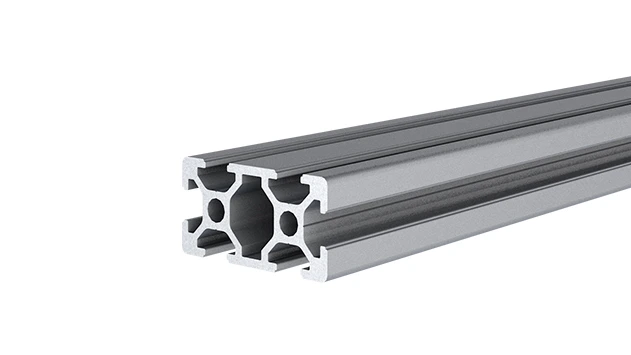
2040 EU Standard Aluminum Profile
2040 is a 2.00 x 4.00CM fractional 20 series square extrusion T-slot profile with four open T-slots, two side with 2.00cm face, the other side with 4.00cm face. The profile has align-a-grooves to assist in aligning connecting profiles.
Walk into any modern manufacturing facility today, and you'll likely spot them: collaborative robots, or "cobots," working side-by-side with human operators. These machines aren't the clunky, cage-bound giants of yesteryear. They're compact, agile, and designed to adapt—whether they're assembling circuit boards, packing boxes, or tending to 3D printers. But here's the thing about cobots: their ability to boost productivity hinges on one often-overlooked factor: the infrastructure that supports them. Rigid steel frames, fixed workbenches, and inflexible conveyor systems? They turn even the most advanced cobot into a one-trick pony. That's where lightweight automation steps in—and at the heart of it all lies a humble yet powerful tool: the 2040 EU standard aluminum profile.
In this article, we're diving into how this unassuming piece of metal is revolutionizing cobot cells. We'll explore why aluminum profiles have become the go-to choice for manufacturers, break down what makes the 2040 EU standard so special, and show you how it integrates with everything from workbenches to conveyors to ESD workstations. Whether you're a small workshop looking to dip your toes into automation or a large plant aiming to future-proof your production line, this is the story of how lightweight, modular design is making cobots smarter, more flexible, and infinitely more useful.
Why Aluminum Profiles? The End of "Set It and Forget It" Manufacturing
Let's start with the basics: why aluminum? For decades, manufacturers relied on steel for building production infrastructure. It's strong, sure, but it's also heavy, hard to modify, and requires welding or specialized tools to adjust. If your cobot needed a new workbench height or your conveyor path had to shift to accommodate a new product, you'd be looking at days of downtime and a hefty bill. Enter aluminum profiles—lightweight, durable, and designed for change.
Aluminum's magic lies in its balance of strength and flexibility. A typical 2040 EU standard aluminum profile, for example, can support hundreds of pounds while weighing a fraction of its steel counterpart. This makes it easy to move, reconfigure, and even disassemble entirely—no welding torch required. But the real game-changer is the T-slot design. Run your finger along the length of an aluminum profile, and you'll notice long, narrow grooves (T-slots) that run the full length. These slots let you slide in accessories like brackets, connectors, and panels with nothing more than a hex key. Need to add a shelf to your cobot's workbench? Screw a bracket into the T-slot. Want to reroute a conveyor? Unbolt the old section and bolt on a new one. It's like building with industrial-grade Legos—and in manufacturing, that adaptability is gold.
Another win? Corrosion resistance. Unlike steel, aluminum doesn't rust, which means it holds up in messy environments—think food processing plants or workshops where coolants and lubricants are part of the daily grind. And let's not forget cost. While aluminum profiles might have a slightly higher upfront price than steel, the savings in labor (no need for welders or heavy machinery) and downtime (reconfigurations that take hours, not days) make them a budget-friendly choice in the long run. For small and medium-sized enterprises (SMEs), which often operate on tight margins, this is a game-changer. You don't need a dedicated engineering team to tweak your cobot cell—just a few tools and a little know-how.
The Star of the Show: 2040 EU Standard Aluminum Profile
Not all aluminum profiles are created equal. The EU standard (EN 10088-2, if you want to get technical) ensures consistency in dimensions, material quality, and performance across manufacturers. And among the EU standard profiles, the 2040 has emerged as the unsung hero of cobot cells. Let's break down why.
First, the dimensions: 20mm by 40mm. That might sound arbitrary, but it's a sweet spot for cobot applications. At 20mm wide and 40mm tall, the profile is narrow enough to fit into tight spaces (like between a cobot arm and a workbench) but tall enough to provide rigidity when building frames or supports. It's also lightweight—around 0.7 kg per meter—so even a full cobot cell frame won't require heavy lifting equipment to install. But don't let the size fool you: made from 6063-T5 aluminum alloy (a heat-treated grade known for strength and weldability), this profile can handle up to 200 kg of evenly distributed weight. For context, that's more than enough to support a typical cobot (which weighs 10-30 kg) plus its workbench, tools, and materials.
Then there's the T-slot configuration. Most 2040 EU standard profiles have two T-slots on the 40mm face and one on each 20mm face. This gives you multiple mounting points for accessories, so you're never stuck for where to attach a component. Need to mount a control panel on the front of the cobot cell? Use the front T-slot. Want to add a side shelf for tools? Use the side slot. This versatility means the 2040 profile can play multiple roles: frame, workbench leg, conveyor rail, or even a guard rail to separate humans and robots (though cobots are designed to work safely alongside people, extra barriers never hurt).
Compatibility is another key factor. EU standard profiles are made to universal specs, so a 2040 profile from one supplier will work seamlessly with aluminum profile accessories from another. That means you're not locked into a single brand—you can mix and match connectors, panels, and brackets to get exactly what you need. Whether you're buying from a local distributor or importing from overseas, the T-slots, hole patterns, and dimensions will line up. For manufacturers scaling up or trying new setups, this interoperability saves time, reduces stress, and opens up a world of customization.

Building Blocks: Aluminum Profile Accessories That Bring Cobot Cells to Life
A 2040 aluminum profile is just a stick of metal without the right accessories. Think of the profile as the backbone; the accessories are the muscles, joints, and organs that make the whole system work. Let's take a look at the unsung heroes of the aluminum profile world—and how they turn a simple frame into a fully functional cobot cell.
First up: connectors. These are the pieces that hold profiles together at angles. The most common is the 90° aluminum profile connector, which joins two profiles at a right angle (perfect for building workbench frames). Then there's the 45° connector for sloped surfaces (like inclined conveyors) and the T-connector for adding a perpendicular profile (say, a crossbeam on a frame). Many connectors use set screws that tighten into the T-slots, creating a secure hold without drilling holes. For extra strength, there are also internal connectors that slide inside the profile and bolt together—great for high-load areas like conveyor supports.
Next, end caps and rubber strips. End caps are small plastic or aluminum covers that snap onto the ends of profiles, hiding sharp edges and preventing dust from collecting inside. Rubber strips (or T-slot covers) fit into the T-slots, protecting them from debris when they're not in use and giving the profile a clean, finished look. These might seem like minor details, but in a busy workshop, anything that reduces dust buildup or prevents cuts is a win.
Panels and brackets are another must-have. Aluminum honeycomb panels, for example, are lightweight but rigid, making them ideal for workbench tops or machine guards. They slot into T-slot brackets, which can be adjusted up or down the profile to set the perfect height. For cobot cells, this means you can raise or lower the workbench top to match the robot's arm reach—critical for precision tasks like soldering or pick-and-place operations. There are also specialized brackets for mounting sensors, cameras, or even small displays that show the cobot's status (e.g., "Running" or "Error").
Finally, leveling feet and casters. Leveling feet screw into the bottom of profiles to stabilize the cobot cell on uneven floors—no more wobbly workbenches! Casters (swivel wheels with brakes) turn a stationary frame into a mobile unit. Need to move the cobot cell to a different part of the factory for a temporary project? Lock the brakes, wheel it over, and unlock. It's that easy. For SMEs with limited space, this mobility is a lifesaver—one cobot cell can serve multiple production lines with a quick roll across the shop floor.
Workbenches: The Cobot's Home Base
If the 2040 aluminum profile is the backbone of the cobot cell, the workbench is its heart. This is where the cobot spends most of its time—picking, placing, assembling, or inspecting parts. A well-designed workbench doesn't just hold tools; it enhances the cobot's efficiency, reduces errors, and keeps the workspace organized. And thanks to aluminum profiles, building that perfect workbench is easier than ever.
A typical cobot workbench built with 2040 EU standard aluminum profiles starts with a frame: four vertical profiles for legs, connected by horizontal profiles at the top and bottom. The top horizontal profiles support the work surface—usually an aluminum honeycomb panel or a wooden board (for ESD protection, we'll talk about that later). The beauty of this design is adjustability. Want the workbench to be 36 inches tall for human operators? Set the vertical legs to 36 inches. Need it taller to align with a conveyor? Add extensions to the legs. The T-slots let you mount the work surface at any height, so the cobot's arm is always at the optimal angle for the task.
Storage is another key feature. Under the workbench, you can add shelves (using horizontal profiles and brackets) for tools, spare parts, or bins of components. On the sides, pegboards or tool holders (mounted via T-slots) keep frequently used items within easy reach of both the cobot and human operators. Some workbenches even include drawers or cabinets—simply bolt a prefab cabinet to the frame using angle brackets. For example, a "workbench E (single deck-without caster)" (a common model) uses 2040 profiles for legs and a single top deck, with space underneath for storage. Add casters, and it becomes mobile; add a second deck, and you've doubled the workspace. The possibilities are endless.
Ergonomics matter too. A cobot workbench shouldn't force human operators into awkward positions. With aluminum profiles, you can tilt the work surface (using adjustable brackets) to reduce strain on wrists, or add a footrest bar at the bottom of the frame for operators standing for long shifts. Some manufacturers even integrate LED strip lights into the T-slots, illuminating the work area without casting shadows (critical for precision tasks like electronics assembly). All of this customization ensures the workbench works for the people and the robot—not the other way around.
Conveyors: Keeping Parts Moving, Without the Headaches
Cobots are great at handling parts, but they can't do it alone. To keep production flowing, you need a way to deliver raw materials to the cobot and carry finished products away. That's where conveyors come in—and aluminum profiles are transforming how these conveyors are built and used.
Traditional conveyors are often heavy, fixed systems made of steel or plastic. They're built to last decades, but that longevity comes with a cost: if your product line changes, the conveyor becomes obsolete. Aluminum profile conveyors, by contrast, are modular and lightweight. A typical setup uses 2040 profiles as the side rails, with roller tracks (another key component) mounted between them. The rollers can be steel, aluminum, or plastic, depending on the product weight and environment. For example, a plastic roller track guide rail (yellow or grey) might be used for lightweight items like circuit boards, while steel rollers handle heavier parts like metal brackets.
The beauty of using 2040 profiles for conveyor rails is adjustability. Want to widen the conveyor to fit larger boxes? Loosen the bolts holding the roller tracks, slide the profiles apart, and retighten. Need to incline the conveyor to feed parts into an upper-level workbench? Use angle brackets to tilt the frame—no need to rebuild from scratch. Even the direction can change: add a 90° turn using curved profiles and swivel roller balls (1 inch or 0.5 inch, depending on the part size) to guide parts around corners smoothly. Swivel roller balls are small, spherical rollers that let parts move in any direction, making turns or merges a breeze.
Integration with the cobot cell is seamless. Since the conveyor frame is built from the same 2040 profiles as the workbench, you can bolt the two together into a single unit. The cobot can then reach across from its workbench to pick parts directly off the conveyor, reducing transfer time and errors. Some conveyors even include sensors (mounted via T-slots) that tell the cobot when a new part has arrived, triggering the next cycle. It's a closed-loop system that keeps production moving without human intervention.
For SMEs, the cost savings are huge. A basic aluminum profile conveyor can be built for a fraction of the price of a traditional steel conveyor, and since it's modular, you can start small (e.g., a 6-foot section) and add more as you grow. If you no longer need the conveyor, you can disassemble it and reuse the profiles for another project—no waste, no regret.
ESD Workstations: Protecting Sensitive Electronics
Not all manufacturing is created equal. In electronics production—building circuit boards, semiconductors, or medical devices—static electricity is a silent killer. A single static discharge can fry a microchip, ruining hours of work. That's where ESD (electrostatic discharge) workstations come in, and aluminum profiles are playing a key role in making these workstations both effective and adaptable.
An ESD workstation built with 2040 EU standard aluminum profiles starts with the same frame as a regular workbench, but with a few critical upgrades. The work surface, for example, is usually an ESD-safe material (like carbon-filled laminate) that dissipates static charges. The aluminum frame itself can be grounded via a wire connected to the building's electrical system—since aluminum is conductive, any static buildup on the frame or work surface is safely channeled away. Even the accessories are ESD-rated: ESD-safe bins, wrist straps for human operators, and black ESD wheels on casters (to prevent static from building up as the workstation moves).
The T-slot design is especially useful for ESD workstations. You can mount grounding points directly into the T-slots, so operators can plug in their wrist straps or ground tools with ease. ESD-safe lighting (LED strips with grounded housing) can be slotted into the top of the frame to illuminate the workspace without generating static. And since the workstation is built with aluminum profiles, you can add or remove components as needed. For example, if you start producing larger circuit boards, you can widen the work surface by adding another panel to the frame. If you need to add a static-shielding enclosure around the cobot, bolt it to the T-slots. The workstation grows and changes with your needs, all while maintaining ESD protection.
For manufacturers in industries like aerospace or medical devices, where even tiny defects can have catastrophic consequences, an ESD workstation built with aluminum profiles offers peace of mind. It's a system that protects sensitive parts while remaining flexible enough to adapt to new products or regulations. And since the frame is lightweight, you can move the workstation to a cleanroom or static-free zone without disrupting production.
From Design to Deployment: Building Your Cobot Cell in a Weekend
You might be thinking, "This all sounds great, but how hard is it to actually build a cobot cell with 2040 aluminum profiles?" The answer: surprisingly easy. Even if you're not an engineer, you can assemble a basic cell in a weekend with a few tools and a little patience.
Step 1: Plan the layout. Start by sketching (or using free online design tools) where the cobot, workbench, conveyor, and storage will go. Measure the space, note the cobot's reach (most have a radius of 2-5 feet), and mark where parts will enter and exit. This doesn't have to be perfect—you can adjust later!
Step 2: Order materials. You'll need 2040 EU standard aluminum profiles (cut to length by the supplier), aluminum profile accessories (connectors, brackets, end caps), a work surface (aluminum honeycomb or ESD panel), conveyor components (roller tracks, swivel balls), and tools (hex keys, a level, a tape measure). Most suppliers will pre-cut profiles to your specs, so you don't need a saw.
Step 3: Build the frame. Start with the workbench: connect four vertical profiles (legs) with horizontal profiles at the top and bottom using 90° connectors. Use a level to ensure the frame is square, then tighten the connectors. Mount the work surface on top using brackets.
Step 4: Add the conveyor. Build a smaller frame for the conveyor using 2040 profiles, then mount roller tracks between the side rails. Attach swivel roller balls at turns if needed. Bolt the conveyor to the workbench frame so they're aligned.
Step 5: Customize. Add shelves, tool holders, or a control panel using T-slot accessories. If it's an ESD workstation, ground the frame and add ESD mats or bins.
Step 6: Test and tweak. Roll a few test parts through the conveyor, check the cobot's reach, and adjust heights or angles as needed. Since everything is bolted together, you can loosen a connector and shift a profile in minutes.
The best part? If you make a mistake, it's easy to fix. Unlike welding, there's no permanent damage—just unbolt and try again. For first-timers, this low risk makes the process less intimidating. And once you've built one cell, building a second (or third) is even faster.
The Numbers Speak: Why Manufacturers Are Switching to Aluminum Profiles
Still on the fence? Let's look at the data. A recent survey of SMEs using cobot cells found that those with aluminum profile infrastructure reported:
- 30% faster setup time for new products (thanks to quick reconfigurations)
- 40% lower maintenance costs (no rust, fewer moving parts to replace)
- 25% higher productivity (less downtime, more flexible workflows)
- 50% reduction in workplace injuries (lighter materials mean fewer lifting accidents)
One manufacturer, a small electronics firm in Germany, shared their experience: they'd been using a steel workbench and conveyor for their cobot, but when they introduced a new circuit board design, the conveyor was too narrow. Rebuilding the steel conveyor would have cost €5,000 and taken a week. Instead, they switched to a 2040 aluminum profile conveyor for €1,500 and had it up and running in a day. Six months later, they'd reconfigured the cell three more times to accommodate new products—each time in under four hours. "It's like having a production line that can read our minds," their operations manager joked.
| Feature | Traditional Steel Cobot Cell | Aluminum Profile Cobot Cell (2040 EU Standard) |
|---|---|---|
| Setup Time | 1-2 weeks | 1-2 days |
| Reconfiguration Time | Days (requires welding) | Hours (tools: hex key only) |
| Weight | Heavy (requires machinery to move) | Lightweight (movable by 2 people) |
| Cost (Basic Setup) | $10,000+ | $3,000-$5,000 |
| Adaptability | Low (fixed design) | High (modular, customizable) |
The Future of Lightweight Automation
As cobots become more advanced (think AI-powered vision systems, longer reach, and collaborative grippers), the infrastructure supporting them will need to keep pace. Aluminum profiles are already evolving to meet these needs. New designs include profiles with reinforced T-slots for heavier loads, or integrated channels for wiring (to reduce clutter). Some manufacturers are even adding smart features, like embedded sensors in the T-slots that monitor temperature, vibration, or load—alerting you if a component is loose or a profile is overstressed.
Sustainability is another trend. Aluminum is 100% recyclable, and many suppliers now offer profiles made from recycled materials. When a cobot cell is no longer needed, the profiles can be melted down and reused—unlike steel, which often ends up in landfills. For manufacturers aiming for net-zero goals, this is a big plus.
Finally, integration with Industry 4.0 (the smart factory) is on the horizon. Imagine a cobot cell where the aluminum profiles themselves are part of the data network: sensors in the T-slots track how often the cell is reconfigured, which accessories are used most, and even predict when a connector might need tightening. This data could be fed into a central system to optimize workflows, reduce waste, and make production more efficient than ever. It's a future where the cobot and its aluminum home work together not just physically, but digitally.
Final Thoughts: Lightweight Automation for Everyone
The 2040 EU standard aluminum profile might not look like much at first glance, but it's changing the face of manufacturing. By replacing rigid steel with flexible, modular aluminum, it's putting lightweight automation within reach of SMEs, empowering them to compete with larger firms. It's a tool that turns cobots from expensive novelties into indispensable team members—ones that can adapt, grow, and keep up with the ever-changing demands of modern production.
Whether you're building your first cobot cell or upgrading an existing one, remember this: the best infrastructure is the kind that works for you, not against you. With aluminum profiles, you're not just buying a frame or a workbench—you're buying the freedom to innovate. So grab a hex key, start designing, and get ready to see what your cobot can really do.