- Company Articles
- Industry articles
- Industry standards
- Lightweight vs Heavy-Duty: 2020 National Standard Profile Grades Explained

Lightweight vs Heavy-Duty: 2020 National Standard Profile Grades Explained
Related Product
2020 National Standard Profile
45° external bending joint, used for 45° external connection of two aluminum pipes.
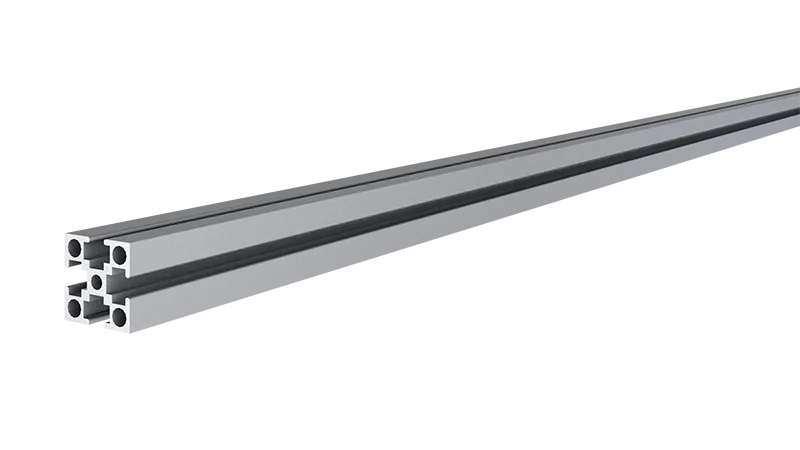
If you've ever stood in a workshop, warehouse, or manufacturing plant and wondered how those sleek workbenches, material racks, or conveyor systems hold up day in and day out, you're not alone. The secret often lies in the unsung heroes of industrial setups: aluminum profiles. But not all profiles are created equal. Today, we're diving into the 2020 national standard profile grades—specifically, the showdown between lightweight and heavy-duty options—and how they can make or break your lean system's efficiency. Whether you're setting up a small assembly line or revamping a large-scale production floor, understanding these differences will save you time, money, and plenty of headaches down the line.
First Things First: What Are 2020 National Standard Profiles?
Let's start with the basics. When we talk about "2020 national standard profiles," we're referring to a specific category of aluminum extrusion profiles defined by China's national standards (GB/T standards, to be precise). The "2020" here isn't just a random number—it denotes the profile's cross-sectional dimensions: roughly 20mm by 20mm. Think of it as the Goldilocks of industrial profiles: not too big, not too small, but just right for a wide range of applications. These profiles are part of the broader family of aluminum extrusion profiles, which are created by forcing heated aluminum through a die to form consistent, customizable shapes.
But why does a national standard matter? Well, in the world of manufacturing, consistency is key. Imagine ordering parts from three different suppliers and getting three slightly different "20x20" profiles—suddenly, your workbench connectors don't fit, your material racks wobble, and your lean system grinds to a halt. The 2020 national standard ensures that regardless of the supplier, these profiles meet strict criteria for dimensions, material thickness, and load-bearing capacity. This standardization is a game-changer for businesses building modular systems, where every component needs to work seamlessly together.
At their core, these profiles are made from aluminum alloy, chosen for its winning combo of strength, lightness, and corrosion resistance. But within the 2020 category, there's a split that matters most to end-users: lightweight vs. heavy-duty grades. Let's break down what that means.
Lightweight 2020 Profiles: The Agile Workhorses
Picture this: You run a small electronics assembly shop, and you need workbenches that your team can rearrange quickly for different projects. Or maybe you're building turnover trolleys that need to be pushed around the floor without straining your staff. Enter lightweight 2020 national standard profiles. These are the "nimble athletes" of the profile world—designed to be easy to handle, cost-effective, and perfect for applications where heavy load-bearing isn't the top priority.
What Makes Them "Lightweight"?
Lightweight 2020 profiles typically have thinner wall thicknesses, usually ranging from 1.0mm to 1.2mm. This might not sound like much, but when multiplied across an entire structure—say, a 2-meter workbench frame—it adds up to significant weight savings. The aluminum alloy used here is often 6063-T5, a common grade known for its excellent formability and moderate strength. This combination keeps the profile light while still maintaining enough rigidity for everyday tasks.
Ideal Uses for Lightweight 2020 Profiles
These profiles shine in setups where mobility and flexibility are key. Think:
- Workbenches (especially mobile ones): A single-deck workbench without casters (like the "workbench e" in some supplier catalogs) or a lightweight assembly station where workers need to adjust the layout frequently.
- Small turnover trolleys: Trolleys used to move small parts or tools around a workshop—no need for heavy-duty strength here, just enough to carry a few boxes or bins.
- Light-duty material racks: Racks for storing lightweight components, like electronic parts or small plastic assemblies. A 2-row, 2-floor rack might be overkill with heavy-duty profiles, but lightweight ones get the job done.
- Prototyping setups: When you're testing a new assembly line layout, lightweight profiles are easy to cut, drill, and reconfigure without specialized tools.
The Pros and Cons
Let's start with the upsides. Lightweight profiles are cheap —often 20-30% less expensive than their heavy-duty counterparts. They're also easy to transport and install; you won't need a forklift or a team of people to move a frame made from these. For small businesses or startups watching their budget, this is a huge win.
But there are trade-offs. The thinner walls mean lower load capacity. A lightweight 2020 profile might safely hold 50-80kg per linear meter, but stack too much weight on it, and you'll see bending or even failure. They're also less resistant to impact—bump a heavy pallet into a lightweight rack, and you might dent or warp the profile. So, if your application involves heavy machinery, constant rough handling, or static loads over 100kg, lightweight might not be the way to go.

Heavy-Duty 2020 Profiles: The Rugged Workhorses
Now, let's shift gears to the heavyweights. Heavy-duty 2020 national standard profiles are built for the tough jobs—the ones where "good enough" just isn't enough. These profiles are the backbone of industrial setups that handle heavy loads, constant use, and harsh environments. If lightweight profiles are the sprinters, heavy-duty ones are the marathon runners—steady, strong, and built to last.
What Makes Them "Heavy-Duty"?
The key difference here is wall thickness. Heavy-duty 2020 profiles typically have walls between 1.5mm and 2.0mm thick—almost double that of some lightweight options. They also use stronger aluminum alloys, like 6061-T6, which undergoes additional heat treatment to boost tensile strength. This makes the profiles denser and stiffer, able to withstand more pressure without bending or deforming.
Another telltale sign? Reinforced designs. Some heavy-duty profiles have internal ribs or thicker corners to distribute weight more evenly. This might not be visible to the naked eye, but it makes a world of difference when you're stacking 50kg boxes on a material rack or mounting heavy tools to a workbench.
Ideal Uses for Heavy-Duty 2020 Profiles
These profiles are non-negotiable in scenarios where safety and durability are critical. Examples include:
- Heavy material racks: Think "material rack b (3 row and 3 floor)" from supplier lists—racks designed to hold multiple layers of heavy parts, like metal components or automotive parts.
- Conveyor systems: The frames supporting roller conveyors or belt conveyors need to handle the constant stress of moving goods. Heavy-duty profiles ensure the system stays stable, even when fully loaded.
- Workbenches with heavy equipment: If you're mounting drills, saws, or other power tools to a workbench, you need a frame that won't vibrate or shift during use. Heavy-duty profiles provide that stability.
- Industrial trolleys for heavy loads: Trolleys used to move machinery parts or large batches of products—casters might be beefier, but the frame needs to keep up.
The Pros and Cons
The biggest advantage of heavy-duty profiles is their load capacity. We're talking 100kg+ per linear meter in some cases—enough to handle most industrial needs. They're also more resistant to wear and tear; scrape them against a wall, bump them with a pallet jack, and they'll keep on going. For businesses with high-volume production or heavy materials, this durability translates to fewer replacements and less downtime.
But they're not without drawbacks. The extra material makes them heavier and more expensive—you'll pay a premium for that strength. Installation is also trickier; you might need help lifting longer sections, and cutting or drilling thicker aluminum requires more powerful tools. And if you don't actually need the extra load capacity? You're just wasting money on material you'll never use.
Lightweight vs. Heavy-Duty: A Side-by-Side Comparison
Still on the fence? Let's put these two grades head-to-head with a quick comparison. This table breaks down the key factors you'll want to consider:
| Feature | Lightweight 2020 Profile | Heavy-Duty 2020 Profile |
|---|---|---|
| Wall Thickness | 1.0mm – 1.2mm | 1.5mm – 2.0mm |
| Typical Alloy | 6063-T5 (moderate strength) | 6061-T6 (high strength, heat-treated) |
| Weight per Meter | ~0.3kg – 0.4kg | ~0.5kg – 0.7kg |
| Max Static Load (per linear meter) | 50kg – 80kg | 100kg – 150kg+ |
| Best For | Mobile workbenches, small trolleys, light racks | Heavy racks, conveyors, workbenches with equipment |
| Cost (Relative) | Lower (30-40% cheaper than heavy-duty) | Higher (but more durable) |
| Installation Ease | Easier (lightweight, no special tools needed) | Harder (heavier, may need power tools) |
Remember, there's no "better" option—only the right one for your needs. A small business making phone cases might thrive with lightweight profiles, while a automotive parts manufacturer would risk disaster skimping on heavy-duty ones.
Aluminum Profile Accessories: The Glue That Holds It All Together
Profiles alone are just pieces of metal. To turn them into functional workbenches, racks, or conveyors, you need aluminum profile accessories—the nuts, bolts, connectors, and brackets that bring everything together. And here's the thing: the accessories you choose depend on whether you're using lightweight or heavy-duty profiles.
Must-Have Accessories for Lightweight Profiles
Lightweight setups often prioritize ease of assembly and flexibility, so accessories here are designed to be user-friendly. Think:
- Aluminum corner codes: Small, L-shaped brackets that connect profiles at 90-degree angles. Options like "2020 switch to aluminum corner codes" are perfect for lightweight frames—they're lightweight themselves and easy to tighten with a hex key.
- Plastic end caps: These snap onto the ends of profiles to cover sharp edges (safer for workers!) and prevent dust buildup. They're cheap and come in colors like yellow or grey to match your setup.
- Light-duty casters: If you're building a mobile workbench or trolley, small caster wheels with plastic or rubber tires work best with lightweight profiles. They won't add too much extra weight, and they roll smoothly on warehouse floors.
Accessories for Heavy-Duty Profiles
Heavy-duty setups need accessories that can handle the same stress as the profiles themselves. That means:
- Reinforced connectors: Think "internal rotatary aluminum joint" or "90° aluminum crossing joint"—these have thicker walls and stronger screws to keep heavy frames from coming loose.
- Heavy-duty casters: Casters with steel wheels and locking brakes, designed to support hundreds of kilograms. Look for "caster accessories" like brake levers or bearing upgrades for extra durability.
- End support brackets: For material racks or long conveyor frames, brackets like "roller track placon mount center support bracket" help distribute weight evenly, preventing sagging over time.
Pro tip: Always buy accessories from the same supplier as your profiles, or at least ensure they're compatible with the 2020 national standard. Mismatched connectors can lead to wobbly structures or, worse, safety hazards.
Putting It All Together: Building a Lean System That Works
At the end of the day, both lightweight and heavy-duty 2020 national standard profiles are tools to build better lean systems. Lean manufacturing is all about minimizing waste—whether that's time, space, or resources—and choosing the right profiles plays a big role in that.
For example, a lean system focused on quick changeovers (like a small-batch production line) would benefit from lightweight profiles. Workers can rearrange workbenches or trolleys in minutes, reducing downtime between jobs. On the flip side, a lean system built for high-volume, heavy-part production needs the stability of heavy-duty profiles to keep material flowing smoothly through conveyors and racks.
Here's a hypothetical scenario to illustrate: Imagine two companies, both using 2020 profiles. Company A makes custom jewelry (lightweight parts, small batches). They use lightweight profiles for workbenches and mobile trolleys, saving money on materials and making it easy to reconfigure their shop floor for each new design. Company B makes industrial valves (heavy, metal parts, high volume). They invest in heavy-duty profiles for their material racks and conveyor frames, ensuring their system can handle the weight without breaking down. Both are using lean principles—they're just using different tools to get there.
Final Thoughts: How to Choose the Right Profile Grade
Choosing between lightweight and heavy-duty 2020 national standard profiles doesn't have to be complicated. Start by asking yourself three questions:
- What's the maximum load my structure will need to support? Be honest—overestimating leads to unnecessary costs, but underestimating leads to failure.
- How often will the structure be moved or reconfigured? If it's daily, lightweight is probably better. If it's once a year (or never), heavy-duty might be worth the investment.
- What's my budget? Lightweight profiles save money upfront, but heavy-duty ones might save you from costly replacements later.
And don't forget to consult with your supplier. A good lean pipe supplier or aluminum profile supplier will ask about your specific needs and recommend the right grade—they've seen it all, from tiny workshops to massive factories. They can even provide samples or load-test reports to put your mind at ease.
At the end of the day, the 2020 national standard profile grades are more than just metal—they're the foundation of efficient, adaptable, and safe workspaces. Whether you go lightweight or heavy-duty, choosing wisely means building a system that grows with your business, not against it. And in the world of manufacturing, that's the ultimate win.