- Company Articles
- Industry articles
- Industry standards
- Load Testing Standards: Ensuring Durability of Flat Swivel Castor Wheel with Brake

Load Testing Standards: Ensuring Durability of Flat Swivel Castor Wheel with Brake
Related Product
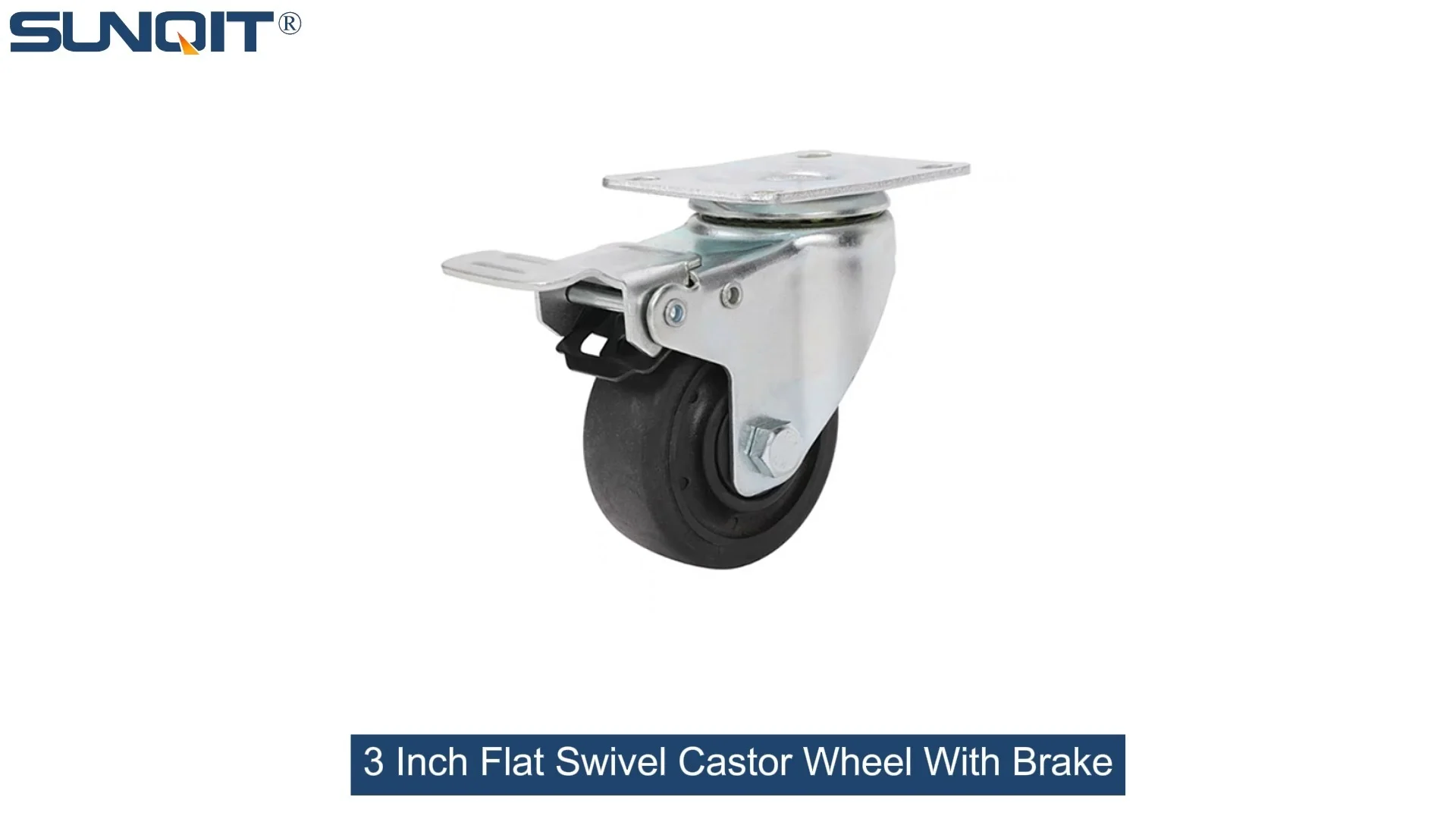
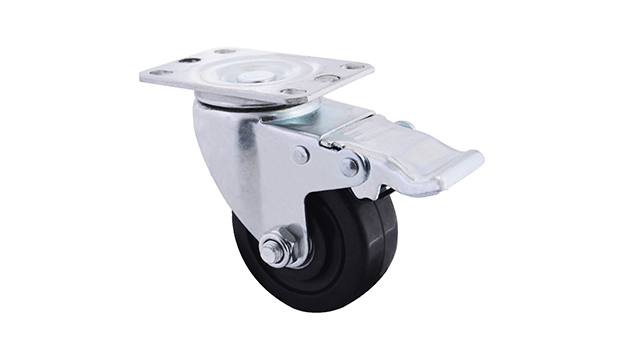
Flat Swivel Castor Wheel With Brake
Chair Casters Ball Bearing Wheels Rubber Base with brake design. Resistant to abrasion, impact and corrosion. Heavy payload can hold 70Kgs per pcs,which can make it works at a stable and smooth status.
Introduction: The Unsung Heroes of Modern Workspaces
In the hum of a busy factory, the glide of a workbench across the floor, or the steady movement of a turnover trolley loaded with components, there's a small but critical component working behind the scenes: the caster wheel. Among these, the Flat Swivel Castor Wheel with Brake stands out as a workhorse, balancing mobility with stability to keep operations running smoothly. Whether it's supporting a heavy-duty workbench in an electronics assembly line or enabling seamless material transport in a lean system, these casters are the quiet backbone of efficiency. But what ensures that a caster can reliably carry 500 pounds day in and day out, stop on a dime when needed, and resist wear even in high-traffic environments? The answer lies in rigorous load testing—an essential process that separates durable, safe casters from those that risk downtime, injury, or costly replacements.
In this article, we'll dive into the world of load testing standards for Flat Swivel Castor Wheels with Brake , exploring why these tests matter, the key benchmarks that govern them, and how they impact everything from workplace safety to the longevity of your lean system. We'll also touch on the role of materials, design, and supplier reliability in ensuring that your casters don't just meet standards on paper, but exceed expectations in real-world use.
Understanding Load Testing: Why It's Non-Negotiable for Caster Durability
At its core, load testing is about answering a simple question: Can this caster wheel handle the weight and stress it will face in daily use? But "handle" is a broad term. A caster might support a static load (like a workbench parked in place for hours) without issue, but fail under dynamic stress (when it's being rolled across a rough floor with a full load). Or it might survive a few hundred cycles of movement but wear out prematurely under continuous use. Load testing simulates these scenarios in controlled environments to ensure that casters meet specific durability, safety, and performance criteria.
Consider a typical scenario: A manufacturing plant uses a workbench equipped with Flat Swivel Castor Wheels with Brake to move tools and between stations. On a busy day, that workbench might carry 300 pounds of equipment, be rolled 50 times across concrete floors, and braked repeatedly to keep it stable during use. If the casters haven't been properly load-tested, a single failure could lead to the workbench tipping, tools crashing to the floor, or even a worker sustaining an injury. Beyond safety, failed casters mean downtime—waiting for replacements, halting production, and losing valuable time. For businesses operating on lean principles, where efficiency is everything, this isn't just an inconvenience; it's a threat to profitability.
Load testing also helps manufacturers and suppliers set realistic weight limits. A caster labeled "500 lbs capacity" isn't a guess—it's a promise backed by data. This transparency lets buyers choose the right caster for their needs, whether it's a light-duty trolley for a warehouse or a heavy-duty solution for an automotive assembly line. In short, load testing isn't just about compliance; it's about building trust between suppliers and the businesses that rely on their products.
Key Load Testing Standards: A Closer Look at Industry Benchmarks
Load testing isn't a one-size-fits-all process. Different industries, regions, and applications have unique needs, which is why global and regional standards exist to ensure consistency and quality. Let's explore some of the most widely recognized standards that govern the testing of Flat Swivel Castor Wheels with Brake and other caster systems.
| Standard | Governing Body | Primary Focus | Key Test Types | Typical Load Range |
|---|---|---|---|---|
| ISO 10524 | International Organization for Standardization | Industrial casters for material handling | Static load, dynamic load, endurance, brake performance | Up to 10,000 N (≈2,248 lbs) |
| ANSI/ASME B101.1 | American National Standards Institute/American Society of Mechanical Engineers | Casters and wheels for industrial equipment | Static load, impact resistance, swivel resistance, brake holding force | Up to 50,000 N (≈11,240 lbs) |
| EN 12530 | European Committee for Standardization | Castors for furniture and light industrial use | Static load, dynamic durability, brake effectiveness on different floor types | Up to 2,000 N (≈449 lbs) |
ISO 10524, for example, is a go-to standard for industrial casters used in material handling. It specifies tests for static load (how much weight a caster can support when stationary for a set period), dynamic load (weight during movement), and endurance (how it holds up after thousands of cycles of rolling). ANSI/ASME B101.1, on the other hand, is more stringent for heavy-duty applications, including impact resistance tests to simulate accidental drops or collisions. For lighter use, like office furniture or small workbenches, EN 12530 focuses on everyday durability and brake performance on common floor surfaces like wood, tile, or concrete.
These standards aren't just guidelines—they're legal requirements in many regions. For instance, a supplier exporting Flat Swivel Castor Wheels with Brake to Europe must comply with EN 12530 to sell in the EU market. Similarly, manufacturers supplying the U.S. industrial sector often need ANSI/ASME certification to bid on contracts. For buyers, this means that choosing a caster with recognized certifications isn't just a matter of quality—it's a way to ensure compliance with local safety regulations.

The Testing Process: From Static Loads to Endurance Trials
Load testing is a multi-step journey that puts casters through their paces. Let's walk through the key stages of testing a Flat Swivel Castor Wheel with Brake , from initial static tests to grueling endurance trials.
1. Static Load Testing: The Foundation of Weight Capacity
Static load testing is the first hurdle. In this test, the caster is mounted to a rig and subjected to a constant load—often 1.5 to 2 times the rated capacity—for an extended period (typically 24 to 72 hours). The goal? To check for deformation, cracks, or failure in the wheel, swivel mechanism, brake, or mounting plate. For example, a caster rated for 500 lbs might be tested with 750 lbs to ensure it can handle occasional overloading without permanent damage.
Why does duration matter? Some materials, like certain plastics or low-grade metals, might seem strong initially but warp or weaken under sustained pressure. Static testing reveals these weaknesses before the caster ever reaches a worksite.
2. Dynamic Load Testing: Simulating Real-World Movement
Once a caster passes static testing, it's time to put it in motion. Dynamic load testing involves rolling the caster (with its rated load) across different surfaces—smooth concrete, rough asphalt, even grated metal—to simulate real-world floor conditions. Testers measure factors like rolling resistance (how easily the caster moves), swivel resistance (how smoothly it turns), and stress on the brake mechanism when stopping suddenly.
For Flat Swivel Castor Wheels with Brake , the brake is a critical focus here. Testers apply the brake while the caster is moving (at speeds up to 4 km/h, typical for workplace transport) to ensure it can stop the load without skidding excessively or failing. They also check if the brake holds when the load is on an incline—say, a 5-degree slope—to mimic ramps or uneven floors.
3. Endurance Testing: Longevity Under Continuous Use
A caster might pass static and dynamic tests, but how does it hold up over months or years of daily use? Endurance testing answers this by subjecting the caster to thousands—sometimes millions—of cycles of rolling, swiveling, and braking. For example, a caster used in a busy warehouse might be rolled 10,000 times a day; endurance testing simulates years of that wear in weeks.
During endurance tests, engineers monitor for signs of wear: wheel degradation, loosening of caster accessories (like bolts or bearings), or brake failure. If a caster's wheel starts to crack after 100,000 cycles, or its brake loses holding force, it's back to the drawing board. Only casters that maintain performance after these rigorous trials earn the right to be called "durable."

Materials and Design: The Building Blocks of Load Capacity
Load testing standards set the bar, but a caster's ability to meet those standards depends heavily on its materials and design. Let's break down the key components of a Flat Swivel Castor Wheel with Brake and how they influence load capacity.
The Caster Wheel: More Than Just Rubber or Metal
The wheel itself is the first line of defense against load stress. Caster wheel materials range from polyurethane (PU) and rubber to steel and cast iron, each with unique strengths. Polyurethane wheels, for example, offer a balance of grip, shock absorption, and floor protection—ideal for indoor use on smooth surfaces. Steel wheels, on the other hand, excel in heavy-duty applications (think 1,000+ lbs loads) but can damage softer floors like wood or tile.
Wheel design also plays a role. A wider wheel distributes weight more evenly, reducing stress on both the wheel and the floor. Reinforced hubs (the center of the wheel where it attaches to the axle) prevent bending under load, while precision bearings reduce rolling resistance and heat buildup during movement—key for endurance.
The Brake Mechanism: Stopping Power You Can Trust
For Flat Swivel Castor Wheels with Brake , the brake isn't an afterthought—it's a critical safety feature. Most brakes work by pressing a pad or lever against the wheel to create friction, but the materials here matter. A brake pad made of low-quality rubber might wear down quickly, reducing stopping power. High-performance casters use durable materials like reinforced nylon or metal for brake components, ensuring they maintain holding force even after repeated use.
Design also impacts brake reliability. A "total lock" brake (which locks both the wheel and swivel motion) offers more stability than a wheel-only brake, especially on uneven surfaces. Load testing ensures that these mechanisms don't slip or fail under the caster's rated load.
Swivel and Mounting: Stability Under Stress
The swivel mechanism (which allows the caster to turn 360 degrees) and mounting plate (which attaches the caster to the equipment) are often overlooked but vital. A poorly designed swivel joint can bind under load, making the caster hard to maneuver, while a weak mounting plate might bend or crack, causing the caster to detach from the equipment. High-quality casters use heat-treated steel for swivel races and thick, reinforced mounting plates to handle both vertical (weight) and horizontal (sideways) stress.
Beyond the Test: Real-World Performance in Lean Systems
Load testing happens in labs, but casters live in the real world—specifically, in environments like lean systems, where efficiency and reliability are paramount. Lean manufacturing relies on minimizing waste, and that includes waste from equipment failure. A Flat Swivel Castor Wheel with Brake that meets load standards isn't just a safety asset; it's a lean asset.
Consider a typical lean workflow: Materials are transported from storage to assembly stations using turnover trolleys, assembled on mobile workbenches, and then moved to packaging via conveyors. Each of these steps depends on casters that move smoothly, brake reliably, and require minimal maintenance. A caster that fails here disrupts the entire flow—workers wait for replacements, deadlines are missed, and the "continuous improvement" ethos of lean systems is undermined.
In lean systems, even small inefficiencies add up. A caster with high rolling resistance, for example, requires workers to exert more force to move trolleys, leading to fatigue and slower workflows. Load-tested casters, with their optimized wheel materials and bearings, reduce that resistance, making movement easier and more efficient. Similarly, a brake that holds securely every time eliminates the need for workers to wedge objects under wheels to prevent rolling—saving seconds per use, which add up to hours over a week.
Choosing the Right Supplier: Ensuring Compliance and Quality
Load testing standards and quality materials are essential, but they're only as good as the supplier producing the casters. When sourcing Flat Swivel Castor Wheels with Brake , look for suppliers who prioritize transparency, compliance, and quality control.
Start by asking for test reports. A reputable supplier should be able to provide certificates showing that their casters meet ISO, ANSI, or EN standards. Don't be afraid to dig deeper: What testing facility did they use? Was it third-party accredited (to ensure unbiased results)? How often do they retest their products (materials and designs can change over time)?
Next, inquire about their manufacturing process. Do they use high-grade materials, or cut corners with cheaper alternatives? Are caster accessories (like bearings or brakes) sourced from reliable suppliers, or are they generic, untested parts? A supplier that controls the entire production process—from material selection to assembly—is more likely to deliver consistent quality.
Finally, consider their track record. Do they have experience supplying casters for your industry? Can they provide references from customers in similar applications? A supplier who understands the unique demands of lean systems or heavy industrial use is better equipped to recommend the right caster for your needs.
Maintenance Tips to Extend Caster Lifespan
Even the best load-tested casters need care to perform at their best. Here are a few simple maintenance tips to extend the life of your Flat Swivel Castor Wheels with Brake :
- Keep them clean: Dirt, debris, and grease can clog bearings and brake mechanisms. Regularly wipe down wheels and swivel joints with a damp cloth, and use a brush to remove buildup from crevices.
- Lubricate moving parts: Swivel joints and bearings need lubrication to reduce friction and wear. Use a high-quality lubricant (like lithium grease) every 3-6 months, depending on use.
- Check for wear: Inspect wheels for cracks, flat spots, or uneven wear. replace wheels that show signs of damage—they can cause the caster to wobble, increasing stress on other components.
- Tighten accessories: Caster accessories like bolts and nuts can loosen over time. Periodically check and tighten them to prevent the caster from becoming unstable.
- Use brakes properly: Avoid slamming on brakes or using them to "drag" the equipment to a stop—this wears down brake pads prematurely. Instead, apply brakes gently when the caster is nearly stationary.
Conclusion: Investing in Quality for Safer, More Efficient Operations
Load testing standards for Flat Swivel Castor Wheels with Brake aren't just boxes to check—they're promises. Promises that your workers will be safe, your equipment will last, and your operations will run smoothly. In a world where every second and every dollar counts, investing in load-tested, high-quality casters is an investment in reliability.
From the materials in the wheel to the precision of the brake, from the rigors of static and dynamic testing to the demands of real-world lean systems, every aspect of a caster's design and performance matters. By choosing casters that meet or exceed industry standards, and partnering with suppliers who prioritize quality and transparency, you're not just buying a product—you're building a foundation for safer, more efficient, and more profitable operations.
So the next time you see a workbench gliding across the factory floor, or a trolley stopping securely with a tap of the brake, take a moment to appreciate the load testing that made it possible. Those unsung heroes under the cart? They're more than wheels—they're the quiet guardians of your workflow.