- Company Articles
- Industry articles
- Industry standards
- Logistics Turnover Cart Design: 3060 National Standard Profile A Implementation Example

Logistics Turnover Cart Design: 3060 National Standard Profile A Implementation Example
Related Product
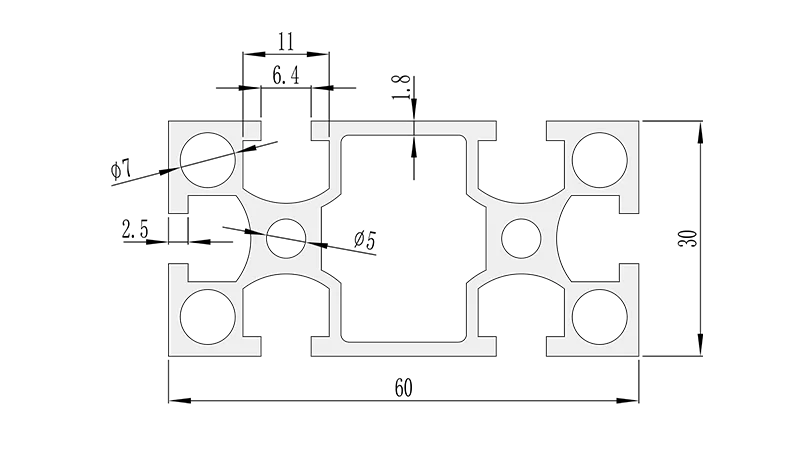
3060 National Standard Profile A
Workbench, production line, logistic rack, warehouse rack Industry: Manufacturer workshop, Automobile, Electronic, Assembling, logistic
In the hum of a busy warehouse, where every second counts and every step matters, there's a quiet hero often overlooked: the logistics turnover cart. It's the workhorse that carries inventory from the receiving dock to the storage racks, ferries components to assembly lines, and moves finished products to shipping zones. Yet for many teams, these carts are more of a frustration than a help. Imagine pushing a rickety steel cart that creaks under the weight of goods, its wheels sticking on uneven floors, or struggling to maneuver a one-size-fits-all design that doesn't quite fit the day's tasks. For Maria, a warehouse supervisor at a mid-sized electronics manufacturer, these struggles were part of daily life—until her team decided to rethink their carts from the ground up. The solution? A custom design built around the 3060 National Standard Profile A, a material that would transform not just how they moved goods, but how they worked together.
This article dives into the world of logistics turnover cart design, focusing on a real-world implementation of the 3060 National Standard Profile A. We'll explore why this aluminum profile has become a game-changer for teams like Maria's, break down the key design principles that make a cart effective, and walk through how to bring such a cart to life—from material selection to assembly, and even the unexpected benefits that ripple through a workplace when tools are built with people in mind.
The Problem with "Good Enough" Carts
Before we jump into the solution, let's talk about the problem. Traditional logistics turnover carts are often designed with cost or convenience in mind—not the people who use them. Steel carts, for example, are durable but heavy; even empty, they can weigh 50 pounds or more, straining shoulders and backs when pushed over long distances. Plastic carts are lighter but lack structural integrity, bending under heavy loads or cracking in cold warehouse environments. One-size-fits-all designs fail to account for the diversity of tasks: a cart that works for bulky automotive parts may be overkill for small electronics components, while a flimsy cart for light goods becomes useless during peak seasons.
Maria's team was dealing with all these issues. "We had a mix of old steel carts and cheap plastic ones," she recalls. "The steel ones were so heavy that new hires would struggle to push them up our loading dock ramp. The plastic ones? They'd crack if you looked at them wrong. And none of them had brakes—so if someone let go for a second, the cart would roll into a rack or another worker. We were replacing parts constantly, and morale was taking a hit. People were tired, and tired people make mistakes."
The breaking point came during a particularly busy quarter. A rush order for circuit boards required moving small, delicate components from the storage area to the assembly line—dozens of times a day. The team's existing carts were either too large (wasting space and making them hard to navigate between workstations) or too flimsy (risking damage to the components). That's when Maria's engineering lead, Raj, suggested a radical idea: design a custom cart using aluminum profiles. "I'd seen them used in workbench frames before," he explained. "They're lightweight, strong, and modular—you can build almost anything with them. And the 3060 National Standard Profile A is perfect for this: it's sturdy enough to handle heavy loads but easy to work with."
Understanding 3060 National Standard Profile A: More Than Just a Material
At first glance, the 3060 National Standard Profile A might look like just another aluminum extrusion—but it's far more than that. Let's break down what makes it special. "National standard" means it adheres to strict size and quality guidelines, ensuring consistency across manufacturers. The "3060" refers to its dimensions: 30mm in width and 60mm in height, a sweet spot that balances strength and versatility. Unlike generic aluminum pipes, this profile has a T-slot design—longitudinal grooves along its length—that allows for easy attachment of accessories like brackets, shelves, and handles without welding or drilling. It's like building with a high-tech Erector set, but for industrial use.
For logistics carts, the benefits of 3060 profile are clear. Aluminum is naturally lightweight—about a third the weight of steel—so even a fully loaded cart is easier to push, reducing physical strain on workers. It's also corrosion-resistant, making it ideal for warehouses with temperature fluctuations or occasional moisture (unlike steel, which rusts). But what really sets it apart is modularity. With aluminum profile accessories—like corner codes, T-connectors, and end caps—you can customize the cart's frame, add shelves, or adjust heights in minutes. Need to add a second shelf for smaller parts? Screw in a bracket. Want to lower the handle for shorter team members? Swap out a connector. This flexibility means the cart grows with your needs, rather than becoming obsolete when workflows change.
Raj put it this way: "Steel carts are permanent. You build them once, and that's it. If your needs change, you either live with it or buy a new cart. With 3060 profile, the cart is a living tool. Last month, we needed to carry taller boxes, so we added an extra shelf using two aluminum profile accessories—took 20 minutes. No welding, no special tools. That's the power of modular design."
Key Design Principles for an Effective Logistics Turnover Cart
Designing a logistics turnover cart isn't just about slapping together a frame and wheels. It's about creating a tool that fits the people who use it, the goods it carries, and the environment it operates in. For Maria's team, three principles guided their design: ergonomics, load capacity, and flexibility. Let's explore each.
Ergonomics: Putting People First
Ergonomics is about designing tools that work with the human body, not against it. For a turnover cart, this means thinking about handle height, cart height, and maneuverability. "We noticed our team was hunching over to push the old steel carts, which had fixed, low handles," Maria says. "By the end of the day, people were complaining about back pain. We wanted to fix that."
Using the 3060 profile, the team adjusted the handle height to 90cm—comfortable for most adults to push without bending. They also angled the handle slightly outward, reducing strain on the wrists. The cart's deck height was set to 75cm, so workers didn't have to bend deeply to load or unload boxes—a small change that made a big difference for repetitive tasks. "One of our older team members, Carlos, told me he could push the new cart all day without his back aching," Maria recalls. "That's when I knew we'd gotten ergonomics right."
Load Capacity: Balancing Strength and Weight
A cart is only as good as its ability to carry the load. The team needed their new cart to handle up to 300kg—enough for the heaviest components they moved regularly. The 3060 National Standard Profile A was up to the task: its thick walls (typically 1.5mm to 2mm) and rectangular shape distribute weight evenly, preventing bending or warping. To test this, Raj built a prototype frame and loaded it with sandbags until it reached 400kg—well above their target. The frame didn't budge.
But load capacity isn't just about the frame. It's also about how weight is distributed. The team added a second shelf halfway up the cart, allowing them to separate heavy items (on the bottom) from lighter ones (on top), reducing the risk of tipping. "We used aluminum profile accessories to attach the shelves—angle brackets that bolted into the T-slots of the 3060 profile," Raj explains. "They're strong enough to hold the weight, but easy to reposition if we need to change the shelf height later."
Flexibility: Adapting to the Day's Tasks
In logistics, no two days are the same. One day, the cart might carry small electronic components in bins; the next, large, bulky boxes. A flexible design ensures the cart can adapt. For Maria's team, this meant building a modular frame that could be reconfigured with minimal effort. "We added T-slots along the sides of the cart, so we can attach dividers, hooks, or even a small workbench top when needed," Maria says. "Last week, we had to pack orders directly from the cart, so we added a plywood workbench surface using L-shaped aluminum profile accessories. It turned the cart into a mobile packing station—genius."
Flexibility also extends to mobility. The team chose caster wheels with swivel locks and brakes, allowing the cart to switch from "easy to maneuver" (swivel wheels unlocked) to "stable when loading" (brakes engaged). "Our old carts had fixed wheels, so you had to push them straight—no turning in tight aisles," Maria laughs. "The new caster wheels? They glide. Even in our narrowest aisles, we can turn on a dime."
Materials and Components: Building Blocks of the Cart
A great design is only as good as the materials and components that bring it to life. For Maria's cart, the star was the 3060 National Standard Profile A, but several other elements played key roles: aluminum profile accessories, caster wheels, and even small details like end caps. Let's break down each.
3060 National Standard Profile A: The Frame
The frame is the cart's backbone, and the 3060 profile was chosen for its perfect balance of strength and weight. The team used 2-meter lengths of the profile for the main rails (front, back, and sides) and shorter pieces for cross-bracing. "Aluminum is lighter than steel, so even a full cart is easier to push," Raj notes. "But don't let the weight fool you—this stuff is tough. We've had carts take bumps into racks, and the frame doesn't dent. Steel would bend or scratch, but aluminum holds its shape."
Another advantage of the 3060 profile is its compatibility with standard tools. Unlike custom steel fabrication, which requires welding or cutting with specialized equipment, the profile can be cut with a simple hacksaw or miter saw, and holes can be drilled with a standard drill bit. "We built the first prototype in our maintenance shop using basic tools," Raj says. "No need to outsource fabrication—that saved us time and money."
Aluminum Profile Accessories: The Connectors That Hold It All Together
If the 3060 profile is the cart's bones, aluminum profile accessories are its joints and muscles. These small, often overlooked parts—corner codes, T-connectors, end caps, and brackets—turn a pile of aluminum extrusions into a functional cart. For example, 90-degree corner codes were used to connect the vertical and horizontal rails of the frame, creating strong, rigid corners without welding. T-connectors allowed the team to add cross-braces for stability, and end caps (plastic or rubber) were snapped onto the ends of the profiles to prevent sharp edges and keep out dust and debris.
"The accessories are what make the cart modular," Raj explains. "We used slotted brackets to attach the shelves—they slide into the T-slots of the 3060 profile and lock in place with bolts. If we need to move a shelf up or down, we just loosen the bolts, slide the bracket, and retighten. It's so simple, even the new interns can do it."
Caster Wheels: The Cart's Feet
A cart is only as mobile as its wheels, and choosing the right caster wheels was critical for Maria's team. They needed wheels that could handle warehouse floors (which, despite best efforts, are rarely perfectly smooth), support heavy loads, and last for years. After testing several options, they settled on 5-inch polyurethane caster wheels with ball bearings and brakes. "Polyurethane is durable but soft enough to absorb shocks, so the cart glides over cracks and bumps," Maria says. "The brakes are a game-changer—no more chasing runaway carts down the aisle!"
The team also opted for two swivel caster wheels (at the front) and two rigid wheels (at the back), a configuration that balances maneuverability and stability. "Swivel wheels up front make it easy to turn, while rigid wheels in back keep the cart moving straight when you need it to," Raj adds. "We mounted the caster wheels using steel plates bolted to the bottom of the 3060 profile frame—strong enough to handle the weight, but easy to replace if a wheel wears out."
Implementation Example: Building Maria's Cart Step-by-Step
Designing the cart was one thing; building it was another. Let's walk through the step-by-step process Maria's team used to turn their ideas into a functional tool. This example is based on their first prototype, a cart designed for moving electronic components (dimensions: 120cm long x 60cm wide x 100cm tall, with two shelves and a handle).
Step 1: Define Requirements
The team started by listing what they needed: load capacity (300kg), two shelves, maneuverable in tight aisles, ergonomic handle, and brakes. They also measured the average size of the components they'd carry to ensure the cart dimensions (120cm x 60cm) would fit standard bins and boxes.
Step 2: Source Materials
They ordered 3060 National Standard Profile A (6 pieces, 2 meters each), aluminum profile accessories (corner codes, T-connectors, shelf brackets), 5-inch polyurethane caster wheels (4, with brakes), plywood for shelves, and bolts/nuts for assembly. Total cost: around $350 per cart—more than the cheap plastic carts they'd used before, but far less than industrial steel carts, and built to last.
Step 3: Cut and Prepare the Profile
Raj cut the 3060 profile into pieces: 4 vertical posts (100cm each), 4 horizontal rails (120cm for the top/bottom, 60cm for the sides), and 4 cross-braces (50cm each). He deburred the edges with a file to prevent sharp spots.
Step 4: Assemble the Frame
Using corner codes and bolts, the team assembled the frame: vertical posts connected to horizontal rails at the top and bottom, with cross-braces added for stability. "We tightened the bolts just enough to hold the frame together, then squared it up before fully tightening," Raj says. "A square frame is key for smooth rolling."
Step 5: Add Shelves and Handle
Plywood shelves were cut to size (120cm x 60cm) and attached using shelf brackets (aluminum profile accessories) slid into the T-slots of the vertical posts. The handle, made from a 60cm piece of 3060 profile, was mounted at a 15-degree angle on the front posts, 90cm from the floor.
Step 6: Install Caster Wheels
Caster wheels were bolted to steel plates, which were then attached to the bottom corners of the frame. Two swivel wheels (with brakes) went on the front, two rigid wheels on the back.
Step 7: Test and Adjust
The team loaded the cart with 300kg of sandbags to test load capacity (no bending or warping), pushed it through the warehouse to test maneuverability (smooth, even on rough spots), and had team members of different heights test the handle (comfortable for everyone). A few tweaks—adjusting the handle angle slightly, adding rubber grips—finalized the design.
The Impact: More Than Just a Cart
Six months after rolling out the new carts, Maria's team noticed changes they hadn't anticipated. Productivity was up: what used to take two trips now took one, thanks to the cart's larger capacity and easier maneuverability. Injuries were down: reports of back pain and strained muscles dropped by 40%. Team morale improved, too. "People feel like we're invested in their comfort," Maria says. "They take pride in the carts—they clean them at the end of the day, report small issues before they become big problems. It's not just a tool anymore; it's part of our team culture."
The 3060 National Standard Profile A proved its worth in durability, too. After six months of daily use, the frames showed no signs of wear, the aluminum profile accessories were still tight, and only one caster wheel needed replacing (easily done with a wrench). "We used to replace plastic carts every 6-8 months," Maria notes. "These aluminum carts? I expect them to last 5 years, easy. The ROI is clear."
| Feature | Old Steel/Plastic Carts | 3060 Profile A Cart |
|---|---|---|
| Weight (empty) | 50-70 lbs | 30 lbs |
| Load Capacity | 200-250 kg | 300+ kg |
| Maneuverability | Poor (fixed wheels, sticky bearings) | Excellent (swivel wheels, smooth bearings) |
| Customization | None (fixed design) | High (modular with aluminum profile accessories) |
| Durability | Low (rusts, cracks, bends) | High (aluminum resists corrosion, frame won't bend) |
| Ergonomics | Poor (low handles, heavy) | Excellent (adjustable handle, lightweight) |
Maintenance Tips for Longevity
To keep their 3060 profile carts in top shape, Maria's team follows a simple maintenance routine:
- Clean Regularly: Wipe down the aluminum frame with a damp cloth to remove dust and debris. Avoid harsh chemicals, which can damage the finish.
- Tighten Accessories: Every month, check aluminum profile accessories (brackets, connectors) and tighten any loose bolts. Vibration from daily use can loosen them over time.
- Lubricate Caster Wheels: Apply a few drops of oil to caster wheel bearings every 3 months to keep them rolling smoothly.
- replace Worn Parts: Caster wheels and end caps wear out eventually—keep spares on hand for quick replacements.
- Inspect for Damage: After heavy use, check the frame for dents or bent profiles. Aluminum is strong, but extreme impacts can cause damage—replace bent pieces promptly.
Conclusion: Designing for People, Not Just Products
The logistics turnover cart might seem like a small part of the warehouse ecosystem, but its impact is huge. By choosing the 3060 National Standard Profile A and focusing on ergonomics, load capacity, and flexibility, Maria's team didn't just build a better cart—they built a better way to work. It's a reminder that great design isn't about fancy materials or complex engineering; it's about understanding the people who use the tool and creating something that makes their lives easier, safer, and more efficient.
Whether you're moving electronics components, automotive parts, or retail inventory, the principles here apply: start with the user, choose materials that balance strength and flexibility (like 3060 profile), and embrace modularity. Your team will thank you—and your bottom line will too. After all, in logistics, every step saved and every strain prevented is a step toward success.
As Maria puts it: "We used to see carts as just another expense. Now? We see them as an investment—in our team, in our productivity, and in the future of our warehouse. And that's a change worth making."