- Company Articles
- Industry articles
- Industry News
- Market Trends for Gusset ALP 4040: Growing Demand in Smart Factory Setups

Market Trends for Gusset ALP 4040: Growing Demand in Smart Factory Setups
Related Product
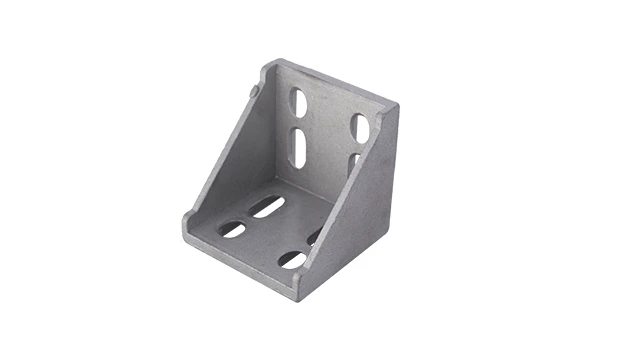
Gusset ALP 4040
The 4040 bracket/Gusset is an external fastening method that creates a 90 degree connection. 4040 means this size is used for 40 series aluminum profile with a quick connection by bolt and nut. It is a lightweight bracket that requires no machining servic
How this aluminum profile accessory is shaping the future of flexible, efficient manufacturing
The Rise of Smart Factories and the Need for Adaptive Components
In today's fast-paced manufacturing landscape, the term "smart factory" has moved from a buzzword to a necessity. As brands race to meet evolving consumer demands, shorten production cycles, and reduce waste, factories are no longer static spaces—they're dynamic ecosystems where adaptability, connectivity, and efficiency reign supreme. At the heart of this transformation lies the need for modular, durable, and easy-to-reconfigure equipment. Enter components like the Gusset ALP 4040, a humble yet critical accessory that's quietly becoming a linchpin in the construction of smart factory infrastructure.
Smart factories thrive on flexibility. Whether it's retooling a production line for a new product, scaling up to meet a sudden surge in demand, or integrating new automation technologies, the ability to adapt quickly can mean the difference between staying competitive and falling behind. Traditional manufacturing setups, often built with rigid steel frames and welded joints, struggle to keep up. They're time-consuming to modify, heavy to move, and prone to corrosion over time. This is where aluminum-based solutions—specifically, aluminum profile systems and their accessories—are changing the game. And within this category, the Gusset ALP 4040 has emerged as a standout player.
But what exactly is a Gusset ALP 4040? In simple terms, it's a specialized bracket designed to reinforce connections between aluminum profiles, particularly the popular 4040 series (named for its 40mm x 40mm cross-section). Think of it as the "backbone" that adds stability to structures like workbenches, material racks, conveyor frames, and roller tracks. Unlike generic steel gussets, the ALP 4040 is engineered for precision: it fits seamlessly into the T-slots of aluminum profiles, requires no welding, and can be assembled or disassembled in minutes with basic tools. This might sound like a small detail, but in a smart factory where every second counts, those minutes add up to significant savings in time and labor.
Understanding Gusset ALP 4040: Key Features and Benefits
To appreciate why the Gusset ALP 4040 is gaining traction, let's break down its core features and how they align with smart factory needs:
- Material: Lightweight yet Strong – Made from high-grade aluminum alloy, the ALP 4040 strikes the perfect balance between weight and strength. Aluminum is approximately 30% lighter than steel, making structures easier to move and reconfigure. Yet, when paired with 4040 aluminum profiles, it can support heavy loads—up to 500kg per connection in some setups—without bending or warping. This is crucial for applications like material racks, where stability is non-negotiable.
- Corrosion Resistance – Unlike steel, aluminum naturally forms a protective oxide layer, making it resistant to rust and corrosion. This is a game-changer for factories in humid environments, food processing facilities, or those using water-based coolants. The ALP 4040 requires minimal maintenance, reducing long-term costs compared to steel gussets that need regular painting or coating.
- T-Slot Compatibility – Designed for T-slot aluminum profiles, the ALP 4040 uses bolts and nuts to secure connections, eliminating the need for welding. This not only speeds up assembly but also allows for easy disassembly and reconfiguration. For example, a factory producing smartphones today might need to adjust its workbench heights next month to accommodate larger devices; with ALP 4040 gussets, that adjustment can be done in hours, not days.
- Precision Engineering – The ALP 4040 is machined to tight tolerances, ensuring a snug fit with 4040 profiles. This precision reduces vibration in structures like conveyor frames or roller tracks, which is critical for protecting delicate components during production. Loose connections can lead to jams, product damage, or even equipment failure—problems the ALP 4040 helps avoid.
These features might seem technical, but their real-world impact is tangible. For instance, a automotive parts manufacturer in Germany recently replaced steel gussets with ALP 4040 on their assembly line workbenches. The result? A 35% reduction in setup time for new workstations and a 20% drop in maintenance costs over six months. "We used to spend days welding and repainting steel frames whenever we launched a new part," said the plant manager. "Now, we can reconfigure a line in a single shift using ALP 4040 and aluminum profiles. It's like building with industrial-grade Legos."

Market Trends Driving Demand for Gusset ALP 4040
The demand for Gusset ALP 4040 isn't just a fluke—it's being propelled by broader trends reshaping manufacturing. Let's explore the key drivers behind its growing popularity:
1. The Push for Lean Manufacturing
Lean system principles—focused on minimizing waste, optimizing workflow, and maximizing value—have become a cornerstone of smart factory design. Gusset ALP 4040 aligns perfectly with these goals. By enabling quick reconfiguration, it reduces "setup waste" (the time spent preparing equipment for new tasks). Its lightweight design also cuts down on "transport waste," as workers can move modular structures like turnover trolleys or mobile workbenches without heavy machinery. Additionally, aluminum's recyclability supports lean's sustainability goals, as old components can be repurposed rather than sent to landfills.
2. Modularity as a Competitive Advantage
Today's manufacturers can't afford to build "one-size-fits-all" production lines. Consumer demands shift rapidly—think of how quickly smartphone models evolve, or how fashion brands pivot to seasonal trends. Factories need to be able to scale up or down, add new stations, or rearrange workflows on the fly. Gusset ALP 4040, when paired with aluminum profiles, makes modularity feasible. For example, a electronics plant using ALP 4040-reinforced material racks can easily add or remove shelves to accommodate larger components, or reposition roller tracks to redirect material flow—all without disrupting the entire production line.
3. Integration with Automation and IoT
Smart factories aren't just about physical equipment—they're about connectivity. Sensors, robots, and IoT devices are becoming standard, and they need stable, vibration-free platforms to operate effectively. The ALP 4040's precision-fit connections reduce structural movement, ensuring that sensors mounted on workbenches or conveyor frames deliver accurate data. Similarly, automated guided vehicles (AGVs) moving along roller tracks rely on stable frames to avoid derailments; ALP 4040-reinforced roller track connectors provide that stability.
4. Sustainability and Green Manufacturing
As governments and consumers pressure brands to reduce their carbon footprints, factories are prioritizing eco-friendly materials. Aluminum is 100% recyclable, and recycling it requires just 5% of the energy needed to produce new aluminum. This makes the ALP 4040 an attractive choice for companies aiming for LEED certification or carbon-neutral goals. Unlike steel, which often ends up in landfills once a structure is decommissioned, aluminum profiles and ALP 4040 gussets can be melted down and reused, closing the loop on waste.

Gusset ALP 4040 vs. Traditional Steel Gussets: A Comparative Analysis
To better understand why manufacturers are switching to Gusset ALP 4040, let's compare it to traditional steel gussets across key metrics:
| Metric | Gusset ALP 4040 (Aluminum) | Traditional Steel Gusset |
|---|---|---|
| Weight | ~30% lighter than steel | Heavier; requires machinery for movement |
| Assembly Time | 10-15 minutes per connection (no welding) | 1-2 hours per connection (welding + cooling time) |
| Reconfigurability | Easy to disassemble and reuse; no damage to components | Difficult to modify; welding weakens steel on rework |
| Corrosion Resistance | High (natural oxide layer); no coating needed | Low; requires painting/coating every 2-3 years |
| Long-Term Cost | Higher upfront cost, but 40-50% lower maintenance and reconfiguration costs | Lower upfront cost, but higher maintenance and replacement costs over time |
| Environmental Impact | 100% recyclable; low carbon footprint | Recyclable but energy-intensive; higher carbon footprint |
The data speaks for itself: while steel gussets may have a lower initial price tag, the ALP 4040 delivers significant savings over the long term. For factories that reconfigure their lines frequently or operate in harsh environments, the trade-off is clear.
Real-World Applications: How Factories Are Using Gusset ALP 4040 Today
To put the ALP 4040's impact into context, let's look at three common applications in smart factories:
1. Workbenches: The Heart of Assembly Lines
Workbenches are where the magic happens in manufacturing—whether it's assembling circuit boards, packaging products, or inspecting components. A stable, adjustable workbench can boost worker productivity and reduce errors. Gusset ALP 4040 is revolutionizing workbench design by allowing factories to build custom setups that adapt to worker heights, tool placement, and task requirements. For example, a medical device manufacturer in Singapore uses ALP 4040-reinforced aluminum profile workbenches with adjustable shelves and integrated LED lighting. When they introduced a new product line with larger components, they simply loosened the bolts, repositioned the gussets, and added extra support brackets—all in under two hours. "We used to have to order entirely new workbenches for each product," said the facility's operations director. "Now, we just reconfigure what we have. The ALP 4040 makes it possible."
2. Material Racks: Organizing Inventory Efficiently
Material racks are critical for storing raw materials, semi-finished goods, and tools. In smart factories, these racks need to be dense (to save space), accessible (to reduce retrieval time), and sturdy (to protect inventory). Gusset ALP 4040 shines here by enabling the construction of multi-tiered racks that can hold heavy loads without sagging. A automotive parts supplier in Mexico, for instance, replaced its steel shelving with aluminum profile racks reinforced with ALP 4040 gussets. The new racks are 40% lighter, allowing workers to move them with a hand trolley when reconfiguring the warehouse layout. They also eliminated the risk of rust staining on metal components, reducing scrap rates by 15%.
3. Roller Tracks and Conveyors: Streamlining Material Flow
Conveyor systems and roller tracks are the arteries of a smart factory, moving parts from one station to the next. Any instability in these systems can lead to jams, delays, or damaged products. Gusset ALP 4040 is used to reinforce the frames of roller tracks, ensuring they remain level and stable even under continuous use. A beverage bottling plant in Brazil, which operates 24/7, upgraded its roller track supports with ALP 4040 gussets after experiencing frequent jams with steel frames. The result? A 99.8% uptime rate, up from 96% previously, and a 30% reduction in maintenance calls. "The aluminum frames don't vibrate as much as steel, so bottles glide smoothly," noted the plant engineer. "And when we need to adjust the track height for different bottle sizes, the ALP 4040 makes it a 10-minute job instead of a full-day project."
Case Study: How a Tier-1 Automotive Supplier Cut Costs with ALP 4040
Challenge: A leading automotive parts supplier in Michigan needed to retool three production lines to support a new electric vehicle (EV) program. Their existing steel-framed workbenches and material racks were welded in place, requiring weeks of downtime and expensive contractors to modify.
Solution: The supplier partnered with an aluminum profile supplier to replace steel structures with 4040 aluminum profiles and ALP 4040 gussets. They built modular workbenches, mobile material racks, and roller track systems that could be assembled and reconfigured in-house.
Results:
- Downtime reduced from 6 weeks to 4 days
- Labor costs for reconfiguration cut by 70%
- Maintenance costs dropped by 35% (no more rust removal or welding repairs)
- Ability to reconfigure lines monthly to test new processes, improving product quality by 20%
Quote: "The ALP 4040 was the unsung hero here," said the plant manager. "It turned our factory into a puzzle we could rearrange at will. We're now building all new lines with aluminum profiles and these gussets—they've paid for themselves ten times over."
Challenges and the Road Ahead for Gusset ALP 4040
Despite its many benefits, the adoption of Gusset ALP 4040 isn't without challenges. One of the biggest hurdles is the initial cost. Aluminum profiles and accessories are generally more expensive upfront than steel, which can deter cost-conscious manufacturers—especially small and medium-sized enterprises (SMEs) with tight budgets. However, as more suppliers enter the market and production scales, prices are gradually decreasing. Additionally, suppliers are offering leasing or financing options for aluminum profile systems, making them more accessible to SMEs.
Another challenge is awareness. Many factory managers are familiar with steel systems and hesitant to switch to unfamiliar technology. To address this, suppliers are investing in education: hosting workshops, providing free samples for testing, and sharing case studies like the one above. Some even offer on-site consultations to help manufacturers calculate their return on investment (ROI) for switching to aluminum-based systems.
Looking ahead, the future for Gusset ALP 4040 is bright. As Industry 4.0 accelerates, and more factories embrace automation and digitalization, the demand for modular, connected infrastructure will only grow. We're already seeing innovations in ALP 4040 design, such as integrated cable management channels for IoT sensors and RFID tags for asset tracking. Suppliers are also experimenting with composite materials to further reduce weight while increasing load capacity.
Moreover, the push for sustainability is unlikely to fade. With governments around the world imposing stricter environmental regulations, aluminum's recyclability will become an even bigger selling point. Factories aiming for net-zero emissions may soon view ALP 4040 and other aluminum components as essential, not optional.
Conclusion: Gusset ALP 4040—A Small Component with a Big Impact
In the grand scheme of smart factory technology, the Gusset ALP 4040 might seem like a minor detail. But as any manufacturer will tell you, the difference between a good factory and a great one lies in the details. This unassuming aluminum bracket is helping factories become more flexible, efficient, and sustainable—three qualities that are non-negotiable in today's manufacturing landscape.
From workbenches to roller tracks, material racks to conveyor frames, the ALP 4040 is proving that modularity doesn't have to come at the cost of strength. It's a testament to how simple, well-engineered components can drive major (change) in an industry. As more factories recognize its value, we can expect to see Gusset ALP 4040 become a standard feature in smart factory setups worldwide—quietly supporting the next wave of manufacturing innovation.
So, the next time you walk through a smart factory, take a closer look at the structures around you. Chances are, you'll spot the ALP 4040 hard at work—reinforcing connections, enabling flexibility, and helping build the factories of the future, one bracket at a time.