- Company Articles
- Industry articles
- Industry standards
- Material Composition of 2040 EU Standard Aluminum Profile: Alloy Grades Explained

Material Composition of 2040 EU Standard Aluminum Profile: Alloy Grades Explained
Related Product
2040 EU Standard Aluminum Profile
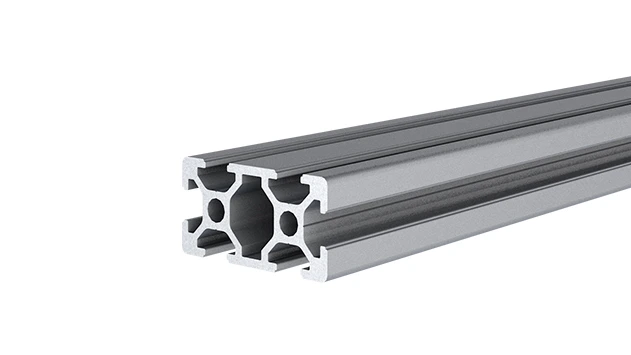
2040 is a 2.00 x 4.00CM fractional 20 series square extrusion T-slot profile with four open T-slots, two side with 2.00cm face, the other side with 4.00cm face. The profile has align-a-grooves to assist in aligning connecting profiles.
Let's start with a scenario we've all been part of, even if we don't realize it. Imagine you're walking through a busy manufacturing workshop—rows of workbenches hum with activity, conveyor belts glide smoothly, and every corner seems to have a sleek, sturdy frame holding tools, parts, or products. Chances are, a lot of those structures are made from aluminum profiles. They're lightweight, strong, and surprisingly versatile. But here's the question: have you ever stopped to wonder what makes one aluminum profile better than another for a specific job? Why does that workbench feel sturdier than the shelf next to it? Or why some frames resist rust even in damp environments while others don't? The answer often lies in something invisible to the naked eye: the material composition and alloy grade of the aluminum profile.
Today, we're diving deep into one of the most widely used profiles in industrial and commercial settings: the 2040 EU standard aluminum profile. If you're a manufacturer, a workshop owner, or even a DIY enthusiast planning a project, understanding what's inside this profile—its alloys, elements, and properties—can save you time, money, and a lot of headaches down the line. We'll break down the jargon, explain why certain alloys matter, and even touch on the little things, like aluminum profile accessories that make these profiles truly functional. Let's get started.
First Things First: What Even Is a 2040 EU Standard Aluminum Profile?
Before we get into the "what's in it," let's clarify the "what is it." The term "2040" refers to the profile's cross-sectional dimensions: 20mm in width and 40mm in height. It's a rectangular or square (depending on design) extrusion, meaning it's formed by pushing heated aluminum through a custom die to get that specific shape. The "EU standard" part is crucial too—it means this profile meets strict European union guidelines for quality, dimensional accuracy, and material consistency. Think of it as a guarantee that if you buy a 2040 EU profile from one supplier, it should fit and perform the same as one from another, which is a big deal when you're building something that needs precise parts.
Now, aluminum extrusion profile s like the 2040 are everywhere. You'll find them in machine frames, workbenches, retail displays, even in some furniture. Their popularity comes from a simple fact: aluminum is lightweight (about a third the weight of steel), naturally resistant to corrosion, and easy to shape into complex designs. But not all aluminum is created equal. Pure aluminum is soft and malleable—great for foil, not so great for supporting heavy machinery. That's where alloys come in.
Alloys 101: Why Pure Aluminum Isn't Enough
Let's backtrack a bit. Aluminum, in its pure form (99.9%+ aluminum), is a bit of a pushover. It bends easily, doesn't hold up well under stress, and isn't strong enough for most structural jobs. So manufacturers mix it with other elements—like silicon, magnesium, copper, or zinc—to create alloys. These "additives" change aluminum's properties, making it stronger, harder, more corrosion-resistant, or easier to shape. It's like baking a cake: the base is flour (aluminum), but adding sugar (magnesium) makes it sweeter (stronger), baking powder (silicon) makes it rise (easier to extrude), and so on.
For 2040 EU standard profiles, the most common alloys are from the 6000 series—specifically 6063 and 6061. These are the workhorses of the aluminum extrusion world, and for good reason. They balance strength, machinability, and cost, making them ideal for everything from lightweight frames to load-bearing structures. Let's break down what makes these alloys tick.

Key Alloy Grades for 2040 Profiles: 6063 vs. 6061 (and Why It Matters)
If you've ever shopped for aluminum profile s, you've probably seen numbers like 6063 or 6061 thrown around. These aren't random—they're designations from the Aluminum Association that tell you exactly what's in the alloy. Let's compare the two most popular grades for 2040 profiles:
| Alloy Grade | Main Alloying Elements | Tensile Strength (MPa) | Yield Strength (MPa) | Elongation (%) | Primary Use Cases |
|---|---|---|---|---|---|
| 6063 | Silicon (0.2-0.6%), Magnesium (0.45-0.9%) | 110-260 | 55-240 | 8-18 | Architectural frames, workbenches, decorative profiles, aluminum profile accessories |
| 6061 | Silicon (0.4-0.8%), Magnesium (0.8-1.2%), Copper (0.15-0.4%) | 207-310 | 172-276 | 10-16 | Heavy-duty frames, machine parts, structural components, automotive parts |
At first glance, 6061 looks "stronger" on paper, and it is. But 6063 has its own superpower: it's incredibly easy to extrude into complex shapes with a smooth, polished finish. That's why you'll often find 6063 in visible applications, like retail displays or architectural trim—its surface takes anodizing (a protective coating) beautifully, giving it a sleek, professional look. 6061, on the other hand, is the go-to for jobs that need to bear weight or withstand stress, like machine frames or load-bearing workbenches.
But why these specific elements? Let's dig into the "ingredients" that make 6063 and 6061 so useful.
Decoding the Elements: What's Actually in That Profile?
Let's play chemist for a minute. Both 6063 and 6061 are part of the 6000 series, which means their main alloying elements are silicon and magnesium. Sometimes called "magnesium-silicon alloys," these combinations create a compound called Mg2Si (magnesium silicide) when heat-treated. This compound strengthens the aluminum, making it harder and more durable. But the ratios matter, and adding other elements can tweak properties even further.
Silicon (Si): The Extrusion Enabler
Silicon is like the "lubricant" of aluminum extrusion. It lowers the melting point of the alloy and makes the molten aluminum more fluid, which is critical when pushing it through a die to form complex shapes like the 2040 profile. In 6063, silicon content is lower (0.2-0.6%) compared to 6061 (0.4-0.8%), but that's intentional. Too much silicon can make the alloy brittle, while too little makes extrusion harder. 6063's sweet spot ensures it flows smoothly through dies, resulting in profiles with sharp edges and consistent dimensions—perfect for when appearance matters.
Magnesium (Mg): The Strength Builder
If silicon is the lubricant, magnesium is the muscle. It forms those Mg2Si particles we mentioned earlier, which act like tiny reinforcements inside the aluminum. The more magnesium, the more particles, and the stronger the alloy—up to a point. 6061 has more magnesium (0.8-1.2%) than 6063 (0.45-0.9%), which is why it has higher tensile and yield strength. But magnesium also affects ductility (how much the metal can bend before breaking). 6063, with less magnesium, is more ductile, making it easier to cut, drill, or bend without cracking—handy for custom projects where you need to modify the profile on-site.
Copper (Cu): The Hardness Helper (But With a Catch)
Copper is the wild card here. It's only in 6061 (0.15-0.4%), and it adds (hardness) and strength. Think of it as adding a pinch of salt to a dish—it enhances the other flavors (or in this case, properties). But copper has a downside: it can reduce corrosion resistance. That's why 6061 is often used indoors or in controlled environments, while 6063, with no copper, holds up better outdoors or in damp areas like food processing plants.
Iron (Fe): The Uninvited Guest (But We Manage It)
Iron isn't added on purpose—it's an impurity from the manufacturing process. Too much iron forms brittle intermetallic compounds that weaken the alloy and make extrusion harder. EU standards strictly limit iron content in 2040 profiles (usually below 0.3-0.5%), ensuring the alloy stays strong and extrudable. It's a small detail, but it's why EU-standard profiles are more consistent than cheaper, non-standard alternatives.
Properties That Make or Break Your Project
Okay, so we know the elements—now what do they actually do for your project? Let's talk about the real-world properties that matter when you're choosing a 2040 profile.
Strength: Can It Hold the Weight?
Tensile strength (how much pulling force it can take before breaking) and yield strength (how much it can bend before permanently deforming) are key here. If you're building a workbench that needs to support heavy tools, 6061's higher strength (207-310 MPa tensile) is better than 6063's (110-260 MPa). But if you're making a lightweight display shelf, 6063 is more than enough—and lighter, which saves on shipping and installation.
Corrosion Resistance: Will It Rust?
Aluminum naturally forms a thin oxide layer that protects it from rust, but alloys can enhance or reduce this. 6063, with no copper and low iron, is highly corrosion-resistant. It's why you'll see it in outdoor furniture or marine applications. 6061, with copper, is still corrosion-resistant but not as much—keep it away from saltwater or harsh chemicals unless you add a protective coating like anodizing.
Machinability: Can You Work With It?
Ever tried drilling a hole in a metal that either gums up the drill bit or shatters? Not fun. 6063 is softer and more ductile, so it drills, cuts, and bends easily—great for DIY projects or custom modifications. 6061 is harder, so it needs sharper tools and slower speeds, but it holds threads better (important for bolts and screws).
Surface Finish: Does It Look the Part?
If your project is visible—like a retail display or office partition—finish matters. 6063's low silicon and iron content gives it a smooth, uniform surface that takes anodizing (a process that adds color and protection) beautifully. You'll get vibrant, consistent colors with minimal defects. 6061 can be anodized too, but its higher alloy content sometimes leads to slight variations in finish—still good, just not as "perfect" as 6063.
From Billet to Profile: How 2040 Aluminum Gets Made
Understanding the alloy is one thing, but how does that alloy become the 2040 profile you buy? It all starts with extrusion—a process that's equal parts science and art. Here's a simplified breakdown:
Step 1: Billet Preparation
Manufacturers start with large cylindrical blocks of aluminum alloy (called billets). These billets are heated to around 450-500°C (about 840-930°F)—hot enough to make the aluminum malleable but not molten. The exact temperature depends on the alloy: 6063 melts at a lower temp than 6061, so it's heated slightly less to prevent overheating.
Step 2: Extrusion
The heated billet is placed in a press and pushed through a steel die with a 20mm x 40mm opening. Imagine squeezing toothpaste through a tube—except here, the "toothpaste" is hot aluminum, and the "tube" is a high-strength die. The die shapes the aluminum into the 2040 profile's cross-section, complete with any T-slots (those grooves along the sides for connecting accessories).
This is where 6063's low silicon content shines: it flows smoothly through the die, filling every nook and cranny to create sharp edges and precise dimensions. 6061, being stiffer, needs more pressure, which can wear out dies faster—but the result is a stronger profile.
Step 3: Cooling and Aging
After extrusion, the hot profile is cooled rapidly with water or air to lock in its shape. Then it's "aged"—heated again at a lower temperature (around 175°C/350°F) for several hours. This aging process helps the Mg2Si particles grow and spread evenly, strengthening the alloy. 6061 usually needs longer aging than 6063 to reach its full strength, but the wait is worth it for that extra durability.
Step 4: Cutting and Finishing
Finally, the long profile is cut into standard lengths (usually 2-6 meters), and finished with options like anodizing, powder coating, or just a clear protective layer. Then it's ready to be paired with aluminum profile accessories like end caps, brackets, or connectors.
The Little Things: Aluminum Profile Accessories That Complete the Package
A 2040 profile is just a piece of metal until you add the right accessories. Think of it like a smartphone—great on its own, but useless without a charger, case, or screen protector. Aluminum profile accessories turn a simple extrusion into a functional structure. Let's highlight a few must-knows:
2040 Aluminum Profile End Cap: The Unsung Hero
Ever noticed the plastic or metal caps on the ends of aluminum profiles? That's the 2040 aluminum profile end cap , and it does more than just look neat. It keeps dust, dirt, and moisture out of the T-slots, preventing corrosion and jamming when you try to insert bolts or connectors later. It also protects people from sharp edges—important in busy workshops where bumps and scrapes are common. End caps come in different materials (plastic for light use, metal for heavy-duty) and colors to match the profile's finish.
Aluminum Profile Fixings: Holding It All Together
You can't build a frame with just profiles—you need aluminum profile fixings to connect them. These include T-bolts, corner brackets, hinges, and slot nuts. What makes them special is how they work with the T-slots in the 2040 profile: you slide a nut into the slot, position your bracket, and tighten the bolt—no drilling required. This flexibility is why aluminum profiles are so popular for custom projects. 6061 profiles, being stronger, can handle higher torque on fixings, making them better for load-bearing connections.
Other Essentials: Brackets, Gaskets, and More
Depending on your project, you might also need angle brackets (for 90° joints), rubber gaskets (to reduce noise or vibration), or even feet to level workbenches. The key is that these accessories are designed specifically for the 2040 profile's dimensions and T-slot spacing, ensuring a snug, secure fit. Using off-brand accessories can lead to wobbly structures or stripped slots—definitely not worth the savings.
Real-World Applications: Where 2040 Profiles Shine
Okay, we've covered the "what" and "how"—now let's talk about the "where." Where do you actually use a 2040 EU standard aluminum profile? The answer is: almost everywhere. Here are a few examples to bring it to life:
Workbenches and Assembly Stations
Walk into any electronics or automotive workshop, and you'll see workbenches made from 2040 profiles. They're lightweight enough to move (with casters) but strong enough to support tools, laptops, and parts. 6063 is popular here for its smooth finish and easy modification—you can drill holes for power outlets or add shelves without weakening the frame. Pair it with a plywood or metal top, and you've got a durable, customizable workspace.
Conveyor Systems and Material Racks
Conveyor belts need sturdy frames to keep them aligned, and 2040 profiles (often 6061 for extra strength) are perfect. They're corrosion-resistant, so they hold up in factories with oils or coolants, and their T-slots make it easy to attach guides, sensors, or brackets. Material racks, too—those shelves holding boxes of parts? 2040 profiles with 6063 alloy are lightweight enough to build tall racks without excessive weight, but strong enough to hold hundreds of pounds.
Retail Displays and Pop-Up Stands
Ever seen a sleek retail display in a store? Chances are it's made from 2040 profiles. 6063's smooth, anodized finish looks professional, and the T-slots let you quickly add hooks, shelves, or signage. Pop-up stands at trade shows are another big user—profiles are lightweight for travel, easy to assemble, and reusable. Plus, with aluminum profile accessories like hinges and locks, you can fold them down for storage.
Automotive and Machinery Frames
Under the hood (or around the body) of cars, trucks, and industrial machines, you'll find 2040 profiles in 6061 alloy. They're used for everything from engine mounts to tool holders, thanks to their high strength-to-weight ratio. Automakers love them because they reduce vehicle weight, improving fuel efficiency, while manufacturers appreciate that they're easy to machine and assemble.
Why EU Standard? What Makes It Different?
You might be thinking, "Why pay extra for EU standard? Isn't all aluminum the same?" Short answer: no. EU standards (like EN 755 for aluminum extrusions) set strict rules for everything from alloy composition to dimensional tolerances. For example, a 2040 EU profile must measure exactly 20mm x 40mm (±0.1mm) across its entire length, with straight edges and consistent wall thickness. Non-standard profiles might vary by 1-2mm, which can throw off your entire project when connecting multiple pieces.
EU standards also ensure the alloy is pure and consistent. No hidden impurities that weaken the profile or cause extrusion defects. This consistency means you can buy from different suppliers and still get profiles that fit together perfectly—a big deal for large-scale manufacturers. Plus, EU standards often include safety requirements, like corrosion resistance for food-grade applications or fire resistance for public buildings.
Choosing the Right 2040 Profile for Your Project
So, how do you pick between 6063 and 6061 for your 2040 profile? Let's simplify with a quick checklist:
- Choose 6063 if: You need a smooth finish, easy extrusion (complex shapes), corrosion resistance, or lightweight design. Great for workbenches, displays, or non-load-bearing frames.
- Choose 6061 if: You need maximum strength, higher load capacity, or better thread retention. Ideal for machine frames, conveyor systems, or structural components.
- Don't forget accessories: Always pair with compatible aluminum profile accessories like 2040 aluminum profile end cap s and aluminum profile fixings to ensure safety and durability.
And when in doubt, ask your supplier. A good aluminum extrusion profile supplier will help you match the alloy grade to your project's needs—whether it's a small DIY shelf or a large-scale manufacturing line.
Wrapping Up: It's All About the Alloy
At the end of the day, the 2040 EU standard aluminum profile is more than just a piece of metal. It's a carefully engineered product, where the right mix of silicon, magnesium, and other elements transforms simple aluminum into a material that's strong, lightweight, and versatile. Whether you're building a workbench, a conveyor, or a retail display, understanding its material composition and alloy grade ensures you get a structure that's not just functional, but built to last.
So the next time you walk past that sleek aluminum frame, take a second to appreciate what's inside. It's the invisible alloys and elements that make the difference between a project that holds up and one that falls apart. And with the right knowledge—and the right aluminum profile accessories —you'll be building better, stronger, and smarter.