- Company Articles
- Industry articles
- Industry standards
- Material Composition of 3030b EU Standard Aluminum Profile: EU Compliance Explained

Material Composition of 3030b EU Standard Aluminum Profile: EU Compliance Explained
Related Product
3030B EU Standard Aluminum Profile
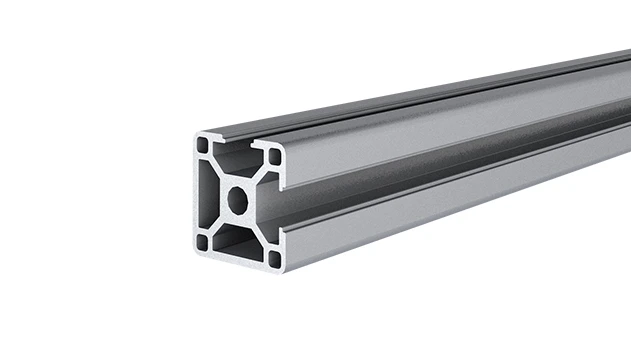
3030 is a 3.00 x 3.00CM fractional 30 series square extrusion T-slot profile with two side open T-slots, each side with 3.00cm face, 2 side with open slot, 2 side with closed face. The profile has align-a-grooves to assist in aligning connecting profiles.
The Backbone of Modern Manufacturing – Aluminum Profiles
Walk into any modern factory, warehouse, or assembly line, and you'll likely spot them: sleek, silver frames holding up workbenches, guiding roller tracks, or forming the skeleton of flow racks. These are aluminum profiles – the unsung heroes of efficient production. Lightweight yet surprisingly strong, adaptable yet consistent, they've become the go-to choice for businesses aiming to build lean, flexible, and durable workspaces. Among the countless profiles available, one stands out for its balance of performance and versatility: the
3030b EU standard aluminum profile
. But what exactly goes into making this profile, and why does its compliance with EU standards matter? Let's dive in.
Meet 3030b EU Standard Aluminum Profile: What Makes It a Go-To Choice?
First things first: the "3030b" in its name isn't just a random code. It tells you exactly what you're getting: a profile with a cross-section of 30mm by 30mm, part of a family of extruded aluminum products designed for structural applications. The "EU standard" tag, though, is where things get really important. It means this profile isn't just thrown together – it's engineered to meet strict European guidelines for quality, safety, and sustainability.
Unlike generic aluminum tubes, the 3030b is an aluminum extrusion profile , shaped by forcing heated aluminum through a precision die. This process creates a consistent, high-strength structure with built-in T-slots – those handy grooves running along its length that let you attach accessories without welding or drilling. Think of it as a modular building block: with the right aluminum profile accessories , you can turn a few 3030b lengths into a workbench, a material rack, or even a custom conveyor frame in hours, not days.
Unlike generic aluminum tubes, the 3030b is an aluminum extrusion profile , shaped by forcing heated aluminum through a precision die. This process creates a consistent, high-strength structure with built-in T-slots – those handy grooves running along its length that let you attach accessories without welding or drilling. Think of it as a modular building block: with the right aluminum profile accessories , you can turn a few 3030b lengths into a workbench, a material rack, or even a custom conveyor frame in hours, not days.

Material Composition: The Science Behind 3030b's Reliability
At its core, the 3030b profile is made from aluminum alloy – but not just any alloy. Most manufacturers use 6063 aluminum, a popular choice for extrusions because it combines strength, corrosion resistance, and excellent formability. Let's break down its key components and why they matter:
Aluminum (97-98%): The base metal, chosen for its low density (about a third of steel) and natural resistance to rust. This keeps the profile lightweight – easy to handle during assembly – while standing up to daily wear and tear in factories where moisture or chemicals might be present.
Silicon (0.2-0.6%): Acts like a lubricant during the extrusion process, helping the molten aluminum flow smoothly through the die to create sharp, precise T-slots. Without enough silicon, the profile might have rough edges or uneven dimensions – a big problem when you're trying to fit accessories like connectors or end caps.
Magnesium (0.45-0.9%): The "strength booster." When combined with silicon, magnesium forms tiny particles called Mg2Si, which strengthen the alloy through a process called precipitation hardening. This is why 6063 aluminum has a tensile strength of around 180 MPa – strong enough to support heavy tools on a workbench or stacks of materials on a rack, but still flexible enough to absorb minor impacts without bending permanently.
Iron (max 0.3%): A common impurity in aluminum, but kept low here. Too much iron can form brittle compounds that weaken the profile, so EU standards strictly limit its content to ensure durability.
Other elements (trace amounts): Copper, manganese, and zinc are often added in tiny quantities to fine-tune properties like corrosion resistance or machinability. For example, a touch of copper can improve electrical conductivity – useful if the profile is part of a workstation with built-in power tools.
The result? A profile that's not just strong, but predictable. Whether you're building a single workbench or an entire production line, you can trust that every 3030b length will perform the same way – a critical factor for maintaining consistency in lean manufacturing systems.
Aluminum (97-98%): The base metal, chosen for its low density (about a third of steel) and natural resistance to rust. This keeps the profile lightweight – easy to handle during assembly – while standing up to daily wear and tear in factories where moisture or chemicals might be present.
Silicon (0.2-0.6%): Acts like a lubricant during the extrusion process, helping the molten aluminum flow smoothly through the die to create sharp, precise T-slots. Without enough silicon, the profile might have rough edges or uneven dimensions – a big problem when you're trying to fit accessories like connectors or end caps.
Magnesium (0.45-0.9%): The "strength booster." When combined with silicon, magnesium forms tiny particles called Mg2Si, which strengthen the alloy through a process called precipitation hardening. This is why 6063 aluminum has a tensile strength of around 180 MPa – strong enough to support heavy tools on a workbench or stacks of materials on a rack, but still flexible enough to absorb minor impacts without bending permanently.
Iron (max 0.3%): A common impurity in aluminum, but kept low here. Too much iron can form brittle compounds that weaken the profile, so EU standards strictly limit its content to ensure durability.
Other elements (trace amounts): Copper, manganese, and zinc are often added in tiny quantities to fine-tune properties like corrosion resistance or machinability. For example, a touch of copper can improve electrical conductivity – useful if the profile is part of a workstation with built-in power tools.
The result? A profile that's not just strong, but predictable. Whether you're building a single workbench or an entire production line, you can trust that every 3030b length will perform the same way – a critical factor for maintaining consistency in lean manufacturing systems.
EU Compliance: What It Takes to Meet European Standards
"EU standard" isn't just a marketing buzzword – it's a promise backed by rigorous testing. For the 3030b profile, compliance starts with EN 755, the European standard for aluminum extrusions. This set of rules covers everything from dimensional tolerances (how accurately the 30x30mm cross-section is maintained along the profile's length) to surface quality (no cracks, pits, or discoloration) and mechanical properties (tensile strength, elongation).
Take dimensional tolerance, for example: EN 755 specifies that the width and height of the 3030b must be within ±0.3mm. Why does that matter? Imagine trying to attach a 90° connector to two profiles where one is 30.5mm wide and the other is 29.7mm – the fit would be loose, and the joint might wobble under load. EU-compliant profiles eliminate that guesswork, ensuring accessories like 3030 aluminum profile end cap s or hinges snap into place perfectly every time.
Then there's REACH and RoHS, two regulations that focus on safety and sustainability. REACH restricts the use of substances of very high concern (SVHCs) like lead or cadmium, while RoHS limits hazardous materials in electrical and electronic equipment. For manufacturers selling into the EU, non-compliance means their profiles could be banned from the market. But for buyers, it means peace of mind: the 3030b profile on your workbench isn't leaching harmful chemicals, and it's safer for workers and the environment.
To prove compliance, suppliers must provide certificates from accredited labs, showing their profiles meet EN 755's mechanical and chemical requirements. Some even go further, getting ISO 9001 certification for their quality management systems – a sign they're committed to consistent production standards.
Take dimensional tolerance, for example: EN 755 specifies that the width and height of the 3030b must be within ±0.3mm. Why does that matter? Imagine trying to attach a 90° connector to two profiles where one is 30.5mm wide and the other is 29.7mm – the fit would be loose, and the joint might wobble under load. EU-compliant profiles eliminate that guesswork, ensuring accessories like 3030 aluminum profile end cap s or hinges snap into place perfectly every time.
Then there's REACH and RoHS, two regulations that focus on safety and sustainability. REACH restricts the use of substances of very high concern (SVHCs) like lead or cadmium, while RoHS limits hazardous materials in electrical and electronic equipment. For manufacturers selling into the EU, non-compliance means their profiles could be banned from the market. But for buyers, it means peace of mind: the 3030b profile on your workbench isn't leaching harmful chemicals, and it's safer for workers and the environment.
To prove compliance, suppliers must provide certificates from accredited labs, showing their profiles meet EN 755's mechanical and chemical requirements. Some even go further, getting ISO 9001 certification for their quality management systems – a sign they're committed to consistent production standards.
Beyond the Profile: Aluminum Profile Accessories That Elevate Versatility
A 3030b profile on its own is just a metal bar – it's the
aluminum profile accessories
that turn it into something useful. Think of them as the "glue" of modular systems, letting you build, modify, and expand without specialized tools. Here are a few must-haves:
Connectors: 90° aluminum profile connectors, 45° angle codes, and three-way joints let you join profiles at any angle. Many are designed for tool-free assembly – just slide them into the T-slot and tighten a bolt. This is a game-changer for lean system s, where reconfiguring a workstation to fit a new product line needs to happen in a day, not a week.
End caps: The 3030 aluminum profile end cap might seem small, but it's essential. It covers sharp edges (safer for workers), keeps dust out of T-slots (so accessories don't jam), and gives the profile a clean, professional look.
Panels and shelves: Aluminum honeycomb panels or plywood sheets can be mounted directly to 3030b frames using bracket accessories, turning them into workbench tops or storage shelves. Since the profile's T-slots are spaced evenly, you can adjust shelf heights in seconds to fit taller or shorter items – no drilling new holes required.
Roller track guides: For flow racks or conveyors, plastic or aluminum roller track guide rails (like the yellow or grey ones you might see) clip into the T-slots, creating a smooth path for boxes or parts to slide along. This is lean manufacturing in action: reducing waste by making material handling faster and easier.
The beauty of these accessories? They're designed to work seamlessly with EU-standard profiles. A 90° connector made for a 3030b will fit any other 3030b profile, regardless of the supplier – a level of compatibility that generic, non-compliant profiles can't match.
Connectors: 90° aluminum profile connectors, 45° angle codes, and three-way joints let you join profiles at any angle. Many are designed for tool-free assembly – just slide them into the T-slot and tighten a bolt. This is a game-changer for lean system s, where reconfiguring a workstation to fit a new product line needs to happen in a day, not a week.
End caps: The 3030 aluminum profile end cap might seem small, but it's essential. It covers sharp edges (safer for workers), keeps dust out of T-slots (so accessories don't jam), and gives the profile a clean, professional look.
Panels and shelves: Aluminum honeycomb panels or plywood sheets can be mounted directly to 3030b frames using bracket accessories, turning them into workbench tops or storage shelves. Since the profile's T-slots are spaced evenly, you can adjust shelf heights in seconds to fit taller or shorter items – no drilling new holes required.
Roller track guides: For flow racks or conveyors, plastic or aluminum roller track guide rails (like the yellow or grey ones you might see) clip into the T-slots, creating a smooth path for boxes or parts to slide along. This is lean manufacturing in action: reducing waste by making material handling faster and easier.
The beauty of these accessories? They're designed to work seamlessly with EU-standard profiles. A 90° connector made for a 3030b will fit any other 3030b profile, regardless of the supplier – a level of compatibility that generic, non-compliant profiles can't match.
3030b in Action: Real-World Applications in Lean Systems and Workbenches
Let's put this all together with a real example: Workbench E, a single-deck workstation without casters, commonly used in electronics assembly. Its frame is built entirely from 3030b profiles, connected with 90° aluminum joints and topped with an aluminum honeycomb panel. Why 3030b?
Stability: The 30x30mm cross-section provides a solid base, even when loaded with soldering irons, oscilloscopes, and circuit boards. The profile's rigidity prevents the workbench from wobbling during precision tasks – a must for assembling small components.
Modularity: Need to add a shelf for tools? Slide a pair of angle brackets into the T-slots and mount a panel. Want to attach a LED light bar overhead? Use a three-way joint to extend a vertical profile upward. If the assembly line retools for a new product, the entire workbench can be disassembled and rebuilt in an hour, saving time and reducing downtime.
Cost-effectiveness: Aluminum is more expensive than steel upfront, but its lightweight nature cuts shipping costs, and its durability means the workbench will last for years without needing replacement. Plus, since accessories are interchangeable, you won't waste money on custom parts if you reconfigure later.
Another common use? Material Rack B, a 3-row, 3-floor storage unit for production parts. Here, 3030b profiles form the vertical supports and horizontal beams, with roller tracks (fitted with 1-inch swivel roller balls) on each shelf to let boxes glide forward as items are removed. This "first-in, first-out" flow reduces waste by ensuring older stock is used before newer batches, a key principle of lean management.
In both cases, the 3030b profile's material composition and EU compliance are invisible to the workers using the equipment – but they're the reason the workbench stays stable, the rack supports heavy loads, and the whole system can adapt as the business grows.
Stability: The 30x30mm cross-section provides a solid base, even when loaded with soldering irons, oscilloscopes, and circuit boards. The profile's rigidity prevents the workbench from wobbling during precision tasks – a must for assembling small components.
Modularity: Need to add a shelf for tools? Slide a pair of angle brackets into the T-slots and mount a panel. Want to attach a LED light bar overhead? Use a three-way joint to extend a vertical profile upward. If the assembly line retools for a new product, the entire workbench can be disassembled and rebuilt in an hour, saving time and reducing downtime.
Cost-effectiveness: Aluminum is more expensive than steel upfront, but its lightweight nature cuts shipping costs, and its durability means the workbench will last for years without needing replacement. Plus, since accessories are interchangeable, you won't waste money on custom parts if you reconfigure later.
Another common use? Material Rack B, a 3-row, 3-floor storage unit for production parts. Here, 3030b profiles form the vertical supports and horizontal beams, with roller tracks (fitted with 1-inch swivel roller balls) on each shelf to let boxes glide forward as items are removed. This "first-in, first-out" flow reduces waste by ensuring older stock is used before newer batches, a key principle of lean management.
In both cases, the 3030b profile's material composition and EU compliance are invisible to the workers using the equipment – but they're the reason the workbench stays stable, the rack supports heavy loads, and the whole system can adapt as the business grows.
Comparing 3030b with Other Aluminum Profiles: When to Choose 30x30?
Not every application calls for a 3030b profile. Let's see how it stacks up against two common alternatives: 2020 (20x20mm) and 4040 (40x40mm) profiles.
The 3030b shines here as the "goldilocks" profile: not too small, not too big, just right for most medium-load applications. If you're building a workstation where workers will stand for hours, or a material rack holding boxes of components, 3030b gives you the strength you need without the extra weight or cost of a 4040 profile.
| Profile Type | Dimensions | Tensile Strength | Best For | Limitations |
|---|---|---|---|---|
| 2020 EU Standard | 20x20mm | ~160 MPa | Light-duty shelves, small workstations, prototype frames | Can't support heavy loads (max ~50kg per shelf) |
| 3030b EU Standard | 30x30mm | ~180 MPa | Medium-duty workbenches, material racks, conveyor frames | Wider than 2020, so may not fit in tight spaces |
| 4040 EU Standard | 40x40mm | ~200 MPa | Heavy-duty storage, industrial machinery frames | Heavier and more expensive; overkill for small workstations |
Conclusion: Why 3030b EU Standard Aluminum Profile Stands Out
At the end of the day, the 3030b EU standard aluminum profile isn't just a piece of metal – it's a tool for building better, more efficient workspaces. Its carefully balanced material composition (6063 aluminum alloy with precise amounts of silicon, magnesium, and other elements) ensures strength, lightness, and consistency. EU compliance – through standards like EN 755, REACH, and RoHS – guarantees quality, safety, and compatibility with a wide range of aluminum profile accessories. And its modular design makes it perfect for lean systems, where flexibility and quick adaptation are key.
Whether you're a small workshop looking to upgrade your workbenches or a large manufacturer revamping an entire production line, the 3030b profile offers something rare: reliability you can count on, and versatility to grow with your needs. It's no wonder it's become a staple in factories, labs, and workshops across Europe – and beyond.
Whether you're a small workshop looking to upgrade your workbenches or a large manufacturer revamping an entire production line, the 3030b profile offers something rare: reliability you can count on, and versatility to grow with your needs. It's no wonder it's become a staple in factories, labs, and workshops across Europe – and beyond.