- Company Articles
- Industry articles
- Industry standards
- Material Handling Carts: 4040r EU Standard Aluminum Profile Load Endurance

Material Handling Carts: 4040r EU Standard Aluminum Profile Load Endurance
Related Product
4040R EU Standard Aluminum Profile
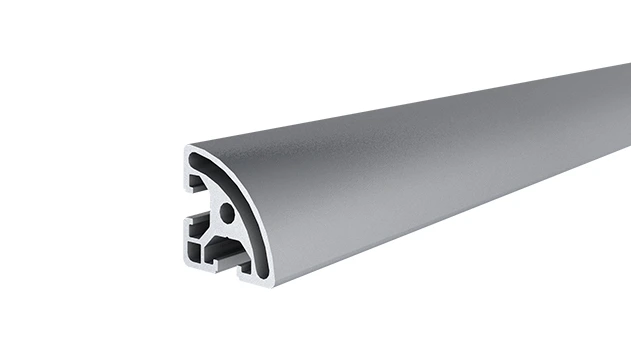
4040R is a 4.00x4.00 CM fractional 40 series square extrusion T-slot profile with two side open T-slots, each side with 4.00cm face,the other side is round face. The profile has align-a-grooves to assist in aligning connecting profiles.
Material Handling Carts: 4040r EU Standard Aluminum Profile Load Endurance
Picture this: A bustling automotive parts warehouse on a Monday morning. Forklifts beep in the distance, workers rush to fill orders, and in the middle of it all, a hand trolley b—loaded with heavy engine components—suddenly jolts. The frame, made of cheap steel, has started to bend under the weight, causing the parts to shift. A worker strains to steady it, but the damage is done: time lost, frustration mounting, and the risk of damaged inventory. This isn't just a bad day; it's a symptom of a bigger problem: underinvesting in the right material handling equipment. The truth is, material handling carts are the backbone of efficient operations—but only when they're built to last. And when it comes to durability, few materials can compete with the 4040r EU Standard Aluminum Profile. Let's dive into why this profile is revolutionizing how we build carts that don't just carry loads—they endure them.
The Unsung Heroes: What Are Material Handling Carts?
Before we get into the nitty-gritty of aluminum profiles, let's take a step back. What exactly are material handling carts, and why do they matter so much? At their core, these are mobile platforms designed to transport goods, tools, or materials within a workspace—think warehouses, factories, retail stores, or even hospitals. They come in all shapes and sizes, from the compact hand trolley a, perfect for moving small boxes in a grocery store, to the rugged hand trolley c, built with reinforced sides for hauling irregularly shaped items like machinery parts.
But here's the thing: Not all carts are created equal. A flimsy cart might save you money upfront, but it'll cost you in the long run—through frequent replacements, downtime, and even workplace injuries. The key to a reliable cart lies in its construction, and that's where the materials used to build its frame take center stage. Enter aluminum profiles: lightweight, strong, and surprisingly versatile, they've become the go-to choice for manufacturers who prioritize both durability and efficiency.
Why Aluminum Profiles? The Case for Lightweight Strength
Why aluminum, you might ask? Why not stick with steel, which has a reputation for being "stronger"? Let's break it down. Steel is indeed strong, but it's heavy—and that weight adds up. A steel cart might be able to carry a heavy load, but pushing it around all day? That's a recipe for worker fatigue and increased risk of strain injuries. Aluminum, on the other hand, offers a rare balance: it's about one-third the weight of steel but boasts impressive tensile strength. That means a cart built with aluminum profiles is easier to maneuver, even when fully loaded, without sacrificing durability.
But weight and strength are just the start. Aluminum is naturally resistant to corrosion, making it ideal for environments where moisture or chemicals are present—like food processing plants or outdoor loading docks. Unlike steel, it won't rust if left out in the rain or exposed to cleaning agents. And let's not forget customization: aluminum profiles, especially those with T-slots (a groove running along the length), are designed to work with aluminum profile accessories like connectors, brackets, and shelves. This means you can build a cart that's tailored to your exact needs, whether you need extra shelves, a tool rack, or a foldable design—no welding required.
Spotlight: 4040r EU Standard Aluminum Profile
Now, let's zoom in on the star of the show: the 4040r EU Standard Aluminum Profile. This isn't just a random piece of aluminum; it's a product of rigorous engineering and adherence to European union standards, which are among the strictest in the world for safety and performance. The "4040" in its name refers to its dimensions: 40mm in width and 40mm in height, making it a compact yet robust choice for cart frames. The "r" likely denotes a specific design feature—perhaps a rounded edge or a reinforced T-slot—though exact specs can vary by manufacturer (always check with your supplier for details).
What makes the 4040r stand out? For starters, its T-slot design. These slots, which run the length of the profile, act as built-in channels for aluminum profile accessories. Want to attach a shelf? Slide a connector into the T-slot and tighten a bolt. Need to add a handle? Just clip on a bracket. This modularity means you can assemble a cart in hours, not days, and reconfigure it just as easily if your needs change. For example, a hand trolley b used in a warehouse today could be modified into a mobile workbench tomorrow by adding a plywood top and tool hooks—all thanks to the 4040r's T-slots.
But the real magic is in its structural integrity. The 4040r is typically made from 6063-T5 aluminum alloy, a grade known for its excellent combination of strength, weldability, and corrosion resistance. This alloy undergoes a heat-treating process (T5) that enhances its hardness, making it capable of supporting heavy loads without bending or warping. And because it meets EU standards, you can trust that it's been tested for factors like impact resistance, load capacity, and even fire safety—critical for industries with strict regulations.
Load Endurance: How 4040r Handles the Heavy Lifting
Let's talk about the big question: load endurance. What does it mean for a cart to "endure" a load, and how does the 4040r profile make that possible? Load endurance isn't just about how much weight a cart can carry once—it's about how well it holds up over time, through hundreds of cycles of loading, unloading, and moving. A cart that can carry 500kg once but bends after 10 uses is useless. The 4040r, however, is built for the long haul.
Key Factors in Load Endurance
Alloy Strength:
As mentioned, 6063-T5 aluminum alloy is no slouch. Its tensile strength (the maximum stress it can handle before breaking) is around 180 MPa, which is more than enough for most material handling needs. For context, that means a 4040r profile with a 2mm wall thickness can support a static load of over 1,000kg per meter—way more than the average cart will ever carry.
Wall Thickness:
The 4040r's wall thickness is carefully calibrated to balance weight and strength. Too thin, and it bends; too thick, and the cart becomes (defeating the purpose of aluminum's lightweight advantage). Most 4040r profiles have a wall thickness between 1.5mm and 3mm, with 2mm being a sweet spot for carts. This ensures the frame is rigid enough to distribute weight evenly across the cart, preventing stress points that lead to failure.
Design Geometry:
The 4040r's square shape (40x40mm) is no accident. Squares and rectangles are inherently stable, distributing weight across four sides rather than concentrating it in one area. Compare that to a round pipe, which can twist under load—suddenly, that square profile makes a lot of sense. Add in rounded edges (common in EU-standard profiles), and you also reduce the risk of injury from sharp corners, a small detail that makes a big difference in busy workplaces.
Real-World Performance: Testing the 4040r
To put this into perspective, let's look at a real test scenario. A manufacturer in Germany built a standard material handling cart using 4040r profiles, paired with heavy-duty caster wheels and aluminum profile accessories like T-slot connectors and end caps. They then subjected it to a "dynamic load test": repeatedly loading it with 300kg (about the weight of three washing machines), pushing it over a rough concrete floor for 1,000 cycles, and checking for deformation. The result? After 1,000 cycles, the frame showed less than 0.5mm of bending—well within EU safety limits. For context, a steel cart of the same size would have weighed twice as much and shown similar bending, but with the added downside of rusting over time.
Another test focused on "fatigue resistance"—how well the cart holds up to repeated stress. The same 4040r cart was loaded with 200kg and rolled up and down a 10-degree ramp 500 times. Again, the frame remained intact, and the aluminum profile accessories (like the caster wheel mounts) showed no signs of loosening. This is crucial for industries like logistics, where carts are used nonstop, day in and day out.
Beyond the Frame: Caster Wheels and Accessories
A cart is more than just a frame, of course. Even the strongest 4040r profile won't perform well if paired with cheap components. That's why we can't talk about load endurance without mentioning two key players: caster wheels and aluminum profile accessories.
Caster Wheels: The Unsung Mobility Partners
You could have the sturdiest frame in the world, but if your caster wheels fail, your cart is going nowhere. The 4040r profile works best when paired with high-quality caster wheels that match the cart's load capacity. For example, a hand trolley a used for light loads (up to 100kg) might use 2-inch rubber caster wheels for smooth movement on tile floors. A hand trolley b carrying 300kg, however, would need 5-inch polyurethane caster wheels with ball bearings to handle the weight and reduce rolling resistance.
The 4040r's T-slots make it easy to mount caster wheels securely. Most caster wheel brackets are designed to slide into the T-slot and lock in place with a bolt, creating a connection that's just as strong as welding. And because the profile is lightweight, even with heavy caster wheels, the overall cart remains easy to push—reducing worker fatigue and increasing productivity.
Aluminum Profile Accessories: The Glue That Holds It All Together
Aluminum profile accessories might seem small, but they're critical for load endurance. Take corner brackets, for example. These simple L-shaped pieces connect two 4040r profiles at a 90-degree angle, reinforcing the corner of the cart frame. Without them, the frame could twist under load, leading to instability. Similarly, end caps protect the profile's ends from damage and prevent debris from getting stuck in the T-slots, which could weaken the structure over time.
Another essential accessory? T-slot nuts and bolts. These specialized fasteners slide into the T-slots and tighten to secure shelves, handles, or other components. Unlike regular nuts and bolts, they distribute pressure evenly across the slot, reducing the risk of cracking the profile. For heavy loads, using double nuts (two nuts tightened against each other) can prevent loosening due to vibration—common in carts that roll over bumpy floors.
4040r vs. Other Profiles: A Quick Comparison
Wondering how the 4040r stacks up against other aluminum profiles? Let's take a look at a comparison table to see why it's often the top choice for material handling carts.
| Profile Type | Width x Height (mm) | Weight per Meter (kg) | Max Static Load (kg/m) | Best For |
|---|---|---|---|---|
| 4040r EU Standard | 40 x 40 | 1.8 – 2.2 | 1,200 – 1,500 | Medium-duty carts (hand trolley b, mobile workbenches) |
| 3030 EU Standard | 30 x 30 | 1.2 – 1.5 | 800 – 1,000 | Light-duty carts (hand trolley a, retail shelving) |
| 4080 EU Standard | 40 x 80 | 3.0 – 3.5 | 2,000 – 2,500 | Heavy-duty carts (industrial machinery transport) |
| 2020 EU Standard | 20 x 20 | 0.8 – 1.0 | 400 – 600 | Mini carts (electronics assembly, lab equipment) |
As you can see, the 4040r hits a sweet spot: it's lighter than the 4080 (making carts easier to maneuver) but stronger than the 3030 (handling heavier loads). For most material handling needs—think hand trolley b or c, mobile racks, or workbenches—it's the ideal balance of size, weight, and strength.
Industries That Benefit Most from 4040r Carts
The 4040r isn't just for warehouses. Its versatility makes it a favorite across industries. Let's take a look at a few:
Manufacturing:
In factories, carts are used to move raw materials, work-in-progress, and finished goods. The 4040r's load endurance ensures carts can handle heavy parts like engine blocks or steel sheets without bending, while its corrosion resistance stands up to coolants and oils.
Logistics and Warehousing:
From hand trolley a moving small packages to hand trolley c hauling bulk pallets, 4040r carts keep inventory flowing. Their modular design means they can be customized with dividers, labels, or barcode scanners for better organization.
Healthcare:
Hospitals need carts that are lightweight (for easy maneuvering by nurses) and easy to clean (to prevent infection). The 4040r's aluminum construction is non-porous and resistant to disinfectants, making it perfect for medication carts or linen transporters.
Retail:
Hand trolley a models built with 4040r profiles are ideal for restocking shelves—light enough for employees to push but strong enough to carry cases of soda or canned goods. Plus, their sleek design won't look out of place on the sales floor.
Caring for Your 4040r Cart: Maintenance Tips
Even the toughest carts need a little TLC to maximize their lifespan. Here are some simple maintenance tips for 4040r-based material handling carts:
- Clean Regularly: Wipe down the 4040r profile with a damp cloth to remove dirt, grease, or chemicals. For stubborn grime, use a mild detergent—avoid abrasive cleaners that could scratch the aluminum.
- Check Caster Wheels: Inspect caster wheels weekly for wear, cracks, or debris stuck in the bearings. replace worn wheels immediately to prevent uneven loading on the frame.
- Tighten Accessories: Aluminum profile accessories like bolts and brackets can loosen over time due to vibration. Give them a quick tighten with a wrench every month to keep the cart stable.
- Inspect for Damage: Look for dents, cracks, or bent sections in the 4040r profile. Even small dents can weaken the structure, so replace damaged profiles promptly.
- Lubricate Moving Parts: Apply a light machine oil to caster wheel bearings and T-slot nuts to keep them moving smoothly. This reduces friction and prevents wear.
Final Thoughts: Invest in Endurance, Not Just Cost
At the end of the day, material handling carts are an investment. A cheap cart might save you money upfront, but it'll cost you in downtime, repairs, and replacement. The 4040r EU Standard Aluminum Profile offers something better: endurance. It's a material that doesn't just carry loads—it carries your operation forward, day in and day out.
Whether you're using a hand trolley a in a small retail store or a fleet of hand trolley b carts in a large warehouse, choosing 4040r means choosing reliability. Its combination of strength, versatility, and EU-standard quality makes it the smart choice for anyone who wants carts that keep up with their business—not hold it back.
So the next time you're shopping for material handling carts, don't just ask, "How much does it cost?" Ask, "What's it made of?" Chances are, the answer will lead you straight to the 4040r EU Standard Aluminum Profile—and a cart that's built to endure.