- Company Articles
- Industry articles
- Industry standards
- Material Rack B: Why 2020 National Standard Profile Enhances Storage Efficiency

Material Rack B: Why 2020 National Standard Profile Enhances Storage Efficiency
Related Product
2020 National Standard Profile
45° external bending joint, used for 45° external connection of two aluminum pipes.
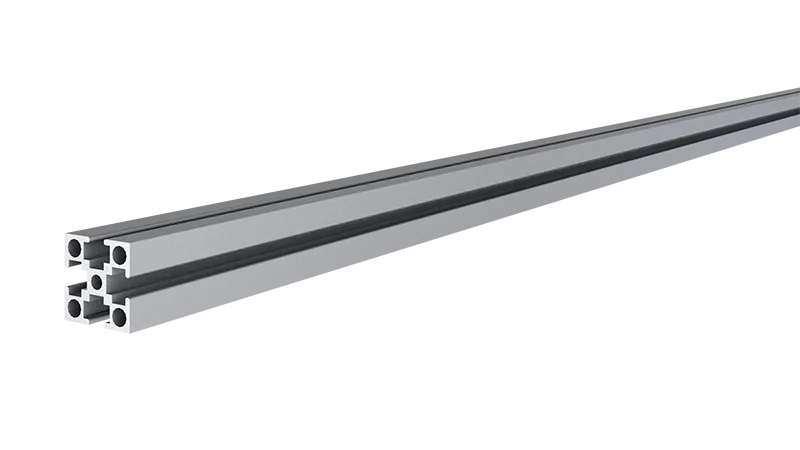
Walk into any manufacturing facility, warehouse, or production line, and you'll quickly notice a silent hero (or villain) of daily operations: storage. The way materials, tools, and components are organized can make or break a team's efficiency. A cluttered corner with piles of parts? That's downtime waiting to happen. A rickety shelf that bends under weight? That's a safety hazard—and a recipe for damaged inventory. But what if there was a storage solution that didn't just hold items, but actively made workflows smoother, teams faster, and spaces smarter? Enter Material Rack B (3 row and 3 floor) —a workhorse designed for modern production needs. And at its core? The unsung champion of industrial organization: 2020 National Standard Profile . In this article, we'll dive into why this combination is revolutionizing storage efficiency, and how it might just be the upgrade your facility has been missing.
The Hidden Cost of Poor Storage: Why "Good Enough" Racks Are Holding You Back
Before we jump into the solution, let's talk about the problem. Many facilities stick with storage racks that are "good enough"—hand-me-down steel shelves, flimsy plastic bins, or custom-built wooden structures that "worked for the last guy." But "good enough" often comes with hidden costs:
- Wasted Time: When tools or materials are disorganized, workers spend precious minutes (or hours) searching for what they need. A study by the Manufacturing Institute found that factory employees lose up to 20% of their shift to "non-value-added" tasks—like hunting for parts in messy storage.
- Damaged Inventory: Racks that aren't designed for specific loads or workflows lead to items getting crushed, bent, or scratched. For delicate components (like electronics or precision parts), this can mean scrapped products and lost revenue.
- Space Drain: Poorly designed racks often take up more floor space than necessary, leaving less room for production lines, workstations, or collaborative areas. In tight facilities, this can feel like trying to operate in a closet.
- Safety Risks: Overloaded steel racks can warp or collapse; unstable wooden structures can splinter. OSHA reports that over 25% of warehouse accidents are related to improper storage, from falling items to trips and falls.
- Stagnant Flexibility: When your storage can't adapt to new products, larger batches, or updated workflows, you're stuck. Adding a new SKU? You'll need to buy a whole new rack. Downsizing a line? That old shelf becomes dead weight.
These aren't just inconveniences—they're drags on your bottom line. And that's where Material Rack B steps in. Designed with the modern facility in mind, it's built to tackle these pain points head-on. But what makes it different? Let's start with the star of the show: the 2020 National Standard Profile.
Meet Material Rack B: A Storage Solution Built for the Way You Work
Material Rack B isn't just another shelf. It's a modular storage system designed for versatility, durability, and efficiency. Let's break down its basics: as the name suggests, it's a 3 row and 3 floor rack, meaning it has three vertical columns (rows) and three horizontal levels (floors) of storage space. This design maximizes vertical storage (utilizing that often-wasted overhead space) while keeping items easily accessible at eye level or arm's reach.
But what really sets it apart is the material: instead of traditional steel or wood, Material Rack B is constructed using 2020 National Standard Profile —a type of aluminum extrusion that's taking the industrial world by storm. If you're not familiar with aluminum extrusion profiles, think of them as precision-engineered building blocks. They're created by forcing heated aluminum through a die to form consistent, hollow shapes with built-in features (like grooves or slots) that make them easy to connect, customize, and repurpose.
So why aluminum? Why 2020 specifically? Let's unpack that.

What Is 2020 National Standard Profile? The "Secret Sauce" of Modern Storage
The term "2020 National Standard Profile" might sound like industry jargon, but it's actually straightforward. The "2020" refers to its dimensions: the profile is 20mm wide and 20mm tall (about the size of a small dice). The "National Standard" part means it adheres to strict manufacturing guidelines for consistency, quality, and compatibility—so you know any 2020 profile from a reputable supplier will fit with other 2020-compatible parts.
But numbers alone don't tell the story. What makes 2020 profile special is its design. Unlike plain steel bars or wooden planks, 2020 aluminum profiles have a T-slot running along their length—a groove that acts like a built-in track. This slot lets you attach accessories (like brackets, shelves, or dividers) without drilling holes, welding, or using messy adhesives. It's like having a storage system that speaks your language: if your needs change, you can rearrange it in minutes, not days.
Let's compare it to common alternatives to see why it stands out:
| Feature | 2020 National Standard Profile | Traditional Steel Racks | Wooden Shelving |
|---|---|---|---|
| Material | Lightweight aluminum (30% lighter than steel) | Heavy steel (prone to rust without coating) | Wood (susceptible to warping, rot, and pests) |
| Customization | Tool-free adjustments via T-slot; compatible with hundreds of accessories | Fixed shelves; requires drilling/welding to modify | Fixed design; modifications often mean rebuilding from scratch |
| Load Capacity | Up to 50kg per linear meter (ideal for medium-weight items) | High (but overloading risks warping or collapse) | Low to medium (varies widely by wood type and build quality) |
| Durability | Corrosion-resistant; withstands humidity, oils, and industrial chemicals | Prone to rust if not powder-coated; dents easily | Degrades over time with moisture, heavy use, or pests |
| Installation | DIY-friendly; no special tools needed (just hex keys or Allen wrenches) | Requires heavy lifting and often professional installation | Requires carpentry skills; not easily scalable |
As you can see, 2020 profile hits a sweet spot: it's strong enough for industrial use, light enough to handle easily, and flexible enough to grow with your needs. And when you pair this with Material Rack B's 3-row, 3-floor design, magic happens.
5 Ways 2020 National Standard Profile Makes Material Rack B a Storage Game-Changer
Now that we know what 2020 profile is, let's explore how it transforms Material Rack B from a "shelf" into a storage powerhouse. Here are five key advantages:
1. It's Built for Speed (and We Don't Mean Racing)
In production, speed matters—but not the "rush and make mistakes" kind. We're talking about efficient speed: getting materials to workers quickly, and letting teams adjust storage as workflows change. Material Rack B, with its 2020 profile, nails this in two ways:
Fast Access: The 3-row, 3-floor layout is designed for "pick and go" efficiency. Each shelf is at a comfortable height (no more bending to the floor or straining to reach the top), and items can be organized by frequency of use (e.g., daily tools on the middle shelf, backup parts on the top). Workers spend less time stretching, climbing, or crouching—and more time doing the job they were hired for.
Lightning-Fast Reconfiguration: Remember that T-slot we mentioned? It turns Material Rack B into a "living" system. Let's say your facility starts producing a new product with larger components. Instead of buying a whole new rack, you can slide out the old shelf brackets, add taller ones, and adjust the spacing—all in 15 minutes. No more waiting for maintenance to drill new holes or hire a welder. It's like rearranging furniture, but for your production line.
2. It's Tough Enough for the Daily Grind (But Gentle on Your Budget)
Aluminum has a reputation for being "lightweight," which some people mistake for "weak." But 2020 National Standard Profile is anything but flimsy. Thanks to its extrusion process (where aluminum is forced through a die under high pressure), the profile is dense and strong—able to support up to 50kg per linear meter. That's enough for tools, boxes of parts, or even small machinery components.
And unlike steel, aluminum doesn't rust. If your facility deals with moisture (like food processing or washdown areas) or chemicals (like automotive or aerospace plants), 2020 profile will stay looking and performing like new for years. Steel racks, on the other hand, need regular painting or powder-coating to avoid corrosion—and even then, scratches can lead to rust down the line.
The best part? Aluminum is surprisingly affordable. While the upfront cost might be slightly higher than cheap steel or wood, 2020 profile's durability means you won't be replacing it every few years. It's an investment that pays for itself in reduced maintenance, fewer replacements, and less downtime.
3. It Plays Well with Others: Compatibility with Aluminum Profile Accessories
A storage rack is only as good as the tools you can use with it. That's where aluminum profile accessories come in—and 2020 profile is the ultimate team player. Because it's a national standard, hundreds of accessories are designed to snap (or slide) right into its T-slot. Here are just a few that make Material Rack B even more powerful:
- Shelf Dividers: Keep small parts organized by product, size, or color. No more "junk drawers" of screws or washers.
- Label Holders: Clearly mark where everything goes, so even new employees can find what they need in seconds.
- Wheel Casters: Add mobility to your rack for "follow-the-workflow" storage. Need parts by the assembly line today and the packaging station tomorrow? Just roll it there.
- Bin Racks: Attach plastic bins to the T-slot for storing loose items (like nuts, bolts, or small tools) without them rolling off the shelf.
The beauty of this compatibility is that you're not locked into one brand or supplier. If you need a specific accessory, you can shop around—any 2020-compatible part will work. It's like having a storage system with an endless wardrobe of "outfits" to suit any occasion.
4. It Saves Space (Because Every Square Foot Counts)
In most facilities, floor space is a limited resource—like real estate in a busy city. Material Rack B, with its 2020 profile, is designed to be a space-saver:
Slim Profile: At just 20mm thick, the aluminum frame takes up minimal space, leaving more room for the items you're actually storing. Compare that to bulky steel racks with thick support beams that eat into your usable area.
Vertical Optimization: The 3-row, 3-floor design uses vertical space efficiently, so you're not spreading storage out horizontally. This is a game-changer for facilities with low ceilings or tight layouts—you're essentially "building up, not out."
One electronics manufacturer we worked with recently swapped their old steel shelving (which took up 12 square meters) for two Material Rack B units (total 6 square meters). They gained back 6 square meters—enough space to add a new workbench and a collaborative area for team huddles. That's the difference between feeling cramped and feeling in control.
5. It's Safe (Because No One Should Risk Their Health for Storage)
Safety isn't optional—it's non-negotiable. Material Rack B and 2020 profile prioritize this in ways that old racks often don't:
Stable Base: The aluminum frame is lightweight but rigid, so the rack stays steady even when fully loaded. Unlike wooden shelves that can wobble or steel racks that tip if overloaded on one side, 2020 profile's uniform design distributes weight evenly.
Smooth Edges: Aluminum extrusion leaves no sharp corners or splinters (unlike wood or poorly cut steel). This reduces the risk of cuts or scrapes when loading/unloading items—especially important for workers handling materials all day.
Weight Capacity Clarity: Reputable 2020 profile suppliers provide clear load ratings (e.g., "this shelf bracket supports 30kg"). No more guessing if a shelf can handle that heavy box—you know exactly what it can take, so you avoid overloading and potential collapses.
Real-World Impact: How One Facility Transformed with Material Rack B
Let's put this all into context with a real example. A small automotive parts manufacturer (let's call them "AutoPro") came to us with a common problem: their storage area was a mess. They were using a mix of old steel racks, plastic bins stacked on the floor, and a few rickety wooden shelves. Workers were spending 15-20 minutes per shift searching for parts, and delicate sensors were getting damaged because they were jumbled together on overcrowded shelves.
We recommended Material Rack B with 2020 National Standard Profile, along with a set of aluminum profile accessories (shelf dividers, label holders, and bin racks). Here's what happened after installation:
- Search Time Dropped by 75%: By organizing parts by type and labeling each shelf, workers could find what they needed in under 2 minutes instead of 15. Over a week, that added up to 5+ hours of extra productivity per worker.
- Damaged Inventory Fell by 90%: The dividers and bins kept parts separated, and the sturdy aluminum shelves prevented crushing. AutoPro went from scrapping 5-10 sensors per month to just 1.
- Space Freed Up: The two Material Rack B units replaced three old steel racks, freeing up 8 square meters of floor space. AutoPro used this to add a new workbench, reducing bottlenecks in their assembly line.
The best feedback? One worker said, "It feels like we moved into a new factory. I don't dread going to the storage room anymore—it's actually… easy." That's the human impact of good storage: less frustration, more focus, and a workplace that feels designed for people, not just products.
Installation and Maintenance: Keeping Your Material Rack B in Top Shape
You might be thinking, "This sounds great, but is it hard to set up?" The short answer: no. Installing Material Rack B with 2020 profile is DIY-friendly—no special skills required. Most kits come with pre-cut aluminum profiles, brackets, and a hex key (the only tool you'll need). Here's a quick overview of the process:
- Assemble the Frame: Connect the 2020 profiles using corner brackets (which slide into the T-slot and lock with a screw). It's like building with adult Legos.
- Add Shelves: Slide shelf brackets into the T-slot at your desired height, then place the shelf boards (often aluminum or plywood) on top. Tighten the screws to lock them in place.
- Attach Accessories: Add dividers, label holders, or bin racks by sliding them into the T-slot. Adjust as needed, then lock them down.
Maintenance is just as easy. Aluminum doesn't rust, so a quick wipe with a damp cloth is usually enough to keep it clean. If a bracket gets loose, just tighten the screw with the hex key. Unlike steel racks, there's no need for repainting, rust treatment, or replacing warped wood. It's a set-it-and-forget-it system—until you need to reconfigure it, of course.
Is Material Rack B with 2020 Profile Right for You? Who Should Consider It
Material Rack B isn't a one-size-fits-all solution—but it works wonders for many facilities. It's especially ideal if:
- You need storage that can adapt to changing products, workflows, or team sizes.
- You're tired of wasting time on disorganized or hard-to-reach storage.
- You want to reduce damaged inventory (especially for delicate or high-value items).
- Space is tight, and you need to maximize every square foot.
- You value safety and want to reduce workplace accidents related to storage.
It's used in industries ranging from electronics and automotive to food processing and pharmaceuticals—anywhere efficient, flexible storage is a priority.
Final Thoughts: Storage That Grows with Your Business
At the end of the day, Material Rack B with 2020 National Standard Profile isn't just about storing items—it's about creating a workplace that works for you . It's about turning "good enough" storage into a competitive advantage: faster workflows, happier workers, less waste, and more space to grow.
If you're still using racks that slow you down, damage your products, or take up too much space, it might be time to make the switch. Remember: storage shouldn't be an afterthought. It's the backbone of your operation—the quiet partner that helps your team shine.
So why wait? Give your facility the storage upgrade it deserves. Your workers (and your bottom line) will thank you.