- Company Articles
- Industry articles
- Industry standards
- Material Waste Reduction: 2020 National Standard Profile in Circular Manufacturing

Material Waste Reduction: 2020 National Standard Profile in Circular Manufacturing
Related Product
2020 National Standard Profile
45° external bending joint, used for 45° external connection of two aluminum pipes.
Walk into any manufacturing facility, and you'll likely see the same silent problem hiding in plain sight: material waste. It's in the half-used steel bars tossed aside after cutting, the outdated workbenches collecting dust in the corner because they can't adapt to new production lines, and the piles of scrap metal from profiles that didn't quite fit the design. For decades, manufacturers have accepted this as part of the job—"just the cost of doing business," as some might say. But here's the truth: that "cost" is more than just financial. It's a drain on resources, a strain on the environment, and a missed opportunity to build more resilient, efficient operations. Today, we're going to talk about how one innovation— 2020 National Standard Profile —is changing the game for material waste reduction in circular manufacturing. Let's dive in.
The Hidden Toll of Material Waste in Manufacturing
Before we get to solutions, let's understand the problem. Material waste in manufacturing isn't just about the scraps on the factory floor. It's a ripple effect that starts with over-ordering raw materials (to avoid shortages) and ends with landfills overflowing with non-recyclable or underutilized components. According to the Ellen MacArthur Foundation, the manufacturing sector is responsible for 54% of global material consumption—and a staggering 32% of that ends up as waste before the product even reaches the customer. For small and medium-sized manufacturers, this waste can eat into profit margins by 15-20% annually. For larger corporations, it's a reputational risk as consumers and regulators demand more sustainable practices.
Consider traditional production setups: rigid steel frames that can't be adjusted when a product line changes, workbenches that get discarded because they're too heavy to reconfigure, and profiles that require custom cutting (leading to offcuts that are too small to reuse). These aren't just inefficiencies—they're missed chances to create a circular system where materials are kept in use, not thrown away. That's where circular manufacturing comes in, and it's why the choice of materials matters more than ever.
Circular Manufacturing: More Than a Buzzword
Circular manufacturing is often talked about, but what does it really mean? At its core, it's a shift from the "take-make-dispose" linear model to one where resources are reused, recycled, and regenerated. Think of it as a loop: materials are sourced sustainably, designed for durability and reusability, and at the end of their life, they're recycled into new products. This isn't just good for the planet—it's good for business. Companies that adopt circular practices report 25% higher operational efficiency, according to McKinsey, and are better positioned to weather supply chain disruptions (since they rely less on virgin materials).
But here's the catch: circular manufacturing doesn't happen by accident. It requires intentional design—starting with the materials you choose. That's where aluminum extrusion profile technology, specifically the 2020 National Standard Profile, becomes a game-changer. Unlike traditional steel or plastic profiles, aluminum extrusion profiles are built for circularity. They're lightweight, strong, infinitely recyclable, and—most importantly—modular. Let's break down why that matters.

Meet the 2020 National Standard Profile: A Material Built for Circularity
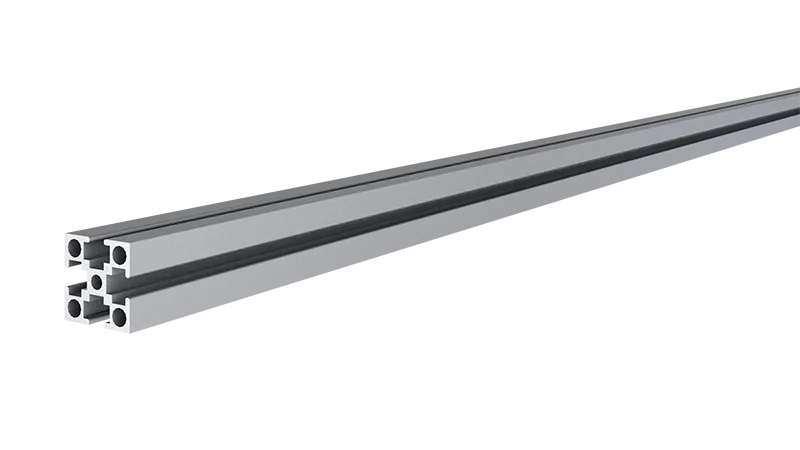
The 2020 National Standard Profile is part of a new generation of aluminum extrusion profiles designed to address the flaws of traditional manufacturing materials. Let's start with the basics: aluminum extrusion is a process where aluminum alloy is pushed through a die to create uniform, custom-shaped profiles. The "2020" in its name refers to its standardized dimensions (20mm x 20mm), which might sound small, but that standardization is key to its versatility. Unlike custom steel profiles that require unique tooling and generate excess waste, 2020 National Standard Profiles are mass-produced to precise specifications, meaning less material is wasted during manufacturing.
But it's not just about the profile itself—it's the ecosystem around it. Aluminum profile accessories like connectors, end caps, and brackets are designed to work seamlessly with the 2020 profile, eliminating the need for welding, drilling, or cutting on-site. That means when a production line needs to be reconfigured, you don't have to cut new profiles or discard old ones. You simply disassemble the existing setup and reassemble it with new accessories. It's like building with Lego blocks, but for factories. This modularity alone reduces waste by up to 40% compared to traditional rigid setups, according to industry studies.
Why Aluminum? The Sustainability Edge
You might be wondering: Why aluminum? Why not stick with steel or plastic? Let's compare. Steel is strong, but it's heavy (increasing shipping costs and energy use), prone to rust (shortening lifespan), and requires significant energy to recycle. Plastic profiles are lightweight but degrade over time, release microplastics, and are rarely fully recyclable. Aluminum, on the other hand, is a sustainability standout. It's 100% recyclable with no loss in quality—meaning a 2020 National Standard Profile that's been used for 10 years can be melted down and turned into a new profile with the same strength and precision. Recycling aluminum uses just 5% of the energy required to produce it from raw bauxite ore, cutting carbon emissions by 95%.
But the 2020 National Standard Profile takes this a step further. Its aluminum alloy is specifically formulated for durability and flexibility. It's strong enough to support heavy machinery (up to 500kg per linear meter in some configurations) but lightweight enough to be moved by hand, reducing the need for heavy lifting equipment. Its smooth, corrosion-resistant surface means it lasts longer in harsh factory environments, and when it does reach the end of its life, it's infinitely recyclable. This isn't just a material—it's a circular economy in a 20mm x 20mm package.
From Waste to Efficiency: Real-World Applications
Enough theory—let's look at how the 2020 National Standard Profile is actually reducing waste in factories today. Take lean systems , for example. Lean manufacturing is all about eliminating waste (muda) in production, and the 2020 profile is a natural fit. One electronics manufacturer in Guangdong, China, recently switched from steel workbenches to 2020 National Standard Profile workbenches. Previously, when they introduced a new smartphone model, they had to order custom steel workbenches, which generated 15kg of scrap metal per bench during installation. The benches were also fixed, so when production needs changed, they ended up in storage (or the landfill). Now, with modular aluminum workbenches, they reconfigure the same profiles using aluminum profile accessories like internal straight joints and adjustable feet. Scrap waste? Near zero. Storage costs? Cut by 60%. And when a bench is no longer needed, the aluminum is recycled locally, giving it a second life.
Another example: material racks. A automotive parts supplier was using wooden pallets and steel racks to store components. The wood warped in humid conditions, leading to product damage, and the steel racks were too heavy to rearrange, so they often had empty shelves (wasting space) while other areas were overcrowded. Switching to 2020 National Standard Profile racks with adjustable shelves solved both problems. The aluminum racks are moisture-resistant, so no more warped storage. The shelves can be moved up or down in minutes using simple brackets, so space is used efficiently. And when the supplier expands, they just add more profiles and accessories—no need to buy entirely new racks. Waste from damaged pallets? Eliminated. Space waste? Reduced by 35%.
The Numbers Speak: Comparing Traditional vs. 2020 National Standard Profiles
To really see the impact, let's put it in black and white. The table below compares traditional steel profiles with the 2020 National Standard Aluminum Profile across key sustainability and efficiency metrics:
| Metric | Traditional Steel Profiles | 2020 National Standard Aluminum Profile |
|---|---|---|
| Waste Generated (per 100m profile) | 8-12 kg (from cutting, welding, offcuts) | 0.5-1 kg (minimal cutting, modular assembly) |
| Recyclability Rate | 60-70% (requires energy-intensive processing) | 100% (infinite recycling, low energy use) |
| Reusability | Low (welding and drilling damage structural integrity) | High (modular design, no permanent modifications) |
| Cost Over 10-Year Lifespan | Higher (replacement, storage, waste disposal costs) | 30-40% lower (reusable, recyclable, low maintenance) |
| Carbon Footprint (per kg produced) | 2.5-3.0 kg CO₂e | 0.2-0.3 kg CO₂e (when recycled) |
Beyond Waste Reduction: The Ripple Effects
The benefits of 2020 National Standard Profile go beyond just cutting down on material waste. Let's talk about time savings. Traditional setups require skilled labor for welding, drilling, and custom fabrication—often taking days or weeks to install. With modular aluminum profiles and accessories, a team of two can assemble a workbench or material rack in hours, not days. That means faster time-to-production for new lines, which is critical in today's fast-paced manufacturing landscape.
There's also the human factor. Heavy steel equipment is hard on workers' bodies, leading to fatigue and injuries. Aluminum profiles are 30% lighter than steel, making them easier to handle and reducing the risk of workplace accidents. One factory in Zhejiang reported a 25% drop in ergonomic injuries after switching to aluminum workbenches and trolleys. Happier, healthier workers? That's a win that doesn't show up on a waste report—but it matters.
And let's not forget regulatory compliance. As governments crack down on waste and carbon emissions, manufacturers using sustainable materials like 2020 National Standard Profile are better positioned to meet strict standards. In the EU, for example, the Circular Economy Action Plan requires 80% of construction and demolition waste to be recycled by 2030. Aluminum profiles fit right into that, helping manufacturers avoid fines and stay competitive in global markets.
Looking Ahead: The Future of Circular Manufacturing with Aluminum Profiles
So, what's next for the 2020 National Standard Profile and circular manufacturing? As Industry 4.0 takes hold, we're seeing smarter integration of aluminum profiles with digital tools. Imagine workbenches with built-in sensors that track usage, alerting managers when a section could be reconfigured for better efficiency. Or profiles with embedded RFID tags, making it easier to track and reuse components across multiple factories. The modularity of aluminum extrusion profiles makes them a perfect fit for the flexible, data-driven factories of the future.
There's also innovation in accessories. Companies are developing even more sustainable options, like biodegradable end caps and recycled plastic brackets, to complement the aluminum profiles. And as 3D printing technology advances, we might see custom accessories printed on-site, reducing shipping waste and lead times even further.
But perhaps the biggest opportunity is education. Many manufacturers still see sustainability as a "nice-to-have" rather than a "must-have." By sharing success stories—like the electronics factory that cut waste by 40% or the automotive supplier that saved $100,000 in storage costs—we can show that circular manufacturing with materials like 2020 National Standard Profile isn't just good for the planet. It's good for the bottom line.
Ready to Make the Switch? Here's How to Start
If you're a manufacturer looking to reduce waste and embrace circular practices, the 2020 National Standard Profile is a great starting point. Here's a simple roadmap:
- Start small: Don't overhaul your entire factory at once. Begin with a single workbench or material rack. See how the modularity works for your team, and scale from there.
- Train your team: Modular assembly is different from traditional fabrication. Spend an hour showing workers how to use the accessories—most people pick it up quickly.
- Partner with a trusted supplier: Look for suppliers who offer not just profiles, but also design support. A good supplier can help you optimize your setup for minimal waste and maximum efficiency.
- Track metrics: Measure waste reduction, time savings, and cost changes before and after. The data will speak for itself, making it easier to justify expanding the program.
Conclusion: Material Choice Matters—Choose Circular
Material waste in manufacturing isn't inevitable. It's a choice—a choice to stick with outdated, rigid materials or to embrace innovation that puts circularity at the forefront. The 2020 National Standard Profile isn't just a piece of aluminum. It's a tool that empowers manufacturers to build smarter, more sustainable operations. It reduces waste, saves time and money, and creates a better working environment for everyone involved.
As we move into a future where sustainability is no longer optional, the manufacturers who thrive will be those who see materials not as disposable resources, but as assets to be kept in the loop. The 2020 National Standard Profile is leading the way—and it's a journey that starts with a single profile, a few accessories, and a commitment to doing things differently. Ready to join the circular revolution? Your factory, your workers, and the planet will thank you.