- Company Articles
- Industry articles
- Industry standards
- Mechanical Properties of 2040 EU Standard Aluminum Profile: Strength & Durability

Mechanical Properties of 2040 EU Standard Aluminum Profile: Strength & Durability
Related Product
2040 EU Standard Aluminum Profile
2040 is a 2.00 x 4.00CM fractional 20 series square extrusion T-slot profile with four open T-slots, two side with 2.00cm face, the other side with 4.00cm face. The profile has align-a-grooves to assist in aligning connecting profiles.
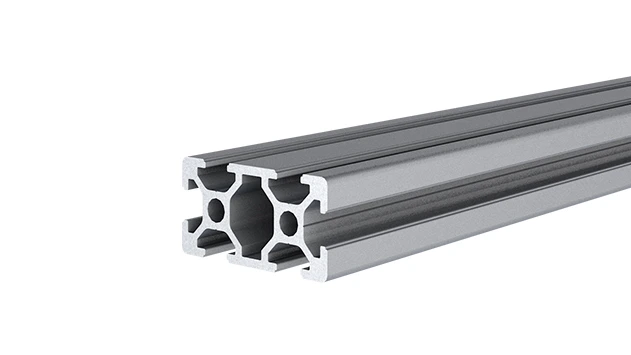
Walk into any modern factory, workshop, or even a well-organized home garage, and you'll likely spot something that looks deceptively simple but plays a critical role: aluminum profiles. These unassuming metal structures are the backbone of workbenches, material racks, conveyor systems, and countless other setups that keep operations running smoothly. But not all aluminum profiles are created equal. Today, let's zero in on one that's become a staple in industrial and commercial spaces worldwide: the 2040 EU standard aluminum profile . What makes it stand out? Why do engineers, manufacturers, and DIY enthusiasts swear by it? The answer lies in its mechanical properties—strength and durability that balance performance, versatility, and cost in a way few materials can match.
What Exactly Is the 2040 EU Standard Aluminum Profile?
First, let's get the basics out of the way. The "2040" in its name isn't just a random number—it refers to the profile's cross-sectional dimensions: 20mm in width and 40mm in height. Simple enough, right? But the "EU standard" part is where things get interesting. This means the profile adheres to strict European union guidelines for dimensions, tolerances, material composition, and performance. These standards ensure consistency, so whether you buy a 2040 profile from a supplier in Germany, Poland, or China (as long as they're EU-compliant), you know it will fit with other EU-standard components—no surprises when you're assembling a workbench or a production line.
But dimensions are just the start. The real magic is in what's under the hood: the material itself. Most 2040 EU standard profiles are made from 6063-T5 aluminum alloy, a popular choice for extrusion (more on that later). This alloy is known for its excellent formability, corrosion resistance, and balanced strength—traits that make it ideal for structural applications where both rigidity and lightness matter. Now, let's dig into the mechanical properties that make this profile a workhorse.
Mechanical Strength: More Than Just "Tough Enough"
When we talk about "strength" in materials, we're not just talking about how much weight they can hold before bending. Engineers break it down into specific metrics, each telling a different story about how the material behaves under stress. Let's break down the key ones for the 2040 EU standard aluminum profile.
Tensile Strength: Resisting the Pull
Tensile strength is the maximum stress a material can withstand while being stretched or pulled before it breaks. For 2040 EU standard profiles made from 6063-T5 aluminum, this typically ranges from 180 to 220 MPa (megapascals). To put that in perspective: 1 MPa is roughly the pressure of 145 pounds per square inch (psi). So, 200 MPa is like having a force of 29,000 psi pulling on a section of the profile before it gives way. That's more than enough for most industrial applications—think supporting heavy tools on a workbench or holding up stacks of materials on a rack. Even in high-stress setups, like a conveyor system moving metal parts, the 2040 profile's tensile strength ensures it won't snap under tension.
Yield Strength: Bending Without Breaking
If tensile strength is about breaking, yield strength is about bending. Specifically, it's the stress at which a material starts to deform permanently—meaning it won't spring back to its original shape. For 2040 EU profiles, yield strength usually sits between 110 and 140 MPa. Why does this matter? Imagine you're using the profile as a support beam for a workbench. If you place a heavy machine on it, the beam might bend a little, but as long as the stress stays below the yield strength, it will straighten out once the weight is removed. Exceed that, and you'll end up with a warped beam that ruins the bench's stability. The 2040 profile's yield strength is carefully calibrated to handle everyday loads without permanent deformation, making it reliable for long-term use.
Modulus of Elasticity: Stiffness When You Need It
Stiffness is another critical factor, especially in structures that need to stay rigid. The modulus of elasticity (also called Young's modulus) measures a material's resistance to elastic deformation under stress. For aluminum alloys like 6063-T5, this modulus is around 69 GPa (gigapascals), which is lower than steel (about 200 GPa) but higher than many plastics. What does this mean in practice? The 2040 profile will flex slightly under heavy loads, but not so much that it feels "wobbly." This balance is key for applications like workbenches, where you need a stable surface for precision tasks, or material racks that hold boxes without sagging in the middle. It's stiff enough to be functional but not so rigid that it becomes brittle—another win for durability.
Hardness: Scratches, Dents, and Everyday Wear
Hardness might not sound as "mechanical" as tensile strength, but in real-world use, it's just as important. A material's hardness determines how well it resists scratches, dents, and surface damage from tools, materials, or accidental impacts. The 2040 EU profile, thanks to the T5 heat treatment (a process that strengthens aluminum by rapid cooling after extrusion), has a Brinell hardness of around 60 HB (Brinell Hardness). For context, that's harder than pure aluminum (which is around 20 HB) but softer than steel (which can be over 200 HB). This sweet spot means it can handle the bumps and scrapes of daily use—like a wrench dropping on a workbench frame or a heavy box sliding across a rack—without showing signs of wear too quickly. It's tough enough to last, but not so hard that it's difficult to machine or modify if needed.

Durability: Built to Last, Even in Harsh Environments
Strength is about handling stress; durability is about handling time. A profile might be strong enough to hold 500kg today, but will it still do that in 5 years? 10 years? The 2040 EU standard aluminum profile answers with a resounding "yes," thanks to a few key durability features.
Corrosion Resistance: Fighting Off Rust and Decay
Aluminum's natural enemy is corrosion, but it has a built-in defense: when exposed to air, it forms a thin, invisible layer of aluminum oxide on its surface. This layer acts as a barrier, preventing further oxidation (rust, in the case of steel). The 2040 profile takes this a step further. Most EU standard profiles are either anodized or come with a clear protective coating that thickens this oxide layer, making it even more resistant to moisture, chemicals, and salt. This is why you'll find 2040 profiles in environments like food processing plants (where water and cleaning agents are everywhere) or coastal workshops (where salt air can eat away at lesser materials). Unlike steel, which needs regular painting or galvanizing to avoid rust, the 2040 profile stays corrosion-free with minimal maintenance—just a quick wipe down now and then.
Thermal Stability: Performing in Hot and Cold
Factories and workshops aren't climate-controlled labs. Temperatures can swing from freezing cold in winter to sweltering heat in summer, especially near machinery or ovens. Aluminum handles temperature changes better than many materials, and the 2040 profile is no exception. Its melting point is around 660°C (1220°F), which is way higher than anything you'd encounter in a typical workspace. More importantly, its mechanical properties remain stable across a wide range of temperatures. Even in sub-zero conditions, it doesn't become brittle, and in high heat, it doesn't soften enough to lose structural integrity. This makes it reliable in outdoor setups, industrial kitchens, or warehouses with fluctuating temperatures—no need to worry about the profile warping or weakening when the mercury rises or falls.
Fatigue Resistance: Standing Up to Repeated Stress
Not all stress is a one-time event. Many structures, like conveyor rails or workbench legs, face repeated loading and unloading throughout the day. Over time, this "fatigue" can cause even strong materials to fail. The 2040 profile's aluminum alloy and extrusion design excel here. Aluminum has good fatigue resistance, and the profile's uniform cross-section (a result of the aluminum extrusion profile manufacturing process) ensures stress is distributed evenly, reducing weak points. Tests show that under cyclic loading—like a workbench that's loaded with tools in the morning, emptied at night, and repeat—the 2040 profile can last for decades without developing cracks or losing strength. This is a big reason it's a favorite for long-term industrial setups where downtime is costly and reliability is non-negotiable.
How Manufacturing Shapes Its Performance: The Aluminum Extrusion Advantage
To truly appreciate the 2040 EU profile's mechanical properties, we need to talk about how it's made: aluminum extrusion . This process isn't just a manufacturing step—it's what gives the profile its unique combination of strength and versatility. Here's how it works: heated aluminum billets (cylindrical blocks) are forced through a die with the 2040's cross-sectional shape. The result is a long, continuous length of profile with a consistent structure from end to end. Unlike casting (pouring molten metal into a mold), extrusion aligns the aluminum's grain structure, making it stronger and more uniform. This alignment is why the 2040 profile resists bending and twisting better than many cast aluminum products. It also allows for complex internal features, like the T-slots that run along its length—those slots are what let you attach brackets, panels, and other components with ease, using aluminum profile accessories like bolts, nuts, and end caps.
The extrusion process also keeps costs in check. Because it's efficient at producing long lengths with minimal waste, the 2040 profile offers premium mechanical properties without the premium price tag of, say, stainless steel or titanium. This affordability, paired with its performance, is why it's become a go-to for small businesses and large corporations alike.
Beyond the Profile: Aluminum Profile Accessories That Enhance Performance
A profile is only as good as the components that work with it. The 2040 EU standard's popularity is partly due to the wide range of aluminum profile accessories designed to complement it. These accessories don't just make assembly easier—they enhance the profile's mechanical properties, turning a simple length of aluminum into a fully functional system. Let's look at a few key ones:
- End Caps: These plastic or metal caps fit snugly into the ends of the profile, preventing dust, debris, or moisture from getting inside. They also add a finished look and protect workers from sharp edges—small touches that boost durability by keeping the profile's internal structure clean and intact.
- Connectors: From 90° angle brackets to T-joints, connectors let you join profiles into frames, shelves, or workbenches. Made from the same aluminum alloy or high-strength plastic, they distribute stress evenly across joints, ensuring the entire structure is as strong as its individual parts.
- T-Slot Nuts and Bolts: These specialized fasteners slide into the profile's T-slots, allowing you to attach accessories without drilling holes. They create a secure, reusable connection that won't weaken the profile (unlike drilling, which can create stress points).
- Rubber Strips: Placed in the T-slots, these strips reduce vibration and noise—useful for workbenches with power tools or conveyor systems moving delicate parts. They also protect the slots from scratches caused by frequent accessory adjustments.
The beauty of these accessories is that they're designed to work seamlessly with the 2040 profile's mechanical properties. A well-chosen connector won't bend under load because it's rated to match the profile's tensile strength. A T-slot nut won't slip because it's engineered to grip the slot's edges, even when the profile is supporting heavy weights. Together, the profile and its accessories form a system that's greater than the sum of its parts.
Real-World Performance: How the 2040 Profile Stacks Up in Applications
Numbers and specs are important, but let's ground this in real life. Where do we see the 2040 EU standard aluminum profile in action, and how does its strength and durability play out there?
Workbenches: The Heart of the Workshop
A workbench is where the magic happens—whether it's assembling electronics, repairing machinery, or crafting prototypes. It needs to support tools, materials, and the occasional heavy part, all while staying stable. A 2040 profile frame is perfect here. Its 20x40mm cross-section provides enough rigidity to prevent the bench from wobbling, even when you're using a vice or hammer. The T-slots let you mount shelves, tool holders, or lighting overhead, and the corrosion resistance means it can handle spills from lubricants, solvents, or cleaning supplies without rusting. I've visited small machine shops where 2040-based workbenches have been in use for over a decade—scratched, maybe, but still solid as a rock.
Material Racks: Holding the Weight of Production
In warehouses and factories, material racks need to hold everything from small components to large boxes, often stacked several feet high. The 2040 profile's yield strength and modulus of elasticity make it ideal for these racks. A typical 2040-based rack with horizontal beams spaced 60cm apart can support 100-150kg per shelf without sagging. And because aluminum is lighter than steel, the racks are easier to move or reconfigure when production needs change—no need for heavy machinery to rearrange your storage setup.
Conveyor Systems: Moving Parts Without Breaking a Sweat
Conveyors are all about motion and repetition. The rails that guide products along the line need to be strong enough to handle constant friction and occasional impacts (like a box tipping over). The 2040 profile, paired with roller tracks and plastic guides, excels here. Its hardness resists scratches from moving parts, and its fatigue resistance ensures it won't weaken over years of daily use. I once toured a packaging plant where 2040-based conveyors had been running 12-hour shifts, 6 days a week, for five years—still smooth, still reliable.
| Mechanical Property | 2040 EU Standard Aluminum Profile (6063-T5) | 2020 EU Standard Aluminum Profile (6063-T5) | 3030 EU Standard Aluminum Profile (6063-T5) |
|---|---|---|---|
| Dimensions (WxH) | 20mm x 40mm | 20mm x 20mm | 30mm x 30mm |
| Tensile Strength | 180-220 MPa | 160-200 MPa | 190-230 MPa |
| Yield Strength | 110-140 MPa | 100-130 MPa | 120-150 MPa |
| Modulus of Elasticity | 69 GPa | 69 GPa | 69 GPa |
| Brinell Hardness | 60 HB | 55 HB | 65 HB |
| Weight per Meter | 1.1 kg/m | 0.7 kg/m | 1.5 kg/m |
The table above compares the 2040 profile to two other common EU standard profiles: the smaller 2020 (20x20mm) and the larger 3030 (30x30mm). Notice how the 2040 balances strength and weight. It's stronger than the 2020 (useful for heavier loads) but lighter than the 3030 (easier to handle and more cost-effective for mid-range applications). This balance is why it's such a versatile choice—it fits the "goldilocks zone" for most projects.
Why It Matters: The Bottom Line for Users
At the end of the day, the 2040 EU standard aluminum profile's mechanical properties translate to one thing: peace of mind. When you build a workbench with it, you don't have to worry if it will collapse under your tools. When you install a material rack, you know it won't sag when you stack inventory. When you design a conveyor system, you can trust it to keep up with production demands, day in and day out. Its strength and durability reduce downtime, lower maintenance costs, and extend the lifespan of the structures you build—all of which add up to better efficiency and profitability.
But it's not just about industrial use. DIYers and hobbyists love it too. Whether you're building a 3D printer frame, a garage storage system, or a custom desk, the 2040 profile gives you professional-level performance without requiring professional-level tools or expertise. Its T-slots and accessories make it easy to modify as your needs change—add a shelf here, a bracket there, and suddenly your setup is upgraded, no welding or drilling required.
Conclusion: More Than a Profile—A Foundation for Success
The 2040 EU standard aluminum profile isn't just a piece of metal. It's a testament to how thoughtful engineering and material science can create something that's greater than the sum of its parts. Its mechanical properties—tensile strength that resists breaking, yield strength that prevents permanent deformation, modulus of elasticity that ensures stiffness, and hardness that fights wear—make it a reliable choice for any application where performance matters. Add in its corrosion resistance, thermal stability, and compatibility with a wide range of aluminum profile accessories , and you've got a material that's built to last, adapt, and perform.
So the next time you walk into a workshop or factory and see those aluminum frames holding everything together, take a closer look. Chances are, you're looking at the 2040 EU standard profile—quietly doing its job, strong and durable, making sure the work gets done. And that, in the end, is the best measure of any material's worth.