- Company Articles
- Industry articles
- Industry standards
- Medical Device Assembly: 4040E EU Standard Aluminum Profile for Cleanroom Compatibility

Medical Device Assembly: 4040E EU Standard Aluminum Profile for Cleanroom Compatibility
Related Product
4040E EU Standard Aluminum Profile
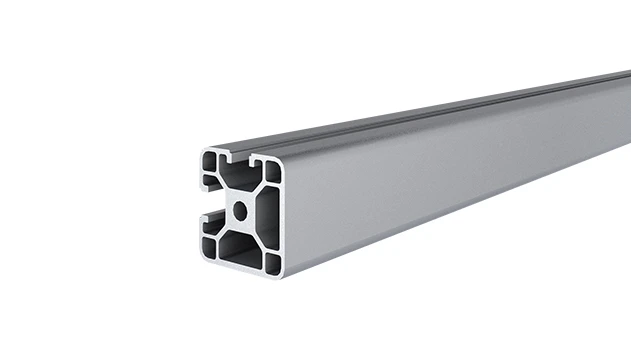
4040E is a 4.00x4.00 CM fractional 40 series square extrusion T-slot profile with two side open T-slots, two side with closed face, each side with 4.00cm face. The profile has align-a-grooves to assist in aligning connecting profiles.
In the world of medical device manufacturing, precision isn't just a goal—it's a requirement. Every scalpel, pacemaker, and diagnostic tool that leaves the production line must meet rigorous standards for safety, reliability, and sterility. But behind these life-saving devices lies an often unsung hero: the infrastructure that powers their assembly. Cleanrooms, with their controlled environments, are the backbone of this process, but even the most advanced cleanroom can falter if its foundational systems—workbenches, flow racks, and material handling setups—aren't up to par. That's where the 4040E EU standard aluminum profile comes in. More than just a structural component, it's a game-changer for medical device assembly lines, blending durability, adaptability, and cleanroom compliance in a way that traditional materials simply can't match.
Let's dive into why this specific aluminum extrusion profile has become a cornerstone for manufacturers aiming to balance efficiency, safety, and regulatory adherence. From its design to its compatibility with lean systems, we'll explore how the 4040E profile isn't just building better workspaces—it's helping build better medical devices.
The Cleanroom Conundrum: Why Infrastructure Matters in Medical Device Assembly
Cleanrooms in medical device manufacturing aren't just "clean"—they're meticulously controlled ecosystems. Airborne particles, temperature, humidity, and even static electricity are monitored around the clock to prevent contamination. For example, ISO 8 cleanrooms (common in device assembly) allow no more than 352,000 particles of 0.5μm or larger per cubic meter—compare that to the average office, which can have millions. Any infrastructure within these spaces must support, not hinder, these strict standards. But here's the catch: medical device production lines are rarely static. New devices are developed, production volumes fluctuate, and regulatory requirements evolve. So the systems holding everything together need to be both rigidly reliable and flexibly adaptable . That's a tough balance.
The Shortcomings of Traditional Materials
Historically, manufacturers turned to materials like stainless steel or wood for workbenches and racks. Stainless steel, while durable, is heavy and difficult to reconfigure—if you need to adjust a workbench height or add a new shelf, you're looking at welding or drilling, which disrupts production and risks introducing metal shavings into the cleanroom. Wood, meanwhile, is porous, making it a breeding ground for bacteria and impossible to thoroughly sanitize. Even plastic, though lightweight, lacks the structural integrity to support heavy medical components like imaging equipment or surgical instrument trays.
This is where aluminum extrusion profiles, specifically the 4040E EU standard aluminum profile, step in. Designed with cleanroom compatibility and lean manufacturing in mind, it addresses these pain points head-on. Let's break down what makes it so effective.
Inside the 4040E EU Standard Aluminum Profile: Design for Cleanroom Excellence
First, let's clarify what "4040E EU standard" means. The "4040" refers to the profile's cross-section dimensions: 40mm by 40mm, a sweet spot for balancing load capacity and space efficiency in medical setups. The "E" denotes its specific groove design, optimized for easy integration with aluminum profile accessories like connectors, end caps, and panel mounts. And "EU standard" ensures compliance with European union regulations for material safety (REACH, RoHS) and structural performance—critical for medical device manufacturers operating in global markets.
Material Matters: Aluminum's Cleanroom Edge
Aluminum, by nature, is non-porous and resistant to corrosion, making it easy to sanitize with harsh cleaning agents (like isopropyl alcohol or hydrogen peroxide) without degradation. Unlike stainless steel, it's lightweight—about 1/3 the weight—so reconfiguring workbenches or flow racks doesn't require heavy machinery or downtime. But the 4040E takes this further: its extrusion process creates a smooth, seamless surface with no crevices where dust or bacteria can hide. Traditional welded steel often has rough joints; wood has grain; plastic can develop micro-cracks over time. The 4040E? A uniform, sleek finish that passes the strictest cleanroom particle tests with ease.
T-Slot Design: Adaptability Without Compromise
The real magic of the 4040E lies in its T-slot design. These longitudinal grooves run the length of the profile, allowing aluminum profile accessories to snap or bolt into place without drilling or welding. Need to add a shelf to a workbench to hold sterilized instrument trays? Slide in a T-slot nut and bolt, and you're done in minutes. Want to attach a static-dissipative panel to prevent electrostatic discharge (ESD) from damaging sensitive electronic components? A few brackets and connectors, and it's secure. This modularity is a game-changer for lean systems, where minimizing waste—including time wasted on reconfiguration—is key.
Consider a scenario: A medical device manufacturer needs to switch from assembling laparoscopic tools to orthopedic implants. The latter require larger work surfaces and specialized material racks. With traditional steel workbenches, this would mean days of disassembly and re-welding. With the 4040E, the team can reposition aluminum profile accessories, swap out panels, and adjust heights in hours—keeping production on track and reducing idle time.

Aluminum Profile Accessories: Elevating the 4040E's Capabilities
A profile is only as good as the accessories that complement it, and the 4040E's ecosystem of aluminum profile accessories is designed to meet the unique needs of medical cleanrooms. Let's highlight a few that make a tangible difference in day-to-day operations:
- End Caps & Seal Covers: These plastic or rubber accessories snap onto the ends of the 4040E profile, sealing off the T-slots to prevent dust accumulation. In a cleanroom, even a tiny particle can compromise a sterile field, so these simple covers are non-negotiable.
- ESD-Safe Connectors: For assembling devices with electronic components (like pacemakers or MRI coils), static electricity is a silent threat. ESD-safe aluminum profile accessories, such as 90° aluminum profile connectors with conductive coatings, ground the system, dissipating static charges before they can damage sensitive parts.
- Adjustable Feet & Casters: Cleanroom floors aren't always perfectly level, and mobility is often needed for tasks like moving workbenches during deep cleaning. Adjustable leveling feet with suction cup bases stabilize the 4040E workbench on uneven surfaces, while lockable casters allow for easy repositioning without scratching floors or generating debris.
- Honeycomb Panels: When paired with the 4040E, aluminum honeycomb panels create lightweight, rigid work surfaces. These panels are non-porous, heat-resistant (ideal for processes involving hot adhesives or sterilization), and can be customized with anti-microbial coatings for added safety.
Take, for example, the "Workbench E (single deck-without caster)" setup—a common configuration in medical assembly lines. Built using the 4040E profile, it combines a honeycomb panel top, ESD connectors, and end caps to create a surface that's easy to clean, static-free, and adaptable. If a manufacturer needs to add a second deck for tool storage, they can simply attach aluminum guide rails and additional panels using T-slot nuts—no tools required beyond a hex key.
How Does the 4040E Stack Up? A Cleanroom Material Comparison
To truly appreciate the 4040E's value, let's compare it to other common materials used in cleanroom infrastructure. The table below breaks down key factors like load capacity, cleanroom compatibility, and assembly time—critical metrics for medical device manufacturers.
| Material/Profile | Load Capacity (kg/m) | Cleanroom Compatibility | Assembly Time (per unit)* | Reconfiguration Ease | Key Limitation |
|---|---|---|---|---|---|
| 4040E EU Standard Aluminum Profile | 300-400 | Excellent (non-porous, easy to sanitize) | 30-45 minutes | High (tool-free adjustments with accessories) | Initial cost higher than plastic |
| Stainless Steel (304 Grade) | 500-600 | Good (corrosion-resistant, but welded joints trap debris) | 2-3 hours (requires welding/drilling) | Low (permanent welds; requires disassembly) | Heavy; difficult to reconfigure |
| Plastic (PVC) | 50-100 | Poor (porous; degrades with harsh cleaners) | 20-30 minutes | Medium (snap-fit, but prone to breakage) | Low load capacity; not suitable for heavy equipment |
| Wood (Plywood with Laminate) | 150-200 | Very Poor (porous; harbors bacteria) | 1-2 hours (requires cutting, sanding) | Very Low (permanent; cannot be reconfigured) | Impossible to sterilize; violates cleanroom standards |
*Assembly time includes cutting, connecting, and securing components for a standard 1.2m workbench.
The 4040E's balance of load capacity (enough to support heavy diagnostic tools) and reconfiguration ease (critical for lean system adaptability) makes it stand out. While stainless steel offers higher load capacity, its rigidity and assembly time make it impractical for dynamic medical lines. Plastic and wood, meanwhile, fail the cleanroom compatibility test—an absolute dealbreaker in medical manufacturing.
Lean Systems & the 4040E: Streamlining Medical Device Assembly
Lean manufacturing principles—focused on minimizing waste, optimizing flow, and continuous improvement—are the backbone of efficient medical device production. The 4040E EU standard aluminum profile aligns seamlessly with these goals, acting as a physical enabler of lean systems.
Reducing Waste Through Modularity
One of the seven wastes in lean (muda) is "overprocessing"—doing more work than necessary. Traditional infrastructure often requires custom fabrication for every new product line, leading to wasted materials and time. The 4040E, with its standardized T-slot design, eliminates this. A single profile can be repurposed for workbenches, flow racks, or turnover trolleys by swapping out aluminum profile accessories. For example, a material rack used for storing surgical tools can be reconfigured into a conveyor support system for packaging—all without purchasing new materials.
Optimizing Flow with Roller Tracks & Guides
In medical assembly, "flow" refers to the smooth movement of materials from one station to the next. Bottlenecks here can delay production and increase the risk of errors. The 4040E pairs effortlessly with roller track and accessories, such as plastic roller track guide rails (available in yellow or grey for visual workflow cues) and swivel roller balls (1 inch or 0.5 inch) for easy material transfer. These components snap into the T-slots of the 4040E, creating gravity-fed flow racks that move components like catheter kits or implant trays from storage to assembly stations with minimal manual handling—reducing labor costs and human error.
Consider a typical workflow: Raw materials arrive in sterile packaging and need to be transported to the assembly workbench. Using a 4040E-based flow rack with roller tracks, these materials glide directly to the operator, eliminating the need for a worker to fetch them. Once assembled, the finished device moves via roller track to the inspection station, then to packaging—all on a system built from the same 4040E profiles. This closed-loop flow is lean at its finest.
Continuous Improvement Through Data-Driven Adjustments
Lean isn't static; it requires ongoing analysis and tweaks. The 4040E's adaptability makes it easy to test new layouts. For instance, if a time-motion study reveals that an assembly station is too cramped, operators can quickly adjust the workbench width by adding extension rails—no need to wait for a custom fabrication shop. This agility allows teams to implement improvements in days, not weeks, keeping production aligned with evolving efficiency goals.
Real-World Impact: A Medical Device Manufacturer's Success Story
To put this in context, let's look at a case study: a mid-sized manufacturer of endoscopic equipment (think colonoscopes and arthroscopes) based in Germany. Prior to adopting the 4040E, their cleanroom relied on stainless steel workbenches and fixed wooden racks. They faced two major issues: long setup times for new product lines (up to 2 weeks) and frequent contamination scares due to hard-to-clean wooden surfaces.
After switching to 4040E-based workbenches and flow racks, paired with ESD accessories and honeycomb panels, the results were striking: Setup time for new lines dropped to 2 days, as they could reconfigure existing profiles instead of building new ones. Contamination incidents fell by 75%, thanks to the non-porous aluminum surfaces and sealed T-slots. Perhaps most notably, operator satisfaction increased—workers reported less fatigue from adjusting heavy steel workbenches and more confidence in the cleanliness of their workspace.
The manufacturer also noted cost savings: By reusing 4040E profiles across product lines, they reduced material waste by 40% in the first year. And because the system is modular, they could scale production up or down without over-investing in infrastructure—a critical advantage in an industry where demand for specific devices (like respiratory equipment during a pandemic) can spike unexpectedly.
Looking Ahead: The 4040E and the Future of Medical Cleanrooms
As medical device technology advances—with smaller, more complex devices and stricter regulatory demands—the need for adaptable, cleanroom-compatible infrastructure will only grow. The 4040E EU standard aluminum profile is well-positioned to meet these future challenges, thanks to its modular design and compatibility with emerging technologies.
For example, as automation becomes more prevalent in medical assembly (think collaborative robots, or cobots), the 4040E can support robot mounting brackets and sensor rails via its T-slots. Cobots can be integrated directly into the workbench, with aluminum profile accessories securing their bases and cable management systems—all without disrupting the cleanroom environment.
Additionally, the push for sustainability in manufacturing aligns with aluminum's recyclability. Unlike steel or plastic, which degrade when recycled, aluminum can be melted down and reused indefinitely without losing quality. For medical manufacturers aiming to reduce their carbon footprint, the 4040E offers an eco-friendly alternative to single-use or hard-to-recycle materials.
Why the 4040E EU Standard Aluminum Profile is a Must for Medical Cleanrooms
In the high-stakes world of medical device assembly, every detail matters. The infrastructure that supports production isn't just a backdrop—it's a critical component of ensuring safety, efficiency, and compliance. The 4040E EU standard aluminum profile, with its cleanroom-optimized design, modular accessories, and lean compatibility, rises to this challenge.
From its non-porous, easy-to-sanitize surface to its tool-free reconfiguration, it addresses the unique needs of medical cleanrooms: strict cleanliness, adaptability to changing production demands, and alignment with lean principles. When paired with aluminum profile accessories like ESD connectors, roller tracks, and adjustable feet, it becomes a versatile system that grows with your operation—reducing waste, cutting costs, and most importantly, supporting the production of life-saving devices.
For medical device manufacturers looking to stay ahead in a competitive, regulated industry, the choice is clear: the 4040E isn't just a profile—it's a foundation for excellence.